
Hello! Welcome to the fifth lesson in our module on Incrementality and True Marketing Impact.
In our last lesson, we drew a clear line between platform-reported ROAS and the far more meaningful metric, incremental ROAS (iROAS). We established that platform ROAS measures correlation, while iROAS measures causation, and that strategic decisions must be based on this causal view to drive real business growth.
Today, we take the crucial next step from understanding to action. The learning outcome for this lesson is to apply incrementality insights to make strategic budget allocation decisions between channels. This is where the analysis turns into portfolio management. As a leader, your primary role isn't just to measure performance but to actively manage your marketing budget as a portfolio of investments, constantly seeking the highest possible return for the business as a whole. This lesson will provide you with a framework to do just that.
1. The Core Principle: Optimizing on the Margin
Your years of experience running Google and Meta ads have likely given you an intuitive sense of diminishing returns—that feeling when you scale up spend, and the CPA starts to creep up. We're now going to formalize this intuition into a core principle for strategic budget allocation.
The key is to stop thinking about a channel's average ROAS and start focusing on its Marginal ROI (mROI).
Marginal ROI is the return on the next dollar you invest in a channel. A channel might have a great average ROAS of 4x, but if it's already saturated, the mROI on your next $10,000 in spend might be less than 1x.
To learn more about this crucial concept, let's turn to an excellent article.
Understanding incrementality for marketing success
The article 'Understanding incrementality for marketing success' by Measured explains how mROI is the ultimate lever for optimization.
Please read the section titled 'How Do You Optimize Marketing ROI Through Incrementality Measurement?'. Pay close attention to the definition of mROI (Marginal ROI) and the core optimization principle: reallocating investment from channels with lower mROI to those with higher mROI.
As the article explains, the strategic goal is to reallocate budget from channels with lower mROI to channels with higher mROI. In a perfect world, you would continue this process until the mROI of every channel in your portfolio is equal and just above your break-even point.
This naturally leads to the question: why does mROI change? The answer is channel saturation, or the point of diminishing returns. Every channel has a limit. The first dollars you spend capture the most interested, high-intent audience. As you spend more, you have to reach less interested audiences, and the return on each new dollar decreases. The art of budget allocation is identifying these saturation points.
2. A Framework for Dynamic Budget Allocation
Static, quarterly budget plans are a relic of a slower-moving era. To act on incrementality insights effectively, you need a dynamic process. The following guide provides a fantastic, modern framework for this.
The CMO's Guide to Channel Marketing Optimization | BlueAlpha
The 'CMO's Guide to Channel Marketing Optimization' from BlueAlpha lays out a clear, actionable process for moving from siloed channel management to a holistic, dynamic portfolio strategy.
Please read these three sections: the introduction (starting 'Channel marketing optimization is...'), 'Audit First: Your Baseline Performance Map', and 'Dynamic Budget Reallocation'. Focus on the three-step logic: understanding the problem, auditing for saturation, and implementing a dynamic reallocation process.
Let's break down this framework into actionable steps for a marketing leader:
Step 1: Audit for Saturation Points
Before you can optimize, you need an honest baseline. As the article suggests, pull your data for the last 6-12 months and look for signals of saturation:
- Channels where CPAs are rising.
- Channels where platform-reported ROAS is declining as you increase spend.
- Channels that seem to perform well (like branded search) but whose performance coincides with activity in upper-funnel channels (like YouTube or TV). This suggests the lower-funnel channel may be harvesting demand created elsewhere, not creating it.
Step 2: Get Causal Insights
Your audit will identify potential problems. Incrementality testing (geo-lift, conversion lift studies) gives you the causal proof. This is how you calculate the true iROAS and mROI for each channel, moving beyond flawed platform attribution.
Step 3: Implement a Dynamic Reallocation Cadence
This is the operational heart of the strategy.
- Set Guardrails: Define minimum spend levels for "always-on" brand protection (e.g., core branded search) and maximum spend levels for channels once their mROI drops below your profitability target.
- Establish a Rhythm: Meet with your team and finance partners on a regular schedule (e.g., monthly or every 4 weeks) to review the latest incrementality data.
- Ask the Decisive Question: In these meetings, the conversation shouldn't be "Did we hit our channel targets?" It should be: "Where will our next dollar earn the highest incremental return?"
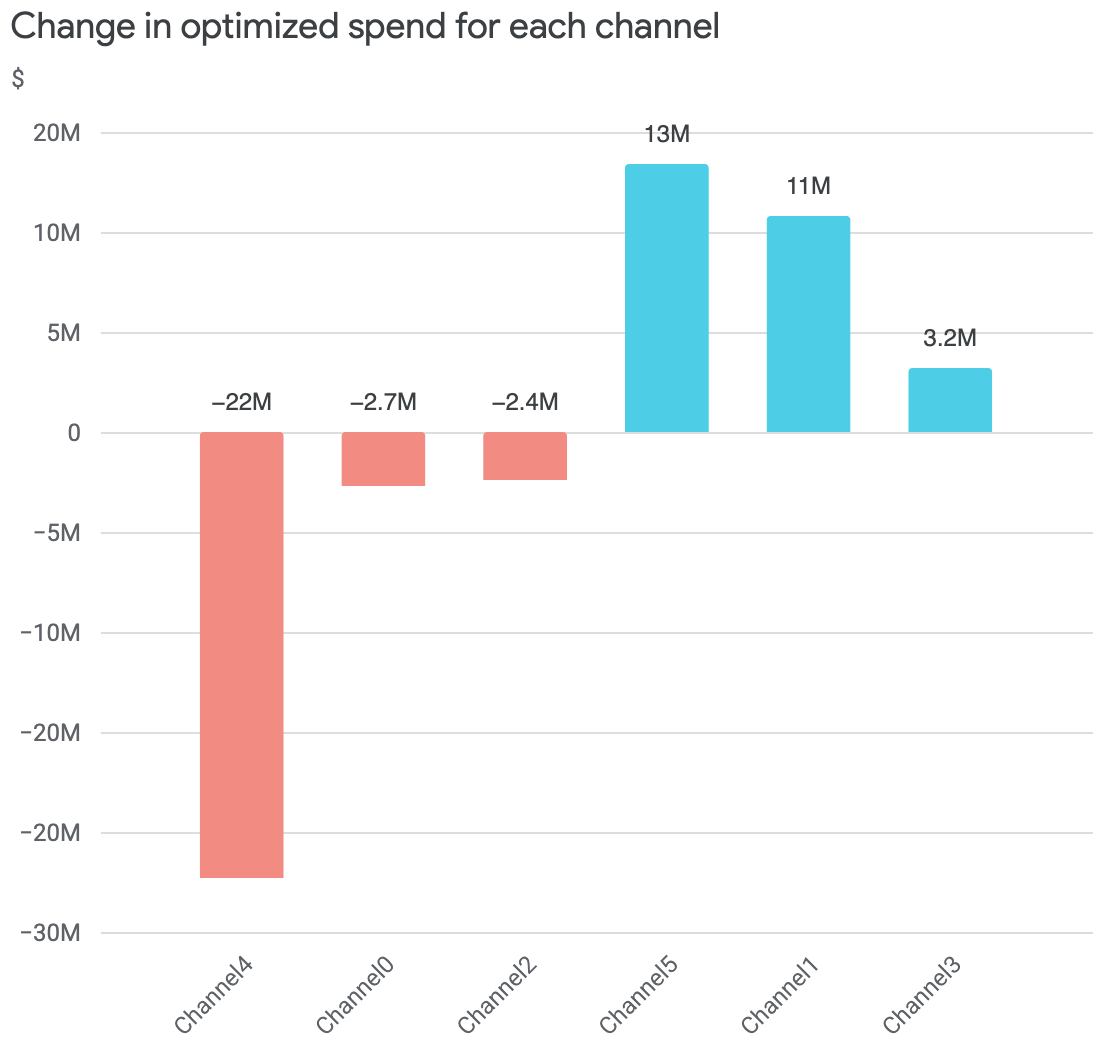
The output of this process is a clear plan for reallocating budget. The chart below shows what this looks like in practice. It's not about making everyone's budget go up; it's about making smart, sometimes difficult, trade-offs to grow the total pie.
3. Case Study: Putting Theory into Practice
This might seem abstract, so let's look at a real-world example of a company that executed this strategy perfectly.
Understanding incrementality for marketing success
Let's return to the Measured article to read their case study on the women's clothing retailer, Soft Surroundings. This demonstrates the power of reallocating budget based on true incrementality.
Please read the section 'Incrementality Measurement Case Study: Soft Surroundings'. Identify the key insight, the budget decision it triggered, and the ultimate business result.
Let's break down the Soft Surroundings story:
- The Insight: An incrementality test revealed that their primary retargeting vendor had a very poor incremental CPA. The platform reported great results, but in reality, it was just taking credit for customers who were already on their way to buy.
- The Decision: They made a bold move and cut their retargeting budget by 52%. They didn't just trim it; they acted decisively on the data.
- The Reallocation: They reinvested that money into more effective prospecting tactics on Facebook, which were proven to be more incremental.
- The Result: Overall top-line revenue grew by 17% month-over-month. They spent less on a channel with a high reported ROAS and saw the entire business grow as a result.
This case is the perfect illustration of today's lesson. It shows how shifting budget away from a low-incrementality channel, even one that looks good on paper, towards a high-incrementality channel directly fuels business growth.
Test your understanding!
Your analytics team presents you with the following mROI (marginal ROI) data for your main channels at their current spend levels:
- Paid Search (Non-Brand): mROI = 2.5x
- Paid Social (Prospecting): mROI = 3.5x
- Paid Social (Retargeting): mROI = 0.8x
- YouTube (Awareness): mROI = 1.5x
Your overall business goal is to acquire customers profitably, with a break-even ROI of 1.0x. Based only on this data, what is the most immediate and obvious budget reallocation you should propose?
Show answer
The most immediate and obvious reallocation is to significantly reduce or cut spend from Paid Social (Retargeting) and move that budget into Paid Social (Prospecting).
The retargeting campaign has an mROI of 0.8x, meaning for every extra dollar spent, you are losing 20 cents. This campaign is actively destroying value. The prospecting campaign, however, has a very healthy mROI of 3.5x, indicating there is still significant room to grow profitably. Shifting funds from the underperforming retargeting campaign to the high-performing prospecting campaign is the most logical first move to increase the overall portfolio's efficiency and drive profitable growth.
4. The Human Element: Leading the Strategic Shift
As a leader, your biggest challenge might not be the analysis, but the people. When you decide to shift budget from the search team to the social team based on incrementality data, you will face resistance. The search manager will feel their work is being devalued, and their channel KPIs will be at risk.
Your role is to elevate the conversation.
The CMO's Guide to Channel Marketing Optimization | BlueAlpha
The 'CMO's Guide' offers excellent advice on managing the organizational dynamics that come with data-driven budget shifts.
Please read the section 'Human Factors'. Focus on the paragraph about 'Conflict'.
The key insight here is to use data as the neutral arbiter. Frame the decision not as one channel "winning" and another "losing," but as the entire team working together to maximize total business profit. Celebrate the net profit the team achieved, so individuals see the collective upside. This shifts the culture from protecting channel turf to driving business outcomes.
Conclusion
Applying incrementality insights to budget allocation is a powerful strategic discipline that separates good marketers from great marketing leaders. It's about moving from static plans to a dynamic portfolio approach, guided by a relentless focus on causal impact.
Key Takeaways:
- Your primary tool for budget allocation is Marginal ROI (mROI), which tells you the return on your next dollar of spend.
- The core strategy is to systematically reallocate budget from channels with low mROI to channels with high mROI, respecting saturation points (diminishing returns).
- Implement a dynamic allocation framework: audit your baseline, get causal insights, and establish a regular cadence for reviewing data and shifting funds.
- Use incrementality data as the "neutral arbiter" to manage team dynamics and align everyone around the shared goal of overall business growth, not siloed channel KPIs.
Preview of the Next Lesson:
We've now seen how powerful incrementality insights can be for making budget decisions. But what happens when the results of an incrementality test are unclear, or when you suspect the methodology might be flawed? To act confidently, you need to be able to critically evaluate the data you're given. In our next lesson, we will focus on how to formulate key questions to ask an analytics team when presented with incrementality study results, empowering you to be a more discerning and effective consumer of data.