
Hello, and welcome. This first module builds the foundation for trading gold CFDs safely in a demo environment before we discuss breakouts, chart structure, or MambaFX-style entries.
The first distinction matters because a chart can look similar on a fixed-time OTC platform and on TradeLocker, while the contract you are trading is fundamentally different. A breakout strategy only makes sense when you understand what determines profit, loss, and when you can get out.
By the end of this lesson, you should be able to tell a gold CFD apart from a fixed-time OTC trade by answering four questions: Do I own anything? How is the payout determined? When does the trade end? Can I exit when my plan says to?
Two contracts, not two ways to own gold
Neither product gives you physical gold.
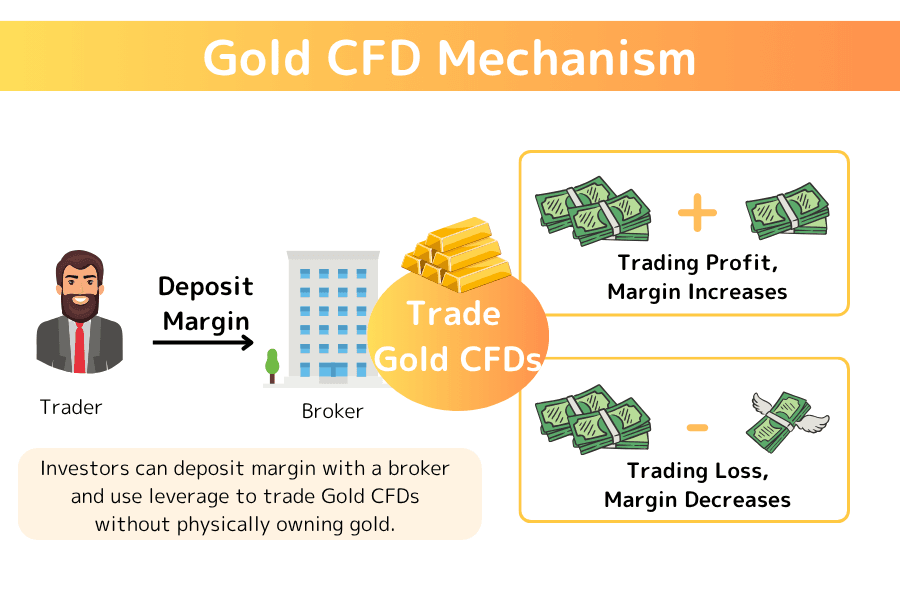
With a gold CFD—a Contract for Difference—you enter a contract with a broker based on the movement in gold’s quoted price. If you buy and price rises, your position gains value; if you sell and price falls, it gains value. You do not receive a gold bar, have storage costs, or become an owner of gold. Your profit or loss is based on the difference between where you opened and where you closed.
With a fixed-time OTC trade, often called a binary option, digital option, countdown, or “up/down” trade, you also do not own gold or a currency. You stake money on whether a quoted price will be above or below a chosen level at one specified time.
The key is that both are derivatives, but their payoff logic is very different.
[PDF] Product intervention: OTC binary options and CFDs - ASIC
Read the Australian Securities and Investments Commission’s explanation of the two products. It is useful here because it defines binary options and CFDs by their contractual mechanics rather than by trading-course marketing.
In Section B, “Binary options and CFDs in Australia” (pp. 11–13), read paragraphs 27–33 on binary options. Start at the binary definition and payoff; notice the words “specified event,” “defined timeframe,” and “all-or-nothing.” Then continue to paragraphs 36–40 under “Contracts for difference.” Focus on closing a CFD position. Compare its opening-and-closing value calculation with the binary contract’s fixed win-or-loss outcome.
Payout: variable price exposure versus a fixed result
A fixed-time trade asks a narrow question:
At expiry, is the platform’s quoted price on the correct side of my entry price?
Suppose you stake USD 10 on “gold will be up” with an advertised 80% return.
- If the expiry price is even slightly above the required level, you win USD 8 profit under the common “80% profit” convention.
- If it is below the required level, you lose the full USD 10 stake.
- Whether price rose by USD 0.01 or USD 10 does not usually change that payout. Correct direction at the specified time is what matters.
Be careful with the platform’s wording: some platforms use payout to mean profit, while others display the total amount returned. Always check the order ticket before assuming what “80%” means.
This payoff creates a built-in issue. At an 80% win payout, a trader needs a win rate above
just to break even before any additional fees or problems with execution. Winning half of trades is still a losing result.
A CFD works differently. Its profit or loss keeps changing while the position remains open. For a long gold CFD, the basic relationship is:
For a short trade, the price difference is reversed: falling price produces profit and rising price produces loss.
So, if a gold CFD moves further in your direction, the profit can grow; if it moves further against you, the loss grows. This is why a CFD trader must decide in advance:
- where the trade idea is invalidated;
- where profit will be taken;
- how much account money can be lost if the stop is reached.
We will calculate those values from your own broker’s gold contract specifications later in this module. For now, the important point is simple: a CFD payoff depends on the size of the price move and your position size; a fixed-time payoff is predetermined.
CFD trading explained | Deriv (non-EU clients)
Watch “CFD trading explained” from Deriv for a compact visual overview of CFDs. The useful idea is not the broker’s promotion, but the distinction between taking a long or short price position and owning the underlying asset.
Watch the definition to establish that CFDs provide price exposure rather than ownership. Then watch long and short positions, focusing on why a larger favorable or unfavorable move changes the outcome. Finish with margin and duration; retain the idea that a CFD normally has no preset expiry, while remembering that insufficient funds can still cause a position to be closed.
Expiry and exit: the distinction that changes how you trade
A fixed-time OTC contract has a clock built into it. You choose, for example, a one-minute or five-minute expiry. At that moment, the platform settles the outcome. You may see price move in your direction right after entry, then reverse before expiry. If it is on the wrong side at settlement, the trade loses anyway.
This means the central decision is not merely “Will price break out?” It is also “Will it be beyond this exact level at this exact time?” That extra timing condition is why a candle pattern that looks promising can still repeatedly fail in fixed-time trading.
A gold CFD normally has no fixed expiry date. You can close it when your trade plan says the reason for the trade is over. Common exit methods are:
- Manual close: You close the position at the current available price.
- Stop-loss: Your platform attempts to close the trade if price reaches the invalidation level.
- Take-profit: Your platform attempts to close the trade at a planned target.
- Margin close-out: The broker may close one or more positions if account funds become too low relative to margin requirements.
“Normally no expiry” does not mean “hold it forever.” Holding a CFD can involve overnight financing charges, changing margin conditions, and the possibility of a broker-initiated close-out. Also, a stop-loss is not a guarantee of an exact exit price during fast movement; spreads and slippage can matter.
For the breakout approach you want to learn, this exit control is essential. A valid gold breakout plan can say:
- Enter only after a defined break or retest.
- Place the stop beyond the structure that would prove the idea wrong.
- Take profit before the next opposing area, or manage according to a tested rule.
- Close manually if a prewritten time or market condition makes holding inappropriate.
That is substantially different from placing a fixed-time “up” button and hoping price finishes correctly when the countdown ends.
“OTC” is not one single thing
It is important not to let the letters OTC confuse the comparison.
In the broad financial meaning, over the counter means that a transaction is arranged directly between parties rather than traded on a centralized exchange. Under that definition, many retail CFDs are also OTC products: you contract with your broker, not with a gold exchange.
However, platforms may also label instruments such as “EUR/USD OTC” or “Gold OTC” when conventional market trading is closed or when the platform is providing its own proprietary or simulated quote. That is a separate practical concern.
Do not automatically assume that every OTC quote is fake, nor assume that a label proves the quote follows the underlying market. Instead ask:
- Is this a standard gold CFD whose price is linked to a disclosed external market reference?
- Or is this a platform-specific OTC instrument with its own pricing methodology?
- Can the broker explain the quote source, spread, execution rules, and how withdrawals work?
- Is the product a variable-profit CFD or a fixed-time, all-or-nothing contract?
The following video makes a useful distinction between conventional market quotes and platform-provided OTC quotes. Its claims about particular platforms should be treated as a prompt to verify a broker’s documentation—not as proof about every OTC market or broker.
The TRUTH About OTC in Binary Options
Watch the selected portion of “The TRUTH About OTC in Binary Options” by Alice | Binary Guides to see why the source of a platform’s OTC quote matters. Use it to sharpen your questions about pricing, not as a universal definition of OTC.
Watch the OTC distinction. Focus on the conventional meaning of an over-the-counter transaction and the video’s separate point that, on some binary platforms, the provider determines the OTC instrument’s quote. Keep the distinction clear: “OTC” alone does not tell you whether a price is reliable; the broker’s documented pricing and execution policy matters.
A side-by-side comparison
| Question | Gold CFD on a broker platform | Fixed-time OTC / binary trade |
|---|---|---|
| Do you own gold? | No. You hold a contract based on gold’s price movement. | No. You stake on an event involving a quoted price. |
| What determines profit or loss? | The price difference between entry and exit, multiplied by the contract’s value and your size, minus costs. | Whether the quoted price meets the contract condition at expiry. |
| Does a larger favorable move pay more? | Yes, generally; size of movement matters. | Usually no; the win is a preset amount. |
| Does it expire at a fixed countdown? | Usually no fixed expiry for a spot-style CFD. | Yes; settlement occurs at the chosen expiry. |
| Can you choose when to exit? | Yes: manual close, stop-loss, take-profit, or broker margin close-out. | Usually the result is settled at expiry; any early-close feature is platform-specific. |
| Primary risks | Leverage, spreads, slippage, fast losses, overnight costs, and margin close-out. | Full stake loss, payout disadvantage, expiry timing, platform pricing, and potential fraud or withdrawal problems. |
The key practical conclusion is not that CFDs are “safe” and fixed-time products are “unsafe.” Both can lose money quickly. The difference is that a CFD allows a structured trade idea to be expressed with an entry, invalidation point, position size, and exit plan. A fixed-time trade turns the outcome into a time-limited win-or-loss event.

If any platform asks you to send more money to unlock a withdrawal or to “recover” a previous loss, do not deposit more. Stop and independently verify the broker and its legal status. We will build a concrete verification process later in this module.
A practical rule for this course
For the rest of this course, treat gold CFD trading on a demo account as the training environment.
That means every planned trade will eventually need:
- a real gold CFD symbol offered by the broker behind your TradeLocker login;
- a known position size;
- a stop-loss and target;
- a clear way to close the trade;
- a maximum loss that is small enough to survive repeated mistakes during learning.
Do not try to copy a trader’s number of entries, account size, or winning screenshots. The transferable part of a breakout strategy is the decision process: identifying structure, waiting for a defined trigger, setting invalidation, and keeping risk controlled.
Key takeaways
A gold CFD and a fixed-time OTC trade may both involve a gold chart, but they are not interchangeable.
- Neither involves owning physical gold.
- A CFD has variable profit and loss based on price movement, position size, and costs.
- A fixed-time trade usually pays a predetermined amount if a condition is met at expiry and loses the stake if it is not.
- CFDs usually have no preset expiry, but can be closed manually, by stop or target, or by a broker’s margin process.
- Fixed-time contracts settle on the clock, which makes exact timing part of the wager.
- “OTC” means more than one thing. Verify the broker, the quote source, and the contract type rather than relying on a label.
Next, you will locate the actual contract specifications for your broker’s gold symbol: contract size, minimum position size, quote increment, margin requirement, and trading hours. Those details are what turn a chart idea into a trade whose risk can be calculated before you enter.
Can't find a good explanation? Sign up and we'll make it for you
Sign up