Hello! Welcome back to our series on negotiation.
In our last lesson, we focused on credibility. We saw that for a threat or a promise to be effective, the other party must believe you have the incentive to follow through. You learned how to make your commitments credible by staking your reputation, using contracts, and making strategic investments.
Today, we move from what you say to when you say it. We'll tackle a crucial tactical question that comes up in almost every negotiation, from setting a price with a new client to buying a new machine from a supplier. Our goal is to evaluate when to make the first offer versus wait for the other party.
This decision isn't a matter of personal style; it's a strategic choice. As we'll see, moving first can give you a powerful advantage, but in certain situations, it can also be a costly mistake.
The Power of the First Number: The Anchoring Effect
The entire debate about making the first offer hinges on a powerful psychological principle called the anchoring effect. This is the human tendency to rely too heavily on the first piece of information offered (the "anchor") when making decisions. Once an anchor is set, subsequent judgments and negotiations tend to revolve around it.
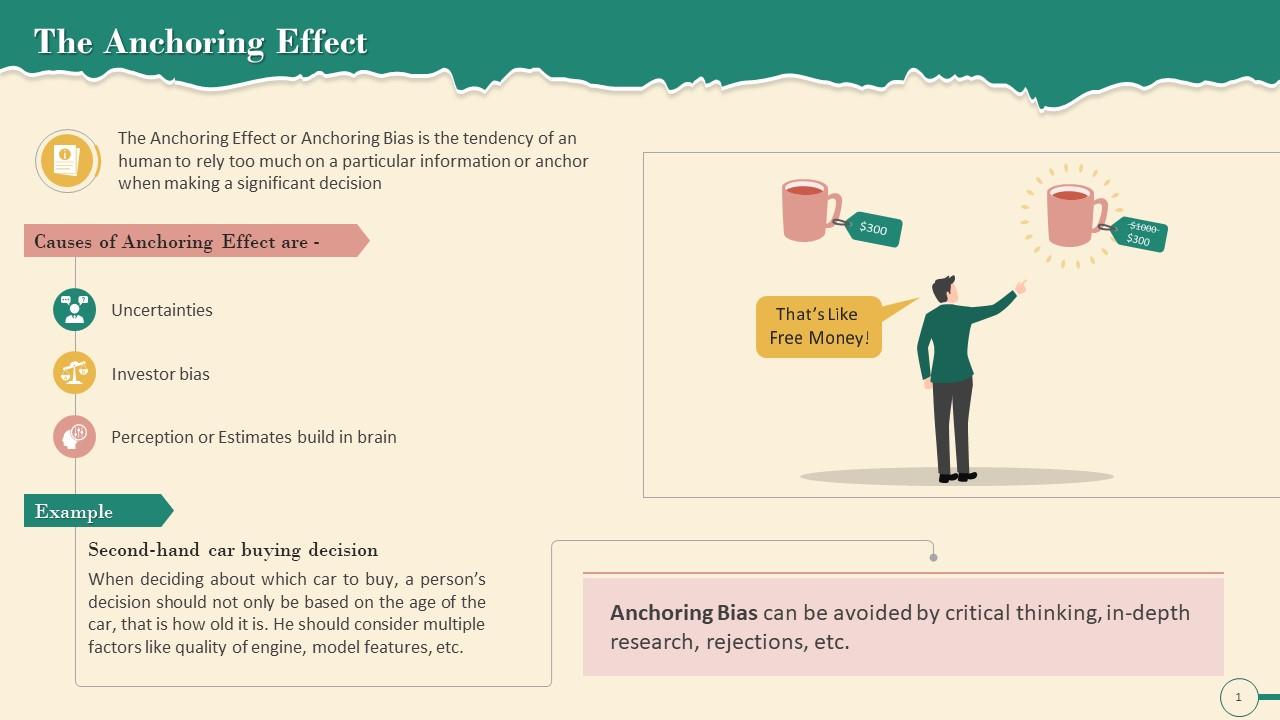
To grasp just how strong this bias is, let's look at the foundational research and its implications in a business context.
Negotiation Advice: When to Make the First Offer in ...
The article 'Negotiation Advice: When to Make the First Offer in...' from the Program on Negotiation at Harvard Law School provides an excellent overview of the anchoring effect. It explains the classic research and shows how even experts can be influenced by it.
Please read the first three paragraphs of the article, starting from the beginning and ending just before the heading that begins 'Research on the anchoring effect suggests...'. Pay attention to the real-estate agent study – it's a perfect example of how an anchor can influence even seasoned professionals who have access to objective data.
As the article shows, the first number on the table has a magnetic pull. For your woodworking business, this means the first price mentioned in a negotiation—whether it's your quote for a set of custom cabinets or a supplier's price for a load of walnut—will frame the entire conversation around value.
The Case for Making the First Offer: Seize the Advantage
Given the power of anchoring, the most common advice is to move first and set the anchor yourself. By doing so, you define the playing field.
There are three primary benefits to making the first offer.
Negotiation Advantage: Make the First Move
The article 'Negotiation Advantage: Make the First Move' from Wharton Executive Education succinctly lays out the reasons why making the first offer is often a winning strategy.
Please read the section under the 'Nano Tool:' heading, which details the three main advantages of moving first.
In summary, by making the first offer, you:
- Set a Favorable Anchor: This is the most direct advantage. Research shows a strong correlation between the first offer and the final price.
- Project Confidence: Moving first signals that you are well-prepared and knowledgeable, which establishes a strong bargaining position.
- Create Room for Concessions: By starting with an ambitious (but realistic) offer, you give yourself space to "concede" during the negotiation while still arriving at a favorable outcome. This also tends to increase your counterpart's satisfaction, as they feel they've "won" concessions from you.
The following video shows a very practical, real-world application of this principle, demonstrating how to set your own anchor and, just as importantly, how to react when someone tries to set a low anchor on you.
How to Negotiate a Lowball Offer
In 'How to Negotiate a Lowball Offer,' business coach Chris Do makes a passionate case for always making the first offer and setting it high. He demonstrates how to control the frame of the negotiation.
Please watch from the beginning to 04:15. Notice how he doesn't just talk about setting an anchor, but also what to do when a client tries to anchor you with a lowball offer: ignore their anchor and set your own.
The Case for Waiting: Gather Information
While moving first is powerful, it carries a significant risk: what if your anchor is wrong? If you lack information, you might make an offer that is far too generous. This is known as the "winner's curse"—you get your first offer accepted immediately, only to realize you could have done much better.
By letting the other party make the first offer, you gain valuable information.
How to Negotiate Like a Pro — My Strategies for Dealmaking
In this short clip, 'How to Negotiate Like a Pro,' author and investor Tim Ferriss presents the counter-argument. He explains why he prefers to let the other side move first.
Please watch from 01:16 to 03:13. Focus on his rationale for waiting: to see the other party's hand and to avoid under-pricing yourself if they were prepared to offer more than you expected.
As Ferriss explains, letting the other side start can protect you from your own ignorance.
- For your business (customer negotiation): Imagine you are quoting a price for a complex, built-in library. You estimate it at $15,000. If you let the client go first and they say, "Our budget for a high-quality, custom piece like this is around $20,000," you've just avoided leaving $5,000 on the table.
- For your business (supplier negotiation): You're buying a used CNC machine. You think it's worth about $40,000 and are prepared to offer that. But you wait. The seller, desperate to clear space for new equipment, opens with, "I can let it go for $32,000." By waiting, you've just reset the entire negotiation in your favor.
The Decision Framework: When to Move First
So, how do you decide? The answer lies in one key variable: how much information you have compared to the other party.
The most critical piece of information is the Zone of Possible Agreement (ZOPA)—the range between your walk-away point (your BATNA) and their walk-away point. The party with a better understanding of the ZOPA is in the stronger position.
Let's return to the Harvard article for a clear, actionable framework.
Negotiation Advice: When to Make the First Offer in ...
This section of the Harvard article provides the core decision-making rule for whether to drop an anchor or wait.
Please read the section that begins 'Research on the anchoring effect suggests...'. This will give you a clear framework based on who knows more about the ZOPA.
Here is a simplified decision rule based on that reading:
-
MAKE the first offer when you have more information.
- Situation: You are selling a product or service where you have a very good handle on your costs, the market value, and what competitors charge.
- Your Business: Quoting a price for custom kitchen cabinets. You know your material costs, labor hours, overhead, and the market rate for premium cabinetry. You have more information than the homeowner.
- Action: Make a confident, well-researched, and aggressive (but not absurd) first offer. Anchor the negotiation high to reflect the premium quality of your work.
-
WAIT for the first offer when they have more information.
- Situation: You are buying something where the other party has superior knowledge about its true value, condition, or their own cost structure.
- Your Business: Negotiating with a supplier for a unique batch of wood or buying a used, specialized machine. The seller knows the material's true quality or the machine's full history and maintenance record better than you.
- Action: Let them start. Their first offer is a valuable piece of data. Use questions like, "What price did you have in mind to get this conversation started?"
-
BE CAUTIOUS when no one has good information.
- Situation: The negotiation involves a high degree of uncertainty for both sides, such as a novel partnership or a project with undefined scope.
- Action: Making a first offer is risky; you could anchor the talks in the wrong place entirely. It's often better to spend more time discussing scope, value, and assumptions before any numbers are put on the table.
Test your understanding!
You are meeting with a local hardware supplier to set up your primary account for fasteners, glues, and sandpaper. As a new business, you'll be a small account for them initially, but you hope to grow. You have a rough idea of retail prices for these goods, but you don't know what kind of volume discounts are typical, what their margins are, or what they offer other cabinet makers.
The supplier asks, "So, what kind of pricing structure were you hoping for?" Should you make the first offer? Why or why not?
Show answer
You should wait and let them make the first offer.
This is a classic case where the other party has significantly more information. The supplier knows their entire pricing structure, the discount levels they offer to accounts of all sizes, and their own cost of goods. You are negotiating from a position of relative ignorance about the ZOPA.
By making a first offer, you risk either insulting them with a number that is impossibly low or, more likely, asking for a discount that is far less than what they might have been prepared to give.
A better response would be to deflect the question and encourage them to go first, saying something like: "Since you work with many businesses like mine, you're the expert here. Why don't you tell me what a standard starting discount for a new professional account looks like, and we can go from there?"
Conclusion
Deciding whether to make the first offer is a strategic calculation, not a coin flip. By understanding the power of the anchoring effect, you can wield it to your advantage or defend against it when used on you.
Key Takeaways:
- The anchoring effect is a powerful cognitive bias where the first number mentioned heavily influences the entire negotiation.
- Making the first offer is advantageous when you have strong information about the item's value (the ZOPA). It allows you to set a favorable anchor and project confidence.
- Waiting for the first offer is the wiser choice when the other party has more information. Their offer provides you with valuable data and prevents you from under-valuing your position.
- Your decision should be based on an honest assessment of who knows more.
Preview of the Next Lesson:
So far, our negotiation lessons have focused on discrete, one-time deals. However, as a business owner, you'll be building long-term relationships with clients, suppliers, and even competitors. In our next lesson, we'll begin a new module and explore how the game changes when it's played over and over again. We will start by examining how the prospect of future business dramatically alters your strategic incentives in the present.