Hello! In our previous lesson, we defined sleep hygiene and outlined its four main pillars: a consistent schedule, a relaxing routine, healthy daytime habits, and an optimized bedroom.
One of those pillars—cultivating healthy daytime habits—involves avoiding substances that interfere with rest. Today, we'll zoom in on this crucial topic. Our goal is to explain the effects of caffeine, alcohol, and nicotine on sleep architecture. We won't just learn that they are bad for sleep, but precisely how they disrupt the delicate cycles and stages of sleep we've discussed. Understanding these mechanisms is a vital step in optimizing your sleep, creating the stable physiological foundation you'll need for the advanced contemplative practices we aim to explore later in this course.
1. Caffeine: The Alertness Imposter
Caffeine is the world's most popular psychoactive stimulant, valued for its ability to increase alertness. However, this benefit comes at a cost to your sleep quality, often in ways that are not immediately obvious. The mechanism behind caffeine's effect lies in its interaction with a brain chemical called adenosine.
Throughout your waking hours, adenosine gradually accumulates in your brain. This buildup generates "sleep pressure"—the growing desire to sleep. The longer you're awake, the more adenosine builds up, and the sleepier you feel. During sleep, your brain clears away this adenosine, so you wake up feeling refreshed.
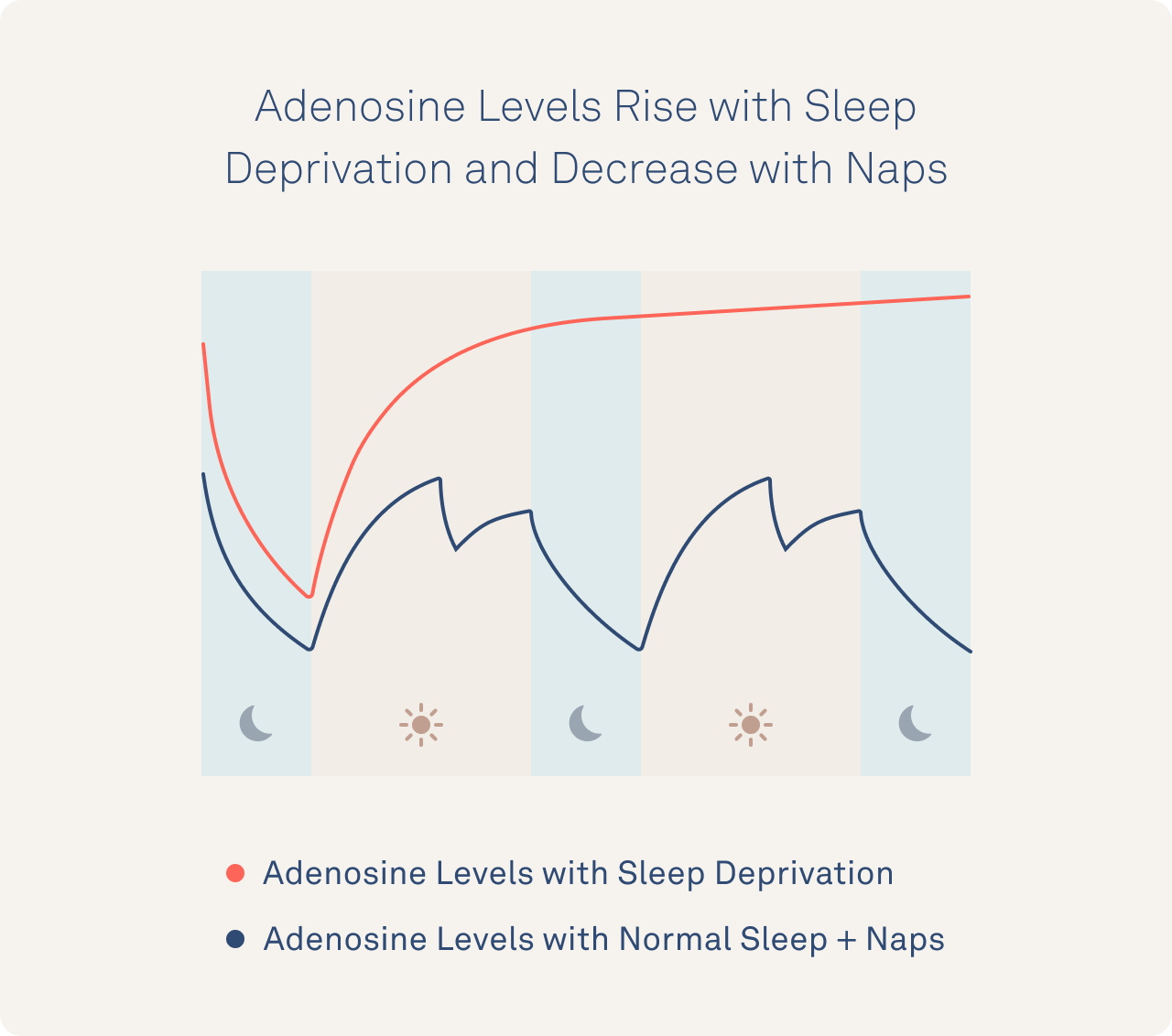
Caffeine works by blocking the adenosine receptors in your brain. It's like putting a piece of tape over a keyhole; the adenosine "key" can't get in to signal sleepiness. This is why you feel more alert after a cup of coffee. The problem is that while you don't feel the sleep pressure, the adenosine is still building up in the background.
To understand the full impact, it's crucial to know how long caffeine stays in your system.
How caffeine and alcohol affect your sleep | Sleeping with Science, a TED series
To understand caffeine's lasting impact, let's watch a segment from the TED series 'Sleeping with Science,' presented by sleep scientist Dr. Matt Walker. He clearly explains caffeine's duration of action and its specific effects on sleep architecture.
Please watch from the beginning until 02:35. Pay close attention to the concepts of 'half-life' and 'quarter-life' and which specific type of sleep caffeine reduces.
As Dr. Walker explained, caffeine's effects are long-lasting:
- Half-Life: It takes about 5-6 hours for your body to eliminate 50% of the caffeine you consumed.
- Quarter-Life: This means that 10-12 hours after your coffee, 25% of that caffeine could still be active in your brain. A coffee at 2 PM can still be disrupting your sleep at midnight.
So, how does this affect your sleep architecture?
- Delays Sleep Onset: By blocking adenosine, caffeine makes it harder to fall asleep.
- Reduces Deep Sleep: Most importantly, caffeine significantly decreases the amount of NREM Stage 3 sleep, also known as slow-wave sleep (SWS). This is the most physically restorative stage of sleep, crucial for cellular repair and memory consolidation.
- Creates a Vicious Cycle: Because you get less deep, restorative sleep, you wake up feeling unrefreshed. You may not attribute this to the coffee you had the previous afternoon, but you'll likely reach for more coffee to compensate, perpetuating the cycle of poor sleep and caffeine dependency.
2. Alcohol: The Sedative Masquerading as Sleep
Many people use alcohol as a "nightcap," believing it helps them fall asleep. While alcohol can indeed help you lose consciousness more quickly, it is one of the most powerful disruptors of natural sleep. The state it induces is sedation, which is not the same as the complex, restorative process of sleep.
Does Alcohol Affect Your Sleep? | Matt Walker & Andrew Huberman
To explore this critical distinction, we'll watch a clip from a discussion between Dr. Matt Walker and Dr. Andrew Huberman. They break down the three main ways alcohol sabotages a good night's rest.
Please watch the segment from 00:32 to 04:37, and then the short concluding clip from 05:20 to 06:31. Focus on the difference between sedation and sleep, how alcohol fragments sleep, and its potent effect on REM sleep.
As the videos highlighted, alcohol systematically dismantles healthy sleep architecture in three key ways:
- Sedation, Not Sleep: Alcohol is a sedative that "knocks out" your cortex. This is fundamentally different from the orchestrated brain activity of natural sleep, which involves coordinated waves of neural firing and silencing, especially during deep SWS.
- Sleep Fragmentation: As your body metabolizes the alcohol during the night, it triggers an arousal effect. Your "fight-or-flight" nervous system becomes more active, leading to numerous small awakenings. You may not remember them, but they prevent you from progressing through the sleep stages smoothly, drastically lowering sleep quality.
- REM Sleep Suppression: Alcohol is one of the most potent suppressors of Rapid Eye Movement (REM) sleep. This is the stage critical for emotional processing, creativity, and integrating memories. Consuming alcohol, especially in the hours before bed, will significantly reduce or even eliminate REM sleep in the first half of the night. Your body will attempt to compensate with a "REM rebound" in the second half, leading to lighter, unstable sleep filled with intense dreams and more awakenings.
This infographic provides a clear visual of alcohol's disruptive effect compared to a normal night of sleep.
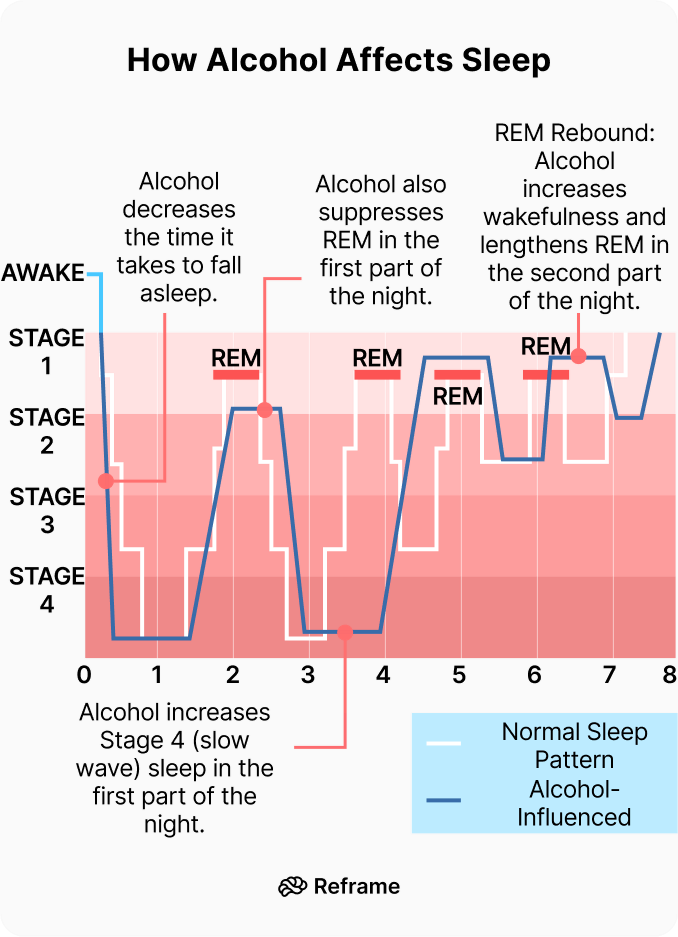
Even a single drink in the evening can be enough to measurably reduce your REM sleep and disrupt restorative processes like the release of growth hormone.
3. Nicotine: The Stimulant Disruptor
Nicotine, the primary psychoactive component in tobacco, is a powerful stimulant. Its effects are often underestimated, especially when used close to bedtime. While some may smoke to "relax," its physiological effect is one of arousal, making it fundamentally incompatible with good sleep.
Scientific studies, such as a large-scale analysis of individuals with untreated sleep apnea, have clarified nicotine's impact on sleep architecture. Here are the key findings from that research:
- Increases Sleep Latency: Smokers take longer to fall asleep compared to non-smokers.
- Reduces Sleep Duration: Nicotine use is associated with getting less total sleep.
- Promotes Lighter Sleep: Nicotine disrupts the sleep stages by increasing the amount of very light Stage 1 sleep and decreasing the more stable Stage 2 sleep.
- Causes Nighttime Awakenings: As nicotine levels drop overnight, withdrawal can cause a smoker to wake up, further fragmenting sleep.
The combined use of nicotine and caffeine is particularly detrimental, leading to even shorter sleep duration and longer sleep latency. Nicotine's stimulant properties directly counteract the body's natural drive to enter and maintain a state of deep rest.
Test your understanding!
A friend tells you they had trouble sleeping. To help, they had a glass of wine and smoked a cigarette right before bed. They fell asleep very quickly but woke up several times, had intense dreams, and felt exhausted and anxious the next morning.
Based on what you've learned about sleep architecture, explain what likely happened to their sleep during the night.
Show answer
- Initial Sleep Onset: The alcohol acted as a sedative, causing them to lose consciousness quickly. The nicotine, a stimulant, likely increased their sleep latency, but the strong sedative effect of the alcohol probably won out initially.
- First Half of the Night: The alcohol suppressed their REM sleep. They likely spent more time in deep sleep initially, but this sleep was not fully restorative due to the alcohol's sedating, rather than natural, effect.
- Second Half of the Night: As their body metabolized the alcohol, they experienced sleep fragmentation (multiple awakenings) and a "REM rebound." This led to the intense dreams and unstable, lighter sleep.
- Overall Effect: The combination of REM suppression, sleep fragmentation from alcohol, and the stimulating effects of nicotine resulted in poor quality, non-restorative sleep, leaving them feeling exhausted and emotionally dysregulated (anxious) the next day.
Conclusion
Today we have dissected the specific ways that three common substances wage war on your sleep. While they may offer a temporary feeling of alertness or relaxation, their net effect is a systematic disruption of the natural, restorative processes of sleep.
Key Takeaways:
- Caffeine acts as an adenosine blocker, which delays sleep onset and, most critically, robs you of restorative deep slow-wave sleep. Its long half-life means an afternoon coffee can easily sabotage your night.
- Alcohol is a sedative, not a sleep aid. It fragments sleep and is a potent suppressor of REM sleep, which is vital for emotional health and memory.
- Nicotine is a stimulant that makes it harder to fall asleep, shortens total sleep time, and promotes a lighter, less restorative sleep pattern.
Avoiding these substances, particularly in the hours before bed, is a non-negotiable step toward true sleep optimization. By doing so, you allow your body's natural sleep architecture to function as intended, which is the essential first step before you can begin to work with consciousness within sleep.
Preview of the Next Lesson:
Now that we've covered the major internal factors (substances we consume) that affect sleep, we will turn our attention to the external factors. In the next lesson, we will describe optimal sleep environment conditions, focusing on how you can manipulate light, temperature, and sound to create a perfect sanctuary for sleep.