
Hello! Welcome back to our journey into the science of sleep.
In our last lesson, we focused on stimulus control, a powerful technique for retraining your brain to associate your bed with sleep, not frustration. We learned the "rules of the road" for breaking negative psychological patterns. Now that we have addressed the environment (light, temp, sound) and the psychology (stimulus control), we turn to the crucial element of timing.
Today's lesson addresses the learning outcome: Explain chronotype and how to align sleep schedule with natural rhythms. You've likely heard of "early birds" and "night owls." These aren't just personality quirks; they are deep-seated biological predispositions. We'll explore what determines these tendencies, how to identify your own, and, most importantly, how to work with your internal clock instead of against it.
Understanding and respecting your body's innate timing is a fundamental form of self-awareness. It's a practical step that complements the mental training of stimulus control and lays a crucial biological foundation for the more advanced contemplative practices we will explore later in the course.
1. What is a Chronotype? The Master Clock and You
Your chronotype is your body's natural, genetically influenced inclination to sleep and wake at certain times. It governs when you feel most alert and when you feel sleepy. This is an expression of your underlying circadian rhythm, the roughly 24-hour internal cycle that regulates many of our physiological processes.
Think of it this way:
- Circadian Rhythm is the operating system that runs the 24-hour schedule for your entire body.
- Chronotype is your personal user profile on that system, determining whether your "peak performance" and "sleep" modes are scheduled for earlier or later in the day.
This entire system is orchestrated by a master clock in your brain.
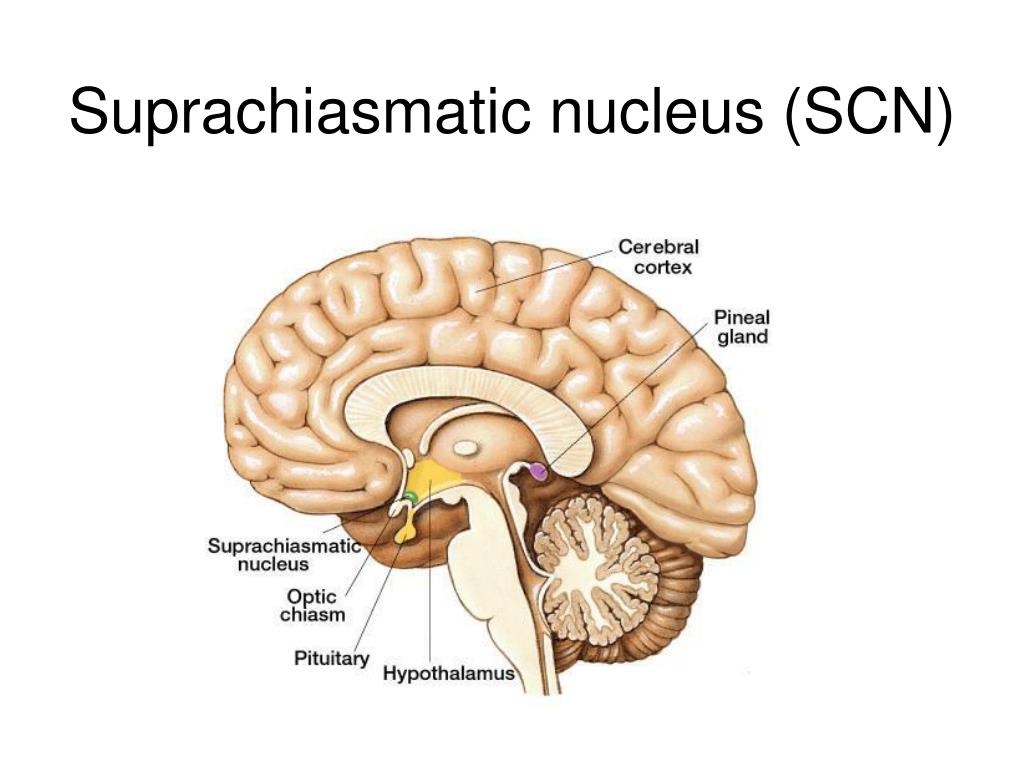
To understand this biological basis, let's watch a short video.
Can you change your sleep schedule?
This TED-Ed video, 'Can you change your sleep schedule?', provides an excellent explanation of how the circadian system, anchored by the SCN in the hypothalamus, uses light cues to regulate your internal clock and hormone flow, like melatonin.
Please watch from 01:03 to 02:44. Focus on how the SCN responds to light and how this leads to the release of hormones that prepare your body for sleep.
As the video explained, while everyone has this internal clock, the specific timing of hormone release (like sleep-inducing melatonin or wake-promoting cortisol) varies from person to person. This variation is what defines your chronotype. These differences are largely genetic, meaning you are born with a predisposition to be an early bird, a night owl, or somewhere in between.
2. The Four Chronotypes: Are You a Lion, Bear, Wolf, or Dolphin?
While chronotypes exist on a spectrum, clinical psychologist Dr. Michael Breus has popularized a helpful framework using four animal archetypes to describe common patterns.
To get a feel for these categories, let's hear Dr. Breus explain them himself.
How to sleep better by knowing your chronotype
In this video, 'How to sleep better by knowing your chronotype', Dr. Breus introduces his four classifications. This will give you a clear sense of the general characteristics associated with each type.
Watch from the beginning to 02:21. Pay attention to the descriptions of the Lion, Bear, Wolf, and Dolphin chronotypes.
Let's summarize these types. See which one resonates most with you.

- Lions (Early Birds): Wake up early with energy, are most productive before noon, and tend to wind down in the evening. About 15% of the population.
- Bears (Mid-Day Types): Their cycle follows the sun. They wake easily, are productive in the late morning, and feel an afternoon slump. They represent the majority, about 55% of the population. The standard 9-to-5 schedule works well for them.
- Wolves (Night Owls): Struggle to wake up early, hit their peak energy in the afternoon and evening, and feel most creative or productive late at night. About 15% of the population.
- Dolphins (Problem Sleepers): Named after dolphins who sleep with half their brain at a time, these are light, often anxious sleepers. They may struggle to follow a regular routine and are often diagnosed with insomnia. About 10% of the population.
To get a better sense of your own chronotype, it's helpful to read a more detailed guide and consider some self-assessment questions.
How to tune in to your natural sleep-wake rhythms
The article 'How to tune in to your natural sleep-wake rhythms' from Psyche.co offers excellent practical advice on figuring out your chronotype.
Please read the section 'Figure out your chronotype'. It provides a simple but effective method for self-discovery: thinking about your ideal sleep schedule on a vacation, free from all obligations.
The key question is: If you had no alarms and no social or work obligations, when would your body naturally go to sleep and wake up? Thinking about your patterns on a long vacation can reveal your true biological preference.
3. The Problem of Social Jetlag
A major challenge arises when your genetically programmed chronotype clashes with the demands of society (e.g., school start times, 9-to-5 workdays). This conflict is called social jetlag.
A "Wolf" (night owl) forced to wake up at 6 AM for work is in a constant state of social jetlag. Their body clock is telling them it's the middle of the night, but their alarm clock is demanding peak performance. This isn't just unpleasant; it has significant health consequences.
Chronotypes: Definition, Types, & Effect on Sleep
Let's read a clear definition of social jetlag and its associated risks from the Sleep Foundation.
First, read the paragraph in the 'Chronotype vs. Circadian Rhythm' section that begins 'When a person’s natural chronotype comes into conflict...'. Then, jump to the section 'Why Is Chronotype Important?' and read the second and third paragraphs, which detail the health risks associated with eveningness and social jetlag.
As the article highlights, chronic social jetlag—often experienced by evening types—is linked to a higher risk of metabolic issues, mental health disorders, and sleep deprivation. It's a persistent stressor on the body. The goal, therefore, is to minimize this gap between your biological time and social time.
4. Aligning Your Life with Your Clock
While you can't easily change your fundamental chronotype (it shifts naturally with age but resists forced change), you can take steps to better align your daily schedule with it and strengthen your circadian rhythm.
Here are the three most effective strategies:
1. Honor Your Chronotype (as much as possible)
Try to schedule your life in a way that respects your biology.
- If you're a Lion or Bear: Tackle your most demanding mental tasks in the morning when you have the most focus.
- If you're a Wolf: If you have flexibility, shift your workday later. Schedule important meetings or creative work for the afternoon or evening when you are at your peak.
- Communicate: Explaining your chronotype to family or employers can sometimes open the door to small, helpful accommodations.
2. Maintain a Consistent Wake-Up Time
This is the single most powerful anchor for your circadian rhythm. As we discussed in the last lesson on stimulus control, waking up at the same time every day—including weekends—stabilizes your internal clock. It allows your body to anticipate wake-up time and helps build consistent sleep pressure for the following night. Drastically sleeping in on weekends is a primary cause of social jetlag.
3. Manage Your Zeitgebers ("Time Givers")
Zeitgebers are external cues that help entrain (synchronize) your internal clock to the 24-hour day. The most powerful one is light.
How to tune in to your natural sleep-wake rhythms
This article from Psyche.co provides excellent, actionable advice on how to use zeitgebers—especially light—to help adjust your internal clock.
Please read the section 'Play with your zeitgebers'. It explains how strategically using light, food, and physical activity can help you feel more alert and shift your cycle slightly.
Here is a practical summary of "light hygiene":
- Morning Light: Get 15-30 minutes of direct sunlight as soon as possible after waking. This sends a powerful "day has started" signal to your SCN, which helps suppress melatonin and lock in your circadian rhythm for the day. Even on a cloudy day, outdoor light is far more powerful than indoor light.
- Evening Darkness: In the 1-2 hours before your desired bedtime, dim the lights in your home. Avoid bright overhead lights and, critically, the blue light from screens (phones, tablets, TVs). This allows your brain to begin producing melatonin, the hormone that facilitates sleep.
By getting bright light in the morning and avoiding it at night, you create a strong, unambiguous daily signal that helps keep your clock timed correctly.
Test your understanding!
A person identifies as a "Wolf" chronotype. Their natural tendency is to sleep from 1 AM to 9 AM. However, their job requires them to be at their desk by 8 AM, and they feel groggy and unproductive all morning. On weekends, they revert to their natural schedule, sleeping in until 9 or 10 AM.
Based on what you've learned, suggest three specific, actionable strategies this person could implement to reduce their social jetlag and feel better during the week.
Show answer
- Establish a Consistent Wake-Up Time: The most impactful change would be to stop sleeping in on weekends. They should set an alarm for their weekday wake-up time (e.g., 7 AM) every single day. This will be difficult at first, but it will stabilize their circadian rhythm and make it easier to fall asleep earlier and wake up on weekdays.
- Use Morning Light as a Zeitgeber: Immediately upon waking at 7 AM, they should expose themselves to bright, natural sunlight for at least 15 minutes. This could be having coffee on a balcony, going for a short walk, or sitting by a sunny window. This powerful light signal will help reset their internal clock and promote alertness.
- Practice Evening Light Hygiene: To help them fall asleep earlier, they should start dimming the lights and avoid all screens (or use blue-light-blocking glasses/apps) at least 90 minutes before their new target bedtime (e.g., 11 PM). This will allow melatonin to rise naturally, making sleep onset easier.
Conclusion
Today, we've moved from the psychology of sleep to its biology. You've learned that your preference for being an early bird or a night owl is a real biological trait called a chronotype, driven by your internal circadian clock.
Key Takeaways:
- Chronotype is your body's innate, genetically influenced sleep/wake preference, which exists on a spectrum.
- It is the expression of your underlying circadian rhythm, orchestrated by the SCN in your brain.
- Social jetlag is the harmful mismatch between your chronotype and your social/work schedule.
- You can improve your sleep and well-being by aligning your schedule with your chronotype through three key actions:
- Honoring your natural energy peaks when possible.
- Maintaining a highly consistent wake-up time.
- Strategically managing zeitgebers, especially morning sunlight and evening darkness.
Preview of the Next Lesson:
You now have a robust toolkit of evidence-based practices. You know how to optimize your environment, retrain your psychological associations with sleep, and align your schedule with your biology. In our next and final lesson of this module, we will bring it all together. You will learn how to design a personalized sleep hygiene plan that incorporates all these principles—environment, stimulus control, chronotype, and lifestyle choices—into a single, actionable strategy tailored to you.