Welcome back. In our last lesson, we focused on sharpening your strategic eye by critiquing and rewriting a B2B landing page. We saw how a clear framework can transform weak, company-focused copy into a powerful, buyer-centric message.
Today, we'll build on that theme of structured persuasion by focusing on one of the most powerful assets in a B2B copywriter's toolkit: the case study. While landing pages make a promise, case studies prove it.
Our learning outcome is to structure a B2B case study using the situation-challenge-solution-results framework. This structure is the industry standard because it mirrors how a business buyer thinks and makes decisions. Mastering this skeleton is the first step to telling a story that sells.
1. The Anatomy of a B2B Case Study
First, let's clarify what a case study is and isn't. It's more than just a glowing review; it's a strategic narrative of a customer's successful journey with your product.
To understand this distinction, let's watch a short clip.
9-Step Formula For Writing The PERFECT Case Study
The video '9-Step Formula For Writing The PERFECT Case Study' by Alex Cattoni offers a great explanation of how a case study differs from a simple testimonial.
Please watch from 01:18 to 02:23. The key takeaway is the idea of a case study as a journey and transformation, which makes it far more relatable and persuasive than a simple quote.
This idea of a journey is what makes case studies so effective. To give that journey a clear and logical flow that resonates with a business audience, we use a simple but powerful structure: Situation-Challenge-Solution-Results.
This framework is sometimes called the "Challenge-Solution-Impact" framework, but the components are the same. It works because it presents information in the exact order a skeptical buyer wants to receive it.
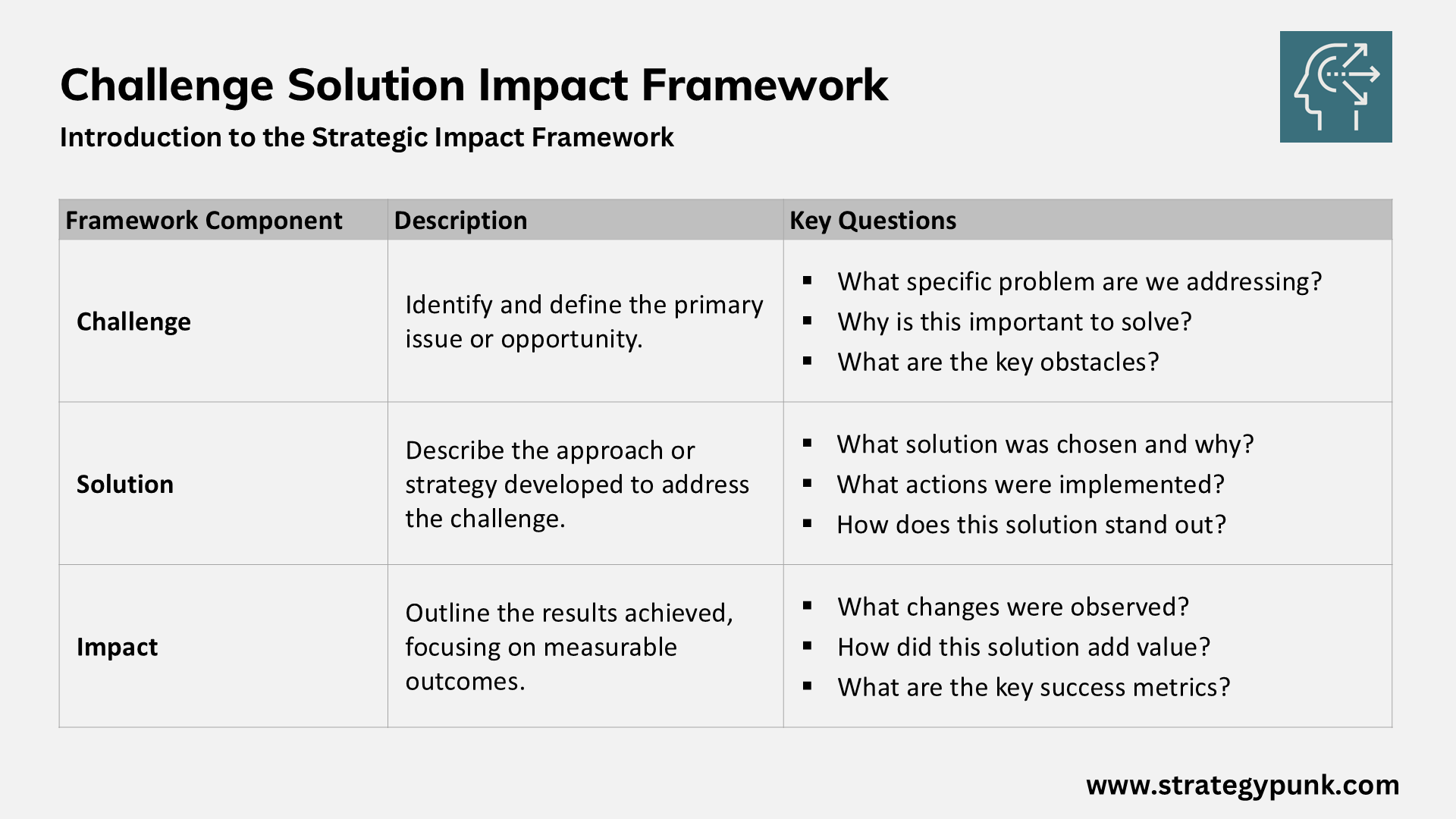
Let's break down each component:
- Situation: Set the scene. Who is the customer? What industry are they in? What was their world like before your product came along? This provides context.
- Challenge: State the specific, painful problem. What wasn't working? What were the business consequences (e.g., lost revenue, wasted time, high costs)? This is the "before" picture.
- Solution: Describe how the customer used your product to solve the challenge. This isn't a feature list. It's about the application of the product in their specific context. How did they implement it? Who used it?
- Results: Prove the transformation with numbers. What was the measurable outcome? This is the "after" picture and the most crucial part of any B2B case study.
2. A Modern Template for B2B Case Studies
Now that we have the core framework, let's look at how to apply it using a modern, best-practice template. B2B buyers are busy and need to grasp the value proposition quickly.
The following resource provides a superb, skimmable template that aligns perfectly with our framework.
The 2025 B2B Case Study Template
The article 'B2B Case Study Template (+ 10 Examples & 2025 Best Practices)' from The Logonaut blog offers a best-in-class structure that's optimized for how modern B2B buyers consume content.
Please read the section titled 'The 2025 Case Study Template'. It begins with the H1 (headline) and ends just before 'What “Good” Looks Like'. Pay close attention to how it structures the information and the emphasis it places on quantifiable results.
This template is excellent because it respects the reader's time. Notice a few key elements that map to our framework:
- Situation: Established in the "Customer Snapshot" and the context given in "The Challenge."
- Challenge: The "The Challenge" section is dedicated to this.
- Solution: Covered in "The Solution" and "Why Us."
- Results: Front-loaded in the "H1 (Outcome-first)" headline and detailed in the "Results" section with a clear before/after table.
This structure allows a reader to get the most important information—the quantifiable result—in seconds, and then dig into the story to understand how it was achieved.
3. Your Turn: Structuring a Case Study
Let's put this into practice. Imagine you're a copywriter for "SyncUp," a project management tool for creative agencies. You've just interviewed a new customer, "Innovate Design," and have a page of notes.
Your task is to take these jumbled facts and organize them into the Situation-Challenge-Solution-Results framework. You don't need to write full paragraphs; just list the relevant points under the correct heading.
Here are your notes from the client interview:
- They chose SyncUp over a major competitor because of our integrated client approval feature.
- After implementing SyncUp, they reduced project overruns by 40% in the first three months.
- Before SyncUp, their project managers spent about 5 hours a week just chasing down files and approvals.
- Innovate Design is a 50-person branding agency that works with enterprise clients.
- Their old process involved a mix of spreadsheets, email chains, and Slack messages to manage projects.
- Client feedback was constantly getting lost in long email threads, leading to frustrating and costly rework.
- The team now uses SyncUp's client portal for feedback and the central task management board to track progress.
- Since using SyncUp, their client satisfaction scores (measured by quarterly surveys) have increased by 15%.
- They were consistently missing project deadlines, which was hurting their reputation.
Take about 7-10 minutes to sort these points into the four categories: Situation, Challenge, Solution, and Results.
4. Debrief and Model Answer
Great. This exercise is the foundational work of writing a case study—turning raw information into a logical structure. Once the structure is right, the writing becomes much easier.
Here is how I would have organized those facts:
Situation
- Innovate Design is a 50-person branding agency that works with enterprise clients.
- Their old process involved a mix of spreadsheets, email chains, and Slack messages to manage projects.
Challenge
- They were consistently missing project deadlines, which was hurting their reputation.
- Client feedback was constantly getting lost in long email threads, leading to frustrating and costly rework.
- Before SyncUp, their project managers spent about 5 hours a week just chasing down files and approvals.
Solution
- The team now uses SyncUp's client portal for feedback and the central task management board to track progress.
- They chose SyncUp over a major competitor because of our integrated client approval feature.
Results
- After implementing SyncUp, they reduced project overruns by 40% in the first three months.
- Since using SyncUp, their client satisfaction scores (measured by quarterly surveys) have increased by 15%.
With this clear structure, you have the blueprint for a powerful story of transformation.
Conclusion
In this lesson, we've established the structural foundation for a compelling B2B case study. You've learned to organize information in a way that aligns with how a business buyer analyzes a problem and evaluates a solution.
Key Takeaways:
- A B2B case study is a story of transformation, not just a customer quote.
- The Situation-Challenge-Solution-Results framework provides a logical and persuasive structure.
- Modern case studies prioritize skimmability, putting the most important Result right in the headline.
- The Results section is the most critical; it must be specific and quantifiable to be credible.
Preview of the Next Lesson:
We now have the skeleton. In our next lesson, we'll learn how to add the flesh. We will focus on how to write a case study narrative that highlights buyer transformation rather than just product features, turning our structured outline into a compelling story that connects with the reader on both a rational and emotional level.