
Hello again. Last lesson compared Orthodox and Reform communal worship. Both traditions use prayer and treat the Torah as sacred, even though they may differ in language, music, seating, and leadership.
Now focus on two prayers that give Jewish worship its central beliefs and structure: the Shema and the Amidah. For GCSE, do not merely identify them. You need to explain why they matter: what each prayer teaches about God, how it shapes Jewish life, and why Jews use it in worship and at home.
By the end, you should be able to make this core distinction:
- The Shema declares faith in the one God and reminds Jews of their covenant duties.
- The Amidah is the central standing prayer through which Jews praise, thank, and make requests to God.
The Shema: declaring belief in one God
The Shema is regarded by many Jews as the most important prayer in Judaism. Its opening line comes from the Torah, in Deuteronomy 6:4:
“Hear, O Israel: the Lord our God, the Lord is One.”
This is a clear statement of monotheism: belief that there is only one God. Judaism is not simply saying that God is the strongest god; it teaches that God is the only God. Reciting the Shema allows Jews to reaffirm this central belief regularly.
The word Shema means “hear” or “listen.” It is therefore not only a statement to repeat: it is a call for the Jewish people to listen to God and live according to God’s teaching.
Read BBC Bitesize’s concise Edexcel revision overview to establish the key facts you need for an exam answer: the Shema’s teaching about one God, its link to covenant and mitzvot, and the Amidah’s place in worship.
First, in the subsection “The Shema,” read from why the Shema matters. Then read the short “The mezuzah” subsection, ending with its daily reminder. Finally, move to the subsection “The Amidah” and read the overview. Notice the difference between what the Shema declares and what the Amidah enables Jews to do in prayer.
The Shema also teaches that belief must affect behaviour. Its wider passages stress:
- loving God wholeheartedly;
- following the mitzvot, God’s commandments;
- teaching Jewish beliefs and practices to children.
This links the Shema to the covenant, the special agreement between God and the Jewish people. Jews believe that they should love God and obey God’s laws; the Shema repeatedly reminds them of this commitment. Therefore, its significance is practical as well as theological. It encourages a Jew to show faith through everyday choices, not only through private belief.
A strong explanatory sentence would be:
The Shema is significant because it declares that God is one, the central belief of Judaism, and reminds Jews that their covenant with God requires them to love God and follow the mitzvot.
The Shema in daily life: synagogue, family, and home
The Shema connects formal worship to ordinary life. Many Jews recite it in the morning and evening; some also say it before sleeping. This creates a pattern in which the day begins and ends with an affirmation of faith in God.
It is also recited in synagogue worship. Hearing the same words alongside other Jews expresses a shared Jewish identity: the congregation is not just a collection of individuals but a community joined by belief in the one God and loyalty to the Torah.
The instructions within the Shema are reflected in religious objects already encountered in the previous lesson. Tefillin, worn by some Jews during weekday morning prayer, contain passages from the Torah, including passages of the Shema. They remind the wearer to keep God’s commandments in both thought and action.
The mezuzah has a similar purpose in the home.
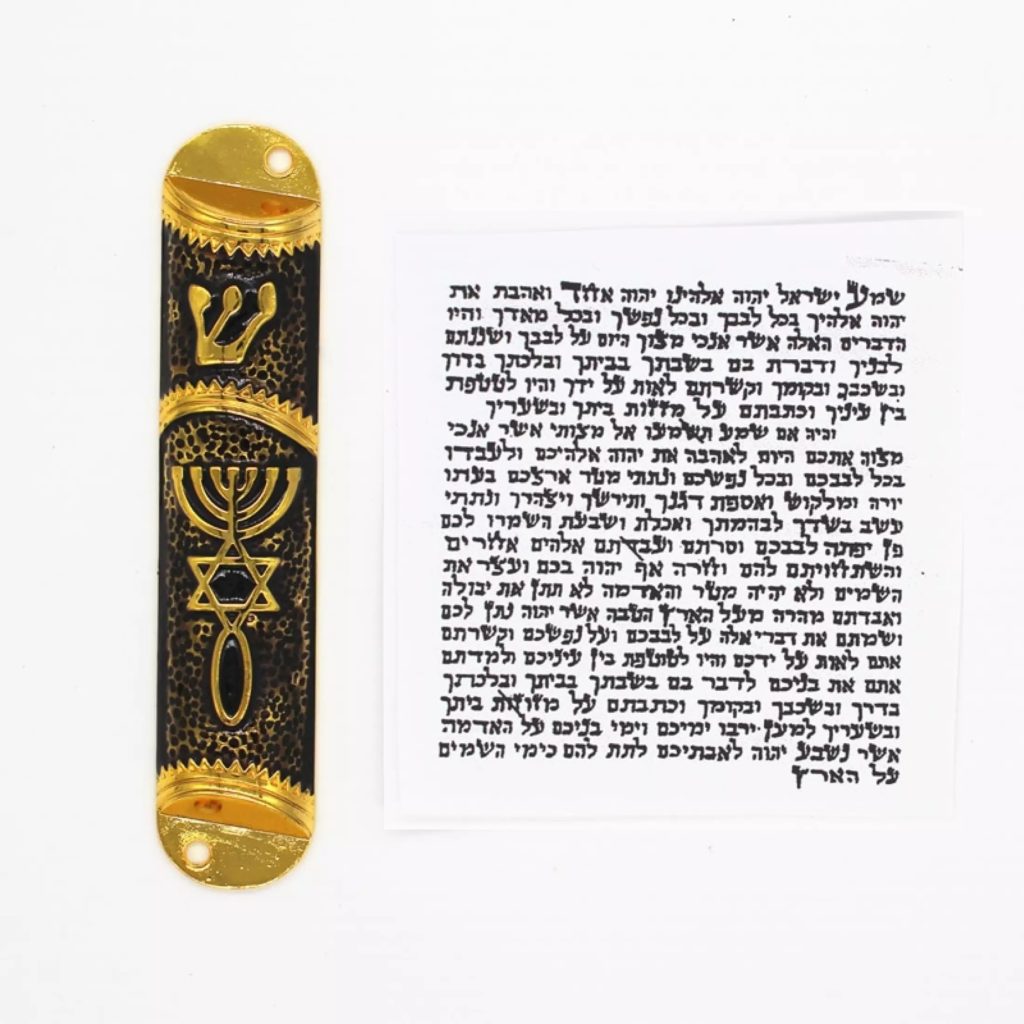
A mezuzah is a small case attached to a doorpost. Inside is a handwritten scroll containing the first two paragraphs of the Shema. Jews may touch the mezuzah when entering or leaving the house, sometimes then kissing their fingers. This is a sign of love for God and respect for the Torah.
The mezuzah shows an important GCSE point: Jewish worship is not restricted to the synagogue. The Shema is physically present at the entrance to the home, so it can remind Jews to live faithfully in all parts of life.
The oft heard words: the Shema in Jewish traditions - RE:ONLINE
This RE:ONLINE article develops the connection between the Shema’s words and Jewish practice at home. Read it for examples you can use to explain, rather than just describe, the importance of the prayer.
In the “Meaning” and “Practice” subsections, read from belief and daily recitation. Focus on how reciting it at waking and bedtime makes faith part of the whole day. Then, under the discussion of Deuteronomy 6:8–9, read tefillin and the mezuzah. Keep the central explanation in mind: these objects act as reminders to obey God and renew the covenant.
Avoid a common error: the mezuzah is the case, not the actual prayer scroll itself. The parchment inside it contains passages from the Shema.
The Amidah: the central “standing prayer”
The Amidah is another key Jewish prayer, but it has a different role from the Shema. Amidah means “standing,” because it is said while standing, traditionally facing Jerusalem. Standing communicates respect and seriousness in the presence of God.
Whereas the Shema is a declaration of what Jews believe, the Amidah provides a structured way of speaking to God. It is the central prayer of Jewish worship services, used on weekdays and on Shabbat.
The weekday Amidah has 19 blessings. Do not try to memorise every individual blessing for Year 10. What matters is its broad structure:
| Part of the Amidah | Main focus | Why this is significant |
|---|---|---|
| Opening blessings | Praise for God | Jews recognise God’s power, holiness, and faithfulness before asking for anything. |
| Middle blessings | Requests for needs such as wisdom, forgiveness, healing, justice, and peace | Jews depend on God and can bring both personal and community concerns to God. |
| Final blessings | Thanksgiving and prayer for peace | Jews express gratitude rather than treating prayer only as asking for help. |
The Amidah therefore holds together three important attitudes in worship: praise, request, and thanksgiving. It gives worshippers words for both the joys and the difficulties of life.
Judaism's Most Important Prayer, Explained
Watch Jewish Learning Institute’s “Judaism’s Most Important Prayer, Explained” for a clear visual explanation of why the Amidah is called the standing prayer and what its blessings cover.
Start with the introduction for the posture and the Amidah’s central place in daily formal prayer. Then watch the blessings. You do not need to learn all nineteen individually: group them mentally into praise of God, requests for human and Jewish communal needs, and thanksgiving. Finish with the conclusion to note that Shabbat and festival versions vary, while personal prayer still matters.
Saying the Amidah facing Jerusalem is also meaningful. Jerusalem is the historic spiritual centre of Judaism and the site of the ancient Temple. Facing it connects Jewish communities across the world to their history and to one another. A Jew praying at home and a congregation praying in a synagogue can orient themselves towards the same sacred place.
The Amidah has a communal dimension, because it is central to synagogue services. Yet it is also deeply personal: worshippers stand quietly before God and reflect on their own need for forgiveness, guidance, healing, or peace. Its fixed words unite Jews across generations, while its themes allow each person to pray with genuine personal intention.
Comparing the two prayers
The Shema and Amidah are both important, but they are significant in different ways.
| Shema | Amidah | |
|---|---|---|
| Main purpose | Declares that God is one and calls Jews to love and obey God. | Provides a structured conversation with God through praise, requests, and thanksgiving. |
| Key belief | Monotheism and the covenant. | God is holy, powerful, caring, and able to respond to prayer. |
| Use in life | Recited regularly; linked to tefillin and the mezuzah in the home. | Central to synagogue services; recited standing and facing Jerusalem. |
| Effect on Jews | Reinforces identity, loyalty to God, and obedience to mitzvot. | Encourages dependence on God, gratitude, repentance, and hope for peace. |
The prayers complement each other. The Shema answers, “What do Jews believe, and how should they live?” The Amidah answers, “How do Jews approach God in worship?”
Writing an effective GCSE explanation
When asked about the significance of a prayer, use this sequence:
- State the teaching or practice accurately.
- Explain the belief behind it.
- Explain the effect on Jewish life.
For example:
The Shema is significant because it states, “the Lord is One,” so it reminds Jews of the central belief in one God. It also teaches Jews to love God and keep the mitzvot, reminding them of their covenant with God. This affects daily life because passages from the Shema are kept in a mezuzah on the doorpost, so Jews may remember their faith when entering or leaving home.
And for the Amidah:
The Amidah is significant because it is the central prayer in Jewish worship services. Jews stand while saying it, showing respect for God, and traditionally face Jerusalem, connecting them with the holy city and Jewish history. Its blessings include praise, requests, and thanksgiving, allowing Jews to bring their needs to God while also expressing gratitude.
Notice that both answers go beyond a definition. They connect practice, belief, and impact.
Key takeaways
The Shema is significant because it:
- affirms monotheism: “the Lord is One”;
- comes from the Torah and reminds Jews of the covenant;
- encourages love of God, obedience to the mitzvot, and passing faith to the next generation;
- shapes daily Jewish life through regular recitation, tefillin, and the mezuzah.
The Amidah is significant because it:
- is the central prayer in Jewish worship services;
- is said standing, traditionally facing Jerusalem, showing reverence and connection to Jewish history;
- contains blessings of praise, requests, and thanksgiving;
- helps Jews express dependence on God, seek forgiveness and help, and pray for peace.
Next, the course moves from daily prayer to Shabbat: how Jews observe the weekly day of rest and why it is central to Jewish identity, family life, and worship.
Can't find a good explanation? Sign up and we'll make it for you
Sign up