
Hello! Welcome to the third part of our super brief history of Bogotá.
In our last lesson, we navigated the complex political landscape that followed independence. We saw the collapse of Bolívar's Gran Colombia and the subsequent identity crisis of the new nation, which cycled through various names and political systems before finally becoming the Republic of Colombia in 1886. The key takeaway was the enduring conflict between two visions for the country: a strong central government (Conservatives) versus a federation of autonomous states (Liberals), a conflict that ultimately saw the centralists win, cementing Bogotá's power.
Today, we'll see how that political drama played out on the city's streets. Our learning goal is to explain how 19th-century political conflicts shaped Bogotá's development, citing the tramway and National Capitol as examples of modernization. We will connect the abstract ideas of political ideology and civil war to the tangible brick, mortar, and steel that began to forge the modern metropolis.
A Capital in Conflict
Throughout the 19th century, Bogotá was the nation's capital, but it was a city struggling to grow. It remained small compared to other Latin American capitals like Lima or Buenos Aires. The constant political strife created a deeply unstable environment.
The century was marked by what historians call the "Mid-century Revolution"—a series of liberal reforms—but also by relentless civil wars between the newly formed Liberal and Conservative parties. The country was in a perpetual tug-of-war, which made large-scale, long-term urban planning incredibly difficult. Initial changes were cosmetic: after independence, the new Republic tried to erase the colonial past by renaming plazas and streets after independence heroes and battles.
However, a growing faction of Bogotá's citizens and leaders felt the city was being left behind. They looked to Europe and North America and saw cities being transformed by new technologies and ideas. This created a powerful tension: a desire for progress and modernity clashing with the reality of political instability and war.
Case Study 1: The Capitolio Nacional – A Symbol of a Troubled Republic
Few structures represent this tension better than the Capitolio Nacional, the seat of Colombia's congress, which dominates the southern side of the Plaza de Bolívar.
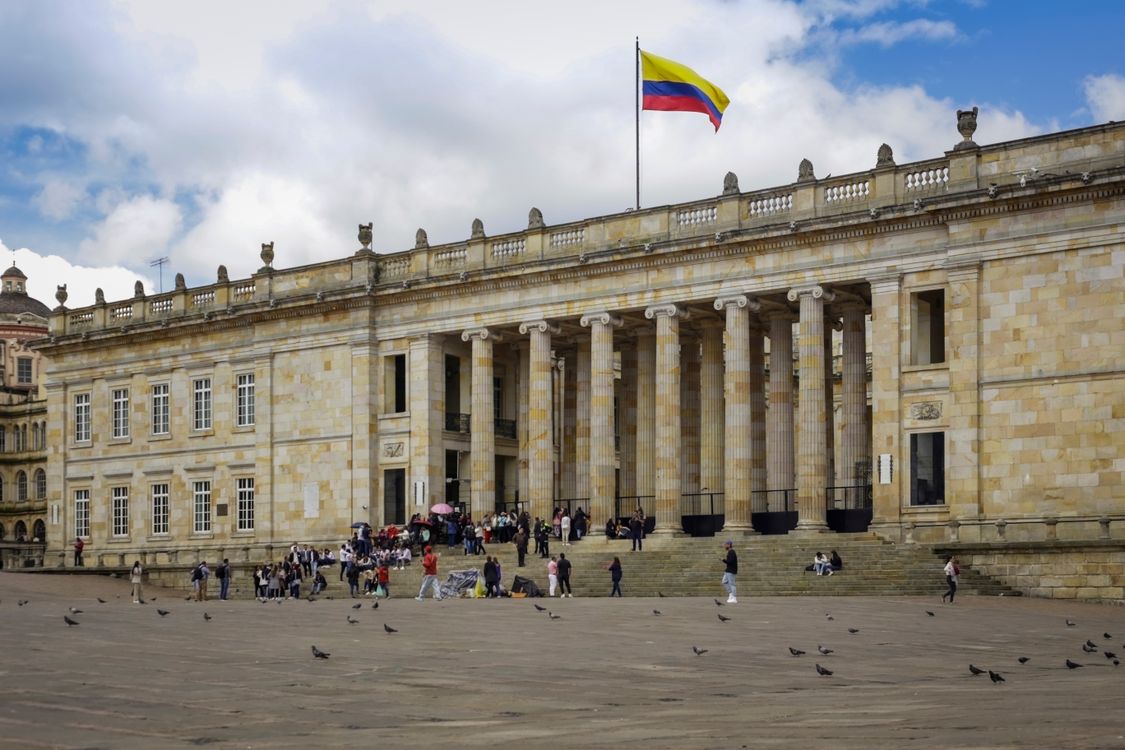
The story of its construction is a perfect metaphor for 19th-century Colombia.
- A Contentious Start: The project was initiated in 1848 under the presidency of Tomás Cipriano de Mosquera, a central figure in the era's conflicts.
- Decades of Delays: Its construction was repeatedly halted by a succession of civil wars and economic crises. Work would start, stop for years, and then resume under a different government, sometimes with a different architect.
- A Bipartisan Project (by necessity): The building was finally completed in 1926, nearly 80 years after it began. By then, it had passed through the hands of multiple presidents from both the Liberal and Conservative parties.
The Capitolio is not just a building; it's a physical record of the nation's struggle to establish a stable state. Its very existence is a testament to perseverance, while its agonizingly long construction timeline is a scar left by decades of political violence.
Case Study 2: The Tramway – Redesigning the City's Flow
While the Capitol's construction crawled along, another force was about to radically redesign the city's "user experience": technology. For most of the 19th century, Bogotá was a compact, walkable city confined to its colonial grid. That all changed on Christmas Day, 1884.
On that day, the first tramway line opened. Pulled by mules, it connected the Plaza de Bolívar with the distant village of Chapinero.
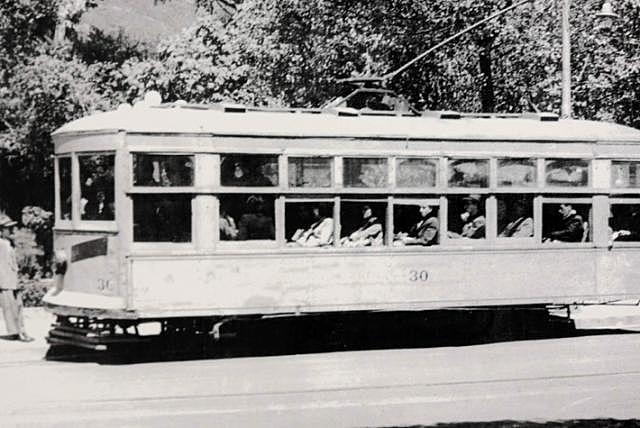
This was more than just a new way to get around. As you'll see in the following reading, it was a disruptive technology that completely altered the city's physical and social structure.
Bogota City Planning – Approaches to the Modern City
The article 'Bogota City Planning – Approaches to the Modern City' analyzes the transformative impact of the tramway. It offers a great analysis of how this single piece of infrastructure redefined the city's growth pattern.
Please read the second half of the article, starting from the paragraph that begins 'Ricardo Montezuma depicts the trolley of Bogota...'. Focus on the specific, quantifiable effects the tramway had on the city's layout and growth.
As the text highlights, the impact of the tramway was immediate and profound, much like how a revolutionary app can change user behaviour overnight.
- Breaking the Grid: The tramway broke the city out of its centuries-old "compact checkerboard shape."
- Creating a Linear City: Urban development exploded, but not evenly. It followed the tram line north towards Chapinero, creating a new, linear urban axis.
- Rapid, Asymmetrical Growth: The city's urban area grew by 45% between 1884 and 1900, and 80% of this new development was clustered along that first tram line.
- Introducing the "Neighborhood": For the first time, the concept of distinct neighborhoods (like Chapinero) emerged, located far from the traditional center and connected by transit.
The tramway, along with the railroads that were also being developed, began to solve one of Bogotá's biggest problems: its isolation. It connected the city's core to its expanding periphery and started connecting Bogotá to the rest of the country. This modernization happened despite the ongoing political wars, often driven by private business leaders who were tired of waiting for the government to act.
Test your understanding!
From your perspective as a product and UX designer, the tramway dramatically altered the "user journey" of a Bogotá citizen. How is the linear, transit-oriented growth spurred by the tram similar to how a digital platform (like Instagram or TikTok) might guide user behavior and shape the "landscape" of its own content?
Show answer
The analogy is quite strong.
- Guided Pathways: Just as the tram created a fixed, high-traffic path that developers built along, a digital platform's algorithm creates a "path" for users (the 'For You' page or the main feed). Content creators (the "developers") build content specifically to thrive along this path.
- Concentration of Activity: Most of Bogotá's growth clustered along the tram line. Similarly, on a platform, the vast majority of user attention and content creation is concentrated on the main feed or recommended content stream, while other features (the "side streets") receive far less traffic.
- Redefining "Center" and "Periphery": The tram allowed new centers of social and residential life (like Chapinero) to emerge, challenging the primacy of the Plaza de Bolívar. In the same way, algorithmic feeds can create new "centers" of culture and influence (e.g., a viral TikTok trend) that exist outside traditional media or established communities, creating new hubs of activity on the platform's "map."
Conclusion
Today we saw how 19th-century Bogotá was a city of contradictions. It was the capital of a republic torn apart by civil wars, yet it was also a place striving for modernity. This tension is perfectly captured in our two main examples:
- The National Capitol: A grand symbol of republican ideals whose 80-year construction tells a story of political instability and conflict.
- The Tramway: A technological innovation that acted as a catalyst for urban transformation, shattering the colonial grid and redesigning the city's layout, even as political battles raged.
These examples show that a city's development is not a clean, linear process. It's a messy, complex system shaped by the interplay of political ideals, social conflict, and technological disruption.
In our next lesson, we will leap forward into the 20th century to witness the single most traumatic event in Bogotá's modern history: the 'Bogotazo' of 1948. This event would violently reshape the city's landscape, destroying parts of the very center we've just seen begin to modernize, and tragically, bringing an end to the era of the tramway.
Can't find a good explanation? Sign up and we'll make it for you
Sign up