
Hello! Welcome back.
In our last lesson, we built a scalable content engine using tools like Taplio and Hypefury. You learned how to broadcast your message efficiently across Twitter/X and LinkedIn. That's the "one-to-many" approach—building brand awareness from your own platforms.
Today, we're flipping the script. Instead of asking the audience to come to you, we're going to where they already are. This lesson is about moving from broadcasting to engaging. We'll focus on the art of building relationships and trust within existing online communities.
Your learning outcome for this lesson is to develop a playbook for providing value in relevant Facebook, Slack, and Discord communities without being spammy. This is a fundamental skill for early-stage founders, allowing you to find your first users, gather critical feedback, and build a loyal following, often with a marketing budget of zero.
The Mindset Shift: From Marketer to Member
The single most important rule of community engagement is: You are not there to sell; you are there to help. Spamming links is the fastest way to get banned and destroy your reputation. The goal is to become a recognized, helpful member of the community. Sales and sign-ups are a byproduct of the trust you build.
Think of it like being a valued senior developer on a team's Slack channel. You gain influence by answering questions, helping debug code, and sharing useful articles. You don't gain influence by constantly dropping links to a side project. We're aiming for the former.
This approach isn't just theory; it's a proven, practical strategy for getting your first users.
I spent $0 on marketing and got 1,200 website visitors - Here's my exact playbook
To see this principle in action, let's start with a post from an Indie Hackers member who used this exact strategy to drive significant traffic with a zero-dollar budget. This will be our case study for today's lesson.
Read the beginning of the post, down to the line 'The biggest lesson? You don't need an audience. You need to be useful in the right places.' Focus on the author's core realization: they stopped trying to 'build an audience' and started going where their users already were.
The author's success came from being "useful in the right places." Let's build a playbook to do just that.
The Community Engagement Playbook
We can break this down into a systematic, three-step process. Given your background, think of this as deploying a probe into a new environment: first you observe, then you interact based on the data you've gathered, and finally you systematize the process for efficiency.
Step 1: Find & Lurk (Reconnaissance)
Before you can add value, you need to find the right places and understand their culture.
1. Finding Your Communities:
Your Ideal Customer Profile (ICP) will determine where you look.
- Facebook: Use the search bar to find groups related to your ICP's job title, industry, or the tools they use (e.g., "SaaS Founders Club," "Digital Marketing Questions").
- Slack/Discord: These are goldmines for niche, high-quality communities. Use specialized search engines to find them.

The Indie Hackers article you just read also lists several excellent communities for SaaS founders at the very end of the post, which you can explore later (LINK, section 6).
2. Lurking with Intent:
Once you join 3-5 promising communities, do not post anything. Instead, for the first few days, your only job is to read.
- Read the Rules: This is non-negotiable. It tells you the explicit do's and don'ts.
- Understand the Culture: Is it formal or informal? Are memes okay? What kind of posts get the most engagement?
- Identify Key Members: Who are the moderators and most helpful contributors?
- Note Recurring Pain Points: Keep a document of the questions and frustrations that come up over and over. This is direct, unfiltered market research.
This 'lurk first' approach is emphasized in many startup playbooks as the key to avoiding instant bans.
Startup Marketing Playbook: 30 Days to Your First 100 Customers
The Techdella guide to getting your first 100 customers reinforces this 'listen first' strategy. Let's see how they frame it.
Read the section under the heading 'Days 5-7: Join Communities and Actually Be Helpful'. Note the explicit warning: 'Do NOT pitch your product this week.'
Step 2: Engage & Help (Adding Value)
After a few days of lurking, you're ready to engage. The guiding principle here is the 90/10 Rule: 90% of your activity should be purely valuable to the community, with no mention of your product. Only 10% of the time, when it's a perfect and natural fit, might you reference what you're building.
How to Provide Value:
- Answer Questions: Use your expertise to provide thoughtful, detailed answers to questions.
- Share Experiences: Talk about your own challenges and learnings while building your SaaS. This "build in public" style fosters connection.
- Ask Insightful Questions: A good question can be as valuable as a good answer. Spark a discussion around a common problem.
The following video, though focused on Reddit, perfectly illustrates the psychology of a value-first post versus a spammy one. The principles are universal.
How I Used Reddit to Hit $17K MRR (With ZERO Audience)
Watch this segment from a Starter Story video where Diego, a successful founder, breaks down the structure of a 'killer organic post'.
Watch from 06:42 to 09:17. Pay close attention to the difference between the post that provided value first (a case study) and the one that failed because it immediately started talking about the product. This is the core concept of non-spammy engagement.
The "No-Pitch Pitch":
So how do you eventually mention your product? Subtly and indirectly.
- Wait for the Perfect Moment: Only mention your tool when it is the direct, undeniable solution to a problem being discussed.
- Use Context-First Language: Frame it as a personal solution. For example: "I actually struggled with this a lot, so I built a small tool to automate it for myself. The core idea was..."
- Leverage Your Profile: The most powerful method is often not to link at all in your comments. Instead, optimize your community profile bio. If you consistently provide value, people will get curious and click on your profile, which should have a clear one-line description of your product and a link to your website.
The author of our case study explains this "indirect traffic funnel" in the comments of his post.
I spent $0 on marketing and got 1,200 website visitors - Here's my exact playbook
Let's return to the Indie Hackers article and see how the author answered questions about this.
Read through the comment threads in the article. Specifically, look for the author's replies to users asking 'how did Reddit users find out about it?' and 'how did you balance adding value vs softly mentioning your product?'. Notice the emphasis on profile clicks and DMs, not direct links in comments.
Step 3: Systematize & Scale (Efficiency)
To make this manageable across multiple communities and for your future SaaS ventures, you need a system.
- Time-Block Your Engagement: Dedicate specific slots in your day for community engagement. The Techdella guide (LINK, section 1) suggests 30 minutes in the morning and 30 in the evening.
- Create Response Templates: From the list of recurring pain points you gathered, create templates for helpful responses. These are not for copy-pasting but serve as a starting point to ensure you give a high-quality answer every time.
- Track What Works: Keep a simple log of which posts or comments generated the most positive engagement, DMs, or profile clicks. This helps you refine your approach.
- Build Relationships with Mods: Once you're an established member, privately thank a moderator for their work or ask if there's any way you can help the community. This puts you on their radar in a positive way.
Test your understanding!
Your SaaS is a tool that helps remote teams run more effective asynchronous stand-up meetings. You're in a Facebook group called "Remote Work Leaders." You see a post that says: "My team is so tired of Zoom stand-ups, but written updates in Slack just get lost. Has anyone found a better way?"
Based on the playbook, what is your initial response?
Show answer
A strong, non-spammy response would apply the value-first principle. It would not immediately link to your tool.
Instead, you might say something like:
"This is a classic remote-work challenge! I've seen a few models work well. One team I know uses a dedicated Slack channel where everyone posts their update by 10 AM in a standard format (Yesterday, Today, Blockers). The key was that the manager dedicated 15 minutes to read them all and post a single summary response. Another approach is using a simple threaded forum post that stays live for 24 hours.
The main thing is to establish a clear ritual around it. Have you tried setting a strict format for the written updates?"
This response is valuable because it:
- Shows empathy ("classic remote-work challenge").
- Provides multiple solutions without being prescriptive.
- Doesn't mention your product at all.
- Ends with a question to continue the conversation.
If the original poster or others engage further, you might eventually find an opportunity to say, "I've been working on a tool to streamline exactly this process, happy to share what I've learned from building it if you're interested."
Platform Nuances: Facebook vs. Slack vs. Discord
While the playbook is universal, each platform has a different feel.
- Facebook Groups: Often large and diverse. Search is powerful for finding past discussions. Moderation can be very strict on self-promotion.
- Slack Communities: Typically more professional and B2B-focused. Conversations are neatly organized into channels. Access is often curated (invite-only), leading to higher-quality discussions.
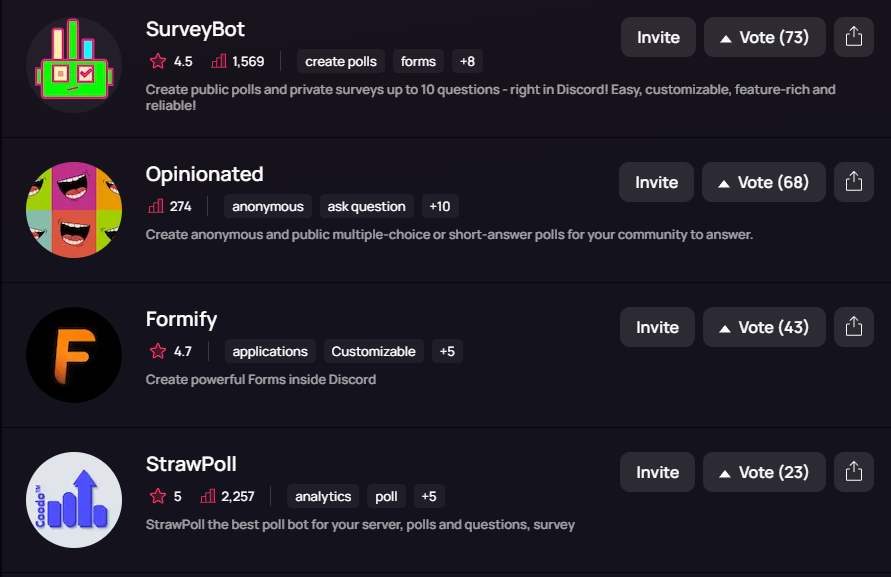
- Discord Servers: A more dynamic and sometimes chaotic environment. Can be great for real-time chat and hosting live audio events ("Stages"). Increasingly popular for tech and SaaS communities. You can even use bots to create polls and forms for engagement.
Conclusion
Today you've built a playbook for one of the most effective, authentic, and low-cost marketing strategies available to an early-stage founder. By shifting your mindset from a seller to a helper, you can embed yourself in the communities where your customers live, build authentic relationships, and drive your first wave of users.
Key Takeaways:
- Value-First Mindset: Your primary goal in any community is to be helpful. Trust and users are a byproduct of consistent value.
- The 3-Step Playbook:
- Find & Lurk: Identify relevant communities and understand their culture before engaging.
- Engage & Help: Answer questions, share experiences, and follow the 90/10 rule.
- Systematize & Scale: Use time-blocking and templates to make your engagement efficient and repeatable.
- The Indirect Funnel: The best promotion often happens without dropping a single link. Drive curiosity to your optimized profile.
Preview of the Next Lesson:
Now that you have the general playbook, we're going to do a deep dive on one of the most powerful—and most challenging—platforms for community marketing: Reddit. In the next lesson, you will draft and share three non-promotional, value-driven posts or comments tailored to your target subreddits' culture. We'll break down the specific tactics needed to succeed in its unique ecosystem.