
Introduction
Welcome back! In our last lesson, we explored syncretism, seeing how indigenous traditions cleverly blended with Catholicism to survive the colonial era. We saw how figures like the Virgin of Guadalupe and the art of the Cusco School became powerful vessels for preserving ancient worldviews in new forms.
But these traditions are not just historical artifacts; they are living, breathing aspects of contemporary life. This brings us to today's learning outcome: Describe the current status of indigenous communities maintaining these mythological traditions. We will shift our focus from historical survival to present-day resilience and innovation. You'll see how communities are actively working to keep their ancestral knowledge alive, not as museum pieces, but as vital guides for navigating the modern world.
Given your background in product design and storytelling, you'll find the methods these communities use fascinating. They are, in a sense, designing solutions to the complex problem of cultural preservation, employing everything from ancient ritual to modern digital platforms.
1. The Living Foundation: Land, Law, and People
Before we dive into specific examples, it's important to understand the current context. Indigenous cultures are not relics of the past; they are a significant and legally recognized part of modern Colombia.
To get a sense of this, let's start with a brief overview.
Colombian history as told by indigenous peoples
The article 'Colombian history as told by indigenous peoples' from Colombia Travel provides a quick snapshot of the current landscape. It helps frame these traditions as part of a living, present-day culture.
Please read the section titled 'Indigenous myths and the prologue to our story'. Focus on the paragraph that begins 'Present: Colombia:'. Note the mention of 87 indigenous groups and 710 dedicated reservations. This establishes the scale and legal recognition of indigenous presence in the country today.
The existence of these 710 reservations (resguardos) is crucial. For indigenous peoples, mythology, spirituality, and identity are inseparable from their ancestral lands. A mountain, a river, or a lagoon is not just a geographical feature; it is a sacred protagonist in their cosmic story. Therefore, the ongoing struggle for land rights and sovereignty is fundamental to maintaining these traditions. The myths live because the sacred places they describe are still revered and protected by their communities.
2. Pathways of Preservation: Two Case Studies
How do communities actively maintain their traditions today? The strategies are as diverse as the communities themselves. Let's explore two powerful, yet contrasting, real-world examples.
Case Study 1: The Kogi - Guardianship Through Separation
The Kogi people, who inhabit the Sierra Nevada de Santa Marta, are descendants of the Tairona. They see themselves as the "Elder Brothers," responsible for maintaining the balance of the Earth, which they call the 'Heart of the World'. They have largely preserved their traditions by maintaining a deliberate, self-imposed separation from the modern world, which they refer to as the land of the "Younger Brothers."
Let's see what this looks like in practice.
The Kogi People: Isolated Descendants of the Tairona in the Sierra Nevada | SLICE
The documentary 'The Kogi People' offers an intimate look into how this community lives its cosmology on a daily basis. It's a powerful example of tradition maintained through adherence to ancestral law.
Watch the segment from 03:16 to 11:12. As you watch, observe the following: The role of the 'Mama': Notice how this spiritual and social leader maintains cosmic order and guides the community. Daily life and ritual: See how spiritual work is gendered (weaving for women, the 'poporo' for men) and integrated into all aspects of life. The relationship with nature: Pay attention to their view of themselves as guardians and their deep concern about the environmental damage caused by the 'minor brothers' (us).
The Kogi demonstrate a path of preservation through continuity. Their social structure, their spiritual practices, and their worldview have remained remarkably intact. For them, "maintaining tradition" is not a special project; it is simply how they live, guided by a deep sense of cosmic responsibility.
Case Study 2: The Misak - Revitalization Through Creative Engagement
In contrast to the Kogi's path of separation, the Misak people of the Cauca department offer a model of active cultural revitalization while engaging with the modern world. They face threats like deforestation and the loss of language, but they are developing creative and proactive solutions.
This next video showcases their inspiring approach.
Colombia: Indigenous communities forge the future | Global Ideas
This DW News report, 'Colombia: Indigenous communities forge the future,' highlights the innovative ways the Misak people are ensuring their culture thrives for future generations.
Please watch from the beginning to 04:39. Focus on the specific projects and methods they are using: The Botanical Garden: How are they preserving ancestral knowledge of plants? The Children's Theater Group: How is performance art being used as a tool for education and cultural transmission? Community Governance: Notice the importance of coming together around the fire to discuss both old traditions and new challenges.
The Misak demonstrate that maintaining tradition can be a dynamic and forward-looking process. They are not just preserving the past; they are actively building a future for their culture by creating new educational systems, using art as a teaching tool, and strengthening their community governance.
3. The Enduring Power of Story
At the heart of all these efforts is the fundamental human act of storytelling. The intergenerational transfer of knowledge remains the bedrock of cultural continuity.
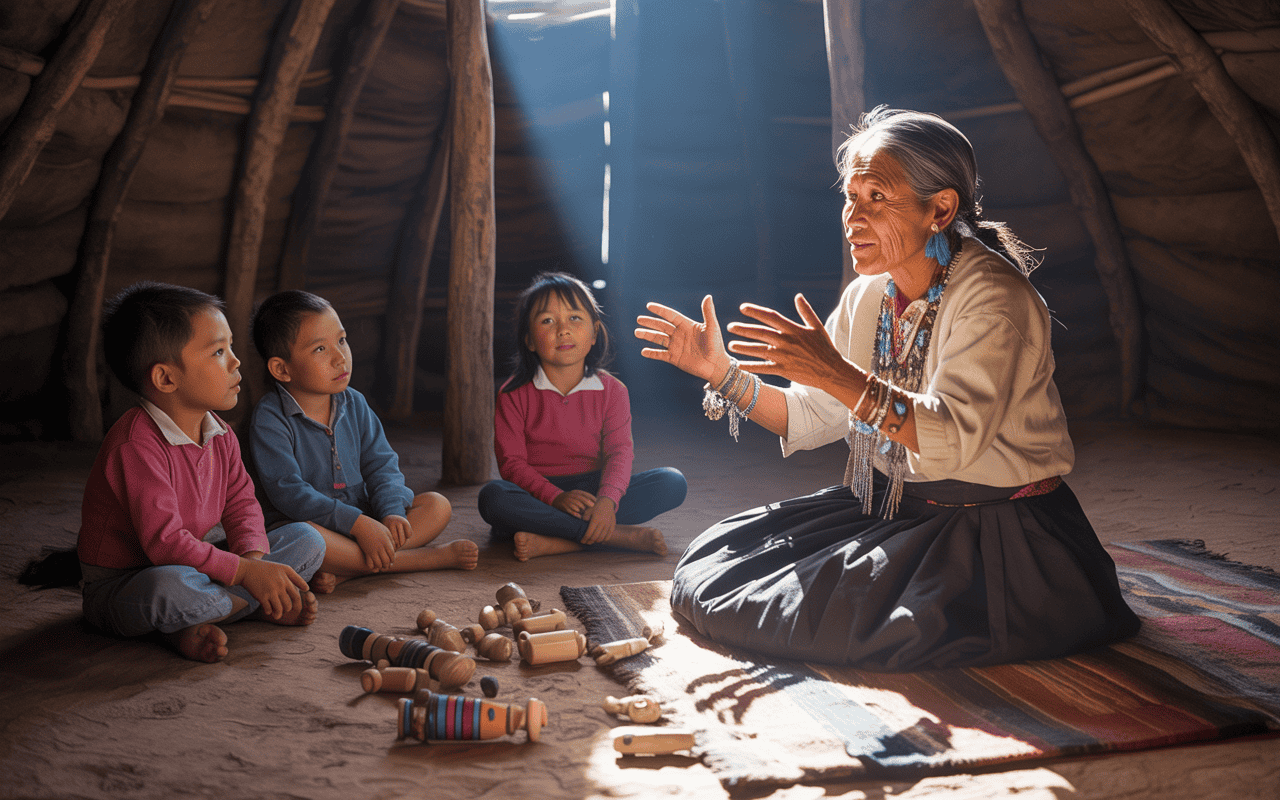
This transmission isn't limited to spoken words. As the article from Colombia Travel you read earlier mentions, the Wayuu people of La Guajira share "their approach to the cosmos...through its handicrafts, including the emblematic ‘mochila’ bags." The geometric patterns woven into these famous bags are a visual language, a way of telling the stories of creation and the universe.
Your goal to illustrate these myths is a contemporary extension of this very practice—translating foundational narratives into a visual medium to ensure they continue to be seen and understood.
4. Tradition in the Digital Age
While oral tradition and craft remain vital, many communities are now embracing modern technology as a powerful ally in cultural preservation. This approach may particularly resonate with your expertise in digital product design.
A fascinating article from SPARC highlights how digital tools are being used to bridge gaps and empower communities.
Project in Colombia Supports Digital Connections in Rural Areas
The article 'Project in Colombia Supports Digital Connections in Rural Areas' details how communities like the Wayuú and Zenú are using digital technology to document, preserve, and share their heritage on their own terms.
Please read the article, focusing on these two key projects: The Wayuú's 'Wikipeetia': Note how this project enables the community to create and control its own digital encyclopedia in their native language, Wayuunaiki. Think of it as a community-driven content management system for cultural knowledge. The Zenú Youth Project: Observe how technology facilitates a process where young people interview elders to document oral history and traditions. This is essentially an ethnographic or 'user research' project for cultural preservation.
These projects are brilliant examples of communities harnessing technology rather than being subsumed by it. They are creating digital repositories of language, stories, and traditional knowledge, ensuring this information is not only preserved but also accessible to their own young people in a medium they readily use.
Test your understanding!
Imagine you were a product designer hired by the Zenú community for the project described in the article. Your task is to design a simple mobile app to help young people capture and organize the stories they collect from the elders.
Based on your design experience, what are two or three key features you would prioritize for this app to make it successful in this specific context?
Show answer
Thinking from a user-centered design perspective for this specific community:
- Offline-First Functionality: The article mentions that many of these areas have little or no connectivity. The app must be able to record audio/video, take notes, and tag content without an internet connection, and then sync to a central repository when a connection is available.
- Multimedia & Tagging: The app shouldn't just be for text. It should prioritize easy audio and video recording. Crucially, it should allow for simple, community-defined tagging (e.g., tags for specific myths, characters, places, plants, rituals) to make the collected stories searchable and organizable later.
- Simple, Visual Interface: The UI should be highly intuitive and visual, requiring minimal text-based instruction. It could use icons that represent different types of stories or knowledge (e.g., an icon for a creation myth, a plant, an animal story). It should be designed for ease of use by people who may not be highly tech-literate, focusing on the core task of capturing and categorizing information from the elders.
Conclusion
As we've seen, the mythological traditions of Colombia's indigenous peoples are far from being relics. They are being actively maintained through a dynamic and diverse set of strategies that demonstrate incredible resilience and creativity.
Key Takeaways:
- Living Traditions: Indigenous myths are actively practiced and preserved by over 87 distinct groups in Colombia, whose rights and lands are legally recognized, though often threatened.
- Diverse Strategies: Preservation takes many forms, from the self-imposed isolation and adherence to ancestral law practiced by the Kogi, to the proactive, creative community projects and educational initiatives of the Misak.
- Land is Foundational: The protection of ancestral territory is inextricably linked to the preservation of the myths and cosmologies that arise from that specific environment.
- Ancient and Modern Tools: Communities rely on the timeless power of oral tradition and traditional crafts (like Wayuu mochilas), while also adopting digital technologies (like the Wayuú's Wikipeetia) to document, share, and revitalize their heritage for a new generation.
These ongoing efforts are the final, living chapter in the long story of these myths. Recognizing this adds a profound layer of meaning and responsibility to your project of illustrating them.
Preview of the Next Lesson:
This lesson concludes our exploration of the historical and contemporary context of Colombian mythology. We are now ready to begin synthesizing what we've learned. In our next module, we will start comparing themes across cultures. Our first lesson will be: Compare creation myth patterns across different Colombian indigenous cultures (e.g., from water, from light). This will help you identify the powerful, recurring archetypes and ideas that can serve as the foundation for your creative work.
Can't find a good explanation? Sign up and we'll make it for you
Sign up