
Hello! Welcome to the first lesson in our new module, "Foundations of Jain Philosophy."
In the previous module, you did the important work of building a practical, science-based plan to optimize your sleep. You now have a toolkit to ensure your body and brain get the biological rest they need. This stable foundation is crucial, because we are now ready to pivot from the science of sleep to the philosophy of consciousness that underlies your ultimate goal: to transform sleep from an unconscious state into a conscious, spiritually-beneficial practice.
To do that, we must begin with the most fundamental question in Jain philosophy: Who, or what, is the "I" that sleeps, dreams, and meditates? The answer to this question is the cornerstone of everything we will explore from this point forward.
Today's learning outcome is to explain the Jain concept of the soul (jiva) and its intrinsic qualities. We will lay the essential groundwork for understanding the teachings of spiritual leaders like Acharya Mahapragya, whose work you are interested in.
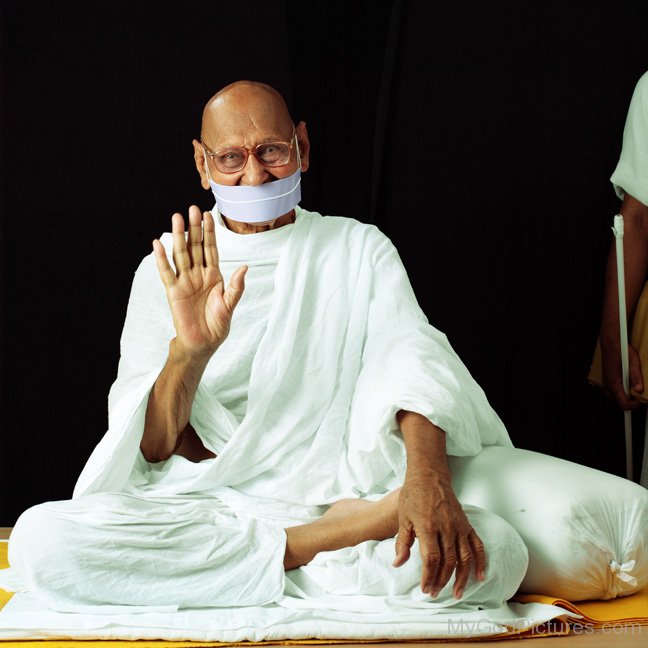
1. The Two Fundamental Realities: Jiva and Ajiva
At the heart of Jain metaphysics is a clear and fundamental distinction between two types of eternal, uncreated substances that make up the entire universe:
- Jiva (जीव): The living, conscious substance. This is the soul, the spirit, the very essence of awareness.
- Ajiva (अजीव): The non-living, unconscious substance. This includes everything else, such as matter, space, time, and the principles of motion and rest.
Every problem, every experience, and the entire path to liberation (moksha) in Jainism is understood through the lens of the interaction between jiva and ajiva. When you say "I feel happy," or "my body is tired," Jain philosophy sees this as an expression of the jiva (the "I") interacting with or experiencing the conditions of ajiva (the body and its karmic influx).
The resource below provides a concise introduction to this core concept and defines the jiva in more detail.
Let's read a brief excerpt from 'DOCTRINES OF MAHAVIRA' provided by Jainworld.com. This will give us a clear, foundational definition of the soul, or Jiva, and introduce its two primary states.
Please read the section titled '(A) The Jiva Dravya'. It begins with 'The jiva means Atman i. e. soul or spirit...' and ends just before the discussion of mundane souls. Focus on the core definition of the soul and the distinction between a mundane and a liberated soul.
As the text explains, the jiva is not something created by a god; it is an eternal, fundamental unit of consciousness. The whole universe is filled with countless individual jivas.
2. The Intrinsic Nature of the Soul: The Infinite Quadruplet
The reading introduced two states of the soul: the worldly soul (samsarin) and the liberated soul (siddha). This is a crucial distinction. The samsarin is the state we are in now—a soul bound by karma, embodied, and subject to the cycle of birth and death. The siddha is a soul in its pure, natural state, having freed itself from all karmic particles.
To understand the jiva's intrinsic qualities, we must look at the nature of a siddha. In its pure form, the soul possesses four infinite attributes, known as the Ananta Chatushtaya (अनन्त चतुष्टय), or the Infinite Quadruplet.
As listed in the resource you just read, these are:
- Ananta Jnana (अनन्त ज्ञान): Infinite Knowledge. The capacity to know everything in the universe—past, present, and future—directly and simultaneously, without the need for senses or a mind. It is perfect, complete omniscience.
- Ananta Darshana (अनन्त दर्शन): Infinite Perception. The capacity for pure, unfiltered perception or intuition of all substances, without the limitation of sense organs. It is the general awareness that precedes specific knowledge.
- Ananta Sukha (अनन्त सुख): Infinite Bliss. A state of perfect, unshakable happiness that is not dependent on any external person, object, or circumstance. It arises from the soul's own nature and is free from all pain, pleasure, and suffering.
- Ananta Virya (अनन्त वीर्य): Infinite Energy. Limitless spiritual power and energy. The soul in its pure state is never weak, tired, or helpless.
These four qualities are not acquired; they are the soul's inherent nature. Our current experience of limited knowledge, flawed perception, fleeting happiness, and fatigue is not our true self. It is a temporary condition caused by the obscuring effect of karma, a concept we will explore in the next lesson.
3. Other Essential Characteristics of Jiva
Beyond the Infinite Quadruplet, Jain texts describe several other key attributes that help define the jiva.
Atma Swarup Vivechan - Book Summary
The following summary of the text 'Atma Swarup Vivechan' (Analysis of the True Nature of the Soul) provides a richer list of the soul's attributes and contrasts the Jain view with other Indian philosophies.
Please read the sections titled 'Jainism vs. Upanishadic View of the Soul', 'Key Jain Attributes of the Soul', and the paragraphs describing the 'Ananta Chatushtaya' and why consciousness is considered an intrinsic quality. Focus on how Jainism asserts the soul's independence and its core characteristics.
Synthesizing from this reading and the previous one, we can summarize the following crucial characteristics:
- Consciousness (Chetana) is its defining feature: This is the primary mark of a jiva. If something possesses consciousness, it is jiva. Everything else is ajiva.
- It is Eternal (Nitya): The jiva has no beginning and no end. It was never created and can never be destroyed. It simply changes its form or state (e.g., from a human body to an animal body, or to a liberated state).
- It is the Doer (Kartā) and Experiencer (Bhoktā): The soul is the agent of its own actions and the one who experiences their consequences (fruits of karma). This establishes responsibility and is the basis of the entire law of karma. Your intentions and actions are yours, and their results accrue to you.
- It is Formless (Amurta): The pure jiva has no color, smell, taste, touch, or physical shape. This is why it cannot be perceived by our physical senses. The body it inhabits has form, but the soul itself does not.
- It is an Independent and Sovereign Entity: This is a key differentiator of Jain philosophy. Unlike some other schools of thought where the individual soul might be seen as a part of a universal soul (Brahman), in Jainism each jiva is a completely separate, individual, and sovereign entity. The goal is not to merge with a higher being, but to realize its own perfect, independent nature.
Test your understanding!
A person feels anxious about an upcoming exam and tired from studying late. According to Jain philosophy, are the feelings of anxiety and tiredness part of the jiva's fundamental, intrinsic nature? Why or why not? Refer to the Ananta Chatushtaya in your answer.
Show answer
No, anxiety and tiredness are not part of the jiva's intrinsic nature.
- Anxiety is a form of suffering and limited knowledge. It is the opposite of Ananta Sukha (Infinite Bliss), which is a state of perfect, unshakeable calm, and Ananta Jnana (Infinite Knowledge), which is free from doubt and uncertainty.
- Tiredness is a lack of energy. It is the opposite of Ananta Virya (Infinite Energy), which is a state of limitless power.
These negative experiences are considered temporary conditions imposed on the soul due to its association with the body (ajiva) and the influence of karma, which obscure its true, infinite nature.
Conclusion
This lesson marks a significant shift in our journey, moving from the physical to the metaphysical. Understanding the Jain concept of the soul is the essential first step in building the philosophical framework for your practice.
Key Takeaways:
- Jainism divides all of reality into two fundamental substance types: the living and conscious (jiva) and the non-living and unconscious (ajiva).
- The jiva is your true self—an eternal, independent, formless, and conscious entity.
- In its pure, liberated state, the jiva possesses the Ananta Chatushtaya: Infinite Knowledge, Infinite Perception, Infinite Bliss, and Infinite Energy.
- Our current, worldly experience of limitation, suffering, and ignorance is not our true nature; it is a temporary state caused by the soul's entanglement with ajiva, particularly karmic matter.
Preview of the Next Lesson:
We've now defined the jiva and its glorious, intrinsic potential. This naturally raises the question: If our true nature is infinite bliss and knowledge, why do we experience life as we do? The answer lies in one word: karma.
In the next lesson, we will dive into the intricate Jain theory of karma. You will learn about the eight types of karma, how they function like a form of subtle matter, and how they bind to the soul, obscuring its inherent qualities and creating the experiences of our worldly life. This will be the key to understanding both the problem (bondage) and the solution (liberation).