
Hello! Welcome back to our exploration of Jain philosophy.
In our last lesson, we delved into the complex process of Bandha, or karmic bondage. We identified the five primary causes that lead to the soul becoming entangled with karmic matter, with Mithyātva (false belief) at the root and Kaṣāya (passions) acting as the glue. Understanding the problem is the first step, but Jain philosophy is fundamentally about the solution.
Today, we shift our focus from the problem to the remedy. We will explore the vital concept of Nirjarā (निर्जरा), the process of dissociating and shedding the karmas that are already bound to the soul. Our learning outcome is to describe the process of karma shedding (nirjara) and its two types.
This is a pivotal lesson. It marks our transition from understanding the mechanics of entrapment to learning the path of liberation. The concept of Nirjarā is the very foundation of all spiritual practices in Jainism, including the Preksha Dhyaan meditation developed by Acharya Mahapragya, which is a central interest for you.
1. Placing Nirjarā in the Path to Liberation
Before we dive into the details, let's see where Nirjarā fits within the overall framework of Jain philosophy. The nine fundamental realities, or Tattvas, describe the entire journey of the soul.
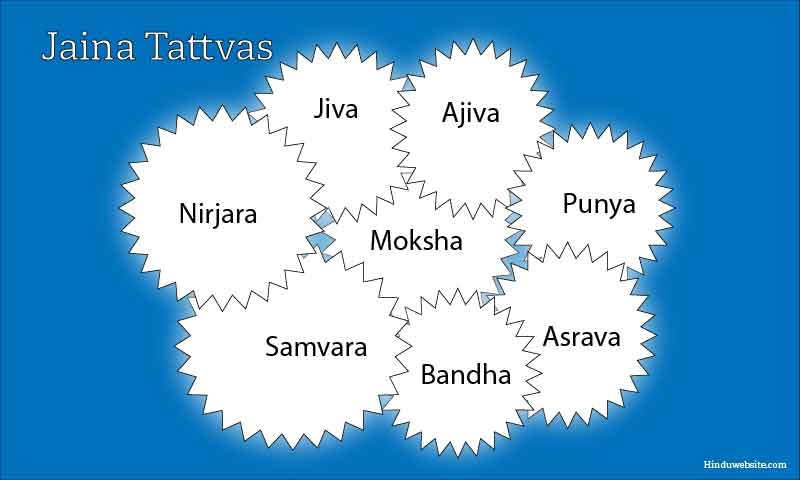
As you can see, the spiritual path has two essential active components:
- Saṃvara (संवर): Stopping the influx of new karma. We touched on this when discussing the causes of bondage; by removing those causes, we "plug the leaks."
- Nirjarā (निर्जरा): Eradicating the karma that has already accumulated.
Let's use an analogy we've encountered before to solidify this.
The article 'Nirjara - By Kishor B Shah' provides an excellent boating metaphor that clearly distinguishes these concepts. It helps visualize how Nirjarā fits into the spiritual journey.
Please read the section titled 'The boating metaphor'. It begins with 'The boat represents the soul...' and ends with '...removing existing ones.' Focus on how the metaphor differentiates between discovering the problem, stopping the inflow (Samvara), and removing the existing karma (Nirjara).
This metaphor beautifully illustrates that it's not enough to simply stop making new mistakes (Saṃvara). We must also actively work to clear the consequences of our past actions (Nirjarā). The word Nirjarā itself is derived from "Nir" (a prefix meaning 'out' or 'without') and "Jarā" (meaning 'to decay' or 'to wear out'), signifying the process of wearing out and expelling karmas.
2. The Two Processes of Shedding Karma
The process of karmic shedding occurs in two fundamentally different ways. Understanding this distinction is crucial because it separates a passive, endless cycle from an active path of progress. The two types are Akāma Nirjarā and Sakāma Nirjarā.
Nirjara (Shedding of Accumulated Karmas)
The webpage 'Nirjara (Shedding of Accumulated Karmas)' from JainWorld offers a very clear and direct explanation of these two types and, importantly, highlights the limitations of the passive approach.
Please read the first three paragraphs, starting from 'Function of Samvara...' and ending with '...instead of allowing it to ripe in natural course.' Pay close attention to the definitions of 'Akama-nirjara' and 'Sakama-nirjara' and the two drawbacks of the passive method.
Let's break down what you just read:
a) Akāma Nirjarā (अकाम निर्जरा): Passive Shedding
This is the involuntary, automatic process where karmas fall away after their pre-determined duration (sthiti) has ended and they have delivered their result.
- Mechanism: Every living being, from a microscopic organism to a human, experiences this. It happens without any conscious effort or spiritual intent.
- Analogy: This is the water in the boat evaporating slowly on its own under the sun. It's also like a fruit ripening and falling off a tree naturally.
- The Major Flaw: As the resource pointed out, this method is a trap. When a past karma (e.g., a karma of anger) ripens, it creates a situation that provokes anger in us. If we react with fresh anger (Kaṣāya), we may exhaust the old karma, but we simultaneously create new, potent karma of anger. This perpetuates the cycle of saṃsāra indefinitely.
b) Sakāma Nirjarā (सकाम निर्जरा): Active Shedding
This is the voluntary, deliberate process of purifying the soul by forcing karmas to ripen and fall away before their scheduled time.
- Mechanism: This is achieved through conscious spiritual effort, specifically through the practice of austerities, known as Tapa (तप).
- Analogy: This is the boatperson actively bailing water out of the boat. It’s also like using a special process to ripen a green fruit quickly.
- The Goal: This is the recommended path for anyone seeking spiritual liberation. It is a path of conscious effort, self-discipline, and willpower, aimed at accelerating the purification process.
Test your understanding!
A person insulted someone years ago, creating a karma that is now ripening. This results in them being publicly humiliated.
- Scenario A: The person reacts with intense rage and plots revenge against the one who humiliated them.
- Scenario B: The person, through spiritual practice, remains calm. They reflect, "This experience is the result of my own past actions. I accept this consequence with equanimity and will not let it stir hatred in me."
Which type of Nirjarā is occurring in each scenario, and what is the likely outcome regarding future karma?
Show answer
-
Scenario A is an example of Akāma Nirjarā. The old karma of insult has fructified and is exhausted. However, by reacting with fresh, intense passion (Kaṣāya), the person has created a new and potent karma of anger and revenge, thus deepening their bondage. They bailed out a cup of water but opened an even bigger leak.
-
Scenario B demonstrates how to properly handle Akāma Nirjarā to turn it into a step toward liberation. The old karma is exhausted, but because the person responded with equanimity and introspection (a key part of Sakāma Nirjarā), they did not create new binding karma. They have successfully bailed out a cup of water without creating a new leak. This is the essence of turning karmic consequences into opportunities for purification. The most potent form of Sakāma Nirjarā would be to undertake specific penances to shed this karma even before it had a chance to ripen.
3. The Twelve Austerities: The Toolkit for Sakāma Nirjarā
So, how does one practice Sakāma Nirjarā? The method is Tapa, which is a set of twelve practices designed to purify the soul by developing self-control and detachment. These are traditionally grouped into two categories.
Nirjara (Shedding of Accumulated Karmas)
Let's return to the 'Nirjara' article from JainWorld to see a list of these twelve powerful tools.
First, read the paragraph that lists the six 'Inward penances' (starting with 'Prayascitta'). Then, read the next paragraph that lists the six 'External penances' (starting with 'Anasana - fasting'). You don't need to memorize them all, but get a sense of the two different categories.
Let's summarize these two crucial categories:
1. Bāhya Tapa (बाह्य तप) – External Austerities: These six practices focus on disciplining the body and senses. They include fasting, eating less than one's hunger, restricting the number of food items, renouncing tasty foods, inhabiting a solitary place, and enduring physical hardships.
However, Jain seers are emphatic: these physical acts are spiritually worthless, or even harmful, if not accompanied by the correct internal disposition. Fasting while dreaming of food only creates more karma.
2. Abhyantara Tapa (अभ्यंतर तप) – Internal Austerities: These six practices are purely mental and psychological. They are considered more important and more potent than the external austerities. They are:
- Prāyaścitta (Atonement)
- Vinaya (Humility, Reverence)
- Vaiyāvṛttya (Selfless service to ascetics and those in need)
- Svādhyāya (Self-study of scriptures)
- Vyutsarga (Abandonment of attachments and ego; also Kayotsarga or relaxation with awareness)
- Dhyāna (Meditation)
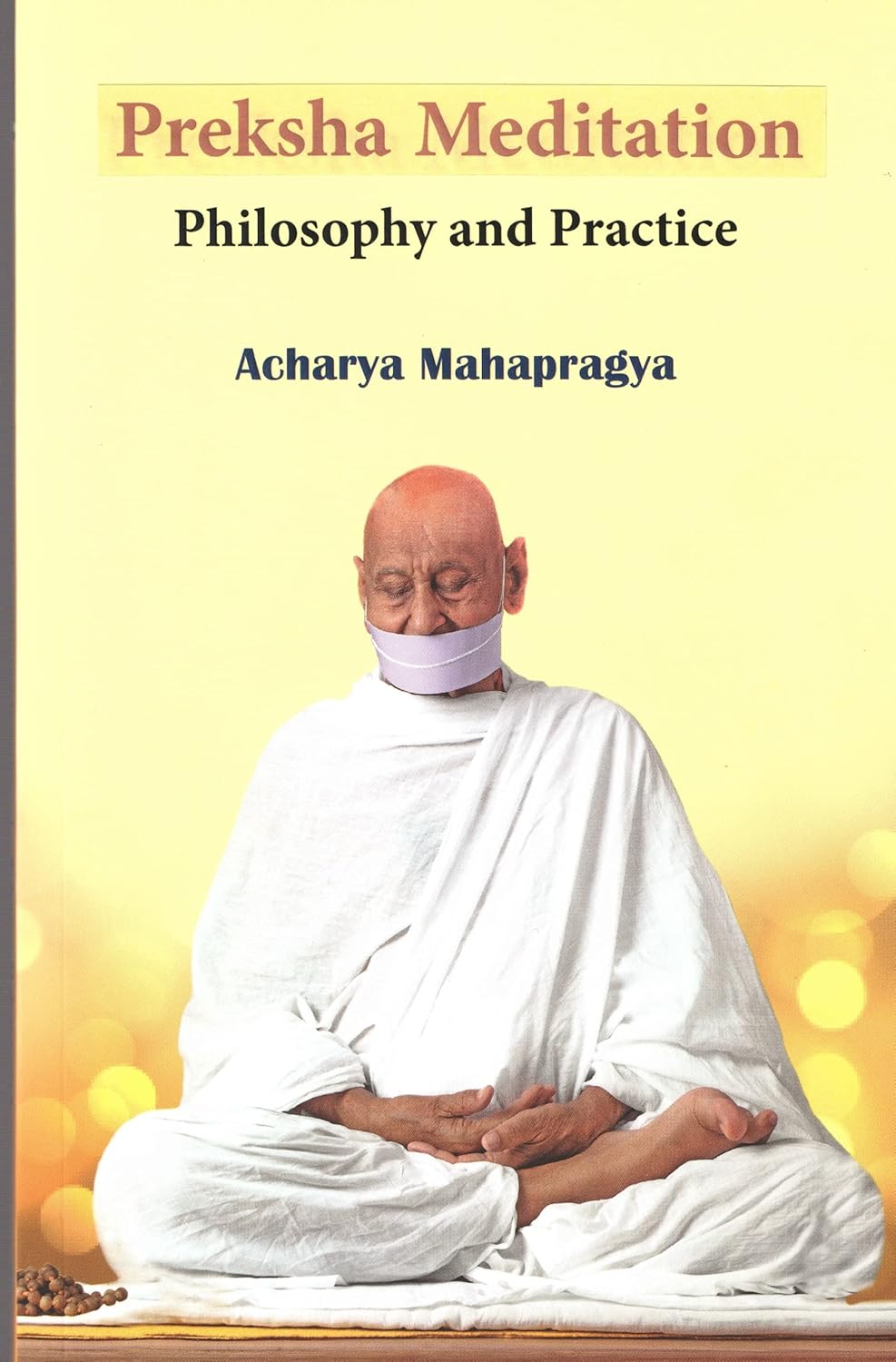
This is where the connection to your goals becomes crystal clear. The highest forms of Tapa, the most powerful tools for achieving Sakāma Nirjarā, are internal practices of the mind. Meditation (Dhyāna) is explicitly named as the ultimate internal austerity. The practices of Preksha Dhyaan, such as Kayotsarga (related to Vyutsarga), contemplation (Anupreksha), and perception of breath and body, are all modern, systematic applications of these timeless internal austerities.
Conclusion
We have now mapped out the path to freedom from karmic bondage. While the process of bondage can seem daunting, Jain philosophy provides a clear and practical toolkit for dismantling it.
Key Takeaways:
- Nirjarā is the essential process of shedding accumulated karma, which follows the stoppage of new karma (Saṃvara).
- Akāma Nirjarā is the passive, automatic fruition of karma. It is slow and often leads to new bondage if one reacts with passion.
- Sakāma Nirjarā is the active, deliberate shedding of karma through spiritual effort, which is the key to liberation.
- The primary method for Sakāma Nirjarā is Tapa (austerity), which is divided into six external and six internal types.
- The internal austerities, such as self-study (Svādhyāya) and meditation (Dhyāna), are the most powerful means of purifying the soul and are central to the teachings of Acharya Mahapragya.
Preview of the Next Lesson:
We have established the what (Nirjarā) and the how (Tapa). In the next lesson, we will explore the why. We will examine the subtle but profound relationship between actions, intentions, and karmic accumulation. This will help us understand why an action done with pure intention has a vastly different karmic weight than the same action done with greed or anger. Grasping this is fundamental to understanding why practices like meditation, which work directly on purifying intention, are so effective for accelerating Nirjarā.