
Hello! Welcome to the fifth lesson in our module on the functions of sleep.
In our previous lesson, we investigated sleep's critical role in maintaining a strong immune system. We learned that sleep is an active state of immunological recalibration and that even a single night of poor sleep can significantly weaken our defenses against viruses and cancer. This established another vital biological process that happens "offline" during our unconscious hours.
Today, we delve into another of the body's master control networks: the endocrine system. The learning outcome for this lesson is to describe how sleep influences key hormones such as growth hormone and cortisol. These two powerful hormones govern our body's cycles of growth, repair, stress, and alertness. Understanding their intricate dance with sleep is fundamental to appreciating why consistent, high-quality sleep is non-negotiable for physical and mental well-being.
This exploration also brings us closer to the heart of your specific interests. As we will see, the conscious regulation of the endocrine system is a central theme in the teachings of Acharya Mahapragya, providing a fascinating bridge between modern physiology and Jain meditative practice.
The Hormonal Symphony of Sleep
Sleep is far from a passive state of shutdown. It is a highly choreographed symphony of hormonal activity. The body uses the quiet hours of sleep to release hormones that build and repair, while suppressing others related to stress and daytime activity.
Today, we focus on two key players that operate in almost opposite ways in relation to sleep:
- Growth Hormone (GH): The body's primary agent for repair, growth, and restoration. As we'll see, its release is powerfully promoted by sleep.
- Cortisol: Often called the "stress hormone," it's crucial for alertness and mobilizing energy. Its release is normally suppressed by sleep.
The timing and balance of these hormones are regulated by your internal biological clock, or circadian rhythm, which we discussed in the first module.
Growth Hormone: Your Nightly Repair Crew
Growth Hormone (GH) is essential throughout our lives, not just during childhood. In adults, it plays a vital role in maintaining tissues and organs, promoting cellular repair, building muscle mass, and boosting metabolism. Sleep is the primary time for this crucial work to happen.
But it's not just about getting sleep; it's about getting sleep at the right time. The release of GH is exquisitely timed.
How to Boost Your Growth Hormone with Sleep | Dr. Gina Poe & Dr. Andrew Huberman
To understand the critical link between sleep timing and Growth Hormone, let's watch this clip from a discussion between neuroscientists Dr. Andrew Huberman and Dr. Gina Poe.
Please watch from 00:14 to 02:56. Pay close attention to when the main pulse of growth hormone is released and why simply delaying your bedtime means you miss this event.
As Dr. Poe explains, the key points are:
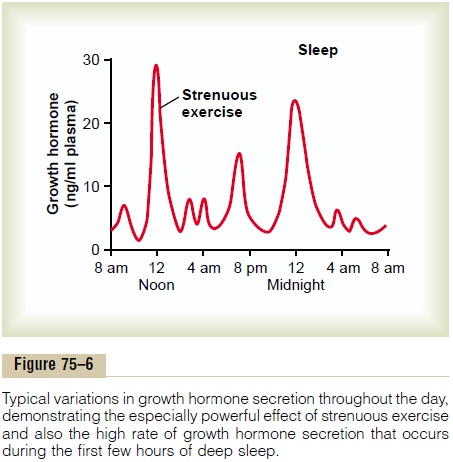
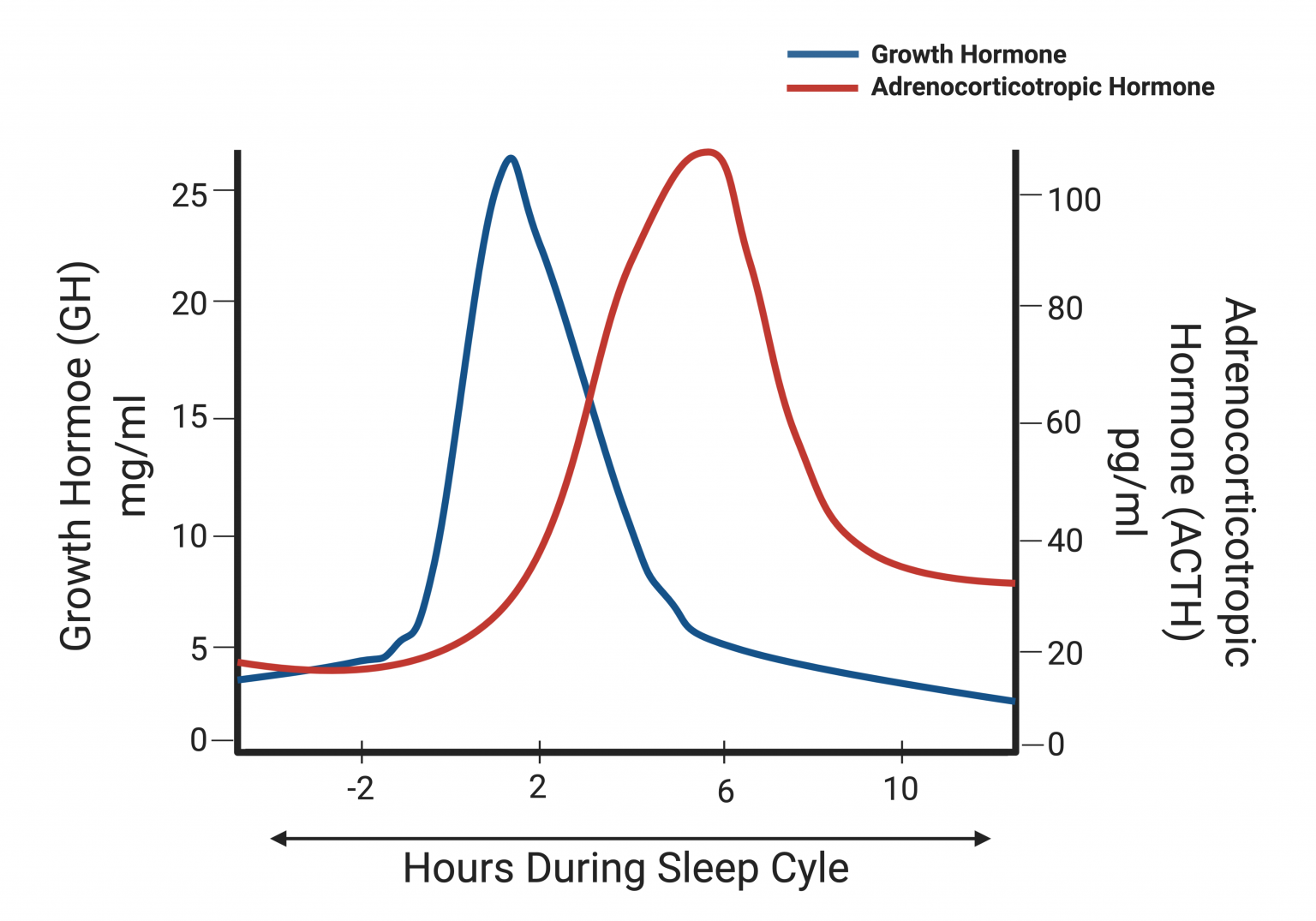
- A "Big Bolus": The vast majority of your daily growth hormone is released in a single, large pulse during your first cycle of deep, slow-wave sleep (SWS).
- A Fixed Window: This release is tied to your body's internal circadian clock. If you normally go to bed at 10 PM, this hormonal event is scheduled to happen shortly after. If you stay up and go to bed at 1 AM instead, you have effectively missed the appointment. Your body doesn't just shift the release to later; you simply miss out on that primary, powerful wave of repair and restoration.
This is a powerful scientific argument for the importance of a consistent bedtime. The following graphs visualize this nightly surge.
Cortisol: Taming the Stress Response
Cortisol is produced by your adrenal glands and is essential for life. It helps regulate blood sugar, reduce inflammation, and manage your stress response. In the morning, a healthy spike in cortisol helps you wake up and feel alert. Its rhythm is meant to be the inverse of melatonin.
Ideally, cortisol levels should decline throughout the day, reaching their lowest point during the first half of the night. This drop in cortisol is what allows your body to relax and enter deep, restorative sleep.
How to Lower Cortisol and Fix Your Sleep: Circadian Rhythm, Cortisol, and Sleep - Dr. Berg
Now let's examine cortisol's rhythm. This video from Dr. Eric Berg explains the normal daily pattern and what happens when it's disrupted.
Please watch from the beginning to 01:27. Focus on the shape of the normal cortisol 'wave' and how an inverted wave—high cortisol at night—affects your ability to sleep.
When this rhythm is disrupted—often due to chronic stress, late-night caffeine, or an irregular schedule—cortisol can remain high in the evening. This makes it difficult to fall asleep and stay asleep, creating a vicious cycle: stress causes poor sleep, and poor sleep further dysregulates your stress-hormone system.
To understand this more formally, let's read a brief scientific summary.
This article from News-Medical provides a concise explanation of the relationship between the body's stress axis, cortisol, and sleep.
Please read the section titled 'Sleep and cortisol.' This will introduce you to the Hypothalamic-Pituitary-Adrenal (HPA) axis, the body's central stress response system, and explain how sleep normally inhibits it.
The article confirms that nighttime sleep actively suppresses cortisol release. It also clarifies what happens when we don't sleep enough: the HPA axis becomes overactive, leading to higher cortisol levels later in the day, which mimics the hormonal profile of aging and contributes to issues like insulin resistance.
Test your understanding!
Imagine a student pulling an all-nighter to study for an exam. They feel "wired" and anxious late at night, and the next day, despite being exhausted, they feel jittery and strangely alert. Using the concepts of Growth Hormone and Cortisol, explain the hormonal chaos happening in their body.
Show answer
The student's experience can be explained by two main hormonal disruptions:
-
Missed Growth Hormone: By skipping a night of sleep, they have completely missed the critical deep-sleep window for the major Growth Hormone (GH) pulse. This means they've forgone a crucial period of physical and cellular repair, contributing to their feeling of physical exhaustion.
-
Elevated Cortisol: The stress of studying, combined with the lack of sleep (which is itself a physiological stressor), has kept their HPA axis activated. Their cortisol levels, which should have dropped to a minimum during the night, remained high. This explains why they felt "wired" and anxious. The feeling of being "jittery but exhausted" the next day is a classic sign of a dysregulated cortisol rhythm—the body is running on stress hormones, not on true, restored energy.
The Bridge to Jain Philosophy: Hormones and Preksha Dhyaan
This brings us to a crucial point of synthesis. Modern science describes this intricate, unconscious hormonal ballet. The question at the heart of your course is whether a conscious practice like meditation can interact with or even regulate these very systems.
According to the philosophy of Acharya Mahapragya, the answer is a definitive yes. He pioneered the integration of modern scientific understanding with the ancient practice of Preksha Dhyaan, believing that knowledge of physiology was essential for effective meditation.
Modern Scientific Elements of Preksha Meditation
Let's explore this connection directly through a text that outlines Acharya Mahapragya's framework. This reading explicitly links the limbs of Preksha Dhyaan to the body's physiological systems.
Please read two brief sections from this text. First, find 'TABLE 6 - Scientific Mapping of Prekṣā-Dhyāna' and note which meditation techniques are mapped to the endocrine (hormonal) system. Second, read the text under the heading 'Caitanyakendra Prekṣā,' focusing on the stated purpose of meditating on these centers.
This text reveals a remarkable convergence of thought:
- Mapping Meditation to Physiology: As seen in Table 6, Acharya Mahapragya directly maps Caitanya Kendra Preksha (Perception of Psychic Centres) to the endocrine system, and Leshya-Dhyana (Perception of Psychic Colours) to the neuroendocrine system.
- The Intentional Goal: The text explicitly states that "The purpose of meditating on psychic centres is to change the chemistry of hormones."
This is a profound concept. The practice of focusing consciousness on specific energy centers (caitanya kendras), which are understood to be located near the major endocrine glands, is intended to consciously influence hormonal output. This provides a direct philosophical and practical framework for engaging with the very systems that regulate hormones like cortisol.
Furthermore, another practice, Kāyotsarga (total relaxation), is presented as a method for combating stress and rebalancing hormonal systems. This directly parallels the modern understanding of needing to calm the HPA axis to lower cortisol.
What science describes as an involuntary, unconscious process, Preksha Dhyaan frames as a system that can be brought under conscious observation and, ultimately, influence.
Conclusion
In this lesson, we have uncovered the precise hormonal rhythms that govern our sleep, specifically focusing on growth and stress.
Key Takeaways:
- Sleep is a critical regulator of the endocrine system.
- Growth Hormone (GH) is released in a large pulse during the first deep sleep cycle of the night. This event is crucial for bodily repair and is tied to a consistent bedtime.
- Cortisol, the stress and alertness hormone, is naturally suppressed by sleep. Elevated cortisol at night, often due to stress or an irregular schedule, disrupts sleep quality.
- The teachings of Acharya Mahapragya, particularly within Preksha Dhyaan, provide a framework for consciously influencing the endocrine system. Practices like Caitanya Kendra Preksha are specifically intended to "change the chemistry of hormones."
Preview of the Next Lesson:
We will continue our exploration of sleep's influence on the endocrine system by turning our attention to metabolism. In the next lesson, we will investigate the relationship between sleep, appetite-regulating hormones, and metabolic health. This will add another layer to our understanding of why sleep is so essential for maintaining a healthy body.