Hello! Welcome to the fifth and penultimate lesson of our course.
In our last lesson, we developed a powerful framework for understanding "value equilibria," learning how the relative power of institutions like the state, market, church, and family, combined with cultural justifications, leads a society to systematically prioritize certain values. We saw this as a dynamic, political process where different groups struggle to make their preferred institutional arrangements dominant.
Today, we elevate this analysis to the highest level of abstraction we'll tackle. Our goal is to synthesize concepts from the course to model how different societal architectures systematically prioritize or sacrifice fundamental values like liberty, security, truth, and cohesion.
We will move from analyzing individual institutional dynamics to constructing and comparing two opposing "ideal types" of societal architecture. Think of these as blueprints for a social operating system. By modeling these contrasting architectures, we can analyze their internal logic, understand their inherent value trade-offs, and see how they systematically produce certain outcomes while precluding others. This will set the stage perfectly for our final lesson, where you will formulate your own argument about the "least bad" institutional arrangement for a free and diverse society.
1. The Building Blocks of Societal Architecture
Before we can model a societal architecture, we need to define its fundamental components. At its core, a society is structured by its institutions. A clear, functional definition is crucial here.
If institutions are failing, what is an institution? How does "the system" influence them?
The video 'If institutions are failing, what is an institution?' provides an excellent and concise vocabulary for our analysis. It breaks down what institutions are and how they function at different levels.
Please watch the following segments to grasp the key concepts: Definition of an Institution (01:58 - 02:44): Pay attention to the four components: rules, roles, norms, and enforcement mechanisms. Official vs. 'Institutions of the Heart' (07:11 - 08:58): This distinction between formal, written rules and informal, unwritten norms is critical for understanding the full texture of a societal architecture. Meta-Institutions (14:28 - 16:15): This is the most important concept. Understand meta-institutions as the highest-level concepts that structure our reality (e.g., our understanding of what a 'school' or 'family' even is). Changes at this level are profoundly destabilizing.
As the video explains, a societal architecture is a nested system. It comprises:
- Formal Institutions: Written laws, constitutions, regulations, and codified rules.
- Informal Institutions (Institutions of the Heart): Unwritten norms, social expectations, and cultural habits.
- Meta-Institutions: The highest-level conceptual frames that give meaning to the roles and rules below them.
With this vocabulary, we can now model our first ideal type: an architecture that, despite often being built with good intentions, systematically creates division and sacrifices key values.
2. Model 1: The "Mechanical" Architecture of Division
One way to conceptualize modern Western society is as a "mechanical" system, designed with the top-down, engineering logic of the 20th-century state. This architecture prioritizes legibility, standardization, and the management of social problems through bureaucratic processes.
A lengthy but profound essay, "The Architecture of Trust," deconstructs this model and analyzes its consequences. We will use it to build our understanding of this first ideal type.
The Architecture of Trust: A Blueprint for a Psychologically ...
Let's read the diagnostic sections of 'The Architecture of Trust' by Amir Noferesti. This text provides a powerful critique of what we are calling the 'mechanical' model, tracing its philosophical roots and sociological consequences.
Please read the following three sections, which build on each other to form a cohesive diagnosis: 'The Unmoored Self: Philosophical Roots of Our Disconnection': This section connects our modern condition to the Enlightenment's 'Great Unmooring' of the individual and truth. Focus on Hannah Arendt's concept of the 'common world' and how its erosion, fueled by a simplified postmodern critique (Foucault's Power/Knowledge) and hyperreality, leads to existential insecurity. 'The Sociological Cage: How Systems of Care Inadvertently Create Division': This is the core of the critique. It uses Foucault and Bourdieu to argue that top-down welfare systems, in trying to 'care' for citizens, create 'welfare-conditioned inequality' by stripping them of social and cultural capital, fostering a habitus of dependency. This section directly analyzes the systemic sacrifice of agency and dignity. 'The Great Fragmentation: How Unmoored Selves in an Unsafe Society Break Apart': This section synthesizes the previous two. It models a vicious cycle where philosophically unmoored selves, operating with biased minds, are placed within sociological cages, resulting in a low-trust, brittle society incapable of solving complex problems. This is the architecture's ultimate output.
This "mechanical" architecture, as modeled in the text, systematically sacrifices several core values:
- Truth: The erosion of a "common world" of shared facts, replaced by hyperreal bubbles and a cynical view that all truth claims are mere power plays, makes rational discourse impossible.
- Cohesion: By treating citizens as "cases" to be managed, the system fosters transactional relationships, erodes social capital, and institutionalizes an "othering" that fragments society into tribes.
- Agency & Liberty: The system, while providing material support, disempowers individuals by framing them as passive recipients. This erodes their sense of agency—the capacity to be the author of one's own life.
- Security: The resulting "brittle society" is fragile. Lacking social trust and the ability to engage in collective action, it is unable to respond resiliently to major crises.
This architecture can be seen as driven by what the philosopher Roger Scruton called the "labor of the negative"—an intellectual impulse focused on identifying and rectifying wrongs through the seizure and application of centralized power.
Roger Scruton: Why Intellectuals are Mostly Left
In this short clip, Roger Scruton explains this concept. It provides a useful ideological lens for understanding the mindset that can lead to building a 'mechanical' architecture focused on demolition rather than preservation.
Watch the segment from 03:02 to 04:47, where Scruton describes Hegel's 'labor of the negative' and contrasts it with a conservative disposition to find things to love and protect. This highlights two different starting points for social action.
3. Model 2: The "Organic" or "Pluralist" Architecture
In direct contrast to the mechanical model, we can envision an "organic" or "pluralist" architecture. This system is not designed like a machine but cultivated like an ecosystem. It is decentralized, emergent, and prioritizes human connection and capability.
This model aligns closely with many concepts we've explored, including Tocqueville's intermediate associations, subsidiarity, and polycentric governance.
The Architecture of Trust: A Blueprint for a Psychologically ...
Now, let's turn to the constructive part of 'The Architecture of Trust'. This section lays out the foundational principles of an alternative, organic model.
Please read these two sections: 'The Foundational Principles of Mutual Thrive: From Transaction to Transformation': This outlines the three core principles of the organic model: Subsidiarity and the Human Scale, From Transactional to Relational, and Agency as the Primary Metric. These principles define the system's values. 'The Deliberative Democracy: A New Grammar for Civic Life': This section applies the principles to the political sphere, proposing deliberative democracy (e.g., citizens' assemblies) as the political operating system for this architecture. Note how it is designed to foster agency, relationality, and build a new 'common world'.
This architecture explicitly prioritizes values the mechanical model sacrifices:
- Agency: It is the primary metric of success. The goal is to empower individuals and communities.
- Cohesion: It is built through relational interactions and the fostering of social capital at the human scale.
- Liberty: It promotes a substantive liberty, rooted in capability and local self-governance, which complements the negative liberty of non-interference.
This vision of an "organic" architecture is powerfully articulated in the philosophy of Pluralism. Given your background in formal systems, you will appreciate how Pluralism can be justified not just with philosophical arguments but with formal models from statistics, game theory, and network science.
The essay 'Why I Am a Pluralist' by Glen Weyl provides a formal and technological vision for this kind of architecture, which he terms 'Plurality'. It distinguishes this approach from the 'monist' logic of both pure capitalism and populist statism.
Please read the following sections: 'Definition' and 'Principles for Plurality': These sections will give you a clear definition of institutional and epistemic pluralism, and outline its core principles (Recognition, Subsidiarity, Neutrality, Cooperation across diversity, Adaptation). 'A Plural Case for Plural Institutions': This is the key section for you. Notice how Weyl draws on diverse formal frameworks—statistical epistemics (Condorcet's Jury Theorem with correlated errors), voting power theory (Penrose), mechanism design (Quadratic Voting), general equilibrium, and network security models—to make a convergent case for institutions that favor cooperation across social diversity. This provides a quantitative justification for pluralist design.
The key insight from Weyl is that once you relax the simplistic assumptions of many "monist" models (e.g., independent signals, atomized individuals, private goods only), a wide range of formal theories converges on the same conclusion: optimal systems should be pluralistic, down-weighting homogenous blocs and up-weighting cooperation across diverse groups.
Test your understanding!
Using the language of Weyl's "A Plural Case for Plural Institutions," how might a pluralist voting system like Quadratic Voting need to be adjusted to account for the real-world existence of "strong family ties" as described in the Alesina paper from our last lesson?
Show answer
Standard Quadratic Voting (QV) assumes atomized, self-interested individuals. The quadratic formula is designed to solve the free-rider problem for large groups.
However, as Weyl (and Buterin) point out, strong family ties represent pre-existing altruism and coordination. The members of a tight-knit family do not face the same free-rider problem among themselves.
Therefore, a naive application of QV would "oversolve" the problem for the family unit, giving their collective preference disproportionate power compared to a group of strangers. A pluralist adjustment would scale down or negate the quadratic "interaction terms" between members of the socially close family, while preserving them for socially distant individuals. This would effectively treat the family as a more cohesive unit, reducing its amplified power and re-balancing the system to favor broader, more diverse coalitions.
4. Critical Evaluation: Architectures and Their Discontents
No model is perfect. A robust analysis requires us to "steel-man" the critiques and acknowledge the inherent trade-offs and potential failure modes of any proposed architecture. An "organic" or "pluralist" system is not a utopia; it comes with its own set of risks.
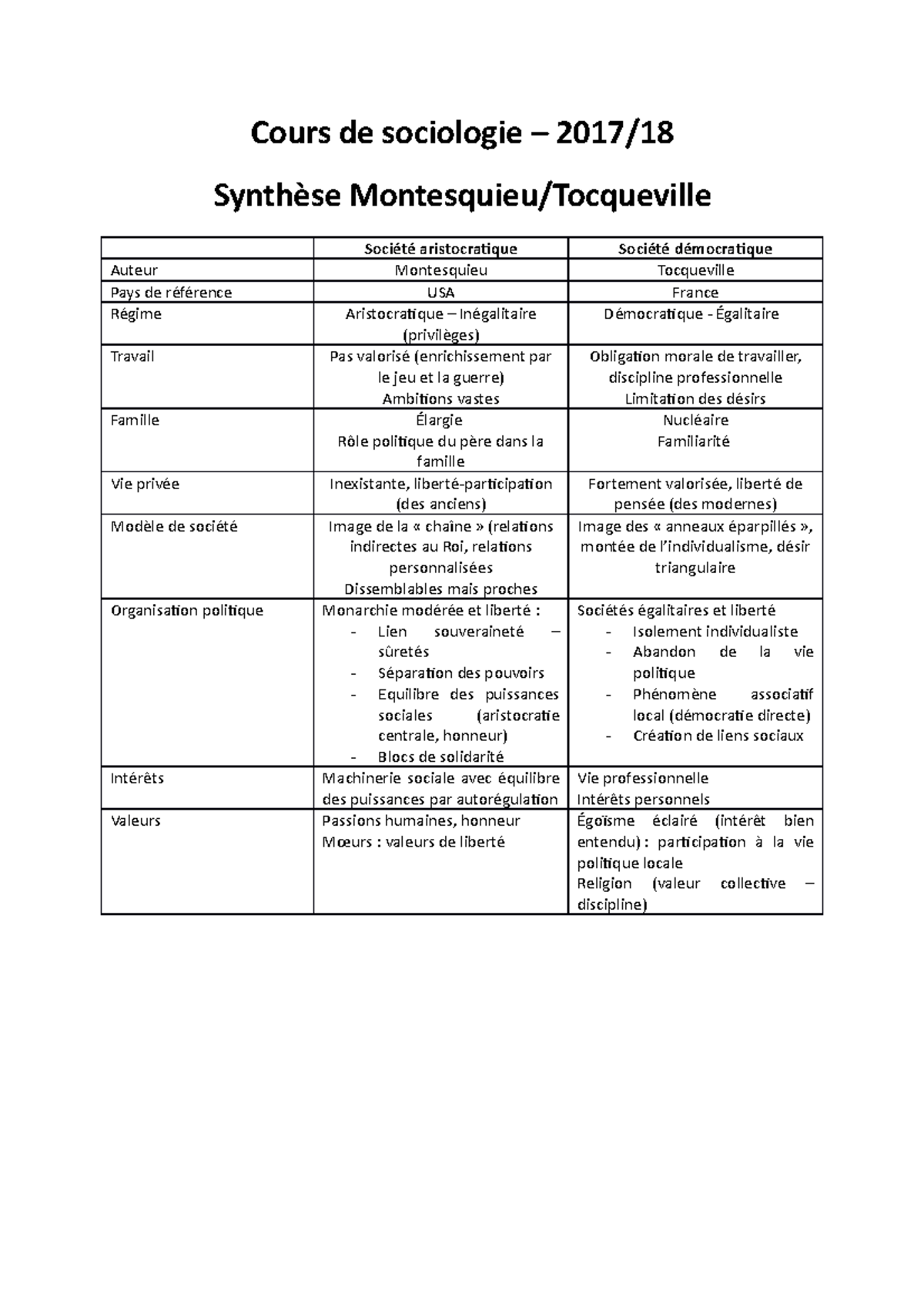
Just as Tocqueville worried about the "tyranny of the majority" in a democratic architecture, we must consider the potential downsides of a pluralist one.
The Architecture of Trust & Why I Am a Pluralist
Finally, let's engage with the most powerful counter-arguments to the organic/pluralist model. Both 'The Architecture of Trust' and 'Why I Am a Pluralist' include excellent sections that anticipate and respond to major critiques.
First, from 'The Architecture of Trust' (LINK), read: 'The Friction of Change: Addressing the Criticisms and Complexities' 'Engaging the Counter-Arguments' (the steel-man critiques from libertarian, social democrat, and conservative perspectives). Focus on the critiques regarding the 'tyranny of the local,' inefficiency, and the abdication of state responsibility. Then, from 'Why I Am a Pluralist' (LINK), read section 5: 'Challenges for Institutional Pluralism' Note the challenges Weyl identifies: underspecification, risk, centralization, manipulability, and legitimacy. These are pragmatic, systems-level concerns.
These critiques force us to confront the difficult trade-offs:
- How do you balance local autonomy (subsidiarity) with universal rights and protections?
- How do you prevent a focus on local community from descending into parochialism or the "tyranny of the local"?
- Can decentralized, relational systems be effective and scalable enough to address global problems?
- Are complex pluralist mechanisms too opaque to be seen as legitimate by the general public?
There are no easy answers here. The goal is not to find a perfect system, but to understand the "value equilibrium" each architecture produces and the price it pays for it.
Conclusion
In this lesson, we have synthesized a vast range of concepts from the course to construct and analyze two opposing models of societal architecture.
Key Takeaways:
- Societies can be modeled as architectures built from formal, informal, and meta-institutions.
- The "Mechanical" Architecture, rooted in top-down bureaucratic logic, tends to prioritize legibility and standardization but systematically sacrifices values like agency, truth, and cohesion, leading to a "Great Fragmentation."
- The "Organic" or "Pluralist" Architecture, rooted in principles of subsidiarity and relationality, seeks to cultivate agency, social capital, and resilience, prioritizing liberty and cohesion. Formal models from various fields provide a convergent justification for its core principle of "cooperation across diversity."
- Neither model is a panacea. Each represents a different value equilibrium with its own distinct benefits, costs, and inherent risks. Choosing between them involves confronting fundamental trade-offs.
Preview of the Final Lesson:
We have now reached the culmination of our analytical journey. You have explored the meta-ethics of justice, examined major historical theories, and analyzed the dynamics of institutional design at both the micro and macro levels. In our final lesson, you will draw upon this entire body of knowledge to tackle the final learning outcome: Formulate a reasoned argument about the 'least bad' institutional arrangements for a society of free and diverse individuals. This will be your opportunity to synthesize everything we have discussed into your own coherent perspective.