
Hello again. In the previous lesson, you compared worked examples with retrieval practice and saw that a wrong or uncertain answer is useful evidence: it shows what you cannot yet reliably produce without support.
This lesson turns that evidence into a system. You will build a cross-subject error log that identifies why an answer went wrong, using four categories: knowledge, reasoning, execution, and question-interpretation errors. The aim is not to create a record of failures. It is to make each practice question tell you exactly what to revise or change next.
From mistakes to metacognition
An error log is a form of metacognitive regulation: noticing how your learning is going, evaluating evidence, and adapting your next move. It makes revision more precise. Rather than writing “revise Physics” after a poor quiz, you might discover that your real issue was repeatedly choosing the wrong component in vector questions, or overlooking the unit requested in the final line.
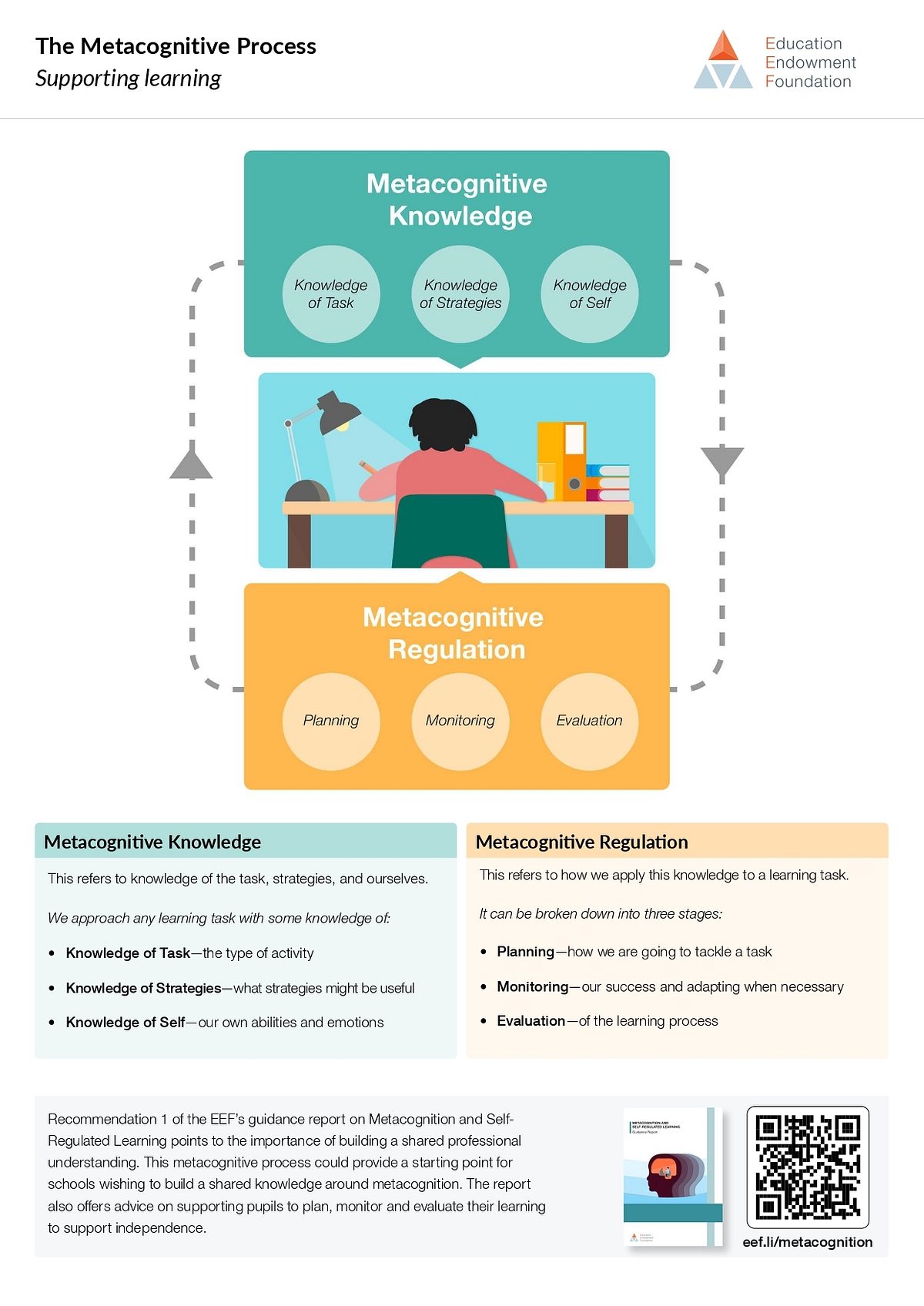
The log works as a loop:
- Attempt a question under appropriate conditions.
- Check the answer or feedback.
- Diagnose the first point at which your response went wrong.
- Repair that particular weakness.
- Retest later, without support.
- Review patterns and plan the following week’s study.
The critical step is diagnosis. “I got it wrong” is an outcome, not an explanation. “I used kilometres when the question required metres” is an explanation that can change your behaviour.
How to Study for the GMAT: Your Most Important Tool, the Error Log
Watch “How to Study for the GMAT: Your Most Important Tool, the Error Log” from PrepScholar GMAT. Although its examples come from GMAT preparation, its simple “which, what, why, how” structure transfers directly to Year 12 subjects.
Watch which and what to see why every entry needs an identifiable question and a precise description of the error. Then watch why and how, focusing on the distinction between the visible mistake and its underlying cause, and on making a prevention strategy specific.
A useful error log should also include correct but uncertain answers. If you guessed correctly, copied a pattern without understanding it, or took far too long, that answer earned a mark but may not be dependable under Year 12 assessment conditions.
The four categories
Use these four categories consistently across all your subjects. They are broad enough to work in Mathematics, Physics, Economics, Geography, English, and Studies of Religion, but specific enough to point towards a different repair.
| Error category | The central question | What it means | Best initial repair |
|---|---|---|---|
| Knowledge | “Did I know the necessary fact, definition, rule, evidence, or method?” | Essential information was missing or incorrect. | Relearn the idea, then use retrieval practice. |
| Reasoning | “Did I know the pieces but fail to connect or apply them?” | You had relevant knowledge but selected an unsuitable method, made an invalid link, or built an unsupported argument. | Study a model, explain the logic, then attempt varied questions. |
| Execution | “Was my approach sound until I made a mechanical slip?” | The method was appropriate, but arithmetic, algebra, notation, transcription, grammar, or diagramming went wrong. | Build a checking routine and practise accurate working. |
| Question interpretation | “Did I answer the question actually asked?” | You overlooked a command verb, condition, quantity, unit, perspective, or limiting word. | Annotate the prompt and restate the task before answering. |
Do not use “careless mistake” as your category. It may describe how the mistake felt, but it does not tell you what to do differently. A student who says “I was careless” might actually have a question-interpretation error, such as missing the word decrease, or an execution error, such as dropping a negative sign.
1. Knowledge errors
A knowledge error occurs when you cannot access the material needed to begin or complete the task correctly.
Examples include:
- In Mathematics, not knowing the exponent law needed to simplify an expression.
- In Physics, not recalling the relationship between force, mass, and acceleration.
- In Economics, not knowing what the cash rate is.
- In Geography, not remembering how representative fraction map scales work.
- In English, being unable to identify what a metaphor is or recall a relevant quotation.
- In Studies of Religion, not knowing the meaning of a command verb such as analyse.
The test is simple: if your notes were closed, did you genuinely lack a required piece of knowledge? If yes, log it as knowledge.
A weak log entry says: “Need to revise vectors.”
A useful entry says: “Knowledge: I could not recall that the horizontal component uses the side adjacent to the angle when the angle is measured from the horizontal.”
That wording tells you exactly what to retrieve later.
2. Reasoning errors
A reasoning error occurs when you possess the individual facts or techniques but use them incorrectly together. This is often the most important category in senior subjects, because assessments rarely ask you only to state a definition.
For example:
- In Physics, you know , but you apply it to the resultant force incorrectly because you have not considered all forces on the object.
- In Economics, you know that higher interest rates discourage borrowing and can reduce spending, but you write that rates “directly reduce inflation” without explaining the chain through aggregate demand and price pressure.
- In Geography, you accurately read two data sources but claim one causes the other without enough evidence.
- In English, you identify a technique and state an effect, but the explanation does not show how the technique creates that effect or answer the question’s focus.
- In Mathematics, you know several formulas but choose a formula that does not fit the information given.
The key sign is this: you can recognise or state the ingredients, but the route from evidence to conclusion is unsound or incomplete.
Reasoning errors are not fixed by rereading everything. They need deliberate attention to the missing link: Why was this method selected? Which evidence supports the claim? What condition makes this formula appropriate?
3. Execution errors
Execution errors happen after you have selected a valid approach. The plan was sensible, but an avoidable mechanical detail changed the answer.
Typical examples:
- Misplacing a negative sign while rearranging an equation.
- Entering a number incorrectly into a calculator.
- Writing instead of .
- Copying a data value incorrectly from a graph.
- Giving a quotation with a missing word that changes its meaning.
- Leaving out a word in an English sentence so that the grammar no longer works.
For instance, suppose a Geography scale question requires:
You correctly set up the calculation but report , rather than . The method was right; the conversion or decimal placement was not. That is an execution error.
Execution errors deserve attention, but do not over-classify mistakes this way. If you used the wrong formula, that is not merely execution. If you misunderstood what distance the question asked for, it is question interpretation. Locate the first meaningful break in your solution.
4. Question-interpretation errors
A question-interpretation error occurs before the subject knowledge is applied. You have responded to a different task from the one set.
Watch for:
- command verbs: explain, analyse, evaluate, compare, calculate
- limiting words: one, most significant, mainly, in the short term
- conditions: “ignore air resistance,” “over the domain,” “using Source A”
- requested form: paragraph, labelled diagram, calculation with units, supported judgement
- direction or quantity: horizontal rather than vertical component; magnitude and direction rather than magnitude alone
Consider this Studies of Religion question:
Explain one way Aboriginal spirituality expresses connection to Country.
A response that lists several facts about Country but does not explain a relationship has not fully met the command verb. The underlying issue may not be a lack of content. It may be that the writer treated explain as though it meant describe. Log that as question interpretation.
Likewise, an English response to “analyse how form shapes meaning” that discusses imagery only may have overlooked the focus on form. The solution is not simply “learn more techniques”; it is to identify the required focus before selecting evidence.
A fast way to classify a mistake
When an answer is wrong, use this order. Start at the top and stop when you identify the first problem.
-
Did I misread, narrow, or fail to meet the task?
If yes, classify it as question interpretation. -
Did I lack a fact, concept, formula, definition, procedure, quotation, or piece of evidence needed to proceed?
If yes, classify it as knowledge. -
Did I know the relevant material but choose, connect, sequence, or justify it poorly?
If yes, classify it as reasoning. -
Did I have a sound interpretation, knowledge base, and method, but make a slip in carrying it out?
If yes, classify it as execution.
A single answer can have more than one issue, but give it one primary category. If useful, record a secondary trigger separately, such as “rushed,” “did not show working,” or “changed answer without checking.” This prevents your log from becoming vague.
For example:
| What happened | Primary classification | Why |
|---|---|---|
| You used when the diagram and angle called for , because you did not know adjacent versus opposite. | Knowledge | The trig relationship was not known securely. |
| You knew the trig ratios but chose the wrong one because you did not label the triangle’s sides. | Reasoning | Knowledge was available, but the approach did not use it reliably. |
| You chose , substituted correctly, but typed instead of . | Execution | The selected method was correct until data entry. |
| You calculated a component correctly but gave the horizontal component when the question requested the vertical one. | Question interpretation | You did not supply the requested quantity. |
The difference may seem small, but the repair is very different. A knowledge error needs recall practice. A reasoning error needs a decision rule. An execution error needs a checking habit. An interpretation error needs better reading of the prompt.
Build one log for all subjects
An elaborate spreadsheet you stop using is less valuable than a simple system you review weekly. You can use a notebook, a document, or a spreadsheet. A spreadsheet is helpful because you can filter entries by subject and error category, but paper is fine if you date entries clearly.
[PDF] Using Error Analysis Logs to Improve Your Learning
Read this two-page strategy aid from KPU Learning Centres for a compact explanation of why repeat errors matter and how a log turns feedback into a study plan.
On page 1, under “What is an Error Analysis Log?” and “How can an Error Analysis Log help me?”, read the purpose and pattern idea. Notice that the goal is to identify repeated errors, not to collect every mark you lose. Then move to page 2, under “How do I use an Error Analysis Log?” Read the four-step process. Adapt its general categories to the four categories used in this lesson.
Create these columns. One row should represent one question, one paragraph, or one identifiable feedback point—not an entire test.
| Column | What to record |
|---|---|
| Date and source | “12 May, Maths mixed revision Q6” or “English practice paragraph, teacher feedback” |
| Subject and skill | “Physics: vectors,” “Economics: monetary policy,” “English: evidence analysis” |
| Status | Wrong, uncertain-correct, guessed-correct, too slow, or feedback issue |
| What I did | The first incorrect move, in one sentence |
| Primary category | Knowledge, reasoning, execution, or question interpretation |
| Correct reasoning | A short explanation in your own words, not copied solution steps |
| Prevention rule | One observable action for next time |
| Repair and retest | What you will practise, plus the date and outcome of a later attempt |
Here are completed examples across subjects.
| Subject and skill | What I did | Category | Prevention rule |
|---|---|---|---|
| Mathematics: algebra | I expanded as . | Execution | “When distributing a negative, write each multiplication as a separate line before simplifying.” |
| Physics: force diagrams | I used with the applied force, not the resultant force. | Reasoning | “Before substituting, draw all forces and write a net-force statement.” |
| Economics: inflation | I wrote that a higher cash rate immediately lowers inflation, with no transmission mechanism. | Reasoning | “Use at least three linked steps: rates, borrowing and spending, aggregate demand, then inflationary pressure.” |
| Geography: map skills | I calculated distance correctly but left the answer in centimetres when the question asked for kilometres. | Question interpretation | “Box the required unit before calculating; convert only after finding map distance.” |
| English: analytical response | I identified alliteration but could not explain its effect. | Knowledge | “Make a flashcard with the technique, a definition, and one example of an effect in context.” |
| Studies of Religion: extended response | I described a practice when the question asked me to analyse how it expresses beliefs. | Question interpretation | “Underline the command verb and write a one-line task translation before planning.” |
Notice that each prevention rule describes something you can do. “Concentrate more” is not a useful rule. “Write a net-force statement before using any equation” is.
Maintain the log without letting it take over revision
The log should support study, not replace it. You do not need a detailed entry for every routine homework slip. Make an entry when the error is:
- repeated;
- important to a current topic;
- likely to matter in an assessment;
- evidence of uncertainty or guessing;
- identified in teacher feedback; or
- a mistake you cannot clearly explain after checking.
Use this short routine after a practice set or returned task. It should take roughly 10 to 15 minutes.
- Mark wrong, uncertain, guessed, and unusually slow responses.
- Re-attempt each important question before reading the solution or feedback in detail.
- Compare your work with the correct answer and identify the first wrong decision.
- Complete the log entry in concise language.
- Carry out the repair immediately if it is small, such as relearning a formula or rewriting a command-verb definition.
- Schedule a short retest after a delay. A retest might be one fresh question, a blank-page explanation, or a rewritten paragraph plan.
At the end of each week, spend about 15 minutes reviewing the log. Count the categories and scan for repeated skills. Then choose a limited response for the following week:
- Repeated knowledge errors: make a small retrieval set and revisit it over several days.
- Repeated reasoning errors: study one strong worked example, identify the decision points, then attempt new questions without notes.
- Repeated execution errors: use a subject-specific checking checklist.
- Repeated question-interpretation errors: spend the first minute of each practice question annotating command verbs, constraints, required evidence, and units.
For example, three Physics execution errors involving units do not mean “I am weak at Physics.” They indicate a narrow, repairable pattern: add a units check to every final answer. A pattern is useful because it makes the next action smaller and clearer.
A minimum viable weekly system
To make this sustainable during Year 12, begin with a modest target:
- log three to five meaningful entries each week across your subjects;
- include at least one uncertain-correct answer when it occurs;
- revisit the log once a week;
- retest one or two repaired errors without notes.
Keep subject labels consistent. For example, always write “Maths Advanced,” “Physics,” “Economics,” “Geography,” “English Advanced,” or “Studies of Religion I.” Consistent labels make it possible to see whether an issue is subject-specific or appears everywhere.
An error such as “not answering the command verb” may appear in English, Geography, Economics, and Studies of Religion. That is valuable information: the solution is not four separate content-revision sessions. It is one general reading routine that you deliberately practise across subjects.
Key takeaways
A cross-subject error log turns marked work into a plan for improvement. Classify each important mistake by its primary cause:
- Knowledge: required information or method was missing.
- Reasoning: information was known but applied, connected, or justified poorly.
- Execution: the approach was sound, but the carrying-out contained a slip.
- Question interpretation: the response did not address the task actually set.
Record the question, the first wrong move, the category, the correct reasoning, and one specific prevention rule. Then retest after a delay and review patterns weekly. This keeps revision focused on evidence rather than on a general feeling that a subject is difficult.
In the next lesson, you will use this system with a mixed set of Mathematics Advanced prerequisite questions, identifying the first skills that need revision before Year 12 work builds on them.
Can't find a good explanation? Sign up and we'll make it for you
Sign up