
Introduction
Welcome to our first lesson on Immanuel Kant, a pivotal figure who reshaped the landscape of Western philosophy. In our previous lessons on empiricism, we concluded with David Hume's profound skepticism. Hume argued that our most fundamental beliefs—in causality, a stable external world, and even our own enduring self—lack a rational basis and are instead products of psychological habit. He left philosophy at a crossroads, seeming to show that empiricism, followed to its logical conclusion, undermines the very possibility of certain knowledge, especially in fields like science and mathematics.
In his own words, Kant was "awoken from his dogmatic slumber" by Hume. He recognized the power of Hume's critique but refused to accept its skeptical conclusion. This lesson will introduce Kant's radical solution to this crisis.
Our learning outcome is to explain Kant's 'Copernican Revolution' as a synthesis of rationalism and empiricism. We will explore how Kant proposed a fundamental shift in our understanding of the relationship between the mind and reality—a shift as profound as Copernicus's displacement of the Earth from the center of the universe. This "revolution" allowed him to rescue knowledge from skepticism while also defining its limits, thereby forging a new path between the opposing traditions of rationalism and empiricism.
1. The Pre-Kantian Impasse: A Crisis in Philosophy
Before Kant, philosophy was largely divided between two great traditions you've studied: rationalism and empiricism. Both were attempting to answer the question: how does our mind acquire knowledge of the world? Both, Kant believed, had reached a dead end.
The prevailing assumption, which Kant called transcendental realism, was that reality exists independently of us, and for knowledge to be true, our minds must correctly conform to how objects are.
- Rationalists (like Descartes and Leibniz) believed we could gain substantial knowledge of this reality through pure reason. However, they struggled to connect their rational conclusions to the world of experience without "dogmatic" leaps, like appealing to a benevolent God to guarantee the connection.
- Empiricists (like Locke and Hume) argued that all knowledge must derive from sensory experience. But as Hume brilliantly demonstrated, this path leads to skepticism. Experience only gives us a sequence of contingent events; it can never provide the necessity and universality we associate with scientific laws (e.g., "every event has a cause").
So, philosophy was stuck. Rationalism was dogmatic, making claims it couldn't prove. Empiricism was skeptical, unable to justify the knowledge we thought we had.
This video offers a clear explanation of this problem, framing it as the "problem of reality" that Kant set out to solve.
Kant's Critique of Pure Reason - Video 9: Reality and the Copernican turn
To understand Kant's solution, we first need to appreciate the problem he inherited. This video from Victor Gijsbers' series on the 'Critique of Pure Reason' explains what he calls 'transcendental realism' and how it led both rationalism and empiricism to fail.
Watch the segment from 01:36 to 05:55. Focus on how the assumption that 'reality is what it is independently of our cognitive powers' creates an unbridgeable gap for both rationalists and empiricists.
2. The 'Copernican Revolution'
Faced with this impasse, Kant proposed a radical change in perspective. Instead of assuming that our knowledge must conform to objects, he asks:
"Hence let us once try whether we do not get farther with the problems of metaphysics by assuming that the objects must conform to our cognition..."
This is the heart of his Copernican Revolution.
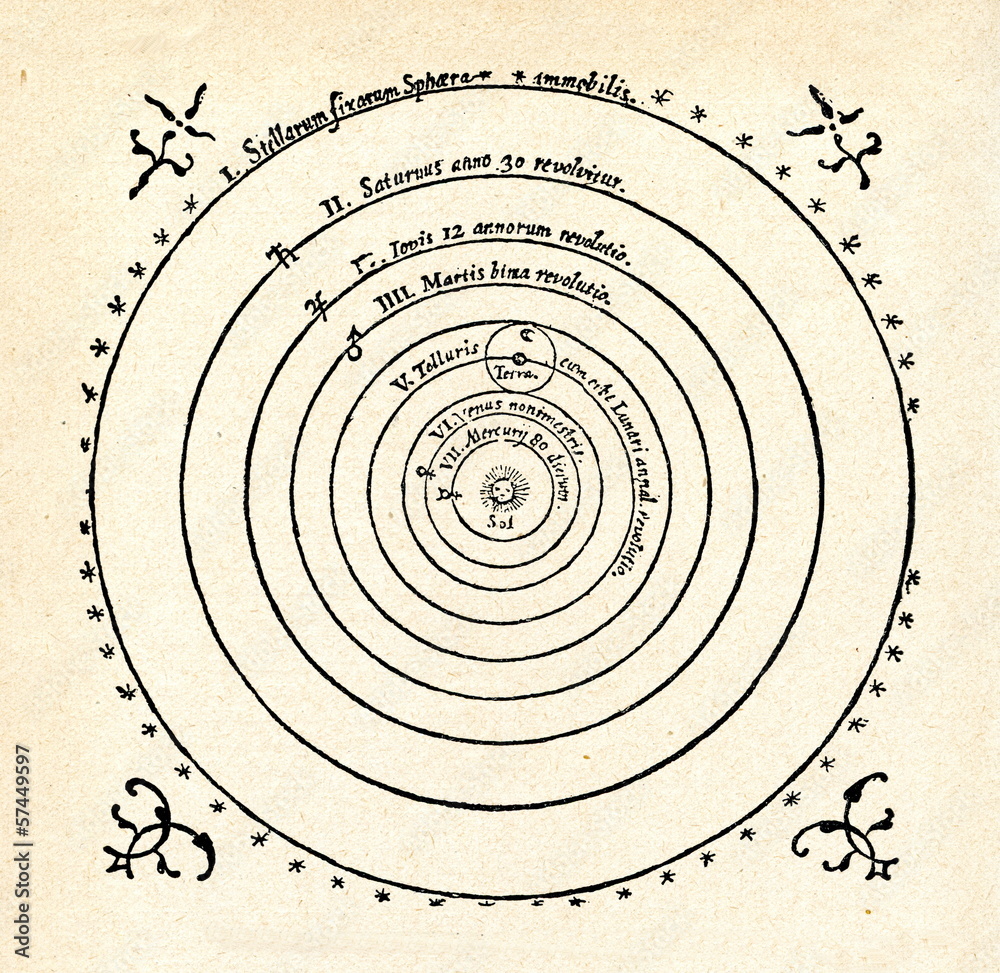
The analogy is this:
- Before Copernicus: Astronomers assumed the heavens revolved around a stationary Earth. When observations didn't fit, they created increasingly complex theories (epicycles).
- Before Kant: Philosophers assumed knowledge revolved around a passively-receiving mind. When this led to skepticism (Hume), they were stuck.
- Copernicus's move: What if the observer (Earth) is moving, and that explains the apparent motion of the heavens?
- Kant's move: What if the mind is not passive but active, contributing a structure to our experience? What if the necessary features of reality (like causality, space, and time) are not discovered "out there" but are imposed by our own cognitive faculties?
This video presents Kant's own introduction of this revolutionary idea from the preface to his masterpiece, the Critique of Pure Reason.
Kant's Critique of Pure Reason - Video 7: The B Preface
Let's hear Kant describe his 'experiment.' This video explains the famous passage where he introduces the Copernican analogy.
Watch the segment from 10:10 to 13:23. Pay close attention to Kant's core proposal: reversing the assumed relationship between cognition and objects.
3. The Synthesis of Rationalism and Empiricism
How does this revolution work in practice, and how does it synthesize rationalism and empiricism?
Kant argues that our experience is a joint product of two things:
- The raw data we receive through our senses (the empiricist element).
- The a priori structures that our mind imposes on that data to make it intelligible (the rationalist element).
Kant's key insight is that our minds are not blank slates. They come with a pre-installed "operating system" that actively organizes all incoming sensory data. This "operating system" includes:
- Forms of Intuition: Space and time. We don't learn about space and time from experience; rather, space and time are the fundamental "lenses" through which we experience anything at all. They are the contribution of our faculty of sensibility.
- Concepts of the Understanding (or Categories): To think about objects, we must organize our intuitions using concepts. Kant argues there are fundamental, a priori concepts like causality, substance, and unity that our understanding uses to structure experience into a coherent world of objects.
This framework allows Kant to have the best of both worlds:
- He agrees with empiricists that all our knowledge begins with experience. We can't have knowledge of things we can't possibly experience. The content of our knowledge comes from the senses.
- He agrees with rationalists that pure reason contributes necessary and universal principles to our knowledge. The form or structure of our knowledge is supplied by the mind a priori.
To use an analogy from your IT background, you can think of the mind's a priori structures as a fixed API or data schema. Raw sensory data, to be processed into what we call "experience," must conform to this schema. Because we know the rules of the schema in advance (a priori), we can know certain things about any possible experience even before we have it—for instance, that it will be spatial, temporal, and causally ordered.
This next reading provides an excellent overview of the entire project, tying together the Copernican Revolution with the synthesis of rationalism and empiricism.
This text from Colin McLear's course notes clearly lays out Kant's project, his relationship to his predecessors, and the core idea of his 'Copernican Revolution.'
Please read two parts of this document: Start with the section titled '1 The Project of the Critique of Pure Reason' and read it through. It explains how Kant positions himself between the rationalists and empiricists. Then, read the section '4 Kant’s ’Copernican Revolution’.' This section explains the analogy and introduces Kant's name for his position: 'Transcendental Idealism.'
4. The Price of Knowledge: Phenomena and Noumena
Kant's revolution successfully saves our knowledge of the natural world from Hume's skepticism. We can have necessary and universal knowledge (e.g., scientific laws) because these laws aren't descriptions of how things are "in themselves," but rules for how our minds must construct experience.
However, this victory comes at a price. It forces us to make a crucial distinction:
- Phenomena: The world as it appears to us, already structured by our minds' a priori forms of intuition (space and time) and categories (causality, etc.). This is the world of experience, the world of science, and the only world we can ever know.
- Noumena (or Things-in-themselves): The world as it might be, independent of the structuring activity of our minds. We can think that such a reality must exist to provide the raw data for our senses, but we can never know it. To know it would require perceiving it, and to perceive it is to shape it with our own cognitive faculties.
This is the core of Kant's Transcendental Idealism. He secures objective knowledge for the world of experience (he is an empirical realist) by arguing that the fundamental structures of this world (space, time, causality) are contributed by the mind (he is a transcendental idealist).
So, Kant resolves the conflict between rationalism and empiricism by assigning them to their proper domains. Rationalist claims about necessity and universality are true, but only for the phenomenal world. Empiricist claims that knowledge is limited to experience are also true, because we can never breach the barrier to the noumenal world. He saves reason, but only by recognizing its limits.
Conclusion
In this lesson, we have taken the first step into Kant's complex and revolutionary philosophy. We've seen how he responded to the crisis of Humean skepticism not by refuting Hume on his own terms, but by changing the terms of the debate entirely.
Key Takeaways:
- Kant addressed the impasse between dogmatic rationalism and skeptical empiricism.
- His Copernican Revolution proposed that objects of experience must conform to the a priori structures of our cognitive faculties.
- This synthesizes empiricism and rationalism: knowledge requires both sensory input (from the world) and organizing structures (from the mind).
- The mind contributes the forms of intuition (space and time) and the concepts of the understanding (like causality) to experience.
- This synthesis comes at a cost: we can only have knowledge of phenomena (the world as it appears to us), not noumena (things-in-themselves).
Preview of the Next Lesson:
To fully grasp Kant's project, we need to understand the tools he created. At the heart of his argument is the question: "How is synthetic a priori knowledge possible?" In our next lesson, we will dissect this question by learning to distinguish between analytic/synthetic and a priori/a posteriori judgments, the fundamental classifications Kant uses to frame his entire critical philosophy.
Can't find a good explanation? Sign up and we'll make it for you
Sign up