
Hello! Welcome to your next lesson in the "Building a High-Performance Marketing Organization" module.
In our last lesson, we focused on the crucial process of aligning key stakeholders around a new data-driven initiative. Successfully gaining buy-in and demonstrating the value of your team's analytical work often has a welcome, but challenging, consequence: more requests for data and analysis from across the business. Without a system to manage this demand, your team can quickly become an order-taking service, overwhelmed by ad-hoc queries and pulled away from strategic, high-impact projects.
Today's lesson addresses this exact challenge. Your learning outcome is to establish a governance process for managing and prioritizing analytical requests from across the business. This isn't about creating bureaucracy; it's about building a strategic framework that protects your team's capacity, ensures their efforts are directed at what truly matters, and provides transparency to the rest of the organization.
We will structure this lesson around the four essential components of an effective governance process:
- The Intake Process: Creating a single, clear "front door" for all analytical requests.
- Prioritization Frameworks: Moving from subjective decision-making to a structured, objective system.
- Roles & Responsibilities: Defining who does what within the process.
- Implementation & Communication: Rolling out the process and managing stakeholder expectations.
1. The Need for Governance: From Chaos to Clarity
As a team lead, you've likely experienced the pain of a high volume of requests arriving through various channels—email, Slack, hallway conversations—each with a different level of urgency and clarity. This "wild west" approach leads to several problems that directly hinder a high-performance marketing organization.
How to Build a Project Intake Process
To understand the core challenges that a formal process solves, let's start with this article from Asana. It clearly outlines the common pain points of managing requests without a system.
Please read the sections titled 'Why is an intake process important for project management?' and 'The challenges of managing project requests.' As you read, reflect on your own experiences with high request volume, scattered requests, and lack of context from stakeholders.
As the article points out, the lack of a process leads to:
- Team Burnout: Your analysts are constantly context-switching and struggling to keep up.
- Lost Requests: Important ideas fall through the cracks.
- Low-Value Work: The team spends time on tasks that aren't aligned with strategic priorities.
- Stakeholder Frustration: Requesters don't have visibility into the status of their requests and feel their needs aren't being met.
A governance process transforms this chaotic environment into a clear, predictable, and strategic workflow.
2. Component 1: The Intake Process - Your Team's Front Door
The foundation of any governance process is a standardized and centralized intake system. This means creating a single point of entry for all new analytical requests.
How to Build a Project Intake Process
The Asana article provides an excellent breakdown of the features of an effective intake process, focusing on the intake form itself.
Read the sections 'What is a project intake process?' and 'Features of an effective project intake process,' focusing specifically on the subsection about the 'project intake form.'
The goal of the intake form is not to create a barrier, but to ensure that every request arrives with the necessary context for your team to evaluate and execute it. For an analytical team, your form should go beyond the basics and be tailored to capture strategic information.
A strong analytical request form should include fields like:
- Requester & Team: Who is asking and which department do they represent?
- The Business Question: What specific question are you trying to answer? (e.g., "Which of our welcome email variants is driving higher first-purchase conversion?")
- The Hypothesis: If applicable, what do you believe the data will show?
- The Decision: What specific action will you take or decision will you make based on the answer? (This is the most critical field—it separates "nice-to-know" from "need-to-know.")
- Impact on Business Goals: Which company or department KPI/OKR does this request support? (e.g., "Improve new user activation rate by 5%.")
- Urgency & Deadline: When is the decision needed and why?
- Success Metrics: How will we measure the success of the decision made based on this analysis?
By mandating this information upfront, you shift the burden of strategic thinking onto the requester and immediately filter out vague or low-impact asks.
3. Component 2: Prioritization Frameworks
Once you have a backlog of well-defined requests, the next step is to prioritize them. Simply working on a "first-in, first-out" basis ensures you're busy, but not necessarily effective. As a leader, your role is to ensure the team's limited resources are focused on the 20% of tasks that will drive 80% of the value (the Pareto Principle).
There are several frameworks you can use, ranging from simple to more complex.
Effective Prioritization Guidance for Marketing Organizations
The article 'Effective Prioritization Guidance for Marketing Organizations' from AgileSherpas introduces several practical techniques. It's grounded in Agile principles, which are highly effective for managing analytical work.
Please read the section 'Key Agile Prioritization Techniques.' This will give you an overview of four different methods: Stack Ranking, MoSCoW, the Eisenhower Matrix, and Cost of Delay.
Let's look at three of these methods that are particularly useful for an analytics team:
a) The Eisenhower Matrix (Urgent vs. Important)
This is a simple but powerful tool for quick, daily or weekly triage. You categorize tasks into four quadrants:
- Urgent & Important (Do): Crises, pressing problems, deadline-driven projects.
- Important, Not Urgent (Schedule): This is where strategic work lives. This includes deep-dive analyses, model building, and experimentation planning. Your goal as a leader is to protect time for this quadrant.
- Urgent, Not Important (Delegate): Interruptions, some meetings, simple data pulls. Can these be automated or handled by a junior team member or a self-serve dashboard?
- Not Urgent, Not Important (Eliminate): Time-wasters, trivial requests. The intake form should help you identify and reject these early.
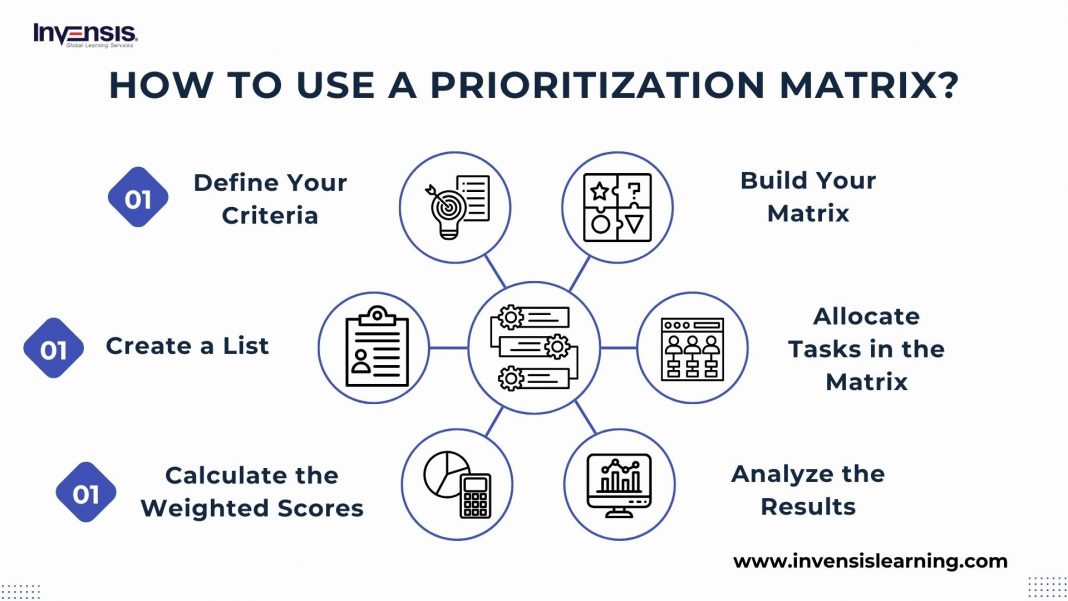
b) The Impact vs. Effort Matrix
This is a visual and collaborative framework, great for prioritization meetings. You plot each request on a 2x2 matrix:
- High Impact / Low Effort (Quick Wins): Do these first to build momentum.
- High Impact / High Effort (Major Projects): These are your big strategic initiatives. They need to be planned carefully.
- Low Impact / Low Effort (Fill-ins): Do these if you have spare capacity, but they shouldn't displace more important work.
- Low Impact / High Effort (Thankless Tasks): Avoid these.
c) The MoSCoW Method
This framework is excellent for planning work over a specific period, like a quarter or a sprint. It helps manage stakeholder expectations by clearly communicating what is and isn't on the roadmap.
What is MoSCoW Prioritization Method? Definition, Overview, and Best Practices
For a clear explanation of how the MoSCoW method works in practice, watch this short video from ProductPlan.
Watch from 00:25 to 03:06. Focus on how each category is defined and the types of questions you should ask to correctly classify an initiative.
As the video explains, you categorize requests into:
- Must-Haves: Non-negotiable for the current period. The project is a failure without them.
- Should-Haves: Important, but not vital. Their absence is painful but there's a workaround.
- Could-Haves: Desirable but with a small impact if left out. These are often the first to be dropped if time is tight.
- Won't-Have (This Time): Explicitly stating what you are not doing is one of the most powerful parts of this framework for managing expectations.
The right framework depends on your team's maturity and culture. You might start with a simple Impact/Effort matrix and evolve to a weighted scoring model over time.
4. Component 3: Defining Roles & Responsibilities
A process is only as good as the people who run it. Defining clear roles ensures accountability and smooth operation.
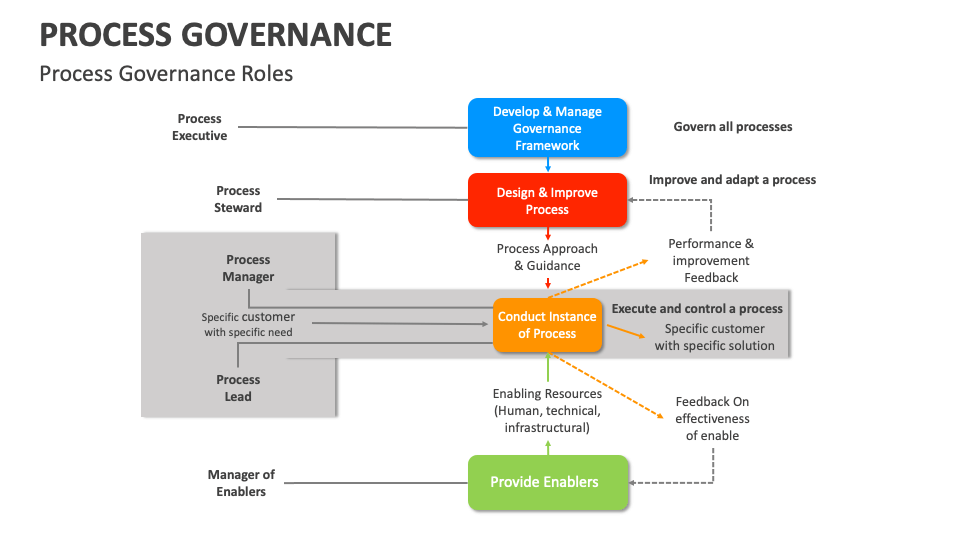
Let's translate these formal roles into a practical marketing analytics context:
- Process Executive/Owner (You): As the marketing leader, you own the overall governance process. You are responsible for its design, success, and for making the final call on major priority conflicts.
- Process Manager/Lead: This could be a senior analyst or an analytics manager on your team. They are responsible for the day-to-day management of the process: triaging new requests, ensuring forms are complete, and preparing the backlog for review.
- Stakeholder Council (The "Process Stewards"): This is not a full-time role, but a crucial function. This should be a small, cross-functional group of leaders (e.g., from Sales, Product, Finance, and Marketing) who meet regularly (e.g., bi-weekly or monthly) to review the prioritized backlog. This council provides business context, validates priorities, and ensures the analytics roadmap is aligned with the entire company's direction. This formalizes the stakeholder alignment we discussed in the last lesson.
- Manager of Enablers: This could be the head of data engineering or IT, who provides the necessary data infrastructure and tools for your team to succeed.
5. Component 4: Implementation and Communication
With the components designed, the final step is to put the process into action.
How to Build a Project Intake Process
Let's return to the Asana guide for a step-by-step implementation plan. This provides a clear checklist for rolling out your new process.
Read the final section, 'How to create a project intake process.' Pay close attention to the steps about centralizing your process, identifying tools, and communicating the process to everyone involved.
Your implementation plan should include:
- Select Your Tool: Centralize your process in a work management tool like Asana, Jira, Trello, or even a sophisticated shared spreadsheet. The tool should allow you to host the intake form, manage the backlog, and track the status of requests.
- Document the Process: Create a simple one-page document that outlines the process, the roles, the prioritization framework, and estimated timelines or Service Level Agreements (SLAs). For example, "New requests will be triaged within 2 business days."
- Communicate, Communicate, Communicate: Announce the new process to the entire organization. Hold a short training session to explain the why behind the change (to focus on high-impact work) and the how (how to use the new form).
- Be Firm but Flexible: In the beginning, you will need to gently redirect requests that don't come through the proper channel back to the intake form. Be prepared to iterate on the process. After the first month, solicit feedback from your team and key stakeholders to see what's working and what isn't.
Test your understanding!
Imagine your team receives these three analytical requests simultaneously:
- From the CFO: "I need to understand the ROAS for our new influencer campaign for the quarterly board meeting this Friday." (High Urgency)
- From a Product Manager: "Can we analyze user behavior data to see if customers who use Feature X have a higher 90-day retention? We're planning our H2 roadmap next month." (High Potential Impact)
- From the Social Media Manager: "Can you pull the weekly engagement stats for all our Instagram posts? I need it for my report tomorrow." (Low Effort, Recurring)
How would you prioritize these using the Eisenhower Matrix (Urgent/Important)? Justify your placement for each request.
Show answer
Here’s a likely prioritization:
- CFO Request (Urgent & Important - Do Now): This is a direct request from a key, high-power stakeholder with a hard deadline tied to a major business event (the board meeting). Its importance is high due to the audience, and its urgency is high due to the deadline. This is the top priority.
- Product Manager Request (Important, Not Urgent - Schedule): This request has the potential for very high strategic impact on the product roadmap and customer retention. However, the deadline is next month. This is a classic "Schedule" item. You should immediately acknowledge it, add it to the backlog for the next prioritization meeting, and schedule the work to ensure it's done well before the PM needs it.
- Social Media Manager Request (Urgent, Not Important - Delegate/Automate): This is a recurring, low-complexity request. While it's urgent for the manager's report, its strategic importance is likely low compared to the others. The best long-term solution is to automate it by building a self-serve dashboard. In the short term, if automation isn't possible, this is a task you might delegate to a junior analyst or timebox strictly so it doesn't distract from the CFO's request. It should not take priority over strategic work.
Conclusion
Establishing a governance process for analytical requests is a foundational act of strategic leadership. It moves your team from a reactive, order-taking function to a proactive, value-driving engine. By creating a transparent and structured system, you not only protect your team from burnout but also elevate the quality and impact of their work across the entire business.
Key Takeaways:
- A Governance Process is Strategic: It's a system to align analytical resources with the most critical business priorities.
- Start with a Single Front Door: A standardized intake form is the cornerstone of the process, ensuring all requests arrive with the necessary strategic context.
- Prioritize with a Framework: Move beyond subjective calls by using structured methods like the Eisenhower Matrix, Impact vs. Effort, or MoSCoW to make objective decisions.
- Define Clear Roles: Ensure accountability by defining who owns the process, who manages it day-to-day, and who provides stakeholder oversight.
- Communicate the Change: Rolling out the process requires clear communication about the "why" and "how" to ensure stakeholder buy-in and adoption.
Preview of Your Next Lesson:
A well-run governance process creates the structure and capacity for your team to do more than just answer questions—it gives them space to ask them. This leads directly to our final topic in this module: how to "Foster a culture of continuous learning and experimentation within the marketing team." We'll explore how to build on this foundation of process to create a team that is constantly testing, learning, and pushing the boundaries of performance.