
Good to see you again. In the previous lesson, you distinguished anthroposophy itself from Waldorf education, anthroposophic medicine, and anthroposophically oriented art therapy. You also practised asking what kind of claim is being made, by whom, and within what setting.
That same discipline begins at the level of reading notes. A Steiner text may prompt a vivid thought, a personal memory, or a significant experience in painting; all of that can belong in your study. But it becomes much more useful when you can later tell exactly what the author said, what you understood the author to mean, what you personally experienced, and what remains uncertain.
In this lesson, you will build a repeatable source-journal entry with five distinct parts:
- quotation
- paraphrase
- personal response
- artistic experience
- unanswered questions
Allow about 40 minutes: 14 minutes with the two study resources, 10 minutes to set up your template, and 15–20 minutes to make one entry from a short passage you are currently reading.
Why separation matters
A source journal is not merely a notebook of appealing passages. It is a record of your relationship to a source. Its purpose is both scholarly and practical: it enables you to return months later and identify the origin and status of an idea without mistaking a later reflection for Steiner’s own wording.
This is particularly important in anthroposophical study because a short phrase can gather many layers of meaning over time. A statement may appear:
- in a published philosophical work;
- in a lecture given to a particular group;
- in a later translation;
- in a teacher-training handout;
- in an artistic or therapeutic tradition;
- or in one’s own inner and artistic experience.
Those layers are not worthless because they differ. But they should not be presented as though they were the same thing.
For instance, consider these two sentences:
Steiner describes a particular quality of blue in this passage.
Blue has this effect on every person who paints with it.
The first sentence can be checked against a source. The second is a broad generalization. It would need much more support, and it may not be justified at all. A source journal helps prevent such movement from a text, through experience, to an unexamined universal claim.
The same care protects artistic practice. You may honestly record, “While working with a blue wash, I noticed my attention becoming quieter.” That is a report of your experience in a particular situation. It does not establish that blue reliably produces calm, nor does it tell you anything diagnostic about another person’s use of blue.
Quotation, paraphrase, and reflection are different forms of writing
Before creating your template, clarify the distinction between the first two source-based parts: quotation and paraphrase.
THE WRITING CENTER | GOLDFARB MEZZANINE 232 | BRANDEIS.EDU/WRITINGCENTER
Read Brandeis University Writing Program’s handout to establish a precise distinction among summary, paraphrase, and direct quotation. Its central point is valuable for source work: even when you write in your own words, the originating author still needs to be named.
On page 1, in the opening section, “What are the differences among summarizing, paraphrasing, and quoting?”, read the definition of summary, then the definition of paraphrase, and finally the definition of quotation. Then turn to page 2, “How and when should I summarize, paraphrase, or quote?” Read the guidance from the bullet point beginning “Summarizing” through the final suggested step. Notice the recommendation to paraphrase by default and reserve direct quotations for wording that genuinely needs to be preserved.
A useful scale is:
| Form | Relationship to the source | Main use in a source journal |
|---|---|---|
| Quotation | Exact words, copied faithfully | Preserving a significant formulation, key term, ambiguity, or wording you will later examine |
| Paraphrase | The author’s meaning restated in your own language | Demonstrating your understanding while retaining the source’s claim and attribution |
| Summary | A broad and condensed account of a longer section or work | Recording the main thread of a chapter, lecture, or book |
For this course, your entry will normally contain a short quotation and a paraphrase. A one-sentence summary is optional when the wider context is needed.
Quotation: preserve words, not your memory of them
A quotation must be copied word for word from the edition in front of you. It should include quotation marks and a location reference: page number where available; otherwise chapter, section, lecture title, paragraph, or another retrievable marker.
For a Steiner source, record as much of the following as you can locate:
- author;
- title;
- original form: book, article, or lecture;
- original publication date or lecture date;
- lecture place and intended audience, when relevant;
- Gesamtausgabe number, if given;
- translator and edition, if reading in English;
- page number or digital location;
- date you consulted the text.
This may seem meticulous, but it solves a recurring problem in Steiner studies: one often encounters a memorable phrase detached from its lecture setting, date, translation, or even its original source.
Paraphrase: state the author’s claim in your own language
A paraphrase is not a quotation with a few words changed. First read the passage carefully. Then look away from it, articulate its sense in your own phrasing, and compare your version with the original to ensure that you have neither distorted nor quietly improved the claim.
Your paraphrase should still identify its source:
In this passage, Steiner presents thinking as an activity that can itself become an object of observation (Steiner, [title], GA [number], p. [number]).
The essential rule is:
A paraphrase belongs to the author in meaning, even though it belongs to you in wording.
Personal response: make your standpoint visible
A personal response begins where paraphrase ends. Here, first-person language is appropriate:
- “I find this distinction difficult because…”
- “This challenges my earlier assumption that…”
- “I am drawn to the phrase because…”
- “I am not yet persuaded by this claim because…”
- “I recognize a connection with my experience in education, but I need to test whether the connection is justified.”
Personal response is not a lower form of study. It is where a text becomes inwardly active. The important thing is to label it honestly, rather than quietly presenting it as the author’s meaning.
The following short video offers a useful reminder that reflection goes beyond description. It also provides a simple structure you can adapt when a passage has genuinely affected your thinking.
Watch “Reflective Writing” from Academic Skills, The University of Melbourne. It distinguishes mere recounting from reflective analysis and introduces a compact framework for moving from an event or text toward considered future action.
Watch the purpose to see why reflection includes questioning, analysis, and a connection between experience and theory. Then watch the DIEP model: Describe, Interpret, Evaluate, and Plan. You do not need to force every journal entry into all four stages, but use the model when your response becomes vague or remains only emotional description.
The source-journal structure
Use one entry per passage, image, artistic indication, or short section of a text. Keep each category visibly separate with headings, spacing, or a consistent colour code.
The five-part structure below is deliberately simple. It can accompany both philosophical study and artistic work.
1. Source record and claim status
Place this at the top of every entry. It answers: What exactly am I studying?
Template
| Field | What to record |
|---|---|
| Date of entry | The date you made the notes |
| Source | Author, title, edition, translator where applicable |
| Original context | Book, article, or lecture; lecture date/place/audience if known |
| Location | GA volume, page, chapter, lecture number, or stable digital location |
| Passage focus | A brief label in your own words |
| Claim status | Steiner’s own claim; later anthroposophical interpretation; training tradition; external scholarly assessment |
The final line continues the discipline of the preceding lessons. If a modern instructor says something about a colour exercise, record the instructor and training context rather than automatically assigning the idea to Steiner.
2. Quotation
Copy only the words you need, exactly. If a passage is long, quote a coherent sentence or brief sequence rather than a striking fragment that loses its context.
Template
“Exact words copied from the edition” (Author, Title, GA [number if applicable], p. [number]).
Under the quotation, add one brief practical note:
Why retain these exact words?
For example: “The wording of ‘freedom’ is central here,” or “I need to examine whether the translator’s term carries implications not obvious in English.”
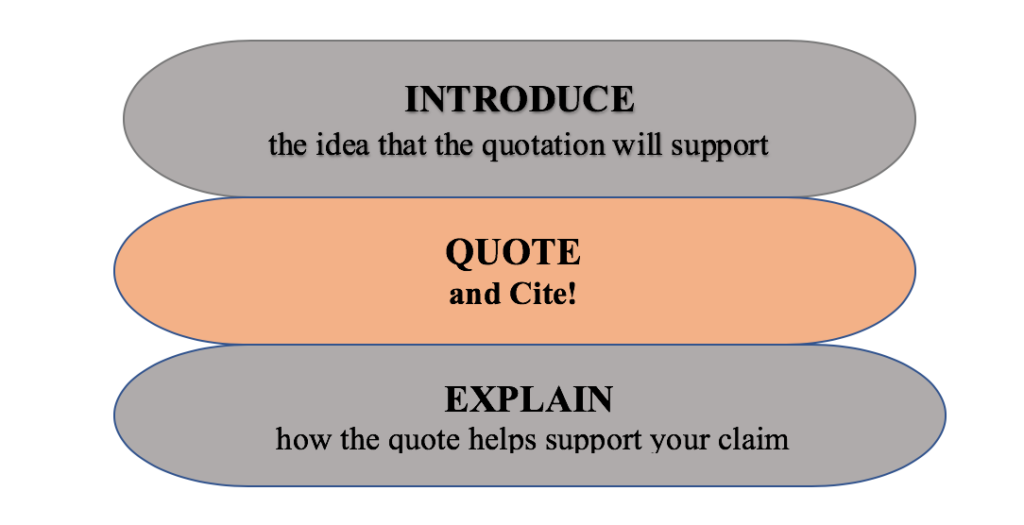
This is the journal version of a “quote sandwich”: you introduce the point, give the exact quotation and citation, then explain why it matters.
3. Paraphrase
State the passage’s meaning in your own words, faithfully and without adding agreement, disagreement, or personal memories.
Template
Paraphrase: Steiner’s point in this passage appears to be that __________. He distinguishes this from __________. The immediate claim concerns __________, rather than __________.
If a paraphrase feels unusually difficult, that is useful information. It may mean that the passage is conceptually dense, that a technical term needs further study, or that you have begun to import a later interpretation. Mark the difficulty instead of disguising it.
4. Personal response
Now allow your own thought to enter, while making its status clear.
Template
Personal response: I notice that I respond to this passage by __________. It connects with / conflicts with __________. At present, I understand it as __________. I need to remain cautious because __________.
A responsible response may include attraction, resistance, uncertainty, or intellectual disagreement. Sympathetic study does not require premature assent. It asks for a serious attempt to understand what is being said before deciding what you make of it.
5. Artistic experience
This section is for a brief artistic study undertaken in relation to the text, or for an experience that arose while reading. Keep it separate from interpretation.
A useful sequence is:
- Material and process: What did you actually do?
- Formal observation: What happened visibly in the work?
- Personal experience: What did you notice in attention, mood, pace, or bodily state?
- Interpretive restraint: What are you not entitled to conclude?
Template
Artistic experience: In a ten-minute watercolour study, I worked with __________ on damp/dry paper. Visibly, the colour __________; the edges, density, direction, and light-dark relation changed when __________. I personally noticed __________. This is an experience in this particular study; it does not establish that __________ for other people.
This section is especially useful for your ongoing Wagner-method work. It permits an intimate record of colour, movement, atmosphere, resistance, and inner response without turning the painting into a personality test or a clinical sign.
6. Unanswered questions
End with questions rather than hurried conclusions. Questions keep study alive and make later return possible.
Separate different kinds of question:
- Textual question: What does this term mean in this passage?
- Contextual question: When and for whom was this written or spoken?
- Comparative question: How does this relate to an earlier philosophical work or a later lecture?
- Practice question: What could I observe if I repeated this artistic study?
- Boundary question: Is this an authorial claim, a pedagogical practice, a therapeutic hypothesis, or my own association?
Avoid phrasing questions as concealed conclusions. For example, instead of “Does this prove that blue heals anxiety?”, write: “What, if any, basis would be needed before making a therapeutic claim about colour and anxiety?”
A worked miniature entry
The following example uses the Brandeis handout rather than a Steiner text, so that the distinctions themselves remain visible. It is a model of form, not content to copy.
Source record
- Date: 12 March 2025
- Source: Brandeis University Writing Program, “Summarizing, Paraphrasing, and Quoting”
- Location: p. 1, “What are the differences among summarizing, paraphrasing, and quoting?”
- Passage focus: Why quotations need exactness
- Claim status: Academic-writing guidance from the Writing Program
Quotation
“Quotations must be identical to the original, using a narrow segment of the source” (Brandeis University Writing Program, “Summarizing, Paraphrasing, and Quoting,” p. 1).
Why retain these exact words? The phrase “identical to the original” is precise. It reminds me not to rely on a remembered or slightly altered Steiner quotation.
Paraphrase
The handout explains that a direct quotation reproduces a limited portion of a source exactly, while paraphrase restates the source’s content in new language. Both forms must make their source visible.
Personal response
I tend to copy longer passages when I fear losing their nuance. This clarification helps me see that preserving exact wording and demonstrating my own understanding are different tasks. I can keep a short quotation for the author’s formulation, then test myself by paraphrasing it separately.
Artistic experience
After reading, I made a small watercolour note in which one diluted ultramarine wash crossed a warmer wash. I observed a softened, unstable edge where the colours met. I noticed that I wanted to call the effect “receding,” but that word is already an interpretation rather than a purely visual description. I need first to record what is visible: relative lightness, spread, edge, and surrounding colour.
Unanswered questions
- How should I cite a Steiner quotation when the English translation differs noticeably from the German term?
- When does a paraphrase of a spiritual-scientific claim become an interpretation rather than a faithful restatement?
- Which parts of my current painting vocabulary come from direct instruction, and which have I inferred through practice?
Notice the order. The artistic observation does not validate or invalidate the writing handout. It is simply a related experience, recorded in its own category.
Make your first Steiner source-journal entry
Choose one short paragraph or a coherent passage of no more than a page from a Steiner text you are currently reading. A compact passage is better than a grand theme. You are learning clarity, not trying to summarize anthroposophy in one sitting.
Work through the following process:
-
Establish the source.
Write the bibliographic details before taking notes. If the text is a lecture, include the lecture date, place, audience, and GA reference when your edition provides them. -
Read once for the overall movement.
Do not copy immediately. Ask what question the passage seems to address. -
Select one short quotation.
Copy it slowly and check it against the source. Record the page or other location before closing the book. -
Put the source aside.
Write a two- to four-sentence paraphrase from memory. Then reopen the text and correct any distortion or unnoticed borrowing of phrasing. -
Write a brief personal response.
Name your attraction, resistance, association, or provisional understanding. Use “I” where appropriate. -
Add an artistic-experience note, if relevant.
If you make a short watercolour study, keep it bounded: ten to fifteen minutes, one colour relationship or formal quality, and descriptive language before interpretive language. If you do not paint, simply note the sensory or attentional conditions of your reading. -
End with two unanswered questions.
Let at least one question concern the text itself rather than your reaction to it.
For personal study, this can be one page. Over time, a collection of such entries will become more valuable than a large unstructured notebook: it will show where your understanding genuinely changed, which ideas came from which sources, and which questions deserve return.
A final boundary for professional preparation
Your source journal is a study and reflective-practice tool. It is not a client record, diagnostic document, or substitute for clinical supervision. If you later use reflective journaling during supervised placement, follow the institution’s confidentiality rules, do not include identifying client details, and keep artistic observation distinct from clinical conclusions.
Key takeaways
A disciplined source journal protects both the source and your experience.
- A quotation preserves exact wording and includes a retrievable citation.
- A paraphrase restates the author’s meaning in your own words while retaining attribution.
- A personal response makes your own standpoint visible rather than disguising it as source material.
- An artistic-experience note records process, visible form, and personal response without turning these into universal or diagnostic claims.
- Unanswered questions preserve uncertainty and direct later study.
You now have a practical method for reading Steiner closely while maintaining clear boundaries among text, interpretation, artistic practice, and personal reflection. In the next lesson, you will use the distinctions developed across this module to construct an initial concept map linking Steiner’s philosophy, spiritual science, picture of the human being, artistic work, and therapeutic applications.
Can't find a good explanation? Sign up and we'll make it for you
Sign up