Introduction
Welcome back! In our last lesson, we established a crucial bridge from the opening to the middlegame. You learned how to recognize when the opening phase is over and how to use the Assess, Identify, and Execute framework to formulate your first middlegame plan.
One of the key elements in the "Assess" step was evaluating piece activity. This is often the most challenging concept for players around your level to master, yet it's the secret to creating powerful, coordinated attacks and solid defenses.
Today's lesson is dedicated entirely to this single, vital concept. Our goal is to define piece activity and learn how to consistently identify the least active piece in any given position. Mastering this skill will give you a default, high-value plan in almost any situation where the correct path isn't immediately obvious: find your worst piece and make it better.
1. What is Piece Activity and Why Does it Matter?
At its core, piece activity is a measure of a piece's influence and usefulness.
- An active piece controls many important squares, has multiple good moves available, and is directly involved in attacking, defending, or controlling key areas of the board.
- A passive piece (or "unemployed" piece) is often stuck on the back rank, blocked by its own pawns, has few or no good squares to move to, and contributes little to your overall strategy.
While material balance is easy to count, piece activity is a more dynamic and, arguably, more important factor in the middlegame. An army of well-placed, active pieces will almost always defeat a clumsy, disorganized army of equal material value.
To understand why this concept is so central to good chess, let's watch a short clip.
3 Simple Steps To Find The Best Move In ANY Position
This video from the Remote Chess Academy introduces three key factors for evaluating any chess position. The presenter makes a strong case for why one of these factors is the most dominant.
Watch the following two clips: From 01:12 to 01:34, where the presenter lists the three main evaluation factors. From 04:54 to 05:37, where he explains why piece activity is the most dominant factor. The 'unemployment' analogy he uses is a very helpful way to think about your pieces.
As the video explains, your pieces are your primary assets. Ensuring they are all "employed" and working productively is the foundation of strong middlegame play.
Let's look at what active pieces look like on the board.

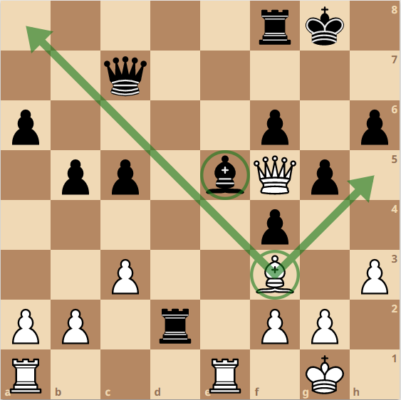
2. The Golden Question: Which is My Least Active Piece?
Now for the most practical part. In your games, when you've finished developing and aren't sure what to do next, you should ask yourself one simple question.
Finding the best Squares for your Pieces with Maneuvering | Chess Middlegame | GM Sam Shankland
Let's hear from Grandmaster Sam Shankland. He introduces the single most important question you should ask yourself to find a plan when you're not facing an immediate threat.
Watch the introduction from 00:00 to 01:18. GM Shankland will state the key question that forms the basis of our lesson: 'Of all my pieces on the board, which one is the least effective?'
This question—"Which is my least active piece?"—is your starting point for formulating a plan. The process is simple:
- Briefly scan each of your pieces (Queen, Rooks, Bishops, Knights).
- For each one, ask: What is it doing? Does it have good squares to move to? Is it attacking something? Is it defending something important?
- The piece that has the weakest answers to these questions is your Least Active Piece (LAP).
Let's see this process in action.
Finding the best Squares for your Pieces with Maneuvering | Chess Middlegame | GM Sam Shankland
Now, let's watch how GM Shankland applies this exact question to analyze a position from a game by former World Champion Anatoly Karpov, a player renowned for his incredible piece coordination.
Watch the analysis from 03:43 to 08:13. Notice how he systematically evaluates White's pieces: First (at 03:43), he identifies the rook on a1 as the worst piece and explains why. Later in the same game (at 04:58), he repeats the process and identifies the knight on c3 as the new problem piece. Pay close attention to his reasoning. This is a fantastic insight, as a knight on c3 might look perfectly fine to many players, but he correctly identifies it as the 'problem piece' in that specific context.
This thought process is so fundamental that it's a core principle in many chess strategy guides. The article "Best Chess Strategies" from World Chess refers to this as the "Worst-piece rule": When a plan is not apparent, then the question is: “What is the worst piece?”. Then work on that one.
To solidify this idea, here is one more short reading.
An Intermediate Guide To Chess Strategy
This guide from House of Staunton provides another clear and concise look at this principle.
Read section 4, 'Improve Your Least Active Piece (LAP)'. It offers a straightforward definition and another simple example of identifying a passive rook and finding a better square for it.
3. Practice: Identify the "Unemployed" Piece
Let's try it yourself. Below is a position. It's Black's turn to move. Take a moment and apply the "Least Active Piece" principle.
Black to move. Systematically go through your pieces and identify which one is the least active.
Your task: Go through Black's pieces one by one (Queen, Rooks, Bishops, Knights) and give each a rating: Active, Okay, or Passive/Unemployed. Which piece or pieces stand out as the least effective?
.
.
.
Analysis
Let's walk through it together:
- Queen on d7: Okay. It's developed and helps control the center.
- Rook on f8: Active. It's on a semi-open f-file, ready to participate in a kingside attack.
- Rook on a8: Passive. This is a classic "unemployed" piece. It's on its starting square, doing nothing, blocked by the a-pawn. It is a major candidate for our LAP.
- Bishop on g7: Okay/Passive. It's developed but its diagonal is currently blocked by its own pawns. It's not doing much, but has potential.
- Knight on f6: Active. A well-placed knight, controlling central squares and eyeing White's position.
- Knight on b8: Passive. This piece has not yet moved! It has no influence on the game. This is our other major candidate for LAP.
Conclusion: The Rook on a8 and the Knight on b8 are clearly Black's least active pieces. Therefore, a good plan for Black would be to start improving one of them. For instance, Black could play ...Na6 to get the knight into the game, or find a way to bring the a8-rook to a more useful file like c8 or d8.
Conclusion
Congratulations! You now have a powerful tool to guide you through the complexities of the middlegame. When you're not sure what to do, you have a default plan that will almost always improve your position.
Key Takeaways:
- Activity is King: Piece activity is a measure of a piece's influence and is one of the most important strategic factors in chess. Your goal is to have all your pieces working together.
- Ask the Golden Question: When you don't have an immediate tactic or threat, ask yourself: "Which is my least active piece?"
- Find the "Unemployed" Piece: Systematically scan your pieces to find the one that is blocked, undeveloped, or simply not contributing. This is your "Least Active Piece" (LAP).
By consistently identifying and improving your worst piece, you will build stronger, more coordinated positions, which naturally leads to more tactical opportunities and better results.
Preview of the Next Lesson:
Today, we mastered the art of identifying the problem. The logical next step is to solve it. In our next lesson, we will focus on how to formulate a simple plan to improve the position of a passive piece. We'll look at maneuvering techniques, how to spot good destination squares, and how to execute the moves that bring your "unemployed" pieces back into the fight.