Hello! Welcome back to the "Fundraising for Your Venture Fund" module.
In our last lesson, we focused on articulating your fund's value proposition to potential Limited Partners (LPs). We identified that the economic terms of the fund—what LPs pay for your services—are a critical component of that proposition. We briefly introduced the industry shorthand "2 and 20," and today, we're going to dive deep into what that really means.
This lesson is dedicated to explaining fund economics, specifically management fees and carried interest. As someone with a technical background but new to finance, our goal is to demystify these core concepts from first principles. By the end of this lesson, you'll understand not just what these terms mean, but also the mechanics behind them and the strategic decisions you'll need to make as you design the economic engine of your own fund.
1. The Core Components: Management Fees and Carried Interest
At its heart, a venture fund's compensation structure is designed to do two things:
- Pay for the fund's operational expenses.
- Reward the General Partner (GP) for generating profits.
These two objectives correspond directly to the two main economic levers: management fees and carried interest. The industry standard is often called the "2 and 20" model.
To start, let's get a formal definition of these terms. This article from the AngelList Education Center, 'Venture Capital Fee Economics', provides a concise overview of the fee structure in venture capital.
Please read the introduction and the section titled 'The Different Types of Venture Capital Management Fees'. This will provide a clear breakdown of the three main fee categories LPs encounter: organizational expenses, management fees, and carried interest.
As the article explains, we can think of the economics in two distinct buckets:
- Management Fee: A predictable, annual fee paid by the LPs to you (the GP) to cover the costs of running the fund. This is your operational budget.
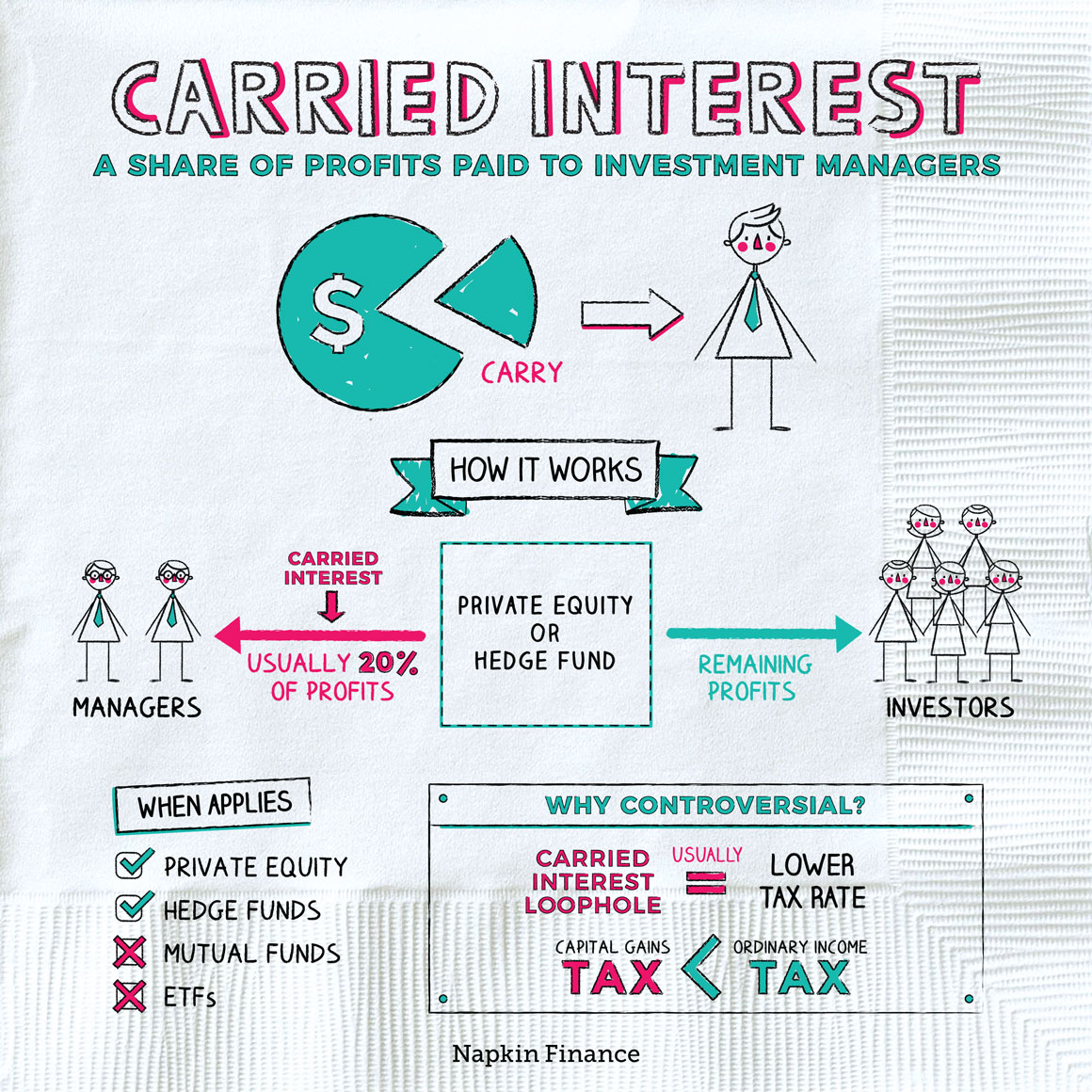
- Carried Interest (or "Carry"): Your share of the fund's profits. This is the primary incentive and where the significant financial upside lies for a successful GP.
2. Management Fees: Keeping the Lights On
The management fee is what allows you to run your fund as a professional business. Before you can even think about generating profits from carry (which can take 7-10 years), you need capital to operate.
What Do Management Fees Cover?
As a solo GP launching your own firm, you essentially become a small startup CEO. The management fee is your revenue.
The operational costs of running a first-time VC fund
This article, 'The operational costs of running a first-time VC fund', written by a first-time fund manager, offers an incredibly practical look at what this operational budget is actually spent on. This will be directly applicable to your own planning.
Read the sections from the beginning up to and including 'c) How to pay for it: management fees and how to build a sustainable business model'. Focus on the breakdown of mandatory costs (regulatory, legal, etc.) and business costs (travel, brand). This will give you a real-world checklist for your own fund's budget.
As you can see from the article, the costs add up quickly. A typical 2% management fee on a small, first-time fund (e.g., $10M) yields $200k per year. This must cover:
- Regulatory & Legal: FCA/AR fees, legal counsel.
- Administration: Fund administrator, accounting, auditing.
- Business Operations: Your own salary, travel to meet founders, office space, software (including the AI tools you plan to use).
- Brand & Marketing: Building your fund's presence to attract deal flow.
How Are Management Fees Calculated?
The standard fee is 2% per year, but it's crucial to understand what that 2% is based on.
- During the Investment Period (typically years 1-4): The fee is usually calculated on committed capital. If LPs commit $10M to your fund, you charge 2% of $10M, even if you've only called and invested $3M so far.
- During the Post-Investment Period (years 5-10): The fee basis often "steps down." It might switch to 2% of invested capital or net asset value (NAV). This reflects the shift from actively sourcing new deals to managing the existing portfolio.
The Sifted article you just read also brings up a key strategy for first-time funds: frontloading fees. You might charge 2.5% for the first few years and a lower percentage later. This ensures you have enough operating cash early on, when costs are high and you don't have fee streams from other funds. This is a strategic decision you'll negotiate with your LPs.
Test your understanding!
You are raising a $15M fund. You estimate your annual operating costs, including a modest salary for yourself, will be $250k. What is the minimum annual management fee percentage you would need to charge on committed capital to break even? What strategic trade-off are you making if you charge a higher fee, like 2.5%?
Show answer
-
Breakeven Fee: $250,000 / $15,000,000 = 1.67%. You would need to charge at least a 1.67% management fee.
-
Strategic Trade-off: If you charge a higher fee (e.g., 2.5%, which equals $375k/year), you have a healthier operational buffer. However, that extra fee money comes directly out of the capital that could otherwise be invested in startups. LPs are very sensitive to this, as it reduces the "investable capital" that can generate returns and, ultimately, carry. You are trading a lower potential fund return for higher operational stability.
3. Carried Interest: The Reward for Performance
Carried interest is the primary economic incentive for a GP. It ensures that you make your most significant compensation only when your LPs achieve a profitable return. The standard carry is 20% of the fund's net profits.
But how are "profits" defined and distributed? This process is governed by a mechanism called the distribution waterfall.
Introduction To Venture Capital & Private Equity#3: Fee Structure In Funds and Carried Interest
This video from Professor Claudia Zeisberger provides a clear, academic explanation of the fee structure and, most importantly, the distribution waterfall. It breaks down the sequence of how money flows back out of the fund after a successful exit.
Watch from 06:25 to 11:06. Pay close attention to the step-by-step description of the waterfall. You will learn about key concepts like the 'preferred return' or 'hurdle rate'.
As the video explains, the waterfall dictates a specific order of payments:
- Return of Capital: First, 100% of the distributions go to the LPs until they have received back all the capital they invested in the fund.
- Preferred Return (Hurdle Rate): Next, the LPs receive an additional amount representing a minimum annual return (typically 6-8%). The GP does not receive any carry until this hurdle is cleared. This ensures LPs get a baseline performance before the GP shares in the profits.
- GP Catch-Up: Once the hurdle is met, there's often a "catch-up" period where the GP receives a majority of the profits until their share of the total profit "catches up" to the agreed-upon carry percentage (e.g., 20%).
- Final Split: After the catch-up, all remaining distributions are split between the LPs and the GP according to the carry structure (e.g., 80% to LPs, 20% to GP).
European vs. American Waterfall
A critical detail in your fund documents (the LPA) will be the type of waterfall.
- European Waterfall (Fund-as-a-whole): The GP only receives carry after the entire fund's committed capital and preferred return have been returned to LPs. This is more LP-friendly as it accounts for both winners and losers in the portfolio.
- American Waterfall (Deal-by-deal): The GP can start taking carry from the first profitable exit, even if other investments later result in losses. This is more GP-friendly. To protect LPs in this scenario, fund agreements almost always include a clawback provision, which allows LPs to reclaim carry from the GP if the fund's overall performance ultimately fails to meet the required return threshold.
For a first-time fund, you will almost certainly be expected to offer a European waterfall or an American waterfall with a strong clawback provision.
4. A Simplified Example
Let's walk through a simple calculation to see this in practice. We will ignore the hurdle rate and catch-up for now to focus purely on the core concept.
Scenario:
- Fund Size: $10M
- GP Carry: 20%
- Total Exit Proceeds after 10 years: $50M
Distribution:
- Return of Capital: The first $10M goes back to the LPs.
- Remaining Proceeds: $50M - $10M = $40M
- Calculate Net Profit: The remaining $40M is the net profit of the fund.
- Calculate Carried Interest: The GP's 20% carry is calculated on this net profit.
- GP Carry: 20% of $40M = $8M
- Calculate LP Profit Share: The LPs receive the other 80% of the net profit.
- LP Profit: 80% of $40M = $32M
Final Payout:
- Total to LPs: $10M (capital) + $32M (profit) = $42M
- Total to GP: $8M (carry)
This simple model illustrates the power of carry. The GP's $8M reward is directly tied to the fund's success in turning $10M into $50M.
Conclusion
Understanding fund economics is fundamental to designing a fund that is both attractive to investors and sustainable for you as the manager.
Key Takeaways:
- Fund economics consist of two primary parts: management fees (for operations) and carried interest (for performance).
- Management fees (typically 1.5-2.5%) are your operational budget. For a small fund, you must carefully plan your costs and fee structure (e.g., frontloading) to ensure you can run the business effectively for its entire 10-year life.
- Carried interest (typically 20%) is your share of the profits and the primary incentive. It aligns your interests with your LPs.
- The distribution waterfall is the sequence of payments that governs how profits are shared, typically including a return of capital, a preferred return (hurdle), and a profit split.
Preview of the next lesson:
In this lesson, we introduced the concept of the distribution waterfall. In our next session, "Describe the structure of a fund's waterfall distribution, including hurdle rates," we will dedicate the entire lesson to modeling these waterfalls. We'll build detailed numerical examples to break down hurdle rates and the GP catch-up mechanism, allowing you to see exactly how these terms impact the financial outcomes for both you and your investors.