
Hello. You have completed a mixed 15-question GED RLA set covering reading, arguments, and grammar. This review is not about doing more questions. It is about finding the type of mistake behind any missed answer, so you know exactly what to fix.
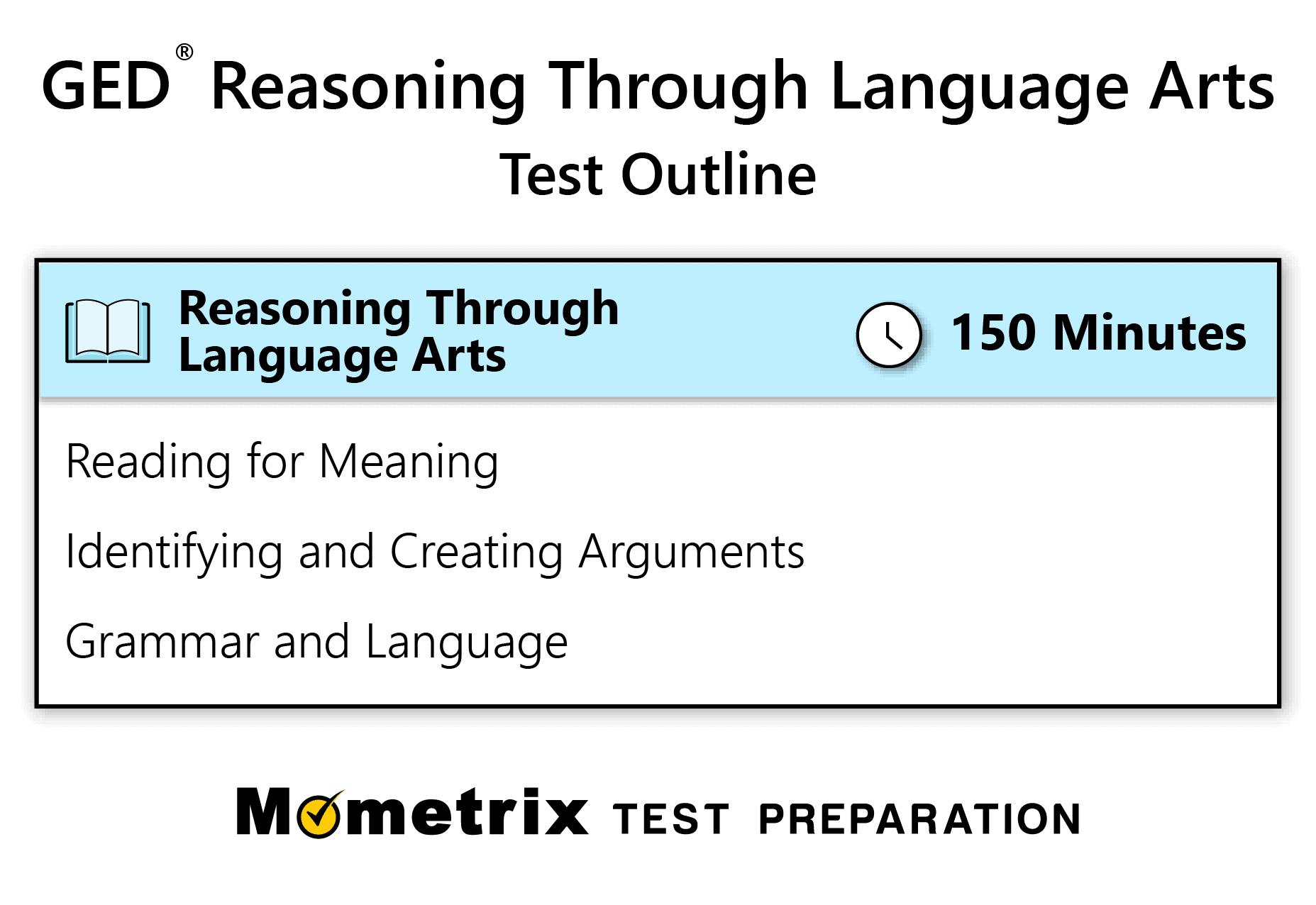
The GED RLA test groups skills in these same three areas:
Since I do not have your marked answers, use the answer key below to self-check. Spend about 15–20 minutes total. For every question you missed, write its skill code and the rule or strategy in the last column.
1. Check your answers and name the skill
| Question | Correct answer | Skill code | If you missed it, use this rule or strategy |
|---|---|---|---|
| 1 | B | Central idea | Use the whole-passage test. The correct answer must cover the library’s later hours, increased use, and why officials think the cost is worthwhile. |
| 2 | B | Supporting detail | Find the exact group named in the question: working parents. The children’s room being busiest after 6:30 directly supports that idea. |
| 3 | B | Inference | Combine the details: many visitors are workers, students, and parents, and they come in the evening. Choose the conclusion that stays close to those facts. |
| 4 | A | Vocabulary in context | Read the word in its sentence: the cost is “justified” because the library serves more people. Here, it means reasonable or worthwhile. |
| 5 | C | Evidence-based conclusion | Choose only what the passage proves. Officials plan to review attendance numbers, so they are using evidence to judge the schedule. |
| 6 | B | Author’s claim | A claim is the author’s main position or recommendation. Here, the author wants the town to install covered bike racks. |
| 7 | C | Direct evidence | When a question asks for evidence, choose the sentence that states the point most directly. This choice literally says commuters already bike to bus stops. |
| 8 | A | Strengthening an argument | A strengthening fact makes the author’s recommendation more believable. Successful covered racks in nearby towns support the proposal. |
| 9 | B | Purpose of evidence | Ask, “Why did the author include this fact?” The sign cost gives the reader a comparison showing that bike racks would be a modest expense. |
| 10 | C | Assumption | An assumption is an unstated idea the argument needs. The plan only makes sense if at least some commuters would use bikes to reach bus stops. |
| 11 | C | Run-on / comma splice | Two complete sentences need proper separation. Use a period, a semicolon, or a comma plus a joining word such as and. |
| 12 | B | Subject–verb agreement | Find the true subject: box, not photographs. A box is singular, so use is. |
| 13 | A | Fragment / modifier placement | “Walking through the park” must describe the person walking: Maria. Choice A creates one complete, clear sentence. |
| 14 | C | Commonly confused words | Their shows possession: the lunches belong to the volunteers. “There” names a place; “they’re” means “they are.” |
| 15 | B | Commas | Put a comma after an introductory phrase: “After the storm, …” Use commas between items in a list: “wet, slippery, and difficult…” |
2. Sort your missed answers into a short priority list
Count how many you missed in each group.
| Questions | Area | What a mistake usually means |
|---|---|---|
| 1–5 | Reading for Meaning | You may be choosing an answer that is related to the passage but does not answer the exact question. |
| 6–10 | Arguments and Evidence | You may need to separate an author’s claim from the evidence, purpose, or assumption supporting it. |
| 11–15 | Grammar and Language | You may need a quick rule check for sentence boundaries, agreement, word choice, or commas. |
Use this simple decision rule:
- 0–1 missed in an area: You are in decent shape. Keep the strategy in mind and move on.
- 2 missed in an area: Review the specific rules or strategy for those questions today.
- 3 or more missed in an area: Make that area your first RLA review priority.
Do not label yourself “bad at reading” or “bad at grammar.” Be specific. For example:
| Instead of writing… | Write… |
|---|---|
| “I am bad at English.” | “I need to use the whole-passage test for central-idea questions.” |
| “I cannot do arguments.” | “I need to identify the author’s recommendation before judging evidence.” |
| “Grammar is confusing.” | “I need to find the real subject before choosing the verb.” |
That is how a wrong answer becomes a usable study plan.
3. Reading errors: use the question’s wording as your guide
Questions 1–5 test five different reading jobs. Before returning to the passage, look at the wording of the question.
| Question wording | What to do |
|---|---|
| Central idea | Ask: “What is the passage mostly about, and what does the author say about it?” Reject answers that mention only one detail. |
| Best supports | Find the claim in the question, then choose the detail that proves it most directly. Shared words are not enough. |
| Can reasonably be inferred | Use evidence plus careful reasoning. Do not choose something that could be true but is not supported by the passage. |
| Most nearly means | Read the sentence around the word. Look for explanations, contrasts, and cause-and-effect clues. |
| Best supported | Avoid extreme words such as always, definitely, and forever unless the passage clearly says them. |
The main reading trap is choosing an answer because it sounds sensible in real life. On the GED, the answer must be sensible because the text supports it.
GED Reading Comprehension 2026: Main Idea & Evidence · Twigera
Read this short section from Twigera only if you missed two or more of Questions 1–5. It gives a repeatable method for central idea, evidence, and inference questions.
In the sections “How to Find the Main Idea,” “How to Identify Supporting Details,” and “How to Make an Inference,” read the central idea method. Then focus on the supporting detail rule: choose the answer that supports the specific point, not merely the same topic. Finish with the inference rule and keep every inference close to the passage.
4. Argument errors: separate claim, evidence, and reasoning
For Questions 6–10, use this order:
- Find the claim. What does the author want the reader to believe or do?
- Find the evidence. Which facts, examples, or comparisons support that claim?
- Check the reasoning. Does the evidence actually make the claim stronger?
- Watch for assumptions. What must be true for the argument to work?
In the bike-rack editorial:
- The claim is that the town should add covered bike racks.
- The evidence includes the fact that commuters already bike to bus stops and the comparison with damaged-sign costs.
- A strengthener is new information that makes the proposal seem more useful or realistic.
- The assumption is that some commuters would benefit from combining biking and bus travel.
A fast test for an assumption is to imagine it is false. If no commuters would find biking to bus stops useful, the author’s recommendation would lose much of its support. That tells you the idea is necessary to the argument.
When you miss an argument question, write one of these exact notes:
- “I chose a detail, not the author’s claim.”
- “I selected information related to the topic but not direct evidence.”
- “I did not ask how this fact affects the argument.”
- “I overlooked an idea the argument needs but does not state.”
5. Grammar errors: identify the rule from the answer choices
For GED editing questions, do not read the full sentence first and guess. Look at what changes across the choices. The differences reveal the rule being tested.
For Questions 11–15, keep these five checks:
- Two complete sentences? Do not join them with only a comma. Use a period, semicolon, or comma plus a coordinating word such as and, but, or so.
- Which noun controls the verb? Ignore extra words between the true subject and verb. In “The box of photographs,” the subject is box.
- Is the sentence complete and clear? A beginning phrase must attach to the person or thing doing the action.
- Does the word mean what the sentence needs? Their means belonging to them; there refers to a place; they’re means they are.
- Does the sentence begin with an introductory phrase? Put a comma after it. Use commas to separate three or more equal items in a list.
Proofreading for Errors - Purdue OWL
Use Purdue OWL’s proofreading guide only for the grammar questions you missed. Read the matching rule rather than trying to memorize every grammar rule at once.
For Question 13, read the explanation of a fragment from the fragment definition. For Question 11, read the run-on check, followed by the comma-splice rule. For Question 12, use the agreement check. If you missed Question 14, return to the “Spelling” section and read the homonym reminder.
Keep this one-line error log
For every missed question, write one short correction note:
Question number — skill — rule/strategy I will use next time
Examples:
- 1 — central idea — choose the answer that explains the whole passage, not one detail.
- 8 — strengthen an argument — choose the new fact that makes the author’s claim more believable.
- 12 — subject–verb agreement — find the main subject before choosing the verb.
- 15 — commas — comma after an introductory phrase; commas in a list.
This is your RLA sprint review: focus on the exact skill behind a mistake, not on rereading everything.
Key takeaways
- Reading answers must be supported by the passage, not just sound reasonable.
- Argument questions require you to distinguish claim, evidence, reasoning, and assumption.
- Grammar questions become easier when you identify the rule being tested from the answer choices.
- Your priority is the category where you missed the most questions.
You have now completed the English-focused sprint. The next module moves to GED Math, beginning with accurate calculator use for negatives, fractions, powers, roots, and multi-step calculations.
Can't find a good explanation? Sign up and we'll make it for you
Sign up