Hello! Welcome to your next lesson in the "Sourcing, Compliance, and Supplier Vetting" module.
In our last lesson, you developed a comprehensive checklist to vet potential suppliers. By now, you should have used that framework to narrow your list down to one or two highly qualified candidates. The hard work you put into vetting isn't just about avoiding bad partners; it's about gathering the intelligence you need for the next crucial step: negotiation.
Today, we transition from evaluation to engagement. Your learning outcome is to negotiate Minimum Order Quantities (MOQs), pricing, and payment terms with a potential supplier. This is where you formalize the business relationship and structure a deal that is profitable and sustainable for your business. We will focus on practical, actionable strategies to help you secure the best possible total value, which often means more than just the lowest price.
The Mindset: From Adversary to Partner
Before we dive into tactics, it's essential to adopt the right mindset. Negotiation with a long-term supplier isn't a zero-sum game or a battle to be won. It's the foundation of a partnership. Your goal is to reach an agreement that is a "win" for both sides. A supplier who feels squeezed on price may cut corners on quality, which ultimately hurts you.
The key is to negotiate from a position of professional confidence. Your previous vetting work, your knowledge of the market, and your clear business plan are your greatest assets.
Understanding the Levers of Negotiation
Many new sellers focus exclusively on unit price. However, this is only one of several negotiable terms. A professional negotiator looks at the entire package.
This article from SellerSprite provides an excellent overview of the key negotiable terms. Pay close attention to the table, as it will serve as our checklist for this lesson.
Negotiating the Best Price for Your Product
Read the article 'Negotiating the Best Price for Your Product' to understand the different components of a supplier deal. It clearly separates the various terms you can negotiate.
Focus on the section 'Negotiable Terms When Sourcing From China'. Study the 'Negotiable Terms table' carefully. We will be covering the top three items (Unit price, MOQ, Payment terms) in detail, but it's important to be aware of the others.
As you can see, MOQ, price, and payment terms are the "big three." Let's break down how to approach each one.
1. Negotiating Minimum Order Quantity (MOQ)
The MOQ is often the first major hurdle for a new seller. A high MOQ can tie up your capital and increase your risk if the product doesn't sell as expected.
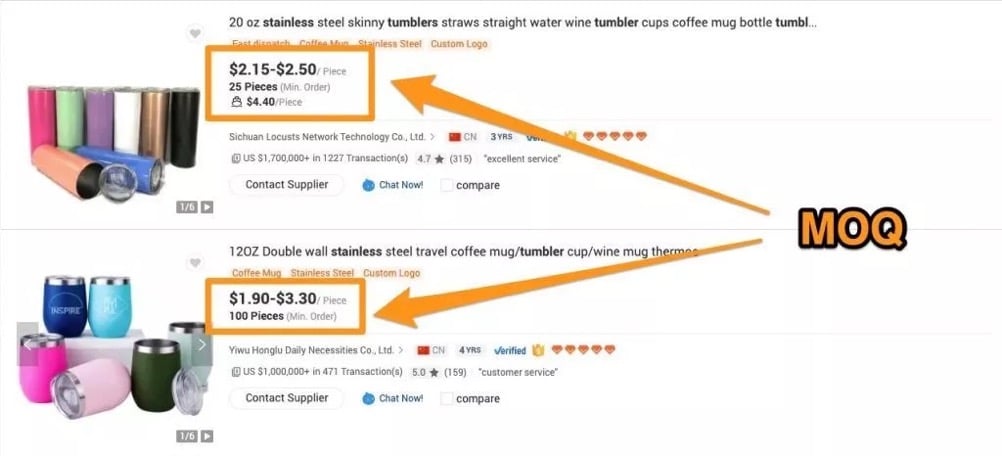
Your goal is to get an initial order quantity that is large enough for the supplier to take you seriously, but small enough for you to test the market without breaking the bank.
This video provides a fantastic, step-by-step playbook for negotiating a lower MOQ.
How To Negotiate A Low MOQ (Minimum Order Quantity) With Chinese Suppliers For Amazon FBA!
The video 'How To Negotiate A Low MOQ' offers a masterclass in framing your request. It provides scripts and explains the psychology behind making your proposal attractive to the supplier.
Watch from 01:32 to 06:47. Pay close attention to these key points: The Right Reason for a Low MOQ: Understand why you should frame your request around 'validating production quality' rather than admitting you're low on funds or unsure about sales. When to Negotiate: Learn why it's best to negotiate after you've approved the sample. The Negotiation Script: Listen carefully to the example script for the first round of negotiation. This is a powerful, professional approach.
Key Strategies for Lowering MOQ:
- Frame it as a "Test Order": As the video explains, your first, smaller order is to "validate your company's production quality" and "gather market feedback for the next large order." This positions you as a serious, long-term buyer.
- Offer a Slightly Higher Unit Price: This is a classic trade-off. You might say, "I understand your MOQ is 1,000 units at $5. Would you be willing to do a test run of 300 units if we pay $5.50 per unit?" This shows you respect their need for profitability.
- Increase Order Size on Other Items: If you are ordering multiple products (e.g., different colors of the same item), you can offer to increase the quantity of a popular item to offset the smaller order of a less popular one.
- Share Setup Costs: If the supplier states the MOQ is due to high machine setup fees, you can offer to pay a portion of that fee in exchange for a smaller production run.
- Create a Sense of Partnership (and Urgency): If a supplier claims they will lose money on your small order, you can counter by explaining your own costs, as demonstrated in this next clip.
How To Negotiate A Low MOQ (Minimum Order Quantity) With Chinese Suppliers For Amazon FBA!
Let's continue with the same video to see how to respond when a supplier pushes back.
Watch from 06:47 to 10:49. Focus on how the speaker escalates the negotiation by: Reframing the loss: Highlighting that you also lose money on a small order due to higher shipping costs, positioning you as partners in this initial risk. Establishing credibility: Mentioning your marketing spend and plans to show you are a serious business. Creating urgency: Politely signaling that you have other options and need a decision.
2. Negotiating Price
Once the MOQ is settled, you can focus on the unit price. Your ability to negotiate price effectively depends almost entirely on your preparation.
Step 1: Know Your Numbers
Before contacting any supplier, you must determine your target landed cost. This is the maximum price you can pay per unit (including shipping, duties, and platform fees) and still achieve your desired profit margin. You should have already done this profitability calculation during the product research phase.
Step 2: Research the Market Price
Use Alibaba's "Request for Quotation" (RFQ) feature to get multiple quotes. This gives you a baseline for what a competitive price looks like.
How to Negotiate With Alibaba Suppliers - Step by Step
This article, 'How to Negotiate With Alibaba Suppliers', explains a practical method for establishing a realistic price range before you even start talking to a specific supplier.
Read the section titled 'Figure out the prices of other Alibaba suppliers for a successful price negotiation.' This will show you how to use the RFQ tool to gather competitive intelligence.
Step 3: Craft Your Message
Your initial outreach should be professional and signal that you are a high-value, long-term customer.
How to Negotiate With Alibaba Suppliers - Step by Step
Let's look at the same article for excellent examples of how to structure your negotiation message.
Read the section 'Successful price negotiation: How to negotiate with an Alibaba supplier.' Pay close attention to the example message and the tips on praising the supplier, framing yourself as a high-value customer, and politely presenting your target price.
Crucial Warning: Be very careful about pushing for the absolute lowest price. Aggressive price negotiation can lead the supplier to substitute cheaper materials, resulting in a lower quality product. This is a false economy that will cost you more in the long run through returns and bad reviews. Always confirm that the quality specifications will remain unchanged.
3. Negotiating Payment Terms
Payment terms are a powerful but often overlooked area of negotiation. They have a direct impact on your cash flow and risk exposure.
- Standard Terms: The most common payment structure with Chinese suppliers is 30% upfront to begin production, and the remaining 70% upon completion (before the goods are shipped). This is often referred to as a "30/70 T/T" (Telegraphic Transfer).
- Your Goal: Your primary goal is to shift as much of the payment as possible to after the goods have been produced and, ideally, inspected.
This video offers some alternative payment structures you can propose.
4 Tricks To Get Alibaba Suppliers To Lower Their Minimum Order Quantity (MOQ)
The video '4 Tricks To Get Alibaba Suppliers To Lower Their Minimum Order Quantity (MOQ)' also contains useful tactics for payment terms.
Watch these two short clips: Tactic 1 (04:57 - 06:12): This tactic reverses the usual approach. Notice how offering to pay a larger percentage upfront can be used as leverage to get a lower MOQ. Tactic 4 (07:30 - 07:58): This discusses the idea of paying in installments, which can be useful for very large orders where you can't afford the full MOQ at once.
Key Strategies for Better Payment Terms:
- Propose 30/70 with a Twist: Agree to the 30% deposit, but propose paying the final 70% after a successful third-party quality inspection, rather than just upon production completion. This is a very common and reasonable request for a professional buyer.
- Milestone Payments: For complex or large orders, you could propose a structure like 30% down, 40% after production is complete, and 30% after successful inspection.
- Build Trust for Better Terms: After you have successfully completed a few orders with a supplier, you can often negotiate better terms, such as "Net 30," where you pay 30 days after shipment. This requires a strong relationship.
Putting It All Together
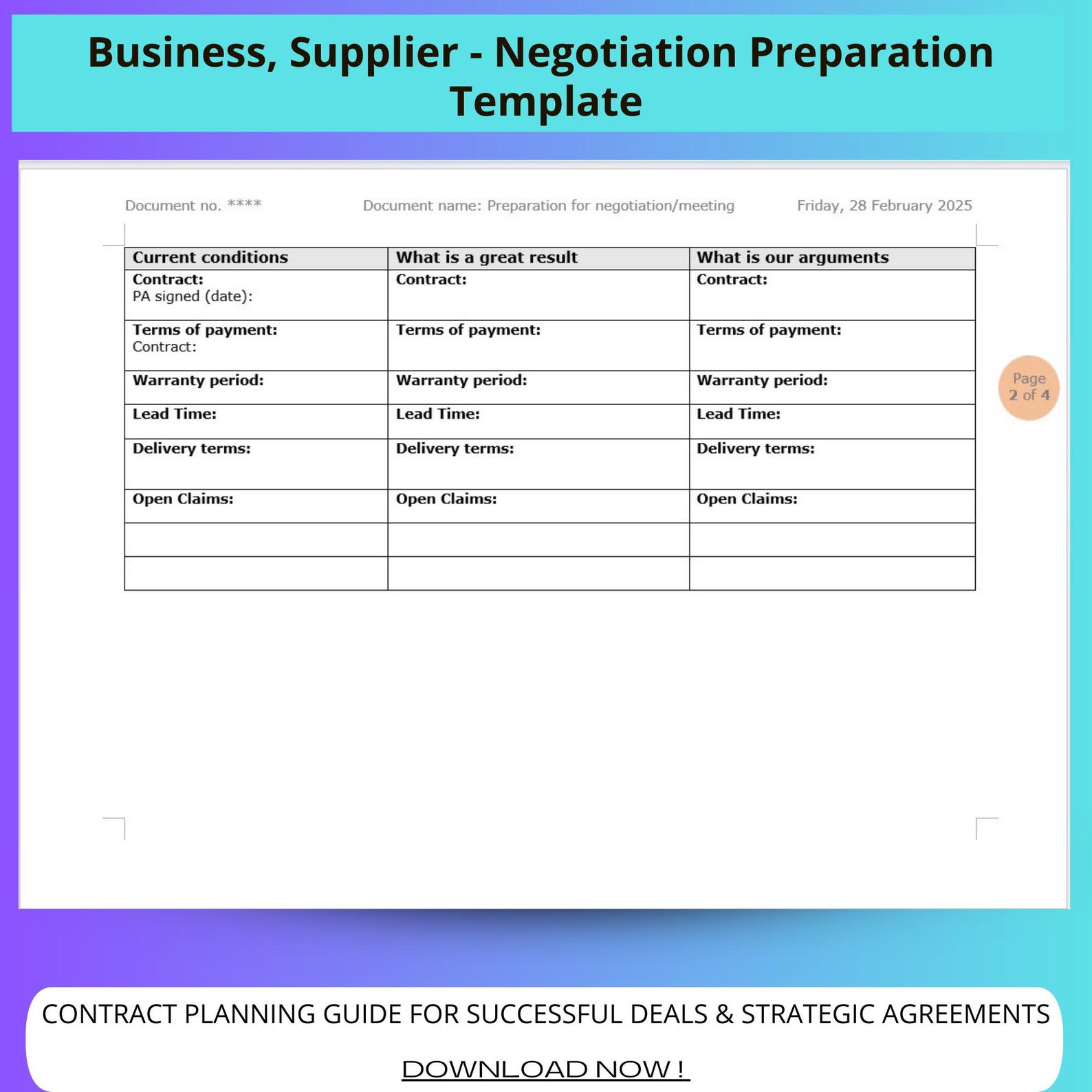
Test your understanding!
You have vetted a supplier for a new product. They have quoted you the following terms:
- MOQ: 1,000 units
- Unit Price: $8.00
- Payment Terms: 50% deposit, 50% on completion
Your target landed cost is $7.00, and you only have the capital for an initial order of 400 units. Draft a short, professional email to the supplier to open negotiations. Use at least two different strategies you learned in this lesson.
Show answer
Here is an example of a strong opening negotiation email:
Dear [Supplier Contact Name],
Thank you for the quotation and the sample, which we were very impressed with. Your company's quality appears to be excellent, and we are excited about the possibility of a long-term partnership.
We are preparing to place our first order. To validate the production quality and test the market response, we would like to start with an initial test order of 400 units. We understand this is below your standard MOQ, and we would be willing to pay a slightly higher price of $8.50 per unit for this first run to make it work.
Our target price for future, larger orders (1000+ units) is closer to $7.00 per unit, which aligns with our market research.
Regarding payment, our company's standard policy for new suppliers is a 30% deposit, with the 70% balance payable after a successful pre-shipment quality inspection. This ensures a smooth process for both of us.
We plan to place a much larger second order within 3-4 months based on the success of this initial launch.
Please let me know if these terms are agreeable for our first order. We look forward to working with you.
Best regards,
[Your Name]
[Your Company]
Strategies used:
- Lowering MOQ: Framed the 400 units as a "test order" to "validate production quality" and offered to pay a higher unit price as a trade-off.
- Negotiating Price: Anchored their future target price ($7.00) while showing flexibility on the first order.
- Negotiating Payment Terms: Politely stated their "company policy" is 30/70 post-inspection, making it seem like a standard procedure rather than a demand.
Conclusion
You now have a powerful set of tools and strategies to negotiate with suppliers effectively. Remember that negotiation is a skill that improves with practice. The confidence you gained during the vetting process will be your strongest asset.
Key Takeaways:
- Negotiation is a Partnership: Aim for a win-win deal that builds a strong, long-term relationship.
- Leverage All Terms: Look beyond unit price. Favorable MOQs and payment terms can be just as valuable.
- Preparation is Everything: Know your target cost, research the market price, and plan your arguments before you ever make contact.
- Frame Your Requests Professionally: Position your first order as a quality validation run to justify a lower MOQ. Always be polite but firm.
Next Up:
Once you've agreed on terms and are ready to place your order, you must ensure your products can be legally imported into the United States. In our next lesson, we will cover the crucial topic of import compliance for sourcing from China, including HS codes, duties, and required certifications.