Hello! Welcome back to the course.
In our last lesson, we established how to create projections to build and maintain specialized read models from an event stream. This is a powerful technique, but it leads to a critical operational question: what happens when the read model's requirements change?
Today, we'll address that question directly.
Lesson 3: Rebuilding Projections
Learning Outcome: By the end of this lesson, you will be able to implement a mechanism to rebuild a projection from an event store.
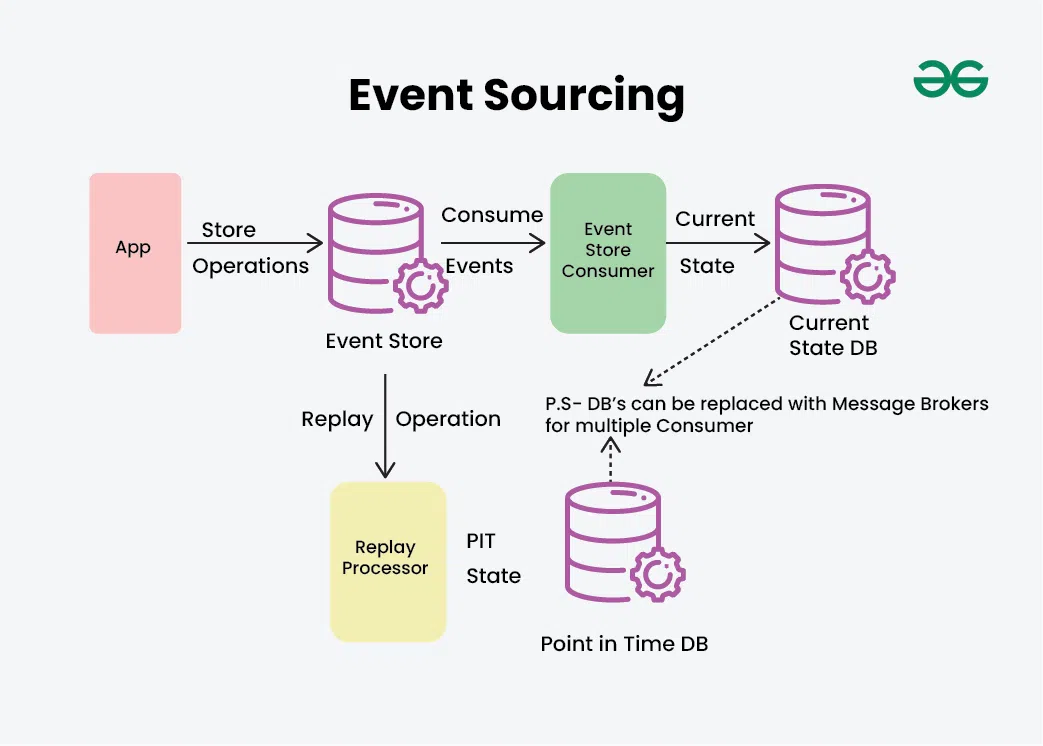
One of the most significant advantages of Event Sourcing is that the event log serves as a permanent, immutable record of everything that has happened in the system. This means that any projection is ultimately disposable and can be regenerated. This capability is not just a theoretical benefit; it's a crucial tool for evolving a system over time. We will explore the strategies for performing these rebuilds, focusing on the trade-offs between simplicity and availability—a central concern in the high-load systems you build.
1. Why and What to Rebuild?
Before diving into the "how," let's clarify "why" and "what." A projection rebuild is the process of creating a new version of a read model by re-processing historical events from the event store.
This is necessary in several common scenarios:
- Bug Fixes: The logic in your projection code had a bug, leading to incorrect data in the read model.
- Schema Evolution: You need to add a new field to a read model, and its value can be derived from data in existing events.
- New Projections: You want to introduce an entirely new read model to serve a new feature or query pattern, and it needs to reflect the system's entire history.
- Performance Optimization: You might rebuild a projection into a new data store or with a different indexing strategy to improve query performance.
The core mechanism that enables this is the replaying of events. Because the event store is the source of truth, we can always regenerate derived state.
2. Strategies for Rebuilding Projections
The main challenge in rebuilding a projection is managing the transition from the old version to the new one. The choice of strategy depends heavily on the system's availability requirements.
Let's explore the two primary approaches.
Guide to Projections and Read Models in Event-Driven ...
The article 'Guide to Projections and Read Models in Event-Driven...' provides an excellent overview of the main strategies for rebuilding projections. It clearly outlines the trade-offs involved.
Please read the section 'Projections rebuild'. Focus on the two main strategies described: the simple 'truncate and reapply' method and the 'blue-green' rebuild.
Based on the reading, let's analyze these two strategies in more detail.
Strategy 1: Simple Rebuild (Truncate and Replay)
This is the most straightforward approach.
- Take the System Offline: The service that depends on the read model is stopped or put into maintenance mode, making it unavailable to users.
- Truncate Data: The existing read model data is completely deleted (e.g.,
TRUNCATE TABLE your_read_model;). - Replay Events: A script or background process is run to read all events from the beginning of the event store and apply the new projection logic, populating the empty read model.
- Bring the System Online: Once the replay is complete, the service is restarted.
- Pros: Simple to implement and manage. It requires minimal coordination.
- Cons: Incurs downtime. The duration of the downtime is proportional to the size of the event store, making it untenable for most high-availability, large-scale systems.
Strategy 2: Zero-Downtime Rebuild (Blue-Green)
This strategy is more complex but avoids downtime, making it suitable for the high-load environments you're familiar with.
- Create "Green" Read Model: A new, separate data store (e.g., a new table
read_model_v2, a new database, or even a new index in Elasticsearch) is created for the new version of the projection. The existing "Blue" read model (read_model_v1) continues to serve all live traffic. - Dual Projections: The system runs two projections in parallel:
- The existing "Blue" projection continues to process new events and update the
read_model_v1. - A new "Green" projection is started. It first runs in a "catch-up" mode, replaying all historical events to populate
read_model_v2. After processing the history, it switches to a "live" mode, processing new events just like the blue projection.
- The existing "Blue" projection continues to process new events and update the
- Switch Traffic: Once the "Green" read model is fully caught up and verified, you perform a cutover. The application's read traffic is redirected from the "Blue" model to the "Green" one. This is typically done via a configuration change, a feature flag, or by updating routing rules in a proxy or API gateway. The switch is near-instantaneous.
- Decommission "Blue": After monitoring the new "Green" system for a period to ensure stability, the old "Blue" projection can be stopped, and the
read_model_v1can be archived and deleted.
- Pros: Zero user-facing downtime. Allows for testing and verification of the new projection before it goes live.
- Cons: Higher implementation complexity. Temporarily requires double the storage resources. The cutover switch requires careful handling.
3. Implementation and Practical Considerations
Now let's move from strategy to the practical mechanics of implementation.
Triggering and Managing a Rebuild
Frameworks and libraries in the event sourcing space often provide built-in tooling for this.
The documentation for Marten, a popular .NET library for event sourcing, provides concrete examples of how a rebuild can be triggered programmatically. This illustrates how such an operation is exposed in a real-world tool.
Please review the C# code snippets in the sections 'Rebuilding Projections' and 'Rebuilding a Single Stream'. You don't need to be a C# expert; focus on the method calls like RebuildProjectionAsync and RebuildSingleStreamAsync to understand the API provided for this task.
As you can see from the Marten examples, a rebuild is typically an explicit administrative action you can trigger. Key capabilities often include:
- Full Rebuild: Rebuilding an entire projection by name (e.g.,
daemon.RebuildProjectionAsync("Shop", ...)). - Granular Rebuild: Rebuilding the projection for only a specific aggregate instance (e.g.,
theStore.Advanced.RebuildSingleStreamAsync<SimpleAggregate>(streamId)). This is a powerful optimization if a bug or data issue affects only a small subset of your data.
The Critical Role of Idempotency
When you replay events, you are re-processing them. In any distributed system, there's also a chance that an event might be delivered more than once during normal operation. Therefore, your projection logic must be idempotent.
An idempotent operation is one that has the same effect whether it is applied once or multiple times.
Guide to Projections and Read Models in Event-Driven ...
Let's revisit the 'Guide to Projections' article to focus on its discussion of idempotency, which is a prerequisite for reliable event processing and rebuilding.
Read the 'Idempotency' section. Pay attention to the different techniques for achieving it, such as using upserts, event versions/positions, or tracking event IDs.
To summarize the key techniques for making your projection handlers idempotent:
- Use Upserts: Instead of separate
INSERTandUPDATElogic, use a singleUPSERT(e.g.,INSERT ... ON CONFLICT DO UPDATEin PostgreSQL) or a "get-then-update" pattern. This ensures that creating a record from an event is idempotent. - Track Last-Processed Version: Store the event's version or stream position in your read model. When a new event arrives, you can ignore it if its version/position is less than or equal to the one you've already processed for that entity.
- Track Event IDs: Maintain a record of the IDs of all processed events. Before processing an event, check if its ID is already in this record. This is the core of the "Inbox" pattern used for reliable messaging.
Given your background, you can see how this relates to ensuring at-least-once delivery in messaging systems and the need for consumers to handle duplicate messages gracefully.
Conclusion
Today we've covered the essential operational capability of rebuilding projections in an event-sourced system. This is what makes the architecture truly evolvable.
Key Takeaways:
- Rebuilding projections is a fundamental operation for fixing bugs, evolving schemas, and introducing new features without losing historical context.
- The core mechanism is replaying the immutable event log to regenerate a read model.
- The choice of strategy is a trade-off between operational simplicity and availability. The simple (truncate-and-replay) method causes downtime, while the blue-green method offers zero downtime at the cost of higher complexity.
- Idempotency in projection handlers is not optional; it is a critical prerequisite for ensuring correctness during both normal operation and rebuilds.
- Modern frameworks often provide tooling to manage and trigger rebuilds, including optimized, granular rebuilds for specific data subsets.
Preview of the Next Lesson:
We've established that idempotency is critical for reliable projections. In our next lesson, "Design an idempotent event handler to ensure exactly-once processing semantics," we will perform a deep dive into the patterns and techniques required to build robust, idempotent consumers. This is a cornerstone skill for engineering any reliable distributed system.