
Hello! Welcome to the final lesson in our module on SEO and Organic Search Foundations.
In our last lesson, you mastered the proactive art of guest posting, learning how to identify opportunities and craft compelling pitches to secure high-value backlinks. Today, we'll explore a complementary, reactive strategy that can land you mentions and links in some of the world's top publications.
This lesson focuses on the learning outcome: Respond to a relevant journalist query on HARO (Help a Reporter Out) to attempt to earn a backlink. While your ultimate goal is to build and scale multiple SaaS companies, establishing authority is a critical first step for each venture. This method is a powerful, repeatable tactic for getting your name, your company's name, and a valuable backlink from high-authority media outlets, rapidly building the credibility needed for a successful launch.
A Quick but Important Update: The "HARO" Landscape
First, a crucial point of clarification. The platform "Help a Reporter Out" (HARO) and its successor, Connectively, have officially shut down. However, the model they pioneered is very much alive and well. The process of journalists seeking expert quotes through a service is now a standard practice in digital PR.
20 HARO Pitching Tips to Win Media Coverage in 2025
The article '20 HARO Pitching Tips' from PressPulse.ai provides excellent context on this change. It explains why the principles of HARO are still completely relevant today.
Read the introductory sections 'What is HARO?' and 'Why HARO is still relevant today?'. This will bring you up to speed on the platform's history and introduce you to the modern alternatives.
Throughout this lesson, when I refer to "HARO-style pitching," I am talking about this proven methodology, which you will apply on modern platforms like Qwoted, Featured.com, and Help a B2B Writer. The principles and tactics are identical.
1. The "HARO" Method: How It Works and Why It's Valuable
The process is simple: journalists from various publications need quotes from experts to add depth and credibility to their articles. They submit a "query" detailing what they're looking for, and you, as an expert source, can respond with a "pitch." If the journalist uses your quote, they will typically credit you with your name, company, and often, a backlink to your website.
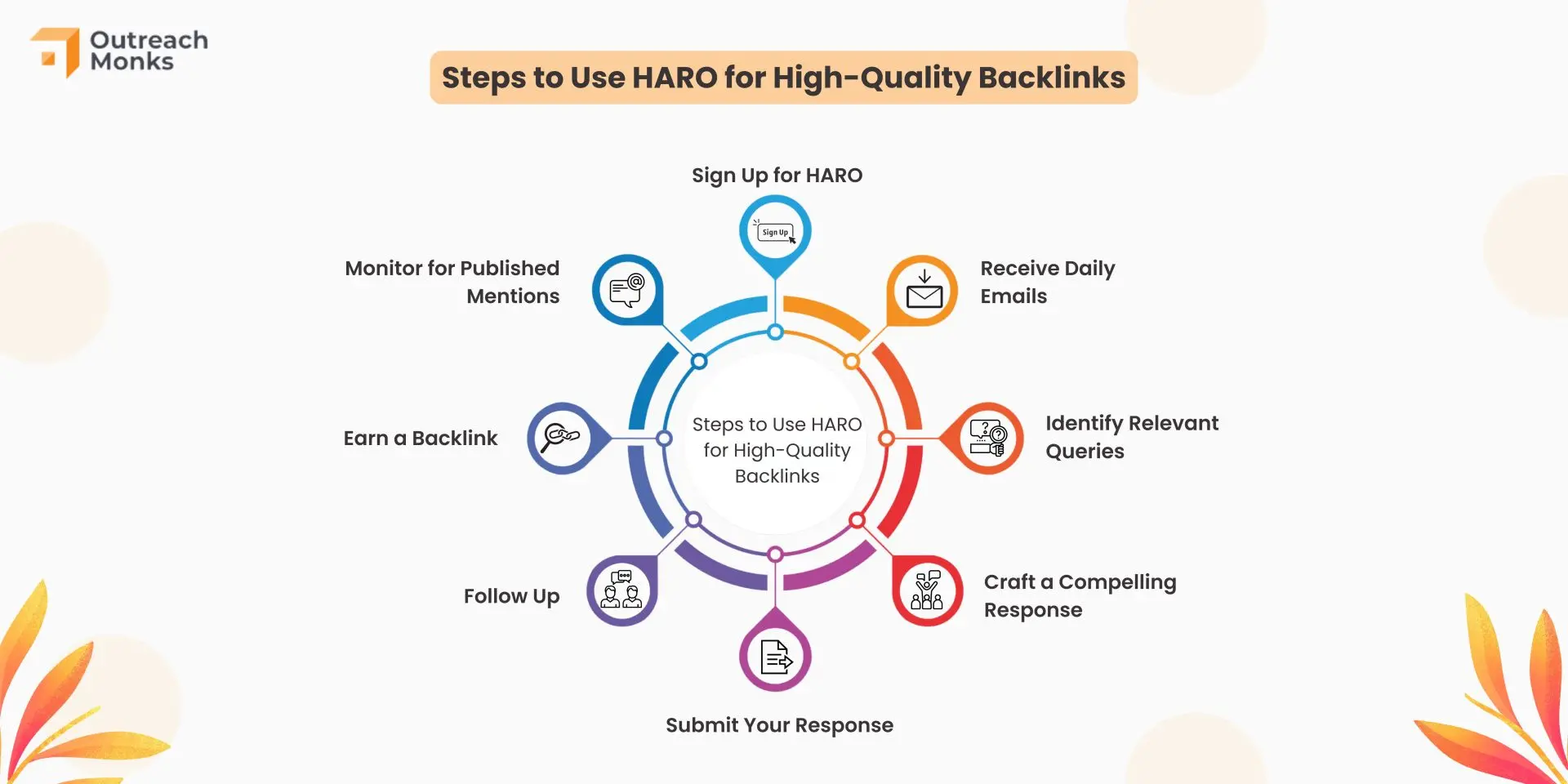
The primary value for your SaaS business comes from two areas:
- Authority Building: Being quoted in publications like Forbes, Business Insider, or niche industry blogs positions you as a thought leader.
- Link Building: A backlink from a high-authority news site is one of the most powerful signals you can send to Google, significantly boosting your website's SEO.
2. Getting Set Up for Success
Before you can pitch, you need to be on the right platforms and have your workflow optimized.
1. Choose Your Platform: Start by creating a free account on a platform like Qwoted or Featured.com. The process is similar for all of them.
2. Sign Up as a Source: You'll be asked to sign up as an "Expert" or "Source." It's crucial to use a professional email address from your company domain (e.g., your.name@your-saas.com) rather than a generic Gmail address. This immediately boosts your credibility.
3. Complete Your Profile and Preferences: Fill out your expert profile completely. Select the categories of queries you want to receive. For a SaaS founder, these might include "Business & Finance," "High Tech," or more specific industry niches.
Backlinks With HARO (Step-By-Step SEO Tutorial)
This video from Itamar Blauer, though focused on the old HARO site, shows the exact process for setting up preferences. The interface will look different on Qwoted, but the concept is the same.
Watch from 00:28 to 01:54 to understand how to configure your account to receive relevant queries. Focus on the strategy of selecting specific subject areas.
4. Manage the Email Flow: These services send multiple emails per day, which can quickly overwhelm your inbox. Set up an email filter to automatically label and organize these queries.

3. The Daily Workflow: Identifying and Vetting Queries
Your daily task is to scan the queries and find the perfect opportunity.
1. Scan for Relevance: Quickly scan the query subjects in the daily emails or on the platform's dashboard. You can use your browser's find function (Ctrl+F or Cmd+F) to search for keywords related to your SaaS niche (e.g., "project management," "marketing automation," "cybersecurity").
2. Vet the Media Outlet: Not all opportunities are created equal. Before you spend time on a pitch, quickly vet the publication.
- Is it reputable? Do you recognize the name?
- What is its authority? Use the Ahrefs Website Authority Checker (which you are familiar with) to check the Domain Rating (DR) of the publication. Prioritize opportunities from sites with a high DR.
- Do they provide a backlink? Read the query's requirements. Most will state what they offer. If they explicitly mention a link to your website, that's a great sign. Be wary of queries marked "Anonymous" unless the topic is a perfect fit.
Backlinks With HARO (Step-By-Step SEO Tutorial)
This video section provides a great demonstration of how to vet a query, including the critical step of checking the site's authority.
Watch from 01:54 to 03:56. Pay close attention to the process of identifying a query and using Ahrefs to check the domain's metrics. This step ensures you're investing your time wisely.
4. Crafting a Winning Pitch
Journalists are inundated with responses. Your pitch must be excellent to stand out. The golden rule is to make the journalist's job as easy as possible. Your goal is to provide a quote so good they can copy and paste it directly into their article.
Key "Don'ts" of Pitching
Let's start with what to avoid. A journalist who reviews thousands of pitches highlights these common, fatal mistakes.
How To Use HARO, AKA Connectively [Template + ...
The article 'How To Use HARO' from Writing From Nowhere gives a priceless behind-the-scenes look from a journalist's perspective. It details the most common mistakes that get pitches immediately deleted.
Read the section 'HARO Pitching Don’ts'. Pay special attention to the warnings against submitting AI-generated content (without heavy editing) and offering to pay for links. These are major red flags for journalists.
In line with your interest in AI, the point about AI-generated content is key. You can use tools like ChatGPT or Claude to help you brainstorm or refine your ideas, but your final submission must be in your own voice and reflect your genuine expertise.
The Anatomy of a Perfect Pitch
Here's how to structure your response for maximum impact.
- Compelling Subject Line: Make it clear and relevant. Don't be generic.
- Good:
Re: Query on Remote Team Productivity - Better:
Pitch: Unique take on async work for your productivity piece
- Good:
- Personalized Salutation: Always use the journalist's first name.
- The Answer (The Core Value):
- Get straight to the point. Don't waste time with a long intro about yourself.
- Provide a unique, non-obvious insight. Don't just state a generic fact they could find on Google.
- Structure it for readability. Use 2-3 short paragraphs or bullet points.
- Back it up. Use a specific data point, a short personal anecdote, or a concrete example from your experience.
- Your Credentials (The Proof): After your answer, provide your details in a clean, easy-to-read format.
- Your Name
- Your Title (e.g., Founder & CEO)
- Your Company Name (linked to your SaaS website)
- A brief (1-2 sentence) bio that quantifies your expertise (e.g., "SaaS founder with 10+ years of experience in building distributed engineering teams.")
- Link to your LinkedIn profile.
- A link to a professional headshot (hosted on your website or a service like Dropbox).
20 HARO Pitching Tips to Win Media Coverage in 2025
The PressPulse.ai article provides a fantastic list of actionable tips for crafting each part of your pitch. We'll focus on the most critical ones.
Quickly review these tips: 'Tip 1: Answer queries that are relevant to your expertise,' 'Tip 2: Structure responses in easily digestible chunks,' 'Tip 5: Respond within two hours,' 'Tip 6: Keep a template... but customize,' 'Tip 9: Craft a Compelling Subject Line,' 'Tip 10: Share unique insights,' and 'Tip 11: Include specific examples.' These reinforce the structure we just discussed.
Successful Pitch Examples
Seeing what works is the best way to learn. The Writing From Nowhere article includes several screenshots of real pitches that were accepted.
How To Use HARO, AKA Connectively [Template + ...
Let's look at what a successful pitch looks like in the wild.
Scroll down to the 'HARO Pitch Examples' section and study the three screenshots. Notice how they are concise, get straight to the point, and clearly state the expert's credentials at the end.
5. Hitting Send and Tracking Your Wins
- Speed is Everything: Journalists work on tight deadlines. The sooner you can respond to a query, the higher your chances. Aim to respond within the first 1-2 hours of a query being posted.
- Set Realistic Expectations: You will not win every pitch. A success rate of 5-10% is considered good. For every 1-2 hours you spend pitching, you might land one good link. Persistence is the name of the game.
- Tracking Your Success: Most journalists won't notify you if you've been featured.
- Set up Google Alerts for your name and your company's name.
- Periodically check your backlink profile in Ahrefs.
- Amplify Your Wins: If you get featured, share the article on your social media profiles (especially LinkedIn and Twitter/X) and tag the journalist and publication. This shows appreciation and can help build a long-term relationship.
Test your understanding!
Imagine you are the founder of a new SaaS called "SyncUp," an AI-powered tool that summarizes meeting transcripts and generates action items. You see the following query on Qwoted:
Query:
- Journalist: Sarah Chen
- Outlet: TechCrunch (DR 93)
- Topic: Seeking insights from tech founders/experts on the biggest productivity drains in the modern workplace and one specific, actionable tip to solve it.
- Deadline: Today at 5 PM EST
Task: Draft a pitch email to Sarah Chen responding to this query. Make sure to include all the key elements of a winning pitch.
Show answer
Here is an example of a strong pitch:
Subject: Pitch: The "Meeting Recovery Tax" is killing productivity
Hi Sarah,
Responding to your query on productivity drains for TechCrunch.
The single biggest productivity drain in the modern workplace is the "meeting recovery tax"—the 30-45 minutes of lost focus both before and after a meeting as teams context-switch. It's not just the meeting itself; it's the cognitive cost of disengaging and re-engaging with deep work.
My actionable tip is to automate the post-meeting workflow. Instead of relying on manual note-taking and memory, teams should use an AI tool that automatically transcribes the conversation, identifies action items, and assigns them in their project management system. This eliminates the need for team members to spend mental energy recapping the meeting and allows them to immediately return to a state of flow. We've seen teams reclaim over 3 hours per employee per week using this method.
Hope this insight is helpful for your article.
[Your Name]
Founder & CEO, SyncUp (https://www.sync-up-saas.com)
Bio: I'm a serial tech entrepreneur focused on building AI solutions that eliminate administrative work. My new venture, SyncUp, helps teams automate their meeting workflows.
LinkedIn: [Your LinkedIn Profile URL]
Headshot: [Link to your headshot image]
Conclusion
You now have a complete playbook for using HARO-style platforms to earn high-authority backlinks and media mentions. This reactive strategy perfectly complements the proactive guest posting outreach you learned in the last lesson. By dedicating even 30-60 minutes each day to scanning queries and sending out 1-2 high-quality pitches, you can consistently build the domain authority and brand credibility that are foundational to scaling any SaaS business.
Key Takeaways:
- HARO is gone, but the method lives on through platforms like Qwoted and Featured.com.
- Speed and Relevance are your biggest advantages. Respond quickly to relevant queries from high-authority sites.
- Make the journalist's job easy. Provide a unique, copy-paste-ready quote.
- Structure your pitch with the answer first, followed by your credentials.
- Success is a numbers game built on quality and persistence. Track your wins and don't get discouraged by rejections.
Preview of the Next Lesson:
This lesson concludes our module on SEO and Organic Search Foundations. You've learned how to build content, optimize it, and acquire the backlinks needed to drive organic traffic. But traffic is only half the battle. In our next module, "Building High-Converting Landing Pages," we'll shift our focus to converting that hard-earned traffic into customers. Your first lesson will be: Deconstruct the essential components of a high-converting SaaS landing page (headline, hero shot, social proof, CTA).