
Rolling Two-Week Biology, Geography, and Photography Plan with AS Resit Repair and A2 Consolidation Balancing
Hello. This course is built around one constraint: your free periods are limited, so the plan has to make each 55-minute session produce evidence of progress rather than simply feeling busy. In this first module, you will create the structure that protects all three subjects while handling the immediate AS resits, new A2 teaching, and the Photography deadlines.
Your starting allocation is fixed: a 9-period week contains three Biology, three Geography, and three Photography sessions; an 11-period week contains four Biology, four Geography, and three Photography sessions. The key is to give every session a clear job and to change those jobs when a deadline passes.
Start with fixed commitments and real deadlines
A useful timetable begins with constraints, not ambitious intentions. Your school free periods are the study capacity you actually have. There is no need to create additional weekend “catch-up” sessions when Saturday school and recovery time already limit that option.
The 9-period week gives you hours minutes of independent work. The 11-period week gives you hours minutes. Across the two-week cycle, that is:
| Subject | Sessions across two weeks | Total time |
|---|---|---|
| Biology | 7 | 6 hours 25 minutes |
| Geography | 7 | 6 hours 25 minutes |
| Photography | 6 | 5 hours 30 minutes |
| Total | 20 | 18 hours 20 minutes |
The extra Biology and Geography session in the 11-period week is justified by the AS resits and the need to consolidate A2 teaching. It is not an invitation to turn free periods into unstructured revision time.
Before building the sheet, check the official exam entries with your centre. The Cambridge timetable is useful for placing the resit deadlines into your planning cycle, but your statement of entry determines whether you take the practical option 33 or 34.
November 2026 Zone 4 Timetable
Read the official Cambridge International timetable to identify the assessment deadlines that determine when a resit task should stop taking space in your plan.
In the syllabus-view listings around page 12, find the Biology entries under “B” and the Geography entries under “G.” Read the Biology dates, noting Paper 2 on 20 October, Paper 1 on 12 November, and the two possible practical dates. Then read the Geography dates, noting Papers 1 and 2. Check these against your own exam entry rather than assuming a practical-paper option.
For planning purposes, place these items in a deadline ledger at the top of your spreadsheet:
| Deadline | What changes after it |
|---|---|
| 6 October 2026: Biology Paper 3/33, if entered | Stop scheduling practical-specific AS repair; use those tasks for the remaining Biology papers. |
| 8 October 2026: Geography Paper 1 | All remaining AS Geography repair focuses on Paper 2 content, data response, and essay weaknesses. |
| 20 October 2026: Biology Paper 2 | Biology AS repair narrows to Paper 1 multiple-choice weaknesses and any practical still outstanding. |
| 22 October 2026: Geography Paper 2 | Geography becomes fully A2-focused. Keep the same number of Geography sessions, but change their purpose. |
| 29 October 2026: Biology Paper 3/34, if entered | Stop any remaining practical-specific Biology repair. |
| 12 November 2026: Biology Paper 1 | Biology becomes fully A2-focused. |
| February 2027: Photography sketchbook deadline | Photography sessions shift from development and evidence gathering toward sequencing, annotation, and correction. |
| 25 April 2027: Photography final submission | The three Photography sessions become available for Biology and Geography exam preparation. |
This prevents a common mistake: continuing to revise a paper that has already been sat because the timetable has not been deliberately updated.
Make the timetable workable, not decorative
A timetable works only if it reflects when you can genuinely work. The following short section of How to Make the Best Study Timetable from Smile with Sola is useful because it begins with fixed commitments and sustainable study timing rather than filling every hour of the day.
HOW TO MAKE THE BEST STUDY TIMETABLE (that you'll actually stick to!) ✨📚
Watch “How to Make the Best Study Timetable” by Smile with Sola for a practical reminder that a plan should fit real energy, school commitments, and weaker subjects.
Watch real constraints first. Focus on the advice to block non-negotiable commitments and realistic downtime before adding revision. Then watch difficult subjects, focusing on the argument for frequent, manageable work on the subject that is easiest to avoid. For this plan, that means Geography cannot disappear merely because it feels less motivating.
Use your actual school timetable rather than copying somebody else’s daily routine. If you have two free periods on the same day, it is usually sensible to use them for the same subject where possible, especially for Geography essays or Photography editing. That reduces the time lost to switching materials and getting started.
Your spreadsheet needs more than coloured boxes. Colour can make the overview readable, but every session needs a visible purpose and an output.
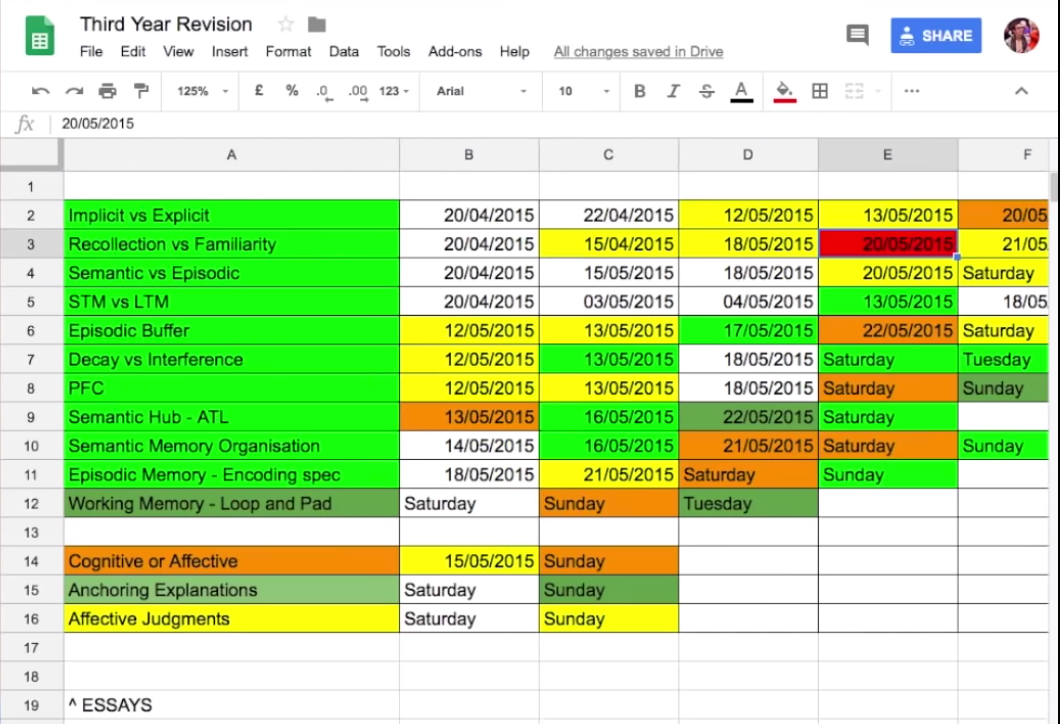
Set up these columns:
| Column | What to enter |
|---|---|
| Date and school free period | The real 55-minute slot available that week |
| Subject | Biology, Geography, or Photography |
| Stream | AS repair, A2 consolidation, or Photography production |
| Exact task | For example, “9700 Paper 2 cell diagrams: mark 15 questions and classify errors” |
| Finished output | A marked question set, one-page recall sheet, contact sheet, annotated experiment, or paragraph |
| Next review | The date when the idea, mistake type, or work selection is revisited |
| Status | Done, moved, or replaced |
Avoid entries such as “revise coasts,” “do Biology,” or “Photography work.” They conceal indecision. A good session can be judged at its end; a vague session cannot.
Your rolling two-week plan before the AS resits
A rolling plan means that only the next two weeks are scheduled in detail. At the end of each two-week cycle, delete completed tasks, move only essential unfinished work, and plan the following two weeks using your latest evidence: marked questions, teacher feedback, current A2 lessons, and approaching deadlines.
Until the final AS papers, use this split:
- In the 9-period week, each science/humanities subject receives two AS repair sessions and one A2 consolidation session.
- In the 11-period week, each receives three AS repair sessions and one A2 consolidation session.
- Photography keeps its three sessions each week because the February sketchbook deadline and April final submission require regular visible progress, not a late sprint.
Across the cycle, each of Biology and Geography therefore has five AS-repair sessions and two A2-consolidation sessions. This is weighted toward the resits without allowing newly taught A2 content to pile up.
Week A: 9 periods
| Session quota | Stream | Purpose for this stage |
|---|---|---|
| Biology 1 | AS repair | Diagnose and repair a weak area from a past paper. Prioritise cell diagrams, unfamiliar images, terminology, or a clearly identified content gap. |
| Biology 2 | A2 consolidation | Consolidate the current A2 lesson that week before it becomes another content gap. |
| Biology 3 | AS repair | Complete and mark exam questions on the repaired Biology weakness. |
| Geography 1 | AS repair | Learn or retrieve one precise case-study set, process sequence, or Paper 1 topic. |
| Geography 2 | A2 consolidation | Consolidate the current Hazardous or Coastal Environments lesson. |
| Geography 3 | AS repair | Practise a data-response or structured response and classify lost marks. |
| Photography 1 | Production | Plan or carry out a shoot, experiment, or source investigation. |
| Photography 2 | Selection and development | Make a contact sheet, select images, edit, annotate, or develop an experiment. |
| Photography 3 | Sketchbook progress | Produce finished sketchbook pages or written-investigation material with evidence of decisions. |
Week B: 11 periods
| Session quota | Stream | Purpose for this stage |
|---|---|---|
| Biology 1 | AS repair | Retrieval of a previously repaired topic without notes. |
| Biology 2 | A2 consolidation | Current A2 content, including an exam-style application question. |
| Biology 3 | AS repair | Timed Paper 2 or Paper 1 question set, depending on the nearest unsat paper. |
| Biology 4 | AS repair | Mark, correct, and log the exact causes of lost marks. |
| Geography 1 | AS repair | Recall and use a named case study or core process explanation. |
| Geography 2 | A2 consolidation | Current A2 Coastal or Hazardous Environments work. |
| Geography 3 | AS repair | Timed Paper 1 or Paper 2 response. |
| Geography 4 | AS repair | Improve the previous response using the mark scheme and a model paragraph plan. |
| Photography 1 | Production | Continue a planned shoot, artist-response experiment, or primary-work development. |
| Photography 2 | Selection and development | Contact sheet, editing, comparative annotation, or experiment refinement. |
| Photography 3 | Sketchbook progress | Turn work into a coherent assessed page rather than leaving evidence loose or undocumented. |
Do not treat the table as an exact daily order. Put the quotas into the actual free periods you have. For example, if you have two adjacent frees, use both for Geography AS repair when you need to write and improve a full answer, rather than fragmenting the work across several days.
Give AS repair and A2 consolidation different jobs
“Revision” is too broad to allocate time well. The plan works because AS repair and A2 consolidation address different risks.
AS resit repair: fix a demonstrated weakness
For Biology, an AS session should usually be driven by a past-paper error. Since Paper 2 content gaps, unfamiliar biological diagrams, and cell identification were particular issues, make the output concrete:
- Spend about 10 minutes retrieving key facts or labelling an unfamiliar diagram without notes.
- Spend about 25 minutes answering targeted past-paper questions.
- Spend about 10 minutes marking against the mark scheme.
- Spend the final 10 minutes writing an error-log entry: what the question required, what you wrote, why it missed the mark, and the exact wording or method to use next time.
For Geography, make AS repair similarly evidence-led. A weak response may be caused by missing process knowledge, generic examples, inaccurate case-study facts, poor command-word interpretation, or lack of evaluation. Your error log should identify which one. “Need to revise Geography” is not a usable next task; “learn three named flood-management measures and evaluate them against cost, effectiveness, and sustainability” is.
A2 consolidation: stop new content from becoming future repair
An A2 session does not need to mean rewriting class notes. It should convert that week’s teaching into retrievable, applicable knowledge:
- Identify the specific lesson or subsection taught since your previous A2 consolidation session.
- Close notes and produce a short recall structure, labelled diagram, process sequence, or case-study grid.
- Check and correct it using class material.
- Complete one applied question, paragraph plan, or data interpretation task.
- Schedule a brief revisit in a later session.
The point is protection: your October resits must not cause a second backlog in A2 Biology or Geography.
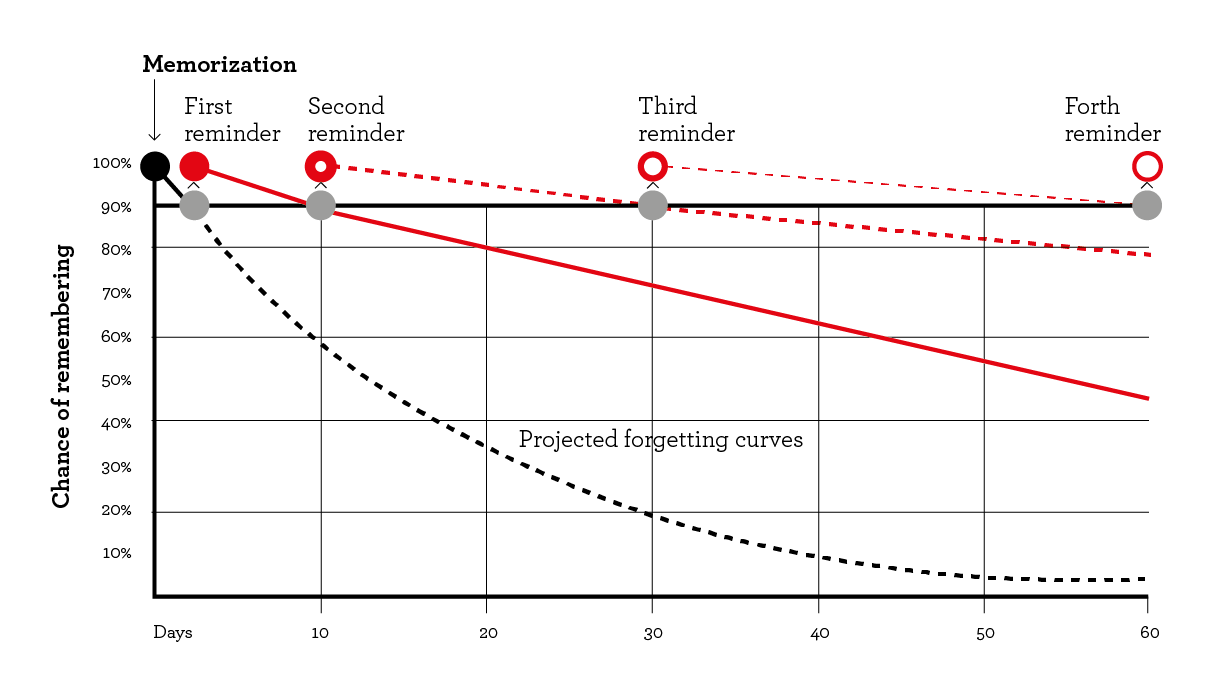
For important Biology terminology, Geography case-study evidence, and Photography artist research, schedule a short retrieval revisit after roughly one week and again after several weeks. The intervals do not need to be perfect. What matters is returning to material before it has to be relearned from scratch.
Rebalance immediately after a deadline
The subject quotas remain stable during the resit period, but the internal split changes as papers are completed. This is how the plan remains rolling rather than rigid.
After each October and November paper
Use these rules:
- After a paper is sat, stop setting work specifically for that paper. Do not keep doing Paper 2 data-response practice after Paper 2 has finished.
- If another AS component remains, redirect AS-repair sessions to that component’s content, question format, and timing.
- Keep one A2 session per subject per week until the last resit is over. This is the protected minimum that prevents A2 content from slipping away.
- After Geography Paper 2 on 22 October, all three or four Geography sessions become A2 work: current content first, then accumulated A2 weak areas.
- After Biology Paper 1 on 12 November, all three or four Biology sessions become A2 work.
From 23 October until Biology Paper 1, a sensible internal allocation is:
| Week type | Biology | Geography | Photography |
|---|---|---|---|
| 9 periods | Two Paper 1 AS sessions; one A2 session | Three A2 sessions | Three Photography sessions |
| 11 periods | Two Paper 1 AS sessions; two A2 sessions | Four A2 sessions | Three Photography sessions |
This keeps Biology Paper 1 preparation active without allowing it to consume the work that needs to continue after the resits.
After the Photography deadlines
The Photography deadlines require a different kind of rebalance.
- Before February 2027, the three Photography sessions should increasingly produce completed sketchbook pages, annotations, and an organised written component rather than endless experiments.
- After the February sketchbook deadline, retain the three sessions but use them for refining selections, final outcomes, presentation, and the remaining written work for April.
- After 25 April 2027, redistribute the freed Photography sessions according to current evidence. Geography begins with the extra session because it is currently the weaker subject.
A sensible default after the final Photography submission is:
| Week type | Biology | Geography |
|---|---|---|
| 9 periods | 4 sessions | 5 sessions |
| 11 periods | 5 sessions | 6 sessions |
This is a default, not a permanent rule. If a timed Biology paper shows a larger mark deficit than Geography, use the next two-week review to move one session accordingly.
The two-week review: a short control system
Use the last five minutes of the final planned session in each two-week cycle to review the plan. Do not build a separate long “planning session” that competes with revision.
Check only four things:
- Completion: Which sessions produced the planned output?
- Evidence: What did marked questions, retrieval attempts, or teacher feedback show?
- Urgency: Which unsat paper or Photography deadline is now closest?
- Replacement: What is the single highest-value task for each subject in the next cycle?
If you miss a session, do not create weekend debt or try to double the next period. Move the task only if it is still essential. Put it into the next session for the same subject and stream, replacing the lowest-priority unstarted task. If it is no longer relevant because a paper has been sat, remove it.
A plan that survives one missed period is much more useful than a perfect-looking plan that collapses when school becomes busy.
Key takeaways
Your timetable is a two-week rolling system built from the free periods you actually have:
- The 9-period week contains three sessions each for Biology, Geography, and Photography.
- The 11-period week contains four Biology, four Geography, and three Photography sessions.
- Before the resits finish, Biology and Geography are weighted toward AS repair while preserving at least one A2 consolidation session per week.
- After each exam component, remove tasks for that component and redirect time to the next live deadline.
- Every 55-minute session needs an observable output and a next-review date.
- After Photography’s final submission, transfer its three sessions mainly to Geography, while using timed evidence to decide whether Biology needs more.
Next, you will audit your existing Natural World Photography work against AQA’s assessment objectives and turn the broad theme into a focused investigation question and visual intention.
Can't find a good explanation? Sign up and we'll make it for you
Sign up