Hello! Welcome to our ninth module, where we are focusing on building powerful partner channels to drive sales.
In our last lesson, you created a set of professional outreach templates to recruit general affiliate partners. You now have the scripts and the strategy to initiate conversations. Today, we're going to sharpen our focus and answer the crucial question: who are the best people to send these messages to?
Our goal is to develop criteria for selecting TikTok micro-influencers and identify a shortlist of potential partners. We'll explore why these creators can be your most powerful asset on the platform and learn a data-driven process to find them.
Why Focus on Micro-Influencers?
While it might seem tempting to chase creators with millions of followers, micro-influencers (typically those with 5,000 to 100,000 followers) often deliver a much higher return on investment. Here’s why:
- Higher Engagement: They have a smaller, more dedicated community that trusts their recommendations, leading to higher engagement rates.
- Niche Authority: They are often experts in a specific niche (like "vegan skincare" or "3D printing for beginners"), meaning their audience is highly targeted.
- Authenticity: Their content feels more genuine and less like a slick advertisement, which resonates deeply with TikTok users.
- Cost-Effectiveness: They are more affordable to partner with, allowing you to collaborate with several creators for the price of one macro-influencer, diversifying your risk and reach.
1. Developing Your Selection Criteria
To avoid wasting time and money on the wrong partners, you need a clear, data-driven set of criteria. We'll divide this into quantitative metrics (the numbers) and qualitative factors (the fit).
Quantitative Metrics: The Key Performance Indicators
These are the hard numbers that tell you if a creator can actually drive results.
- Follower Count: This is your starting point. For micro-influencers, a good range is between 5,000 and 100,000 followers. According to Shopify, creators with over 1,000 followers can join the TikTok Shop affiliate program, but the 5k+ range often indicates a more established presence.
- Engagement Rate: This is arguably the most important metric. It shows how much of the creator's audience actively interacts with their content.
- Calculation:
(Total Likes + Comments + Shares on recent videos) / Total Followers / Number of videos - Benchmark: For micro-influencers, aim for an engagement rate of 10% or higher. Anything below 5% may indicate a less-engaged audience.
- Calculation:
- View-to-Follower Ratio: A quick way to gauge if content is reaching a good portion of their followers.
- Calculation:
(Average Views per video / Follower count) * 100 - Benchmark: Look for a ratio of at least 1.5% for accounts under 500k followers, but aim higher for micros.
- Calculation:
- Video GPM (Gross Merchandise Value per 1,000 Views): This is the ultimate sales metric for TikTok Shop affiliates. It tells you how much revenue a creator generates for every 1,000 views on their videos. This data is available within the TikTok Shop creator marketplace and is a direct indicator of a creator's ability to sell. A creator with a high GPM is proven to be effective at converting views into sales.
TikTok Influencer Marketing: The 2024 Ultimate Playbook
For a deeper dive into these metrics and benchmarks, the Rebelgrowth article 'TikTok Influencer Marketing: The 2024 Ultimate Playbook' provides an excellent framework. It also details how to vet creators for authenticity.
Please read the sections 'Step 2: Build a Data-Driven Influencer Shortlist' and 'Step 3: Vet Creators for Authenticity & Brand Fit'. Focus on the 'Engagement-to-Follower Ratio (The 1.5x Rule)' and the manual checks for spotting fake followers, such as scanning comments for generic vs. contextual responses.
Qualitative Criteria: Vetting for Brand Fit
Numbers alone don't tell the whole story. A creator must also align with your brand's identity and values.
- Audience Demographics: The creator's audience should be your target audience. If you sell anti-aging skincare for women 40+, a creator whose audience is primarily teenage boys is not a good fit, no matter their engagement rate.
- Content Style and Tone: Is their content polished and professional, or raw and humorous? Does their communication style match your brand's voice?
- Authenticity and Trust: Look at the comments. Do followers ask genuine questions and express trust in the creator's opinions? This is a strong sign they have real influence.
- Red Flags: Watch out for inconsistent content, a sudden drop-off in views (engagement cliffs), or followers from countries where you don't ship.
This next video demonstrates a powerful tool for analyzing these qualitative and quantitative aspects, especially audience demographics.
5 Easiest Ways To Find Influencers For Your Brand (Free & Paid)
The video '5 Easiest Ways To Find Influencers' by Business By MarielaPerCal shows how to use an influencer platform called Modash. It's a fantastic demonstration of how to apply the criteria we've just discussed to find the perfect partners.
Watch the two segments from 01:01 to 03:01 and 04:11 to 06:25. Pay close attention to how she filters not just for the influencer's profile (followers, engagement rate) but also for their audience's characteristics (location, gender, age). Notice the feature for checking the percentage of fake followers.
2. Finding Your Micro-Influencer Partners
Now that you have your criteria, it's time to find creators who meet them. Here are three effective methods.
Method 1: Native and Manual Discovery
These methods use TikTok's built-in features and are completely free.
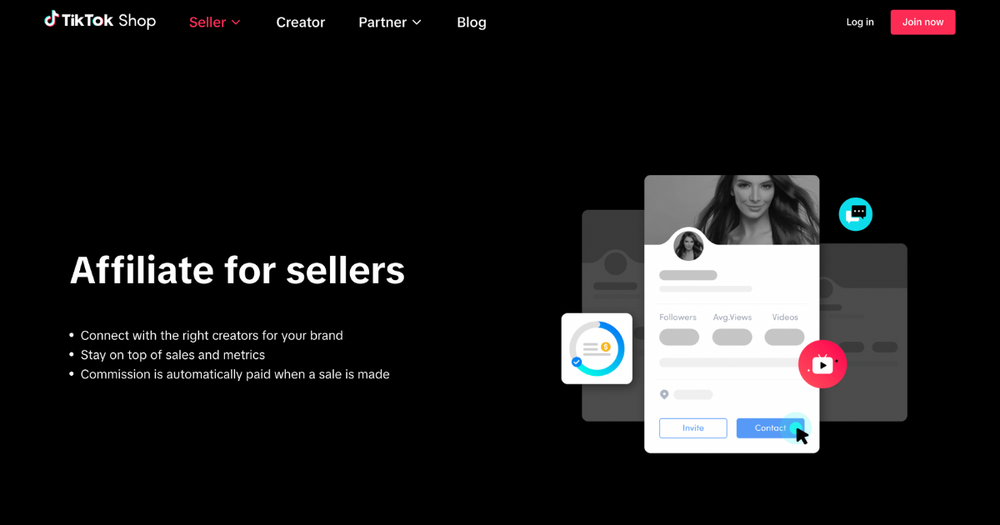
- TikTok Creator Marketplace (TCM): This is TikTok's official platform for finding creators. You can filter by category, follower count, average views, audience location, and more. This is also where you can find data like Video GPM for TikTok Shop affiliates.
- Hashtag Search: Search for specific, niche hashtags related to your product (e.g.,
#portableblenderrecipes, not just#blender). The top-performing videos under these hashtags will lead you to relevant micro-influencers.
Method 2: Competitive Analysis ("Affiliate Sniping")
This is a powerful, practical strategy for finding creators who are already proven to be successful. The idea is to find your competitors' top-performing affiliates and recruit them by offering a better deal (e.g., higher commission).
How to Find Tiktok Shop Affiliates to make you $240,000/month (FULL TUTORIAL)
Jon Reiter's video on finding TikTok Shop affiliates provides a masterclass in this technique. He calls it 'affiliate sniping' and shows you exactly how to execute it using an analytics tool.
Watch the segment from 01:51 to 04:19. Focus on the two methods he presents: Targeted Collaboration: Using the native TikTok Shop 'Find Creators' tool. Affiliate Sniping: Using a tool like Kalodata to find a competitor's product and see a list of all the affiliates driving sales for them. This is a highly actionable strategy.
Method 3: Finding "Look-Alikes"
Once you find one creator who is a great fit, you can use that information to find others just like them.
- On TikTok: When you are on a creator's profile, tap the small arrow next to the "Follow" button. TikTok will often suggest similar profiles.
- Using Tools: Platforms like Modash (shown in the LINK video) have "look-alike" features that analyze a creator's profile and generate a list of similar influencers.
3. Building Your Shortlist
As you find potential partners, you need an organized system to track them. A simple Google Sheet or spreadsheet is perfect for this.
Create a spreadsheet with the following columns:
- Username
- Link to TikTok Profile
- Follower Count
- Average Views (Last 10 videos)
- Engagement Rate (Calculated)
- Video GPM (if available)
- Audience Notes (Location, Age, etc.)
- Brand Fit Score (1-5)
- Contact Info (Email, if available)
- Status (Not Contacted, Reached Out, Negotiating, Active)
Your task is to populate this list with 15-20 promising micro-influencers who meet your criteria.
Test your understanding!
You are selling a high-quality, eco-friendly yoga mat. You find two potential micro-influencers on TikTok:
- Creator A: 50k followers. Posts daily workout challenges. Average engagement rate is 4%. Audience is 70% male, ages 18-24, primarily in the US.
- Creator B: 15k followers. Posts tutorials on restorative yoga and mindfulness. Average engagement rate is 12%. Audience is 85% female, ages 25-45, primarily in the US. Her recent videos mention the importance of sustainable products.
Which creator is a better fit for your shortlist, and why?
Show answer
Creator B is the clear choice.
While Creator A has more followers, Creator B is a much better fit based on our criteria:
- Higher Engagement (12% vs. 4%): Creator B's audience is far more engaged and likely to act on her recommendations.
- Better Audience Fit: Creator B's audience (women 25-45) is a classic demographic for premium yoga products. Creator A's younger, male-dominated audience is less likely to be your core customer.
- Stronger Brand Fit: Creator B's focus on restorative yoga and sustainability aligns perfectly with an "eco-friendly yoga mat." Her content provides the right context for your product.
This demonstrates why looking beyond follower count to analyze engagement, audience, and brand fit is critical.
Conclusion
You now have a robust framework for identifying high-potential TikTok micro-influencers. Instead of guessing, you can now use a data-driven process to build a shortlist of partners who are primed to deliver real results for your brand.
Key Takeaways:
- Prioritize Fit over Followers: The right micro-influencer with 15,000 engaged followers is more valuable than a macro-influencer with 1 million un-engaged ones.
- Use a Mix of Metrics: Combine quantitative data (Engagement Rate, Video GPM) with qualitative analysis (Brand Fit, Audience Demographics) for a complete picture.
- Be a Detective: Use native TikTok tools, manual searches, and competitive analysis ("affiliate sniping") to uncover the best creators in your niche.
- Stay Organized: A simple spreadsheet is your best friend for tracking potential partners and managing your outreach pipeline.
Next Up:
You have the outreach templates and a process for building your shortlist. In the next lesson, we will combine these skills. We'll focus on how to draft an outreach email and define key terms for a micro-influencer collaboration, ensuring your pitch is perfectly tailored to this specific type of creator and sets the stage for a successful partnership.