
Introduction
Welcome back! In our last lesson, we discovered that the Embera world is a vibrant ecosystem teeming with spiritual beings known as 'jai'. We learned that these spirits, including powerful animal figures like the jaguar, are not inherently good or evil, but are complex, ambivalent 'persons' with their own societies and motivations. This creates a world of immense spiritual power but also of significant risk, which requires careful navigation.
This brings us to a fundamental question: how do humans interact safely and productively with this spirit world? The answer lies with a specialist, a key figure in Embera society. Today, we will describe the role of the Jaibaná (shaman) in mediating with the spirit world.
Think of the spiritual cosmos we've discussed as a complex operating system with different user types and access levels. Most people are standard users with limited permissions. The Jaibaná, however, is a 'super-user' or system administrator. They have the knowledge and clearance to interact with the system's core functions—the spirits themselves—to maintain balance, resolve conflicts, and perform critical tasks for the community's benefit.
1. Who is the Jaibaná? The Mediator
The Jaibaná is the spiritual expert and mediator for the Embera community. Their entire role is built on a unique ability to perceive and interact with the non-human world.
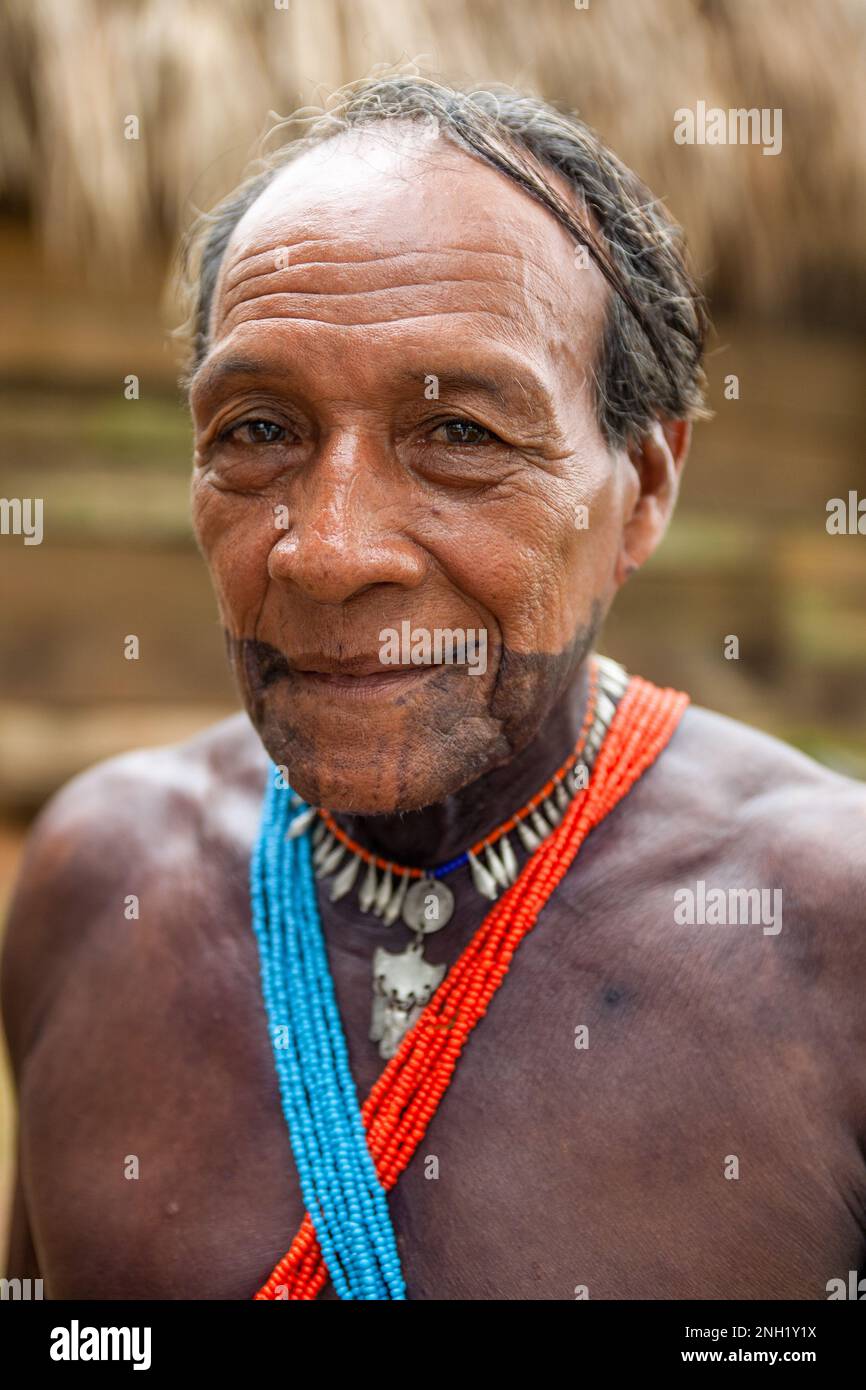
To understand the Jaibaná's function, we first need to understand the name itself and the unique perspective it implies. Let's turn to an academic paper that provides a clear definition and context.
“All Within the Same Thought”: Embera People Relations ...
The article '“All Within the Same Thought”' offers a precise definition of the Jaibaná and explains their unique ability to see the world differently from others.
First, please find the definition of Jaibaná. It is located on page 11. Look for the sentence that breaks the word down into 'jai' (spirit) and 'bbaná' (possession). Next, go back to page 5 and read the paragraph beginning with 'As a specialist, the jaibaná manages to transcend...'. This section is crucial as it explains their ability to see non-humans as 'people' and converse with them.
As you've just read, the name Jaibaná literally means "the one who has the spirits." This isn't just a title; it's a job description. They are the designated point of contact with the 'jai'.
Crucially, the Jaibaná possesses a different kind of vision. Where an ordinary person sees a tree or a jaguar, the Jaibaná can see the 'person' or spirit within. This is the foundation of their ability to mediate—they can communicate with non-human beings on their own terms, treating them as subjects with whom one can negotiate, argue, and build relationships.
This work often involves specific ritual objects that serve as both tools of the trade and symbols of authority.

2. The Jaibaná in Practice: Healing and Protection
The Jaibaná's mediation is not an abstract philosophical exercise; it has highly practical applications for the community's survival and well-being. Perhaps their most visible role is that of a healer.
The following resource provides a powerful, real-world account of a young Jaibaná named Byron responding to a health crisis in his community. It’s a perfect example of the Jaibaná's role in action.
Serranía de las Quinchas: Indigenous Embera and Spirits ...
The article 'Serranía de las Quinchas: Indigenous Embera and Spirits...' from the University of Exeter's BioResilience project gives us a narrative look at a Jaibaná's work. It shows how traditional spiritual practice is applied to solve contemporary problems.
Please read the two sections about the Jaibaná named Byron. Start with the paragraph 'While trying the ácid mamoncillos fruits, we walked by the house of Byron...' and continue until you've read '...some of the plants had not wanted to talk to him yet.' Focus on the specific actions he takes to heal the sick children and how he describes his relationship with the spirits of the plants and the mountain.
Byron's story illustrates the complete process of Jaibaná-led healing:
- Diagnosis: He identifies the illness affecting the community's children, linking it to contaminated water.
- Sourcing Medicine: He travels to the sacred mountains of the Serranía de las Quinchas to find the necessary medicinal plants.
- Spiritual Negotiation: This is the critical step. He cannot simply take the plants. He must first "talk with the spirit of the plant" and ask for permission. Without this negotiation, the plants will not be effective.
- Ritual Application: He prepares curative baths and performs ceremonies to force the "negative energies out of the patient’s body."
- Cosmic Maintenance: Beyond healing, he also works to appease the powerful spirits of the mountain, ensuring they "remain calm." This shows his dual role as both a doctor and a diplomat.
This is a fantastic example of what anthropologists call relational ontology—the understanding that the world is made up of relationships, not just inert objects. For a plant to heal, a relationship of respect and reciprocity must first be established with its spirit.
3. The Ritual Leader: Harmonization and Negotiation
In addition to being a healer, the Jaibaná is the master of ceremonies for all significant interactions with the spirit world. When the community needs to enter a sacred site (drua wãndra), hunt in a new area, or undertake any activity that might disturb the 'jai', the Jaibaná leads the way.
The article "“All Within the Same Thought”" provides an incredibly detailed account of a Jaibaná guiding an expedition to a sacred waterfall. This is like watching a project manager or facilitator lead a high-stakes stakeholder meeting.
“All Within the Same Thought”: Embera People Relations ...
Let's return to our main text to see the Jaibaná's role as a ritual leader. This section provides a step-by-step walkthrough of the complex preparations and actions required to safely enter a sacred space.
Please read the section titled 'Path and visit to the drua wãndra,' which begins on page 15. As you read, notice the sequence of actions: the dream before the trip, the 'harmonization' ritual, the use of the staff and tobacco, the greetings to the plants, and the culminating ritual at the waterfall. This provides a vivid picture of the mediation process.
This detailed narrative reveals the Jaibaná's toolkit for mediation:
- Dreams: Communication begins before the physical journey. The Jaibaná dreams to converse with the spirits, ask for permission, and receive instructions.
- Harmonization: The ritual of sprinkling the group with plant-infused water is called amba kein yeira, meaning "like-minded." Its purpose is to align the intentions of the humans with the spirits of the place, ensuring a peaceful encounter.
- Offerings and Communication: Tobacco smoke and snuff are used as offerings and to facilitate communication, as they are pleasing to the spirits.
- Orchestration: The Jaibaná directs every interaction, from greeting individual plants before collecting them to waving his staff toward the cardinal points to acknowledge the guardian spirits.
Through these actions, the Jaibaná ensures that the boundary between the human and spirit worlds is crossed with respect, reciprocity, and a clear purpose, preventing the danger that comes from upsetting the cosmic balance.
Test your understanding!
You have seen the Jaibaná act as a healer, diplomat, and ritual leader. Drawing on your background in design and systems thinking, what core 'user needs' of the Embera community does the Jaibaná's role fulfill? Think beyond just "healing sickness."
Show answer
This is a great way to frame it. Here are some of the core community needs the Jaibaná addresses:
- Risk Management: The spirit world is powerful and dangerous. The Jaibaná provides the expertise to mitigate the risks of negative interactions, acting as a spiritual safety protocol.
- Resource Access: To get medicinal plants or hunting success, permission is needed from spirit "owners." The Jaibaná is the negotiator who secures these vital resources for the community.
- Justice and Balance: When the cosmic balance is upset (e.g., someone disrespects a sacred site and falls ill), the Jaibaná acts as a diagnostician and restorer of that balance, ensuring harmony is re-established.
- Meaning and Sense-Making: The Jaibaná provides explanations for events that might otherwise seem random or chaotic (like illness or bad luck), placing them within a coherent cosmological framework. They answer the "why."
- Knowledge-Keeping: The Jaibaná is a living repository of immense ecological and spiritual knowledge—which plants heal, which spirits live where, which rituals to perform. This is a critical information architecture for the community's survival.
Conclusion
Today we have met the crucial figure who bridges the human and spirit worlds in Embera culture. The Jaibaná is far more than a "medicine man"; they are a mediator, diplomat, healer, and guardian of cosmic balance.
Key Takeaways:
- The Jaibaná is "the one who has the spirits," a specialist who can perceive and communicate with the non-human persons of the animist world.
- As a healer, the Jaibaná negotiates with plant and mountain spirits to acquire medicinal knowledge and power, addressing the physical and spiritual needs of their community.
- As a ritual leader, they orchestrate all interactions with sacred places and powerful spirits, using dreams, offerings, and "harmonization" rituals to ensure safety and reciprocity.
- The Jaibaná's work is fundamentally about mediation and maintaining balance. They manage the complex, high-stakes relationships between the human community and the powerful 'jai' who inhabit their shared world.
Preview of the Next Lesson:
This lesson concludes our exploration of the Embera people of the Pacific Rainforest. We will now journey to a different region and a different time. In our next module, we will travel to the Cauca River Valley to explore the world of the Quimbaya civilization, a culture renowned for its sophisticated goldwork and distinct mythological views on life and the afterlife.
Can't find a good explanation? Sign up and we'll make it for you
Sign up