
Hello, and welcome to the first module of your technical-management preparation course. This module establishes the role transition: before practicing one-to-ones, delivery planning, architecture strategy, and interview stories, you need a precise answer to a deceptively simple question: what is a technical manager actually accountable for?
With five years in backend engineering, DevOps, and project coordination, you have likely already performed parts of several leadership roles. The important distinction is not whether you have led work before; it is whether you were accountable for a project, a technical direction, an individual deliverable, or the sustained effectiveness of people and a team. This lesson separates those accountabilities so you can assess roles accurately during your job search and describe your experience without overstating—or understating—it.
Start with accountabilities, not titles
Job titles are unreliable shorthand. At one company, “Engineering Manager” means a full-time people manager for eight engineers. At another, it means a senior engineer who spends half their time coding and half coordinating a small squad. “Tech lead,” “team lead,” and “project lead” can likewise be formal positions, temporary assignments, or simply labels a team uses informally.
So do not begin with the title. Begin with four questions:
- What outcome is this person ultimately answerable for?
- Who has formal authority to make which decisions?
- Is the responsibility temporary and project-specific, or ongoing and team-wide?
- Is success measured mainly through personal output, project delivery, technical direction, or team outcomes?
An accountability is more than a task. A task can be delegated; accountability remains with the person expected to ensure the outcome happens. For example, a manager may delegate a migration to a senior engineer, but remains accountable for ensuring the team has capacity, clarity, support, and escalation paths to deliver it safely.
Watch this short comparison of the management and individual-contributor paths. It is useful mainly for its warning that titles and ladders differ across organizations.
Engineering manager vs tech lead - software developer career paths
In “Engineering manager vs tech lead - software developer career paths,” Not Only Code distinguishes career tracks from temporary functional roles. Use it to build a title-agnostic view before looking at individual job descriptions.
Watch career tracks for the usual distinction between individual-contributor and management ladders. Then watch lead roles for the idea that tech lead and team lead are often roles added to a senior-engineer level rather than permanent levels themselves. Finish with title variation, focusing on why a job description matters more than a title.
The key implication for your search is practical: do not reject a posting because it says “Engineering Manager” and mentions architecture, nor assume a “Technical Lead” opening includes people management. Look for the actual decision rights and expected outcomes.
The four roles: their primary “unit of success”
A useful default model is to identify the unit through which each role creates value:
| Role | Primary unit of success | Core accountability | Typical formal authority |
|---|---|---|---|
| Individual contributor (IC) | Their assigned work and technical contribution | Delivering high-quality work, collaborating effectively, and improving the system within their scope | Authority over their own implementation choices within team standards |
| Technical lead | Technical direction for a product, service, or initiative | Ensuring coherent technical decisions, quality, and manageability of the solution | Technical influence and, sometimes, delegated architecture decisions |
| Project lead | A defined project or initiative | Bringing a cross-functional effort to a successful outcome within agreed scope, timing, and quality | Authority to coordinate work, surface risks, and drive project decisions |
| Technical manager | The sustained effectiveness of a team of people | Team capability, health, delivery, alignment, and the conditions that enable good technical decisions | Formal people-management authority and accountability for team outcomes |
These categories overlap deliberately. A technical manager still needs technical judgment. A tech lead must communicate and coordinate. A project lead may facilitate planning and manage risks. An IC can lead through expertise and influence without becoming a manager.
The difference is what remains true when the current project ends:
- An IC’s responsibility is primarily their contribution to the next piece of work.
- A tech lead may move to a new initiative, with another engineer becoming the technical lead.
- A project lead’s accountability generally ends or changes substantially when the project is delivered.
- A technical manager remains accountable for the team’s ability to perform across projects: its people, capacity, clarity, collaboration, and growth.
The LeadDev overview makes this transition explicit: an engineering manager may still be an engineer, but primarily succeeds by directing work through others, removing obstacles, and developing team capability.
What is an engineering manager? Taking the step up - LeadDev
Read LeadDev’s overview to distinguish an engineering manager’s ongoing people-and-team accountability from a tech lead’s technology-centered responsibility.
In the section “What does an engineering manager do?”, read from the role definition. Focus on the shift from personally completing work to creating conditions in which the team can complete it. Then, under “Engineering manager vs. lead engineer: What’s the difference?”, read from the comparison. Notice the two distinctions: a tech lead is often an additional role held by an engineer, while an engineering manager is a distinct job; their central focus is also different, technology versus people working effectively toward technical goals.
Individual contributor: accountable for contribution, not the team system
An individual contributor is accountable for the quality, reliability, and timeliness of their own work. For a backend/DevOps engineer, that might include:
- designing and implementing a service or infrastructure change;
- reviewing code and improving operational practices;
- diagnosing production problems;
- documenting a component’s behavior;
- influencing technical choices through evidence and expertise.
A strong IC can have wide influence. A staff engineer, for instance, may guide architecture across several teams. Influence does not automatically mean formal management. The defining distinction is whether the person directly manages people and is held accountable for their performance, growth, and the ongoing operation of a team.
Consider this sentence:
“I built the deployment pipeline, reduced release time, and documented the process.”
That is strong IC impact. It emphasizes a valuable personal contribution.
Now compare:
“I coordinated engineers and platform stakeholders to redesign the deployment pipeline, clarified ownership, and enabled the team to reduce release time.”
That shows project or technical leadership, depending on the scope. It still does not necessarily show people management, because it says nothing about direct reports, development, performance expectations, staffing, or the long-term health of a team.
An IC may mentor colleagues, facilitate a meeting, or lead an initiative. Those are important leadership signals—particularly for someone transitioning into management—but they are not by themselves proof of formal manager accountability.
Technical lead: accountable for technical coherence
A technical lead is usually accountable for the technical direction of a bounded area: a service, a platform, a domain, or an initiative. They help the team make sound technical decisions and maintain a coherent engineering approach.
Typical technical-lead accountabilities include:
- framing technical options and trade-offs;
- setting or reinforcing engineering standards;
- reviewing designs and critical implementation choices;
- identifying reliability, scalability, security, and maintainability risks;
- aligning engineers around an architecture or implementation plan;
- mentoring engineers in technical practices.
In your current domain, a tech lead for an AWS-based backend modernization might decide whether a workload should remain on ECS, move to Lambda, or be redesigned around asynchronous processing. They would make assumptions visible, compare trade-offs, and help engineers implement the chosen direction.
However, a tech lead is not automatically accountable for:
- performance reviews or compensation recommendations;
- recurring one-to-ones and career development;
- resolving an engineer’s ongoing performance problem;
- hiring plans and headcount allocation;
- the team’s sustained morale, workload balance, and staffing capability.
Some organizations combine tech-lead and manager responsibilities in one person, especially in smaller teams. If that happens, separate the hats rather than assuming they are one accountability. When you are reviewing a design, you are acting as a technical lead. When you are coaching an engineer who is struggling to meet expectations, you are acting as a manager.
Project lead: accountable for a particular delivery outcome
A project lead drives execution for a defined initiative. This closely matches much of the leadership you have already done through technical/project coordination.
For example, imagine a project to introduce centralized audit logging across several Node.js services. A project lead might:
- align the team around the project goal and milestones;
- identify dependencies on security, platform, and product teams;
- maintain visibility into progress, risks, and scope;
- remove day-to-day obstacles;
- facilitate decisions when teams disagree;
- ensure the delivered capability meets agreed quality requirements.
This is real leadership. The project lead is not merely a meeting organizer; they actively guide the work and keep the initiative moving. Atlassian’s description is a helpful concise view of this delivery-centered role.
Project Lead: Role, Skills, and Responsibilities Explained | Atlassian
Read Atlassian’s explanation to sharpen the distinction between leading a project to delivery and managing a team over time.
In “What is a project lead, and what do they do?”, read from the opening definition. Then go to “Key responsibilities of a project lead” and read from the responsibility list. Focus on the bounded, execution-oriented accountabilities: milestones, risks, stakeholders, and quality.
The project lead’s central question is: “How do we get this initiative delivered successfully?”
The technical manager’s broader question is: “How do I build and sustain a team that can deliver this initiative and the next several initiatives effectively?”
A project lead may spot that one engineer lacks the AWS knowledge needed for the audit-logging project. Their immediate response might be to adjust the plan, pair them with an experienced colleague, or find support.
A technical manager has the same immediate delivery concern, but also asks longer-term questions:
- Is this an isolated gap or a team capability gap?
- Who needs a development opportunity, and what support will make it safe?
- Are expectations clear enough for the engineer to succeed?
- Does the team’s staffing plan fit the roadmap six months from now?
- Is a recurring workload or communication issue limiting multiple engineers?
That enduring system of people and work is the manager’s domain.
Technical manager: accountable for the team’s capacity to succeed
For this course, technical manager means a formal people leader who also has sufficient technical judgment to lead an engineering team responsibly. Companies often use engineering manager for this role.
A technical manager’s work can be grouped into three connected accountabilities:
-
People and team health
They establish expectations, hold regular one-to-ones, give feedback, develop engineers, address performance fairly, hire thoughtfully, and cultivate an environment where concerns and disagreements can be raised productively. -
Delivery and organizational alignment
They help the team translate business priorities into achievable plans, manage capacity and risks, coordinate with product and other teams, communicate upward, and protect the team from avoidable disruption. -
Technical stewardship
They ensure the team makes sound technical decisions and has appropriate technical leadership. This does not mean personally designing every system. It often means asking the right questions, assigning appropriate technical ownership, challenging unsafe assumptions, and ensuring risks are understood.
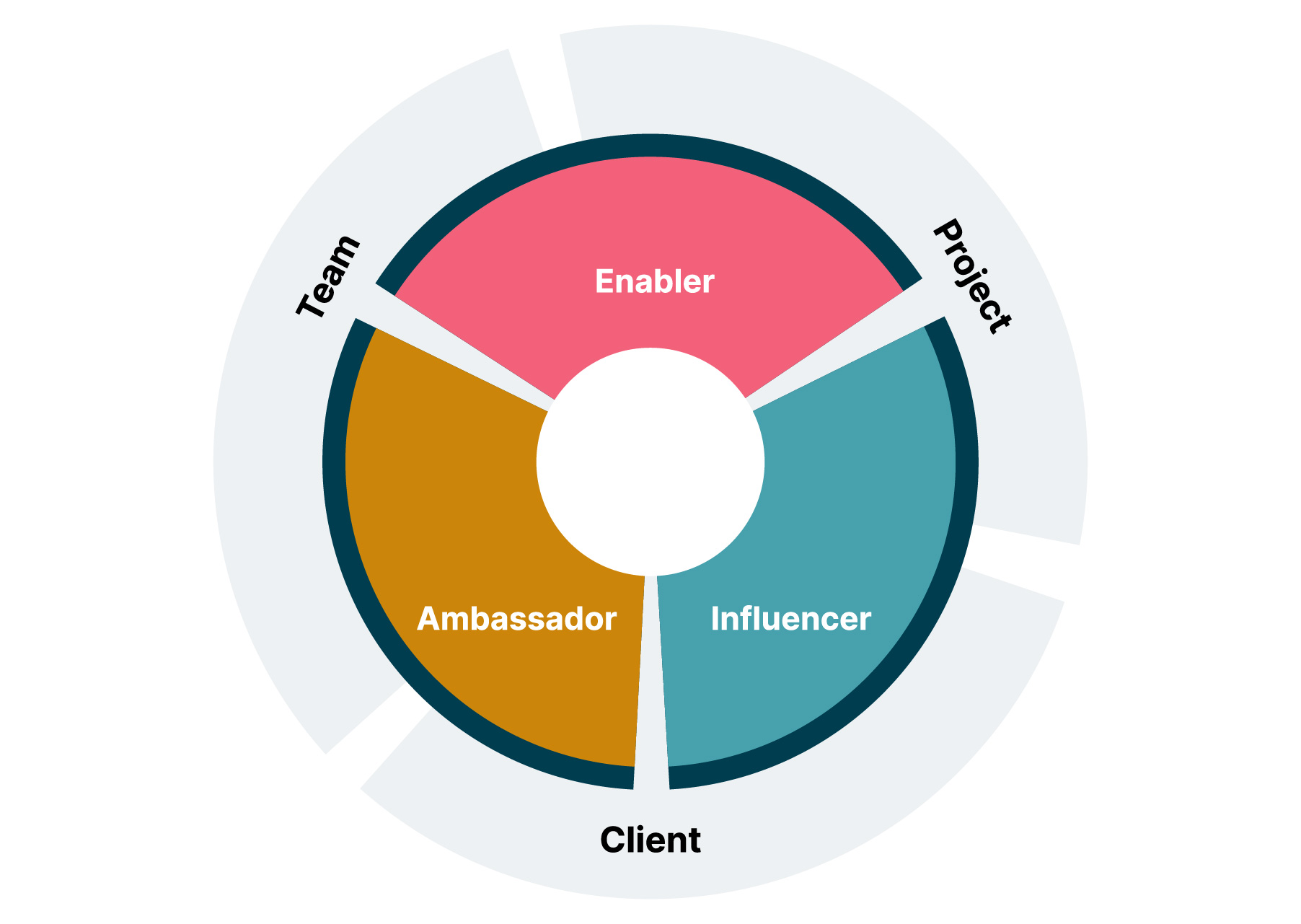
This three-role view is useful because it counters a common misconception: technical management is “less technical” only if technical means writing production code personally. The manager’s technical judgment still matters, but it is used differently.
For example, when an engineer proposes a new AWS data service, a technical manager should not automatically take over the design. A stronger managerial response is to ensure that the proposal addresses customer need, availability, security, operational ownership, migration risk, and cost. The tech lead or senior engineer may own the recommendation; the manager ensures the team has the decision process, capability, and cross-functional alignment to make it responsibly.
The following video segment captures the move from an intermediary project-lead role into formal management, including the significance of direct reports and collective accountability.
Individual Contributor Vs Manager
In “Individual Contributor Vs Manager,” Alexander Lyon Communication Coach contrasts leading an initiative without formal authority with managing people and being accountable for collective results.
Watch the middle role for the distinction between coordinating a project and supervising people. Then watch manager accountabilities. Focus on the shift toward coaching, formal decisions, accountability for team performance, broader business context, and communication across team, peers, and senior leadership.
One scenario, four perspectives
Suppose a customer-facing Node.js API is experiencing intermittent latency spikes. A product launch is six weeks away, two engineers are overloaded, and the database team must approve a schema change.
All four roles may be involved, but their accountabilities differ.
| Role | What they primarily own in this situation | A productive contribution |
|---|---|---|
| IC | A defined technical contribution | Investigates traces, identifies a connection-pool issue, implements and validates a fix |
| Technical lead | A sound technical direction | Frames options, reviews the service and database design, sets acceptance criteria for reliability |
| Project lead | Coordinated delivery of the remediation or launch readiness project | Tracks milestones and risks, coordinates the database dependency, communicates project status |
| Technical manager | The team’s ability to resolve the issue sustainably while delivering responsibly | Rebalances workload, ensures clear ownership and escalation, manages stakeholder expectations, develops needed capability, and makes sure the team is not normalizing unsustainable on-call pressure |
Notice what the manager does not need to do: personally diagnose every latency issue or author the final schema migration. If they do that routinely, they may temporarily appear useful while preventing the team from building ownership and capacity.
Conversely, a technical manager cannot simply say, “The tech lead owns it,” and disengage. They remain accountable for the conditions around the work: whether the right owner exists, whether the decision is sufficiently supported, whether competing commitments are realistic, and whether risks are escalated appropriately.
A practical role-identification checklist
When reading a role description or evaluating your own experience, use these signals.
Strong signals of a technical-manager role
Look for responsibility for:
- direct reports, one-to-ones, feedback, performance management, and career growth;
- hiring, onboarding, team composition, or headcount planning;
- team delivery across multiple initiatives, not only one project;
- stakeholder communication representing the team;
- prioritization, capacity, team health, and organizational obstacles;
- building an environment in which engineers can make good decisions and grow.
Strong signals of a technical-lead role
Look for responsibility for:
- architecture, design reviews, technical strategy, standards, and engineering quality;
- technical mentoring and decision facilitation;
- solving problems that cross a product or system boundary;
- technical influence without explicit ownership of performance reviews, career development, or direct reports.
Strong signals of a project-lead role
Look for responsibility for:
- a named initiative, launch, migration, program, or milestone;
- execution plans, progress tracking, dependencies, risk management, and stakeholder updates;
- coordinating contributors who report to other managers;
- delivery within an agreed scope and time horizon.
Strong signals of an IC role
Look for responsibility for:
- delivering individual features, services, infrastructure, analysis, or operational outcomes;
- expertise in a technical area;
- collaboration and influence without formal responsibility for another person’s performance or growth.
A posting may contain signals from more than one category. That is not automatically a problem. The question is whether the mix is deliberate and feasible. A role asking for people management, architecture leadership, delivery management, and 50% hands-on feature work for a large team may involve conflicting expectations. In an interview, ask how many direct reports there are, how technical decisions are owned, how much time is expected for hands-on work, and which outcomes define success in the first six months.
Positioning your existing leadership experience accurately
Your project-lead experience is credible evidence for a transition into technical management, especially where you have coordinated work, unblocked delivery, made trade-offs visible, and influenced across teams. Present it as evidence of transferable leadership, while naming the formal-management responsibilities you are seeking to develop.
Use language that distinguishes the scope honestly:
- Project-lead evidence: “I coordinated a cross-team migration, clarified ownership across engineering and operations, and surfaced dependency risk early.”
- Technical-lead evidence: “I established the technical approach for the migration, reviewed design trade-offs, and helped engineers adopt the new operational model.”
- Managerial potential: “I created conditions for the team to deliver: clarified goals, distributed ownership according to strengths, protected focus, and kept stakeholders aligned.”
- Formal management gap to address: “I have not yet had direct-report responsibility for performance and career development; I am building the skills and evidence needed to take on that accountability.”
That last statement is not a weakness if it is accompanied by a concrete plan and real leadership evidence. Later modules will give you tools for one-to-ones, feedback, delegation, performance conversations, hiring, and team development—the areas that turn project leadership into sustained people leadership.
Key takeaways
The most important distinction is not who is “more senior” or who writes the most code. It is the primary accountability:
- An IC is accountable for the quality and impact of their contribution.
- A technical lead is accountable for technical direction and coherence.
- A project lead is accountable for the successful delivery of a defined initiative.
- A technical manager is accountable for the ongoing effectiveness, growth, and outcomes of a team of people.
These roles often overlap, particularly in smaller organizations. During your job search, treat the title as a hypothesis and use the job description, interview questions, decision rights, and success measures to discover the real role.
Next, we will build on this distinction by examining how a technical manager’s success is measured: not mainly by personal technical output, but by what the team can reliably achieve.
Can't find a good explanation? Sign up and we'll make it for you
Sign up