
Welcome back. In the previous lesson, we separated measurable risk from fundamental uncertainty: in early-stage VC, the difficult question is often not merely how likely an outcome is, but what future market, financing, and institutional arrangement will exist at all.
Keynes’s beauty-contest model begins precisely there. When long-run value is uncertain, investors cannot rely only on their own view of a company’s eventual economic potential. They also ask what other investors will believe—and, crucially, what those investors expect their future audiences to believe. This lesson develops that chain of higher-order beliefs and applies it to startup and category valuation.
By the end, you should be able to identify when a valuation is driven mainly by first-order judgments about a venture’s prospects and when it is increasingly driven by beliefs about the beliefs of later financers, acquirers, employees, and investors.
1. Keynes’s contest is about the object of prediction
Keynes’s original metaphor was a newspaper competition: participants selected faces, and the winner was the person whose choices most closely matched the average choice of all participants. The sensible strategy was therefore not to select the faces one personally found most attractive. It was to select the faces one expected others to select.
The historical metaphor is dated; its analytical structure remains useful. The point is not aesthetic judgment. It is that a participant’s payoff depends on matching collective expectations, not directly on independently judging the underlying object.
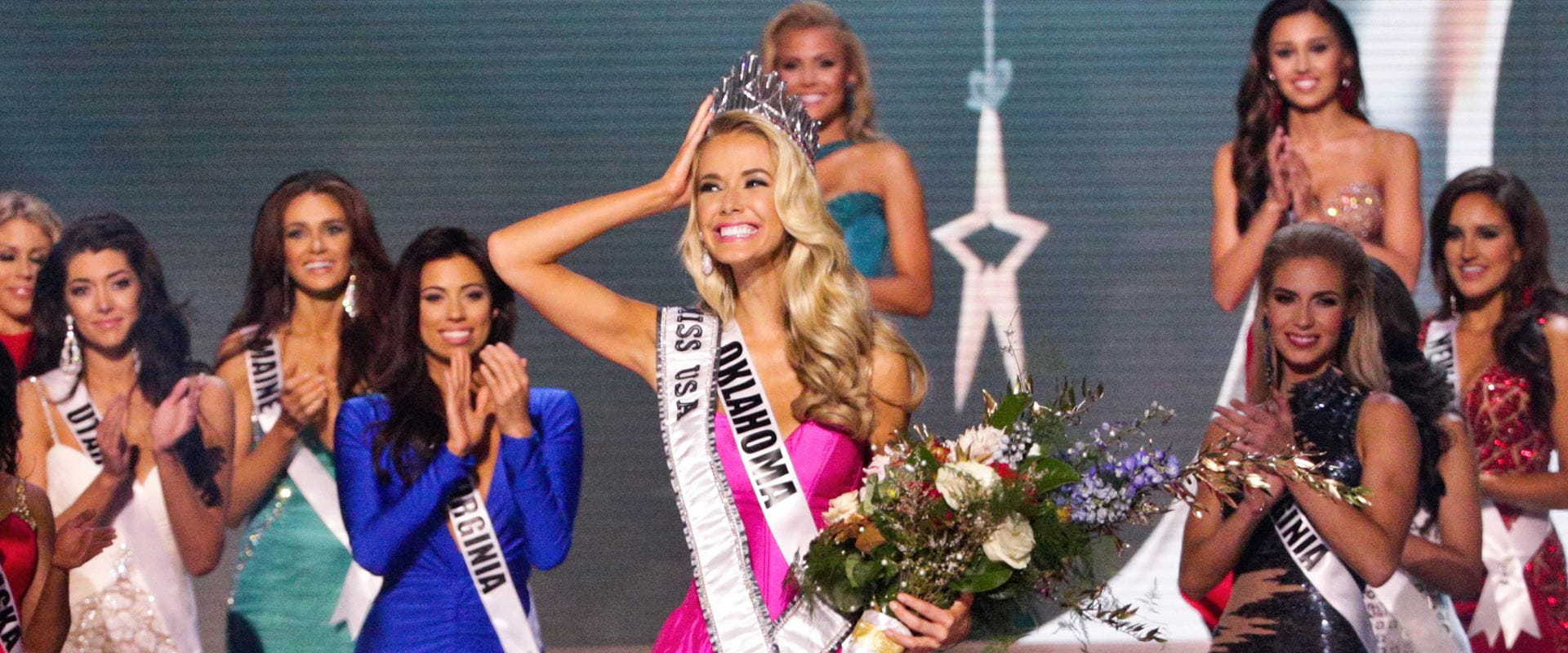
In a venture context, the analogous question is often not simply:
“Will this company eventually create substantial economic value?”
It is also:
“Will the relevant next audience regard it as valuable at the moment the company needs capital, talent, customers, or an exit?”
That next audience may include:
- the lead investor at the next round;
- crossover or growth investors underwriting later scale;
- strategic partners or acquirers;
- senior recruits deciding whether the equity is worth accepting;
- enterprise customers assessing whether the company will survive and become a category standard.
The issue is especially acute for companies with substantial financing dependence. A capital-intensive AI lab, a biotech platform, or an industrial-automation company may possess real technical promise. Yet its path to realizing that promise depends on whether successive investor audiences continue to regard the company—and the category—as fundable.
Keynes’s insight is not that fundamentals are irrelevant. It is that, under uncertainty and limited liquidity, the route from fundamentals to realized returns passes through other people’s judgments.
2. From a first-order view to higher-order beliefs
It helps to distinguish several layers explicitly. Let denote the company’s eventual economic potential: its plausible future cash flows, strategic value, or durable ability to create surplus. This is not a single objectively observable number in VC, but it is still the object that a fundamental thesis tries to assess.
An investor can hold several different beliefs:
This is a first-order belief: the investor’s own assessment of the venture’s eventual economic potential.
This is a second-order belief: what investor expects the relevant market audience to believe about the venture’s economic potential.
This is a third-order belief: what investor expects the relevant market audience to expect other future audiences to believe.
The bar in these expressions is deliberately imprecise. In venture investing there is rarely one unified “market.” A seed investor may care most about the likely beliefs of Series A leads in eighteen months. A Series A investor may care about growth-stage capital, strategic buyers, or public-market comparables three to five years later.
The progression looks like this:
| Level | Venture question |
|---|---|
| First-order belief | “Do I think this company can build a valuable business?” |
| Second-order belief | “Will Series A investors think it can build a valuable business?” |
| Third-order belief | “Will Series A investors believe that later-stage investors will fund and value it?” |
| Higher-order belief | “What valuation narrative will remain credible across several future financing and exit audiences?” |
A sophisticated investment memo often contains all these layers but fails to separate them. Statements such as “this will be an obvious Series A” or “strategics will pay a premium” may sound like fundamental claims. They are often forecasts about future collective judgment.
That need not make them invalid. It does mean they should be treated as distinct propositions requiring distinct evidence.
3. Why the chain matters more in venture capital than it first appears
In a liquid public market, an investor can often revise a view and sell. In early-stage venture, the investment is illiquid, the future funding environment matters, and price discovery occurs through a small number of consequential financing events.
A simplified representation is:
A venture’s economic potential matters to eventual value. But future financing beliefs can affect whether the company reaches the point at which that potential can be realized. This is why a company with essentially unchanged technology can be valued very differently when the market’s view of its financing path changes.
Consider a hypothetical frontier-model lab at seed stage.
An investor may hold the following beliefs:
- First order: The technical team can train a differentiated model for a valuable enterprise workflow.
- Second order: Series A investors will take this technical differentiation seriously if the lab reaches a benchmark and wins two design partners.
- Third order: Series A investors will participate only if they expect growth investors and strategic partners to continue underwriting large compute budgets and long periods before mature profitability.
The third proposition can dominate the near-term price even if the first is true. In other words, the investor is not simply estimating technical or commercial success. They are estimating whether a chain of future capital providers will remain willing to believe in that success.
This helps explain a common experience in hot categories: an investor says, “I like the company, but I am not sure the next round will get done.” The statement may be shorthand for a higher-order-belief problem. The investor might believe in the company’s eventual value while doubting that the relevant later financing audience will believe—and continue to believe—before the company becomes self-sustaining.
4. The beauty contest is not an infinite-regress party trick
At first sight, higher-order reasoning appears to create an endless loop:
- What do I believe?
- What do others believe?
- What do they think others believe?
- What do those others think still later investors believe?
The loop is real in principle. In practice, the relevant number of levels is bounded by the institutional structure of the investment.
For a pre-seed enterprise-software investment, perhaps the crucial chain is only two steps deep:
- Will a Series A investor recognize credible repeatability after initial deployments?
- Will that Series A investor believe a larger market will pay for the company’s next stage of growth?
For a capital-intensive company, the chain may extend further because each financing audience is underwriting a later audience’s willingness to provide capital. The practical question is not “Can I reason infinitely many levels deep?” It is:
Which future audience must validate this thesis before the company can become independent of external belief?
A useful contrast is between two companies with similar technical quality:
| Company | Financing dependency | Central valuation question |
|---|---|---|
| Vertical SaaS company with fast customer payback | Moderate | Can early traction establish repeatable unit economics before the next round? |
| Model-training lab requiring sustained compute expenditure | High | Will several future capital audiences keep financing the path before durable revenues arrive? |
| Therapeutics platform with long regulatory timelines | High | Will specialist investors and partners continue to fund the development sequence through multiple binary milestones? |
The beauty-contest dynamic is therefore not automatically a sign of superficiality or irrationality. It can be an economically rational response to a venture’s dependence on other actors’ future judgments.
The problem begins when the chain becomes detached from underlying constraints: when everyone is confident that later investors will fund a category mainly because everyone else currently appears confident.
5. Keynes: enterprise, speculation, and the convention of present valuation
Keynes distinguished between enterprise—forming a view about an asset’s prospective long-term yield—and speculation—forecasting the psychology of the market. The distinction is particularly useful for VC because both activities occur inside a single investment decision.
Read Keynes’s own argument before applying it to startup valuation. The primary text connects the beauty contest to a broader problem: when long-term outcomes cannot be calculated with confidence, investors rely on a shared convention that current valuation is broadly reasonable until meaningful new information arrives.
Chapter 12. The State of Long-Term Expectation
Read the relevant passages from John Maynard Keynes’s The General Theory. They establish the original beauty-contest argument, distinguish long-term enterprise from speculation about market psychology, and explain why conventional valuation can persist despite weak knowledge of the distant future.
In Chapter 12, begin with the paragraph beginning “Or, to change the metaphor slightly,” and read the beauty-contest passage. Focus on why Keynes says participants may reach a third degree of reasoning. Then find the later paragraph beginning “If I may be allowed to appropriate the term.” Read the enterprise and speculation distinction. Notice that Keynes is not claiming enterprise disappears; he is distinguishing the forecast of long-run yield from the forecast of market opinion. Finally, in the following discussion of convention, read from the paragraph beginning “In practice we have tacitly agreed” through the account of valuation convention. Focus on the conditional stability of a valuation convention and on what happens when confidence in it weakens.
A convention is not simply a mistake or a delusion. It is a collectively maintained working assumption that allows people to act despite radical uncertainty. In venture markets, examples may include:
- “Top-tier application-software companies can reliably raise later rounds after reaching a given annual recurring revenue threshold.”
- “A frontier AI company with exceptional research talent can finance substantial compute expenditure before profitability.”
- “A climate-software company with contracted enterprise demand can raise through a temporary public-market downturn.”
- “A strategic acquirer will pay a premium for scarce technical capability in this category.”
A convention can economize on repeated, costly re-evaluation. But its stability depends on continued mutual belief. Investors do not need to believe it is eternally true; they need to believe enough other decision-makers will continue acting as though it remains usable.
That is why valuation shifts can be abrupt. The deterioration may begin not with proof that every company is weaker than expected, but with doubt that the old convention will survive the next financing cycle.
6. A game-theoretic view: sophistication must match the actual audience
The standard number-guessing game makes the logic concrete. Each player chooses a number, and the winner is closest to two-thirds of the group average. A player who assumes others choose randomly may select roughly 33. A player who assumes others make that calculation may select roughly 22. A still more sophisticated player goes lower.
The theoretical equilibrium is the lowest permissible number. Yet real people do not begin there, because they differ in experience, attention, and beliefs about one another’s reasoning.
GTO-1-06: Strategic Reasoning and the Keynes Beauty Contest Game
Watch “GTO-1-06: Strategic Reasoning and the Keynes Beauty Contest Game” from Game Theory Online. It gives a compact formal intuition for iterative belief formation, then shows why actual groups stop short of the theoretical equilibrium.
Watch the game setup to fix the payoff structure. Continue with iterated reasoning, which derives the equilibrium by repeatedly asking how rational players respond to other rational players. Then watch observed play. Focus on the clusters of guesses at different reasoning levels and on why repeated interaction changes expectations about the sophistication of the group. The key venture parallel is not the equilibrium number; it is the need to estimate the reasoning and incentives of the actual financing audience.
This qualification matters in VC. A contrarian investor can be “too sophisticated” if they model a future audience as fully rational, deeply informed, and strategically self-aware when it is in fact driven by simpler category heuristics.
For example, suppose a technically compelling sector is temporarily unpopular. One investor may reason:
“The fundamentals are attractive, and sophisticated later-stage investors will eventually recognize that.”
But the relevant next-round market may be composed of generalist funds allocating attention according to recent comparables, visible exits, and the involvement of familiar lead investors. In that setting, the contrarian’s superior first-order analysis may not translate into timely financing recognition.
Conversely, a fashionable category can remain overvalued longer than a skeptical investor expects because the investor underestimates how much each participant expects others to sustain the convention.
The relevant question is therefore not merely “What is the equilibrium?” It is:
Who exactly are the next decision-makers, what do they observe, what constraints do they face, and what level of reasoning are they likely to use?
7. A worked venture-category example
Imagine an emerging category of “autonomous research labs.” A few highly visible companies have attracted large rounds, one has signed an important strategic partnership, and several brand-name funds have invested.
An investor assessing a new company in the category might make the following distinctions.
| Proposition | Belief level | What would support it? |
|---|---|---|
| The company’s technical approach can materially improve research productivity. | First order | Reproducible benchmarks, customer workflow evidence, technical diligence. |
| Series A investors will regard these benchmarks as enough to fund the company. | Second order | Recent financings, stated investor criteria, credible peers, quality of the lead-investor market. |
| Series A investors will expect later capital to finance the category’s long path to scale. | Third order | Growth-market appetite, strategic-partner interest, public comparables, capital-intensity narratives. |
| The category will remain a recognized investment “slot” in generalist and specialist portfolios. | Higher order | Persistence of the category narrative, hiring competition, media attention, peer-company financing. |
Notice that a large round by a prestigious investor can affect several rows at once.
It may contain information: perhaps the investor discovered something meaningful through diligence.
It may also have a coordination effect: later investors now expect other later investors to take the category more seriously. That belief can influence the next round even if no new fact about the technology has appeared.
At this stage, do not collapse those explanations. “A top fund invested” is not direct evidence that the company is fundamentally superior, nor is it meaningless. It is evidence whose interpretation depends on whether the fund’s participation changes only beliefs or also the company’s actual future opportunities.
Later lessons will distinguish social learning, prestige, narrative, and reflexive feedback more systematically. For now, the essential discipline is to label the level of claim being made.
8. What a contrarian should do with the beauty-contest model
The wrong conclusion from Keynes is: “Fundamentals do not matter, so follow the crowd.”
The equally wrong contrarian conclusion is: “The crowd is always wrong, so ignore future market beliefs.”
A stronger position is to maintain two linked but separate theses.
The fundamental thesis
What do you believe about the company or category that is not adequately reflected in prevailing valuation?
Examples:
- a technical bottleneck is more tractable than consensus assumes;
- an overlooked buyer segment has a stronger economic reason to adopt;
- one salient failure reflects a flawed go-to-market model rather than a category-wide impossibility;
- a company can reach commercial self-sufficiency with less external financing than the market assumes.
The recognition thesis
Who must revise their beliefs, on what evidence, and before what financing or survival constraint becomes binding?
A recognition thesis is not “eventually everyone will see it.” It identifies a plausible path by which the relevant audience changes its view:
- a milestone makes technical quality legible;
- early customer deployment changes the market’s reference class;
- an adjacent category’s success creates a credible comparable;
- a specific financing overhang clears;
- a new investor audience enters with a different framework for evaluating the sector.
The distinction matters because an investor can be right on fundamentals and still lose the practical contest. If a company requires several years of external funding but cannot survive until recognition occurs, the investment may be unviable despite a compelling first-order thesis.
A concise diagnostic is:
| Question | What it tests |
|---|---|
| What do I think the company can become? | First-order fundamental judgment |
| What does the market currently believe? | Consensus view |
| What does the next financing audience need to believe? | Second-order belief |
| What does that audience expect its own future audience to believe? | Third-order belief |
| What concrete event could change this chain? | Recognition mechanism |
| Can the company survive until that event? | Timing and financing dependency |
This is a more demanding version of contrarianism. It rejects consensus only where one can explain both its causal weakness and the mechanism by which the relevant future audience may cease to rely on it.
Key takeaways
- Keynes’s beauty contest models situations in which payoff depends on anticipating collective judgment, not only on independently evaluating the underlying object.
- In VC, first-order beliefs concern a startup’s eventual economic potential; higher-order beliefs concern what successive financing and exit audiences will believe about that potential.
- A startup can be fundamentally promising yet poorly valued if investors doubt that later capital providers will support the path to realization.
- A valuation convention can create stability under radical uncertainty, but it is vulnerable when participants begin to doubt that others will continue to uphold it.
- Brand-name rounds, visible comparables, and category narratives can matter because they affect expectations of other investors’ expectations—not solely because they reveal new fundamentals.
- A rigorous contrarian thesis needs both a fundamental thesis and a recognition thesis, while taking seriously the company’s ability to survive before recognition arrives.
Next, we move from strategic anticipation to Bayesian social learning: how an investor should update a category view when private evidence, public signals, and other investors’ actions point in different directions.