
Hello again. In the previous lesson, you learned to read a job description as evidence rather than advertising: duties, skills, working conditions, and compensation are separate things. The two agency listings showed an important pattern: remote can coexist with frequent feedback, client contact, and constant switching between projects.
This lesson turns that evidence into a decision tool. Rather than asking whether a role is “good” in the abstract—or whether it is universally “autism-friendly”—you will score the working conditions of each role against the conditions that make work sustainable and meaningful for you: reliable income, remote access, intellectual depth, independence, and enough continuity to focus deeply.
By the end, you should have a provisional ranking of nearby writing roles and a clearer target: not merely “a creative writing job,” but a particular kind of salaried writing environment.
A score is a decision aid, not a verdict
Writing roles are not fixed objects. A “content writer” at a small agency can spend the day moving among six clients, while a content writer in an in-house education company may spend several days researching and drafting one guide. The title is the starting point; the job description determines the lived reality.
A weighted score helps you make those distinctions visible. MIT’s Career Advising & Professional Development recommends rating both the importance of each factor and how well each offer meets it, then multiplying the two ratings. We will adapt that approach for roles before you have offers in hand.
Choosing between job offers (worksheet) – Career Advising & Professional Development | MIT
Read MIT Career Advising & Professional Development’s brief explanation of weighted comparison. It provides the basic logic for separating what matters most to you from how well a particular option meets it.
In the main body, locate the paragraph beginning “CAPD’s ‘Choosing Between Offers worksheet’.” Read the scoring method. Notice that importance and fit are rated separately: a role should not rank highly merely because it has one attractive feature.
For this course, we will use a smaller -to- scale, because it is easier to apply consistently.
Here, is the importance weight for a criterion and is the role’s fit rating. A high total does not prove that a role will be easy, safe, or fulfilling. It shows which options best match the priorities you have named given the evidence currently available.
Turn your needs into observable criteria
The most useful criteria describe a work condition you can actually investigate. For example, “I want to feel calm” is real and important, but it is difficult to score directly. “I need remote work, written briefs, and limited simultaneous projects” gives you observable evidence to look for.
The following five criteria reflect your stated priorities. The importance weights are a starting point, not a permanent identity statement.
| Criterion | Why it matters here | Starting importance weight |
|---|---|---|
| Salary stability | You want a regular salaried role and need to begin earning within roughly three months. | 5 |
| Remote access | A quieter home-based setting can reduce the strain caused by workplace noise. | 5 |
| Intellectual depth | You want to develop work around myth, mind, meaning, identity, and reflective inquiry—not only produce generic promotional material. | 5 |
| Independence | Clear written briefs, room to make decisions, and time to draft independently support your preferred work style. | 4 |
| Focus continuity | Low task-switching demand protects sustained attention and leaves more energy for both professional development and The Journal of Ardency. | 5 |
The maximum possible total is:
Use the same scale every time
The quality of a scoring system depends on consistent meanings. Use these anchors when rating a specific job later.
| Criterion | Rating 1 | Rating 3 | Rating 5 |
|---|---|---|---|
| Salary stability | Unpredictable freelance or per-piece payment; no clear ongoing arrangement | Some regular work, but salary, contract, or payment terms are unclear | Clear full-time salaried employment with transparent pay and written terms |
| Remote access | Primarily office-based or location-bound | Hybrid, remote possible, or remote status unclear | Explicitly fully remote and workable from your location |
| Intellectual depth | Mainly repetitive promotional text with little research or interpretation | Some research and problem-solving, alongside routine content | Sustained research, interpretation, explanation, or subject-matter inquiry |
| Independence | Constant approvals, calls, pitching, or close supervision | Defined individual work mixed with regular coordination | Clear outcomes, substantial drafting time, and mainly asynchronous communication |
| Focus continuity | Many accounts, formats, urgent requests, and frequent interruptions | A moderate mix of tasks, but planning is possible | One main subject or project at a time, with protected blocks for deep work |
For the final criterion, a higher score means fewer task-switching demands. This avoids a common mistake: treating variety as automatically positive. Variety can be stimulating, but a job built around constant transitions can be costly if switching tasks is difficult.
Roles are broader than “content writer”
Before scoring, it helps to see the variety hidden under the content-writing umbrella. Indeed’s overview shows that content work can include websites, blog articles, email campaigns, landing pages, social media, research, and editing. Those formats require very different rhythms of attention.
What Do Content Writers Do? (With Job Roles And Career Path)
Read this Indeed India career guide for a practical overview of the tasks and role titles grouped under content writing. Use it to distinguish a role’s main output from its job title.
First, in the section “What do content writers do?”, read the task overview. Pay particular attention to how blogs, landing pages, email campaigns, research, and editing ask for different kinds of attention. Then go to “Typical job roles of content writers.” Read the role comparison. Treat the listed salary figures as broad orientation only, not a promise of pay, employment stability, or remote availability in a particular vacancy.
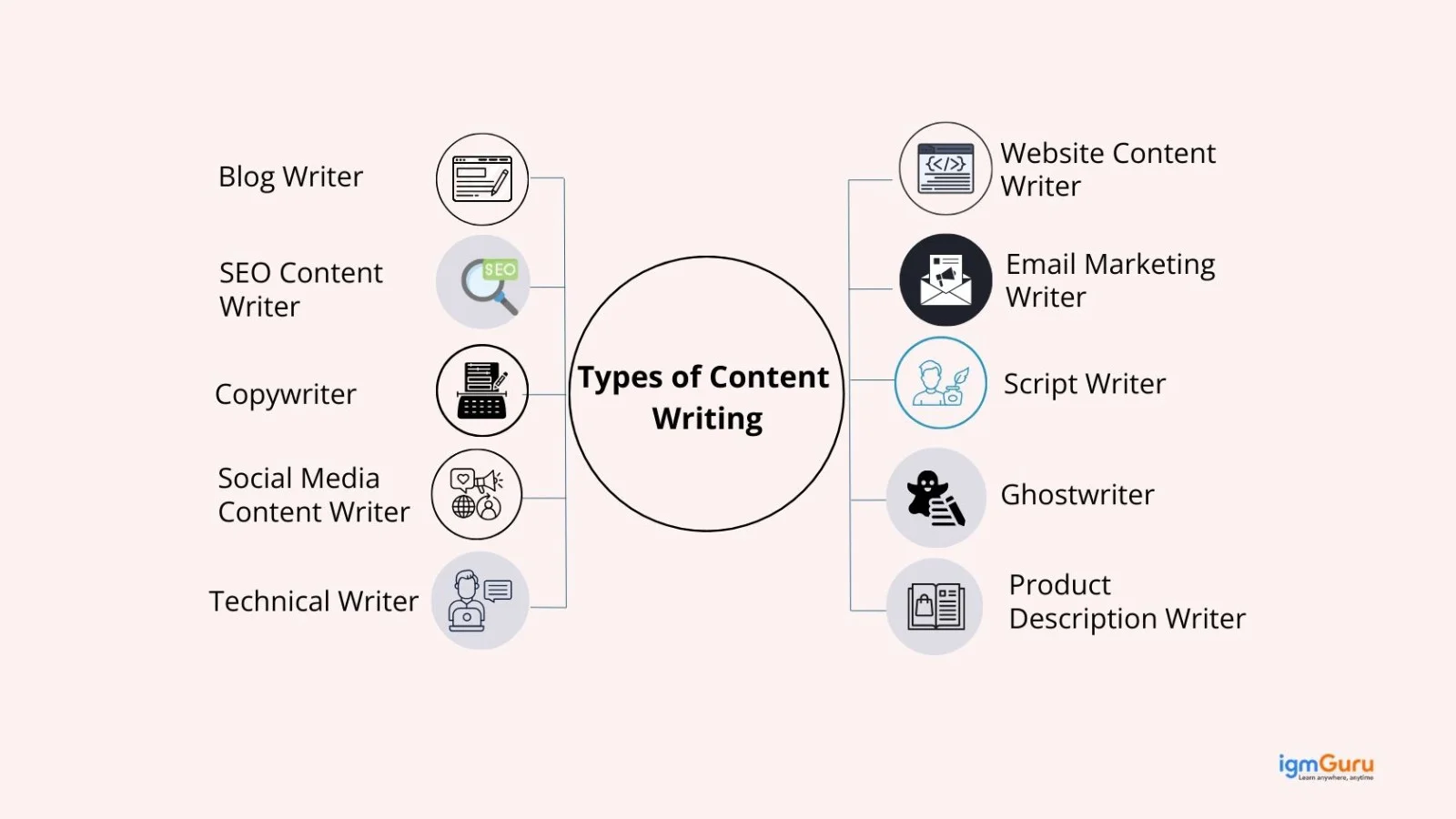
The image and reading make one point especially clear: format shapes workflow.
- A research-led article may involve long periods of reading, outlining, drafting, and revision.
- A landing page or ad campaign may require concise persuasive language, rapid testing, multiple stakeholders, and performance deadlines.
- A social-media calendar may require moving among platforms, trends, brands, and short-form formats.
- A script can offer narrative work, but it is often shaped by production constraints, edits, and collaboration with clients or visual teams.
- Editorial assistance can involve intellectually rich material, but also submissions, correspondence, schedules, fact checks, and many small administrative tasks.
No format is inherently better. The relevant question is: Which combination of purpose and work rhythm can you sustain while still doing your strongest work?
Add sustainability to the comparison
Employment advice for autistic people often becomes too general: it either suggests a narrow list of supposedly suitable jobs or assumes that everyone needs the same environment. Neither approach is useful.
The Thought Spot video offers a more practical reflective prompt: consider people, special interests, purpose, and sensory sensitivities. These are the creator’s personal framework rather than a clinical rule or a universal ranking for autistic people. Its value here is that it gives language for needs that job adverts often obscure.
In “Autism-friendly jobs,” The Thought Spot presents a reflective framework for evaluating work sustainability. Watch it as a prompt for identifying your own requirements, not as a claim that any role is suitable or unsuitable for every autistic person.
Watch four priorities, where the speaker introduces people, special interests, purpose, and sensory sensitivities as factors to rank personally. Then watch sensory fit, focusing on the distinction between liking a field and being able to tolerate its daily environment over time.
For your own situation, these broader factors connect directly to the five criteria:
| Reflective question | Job-description clues to look for |
|---|---|
| Will the environment protect my sensory energy? | Fully remote status, written communication, predictable meeting expectations, equipment or accommodation policies |
| Can I work with topics that hold my attention? | Education, culture, wellbeing, publishing, research, thought leadership, long-form explainers |
| Will I be constantly masking or performing socially? | Client-facing duties, presentations, cold outreach, daily video calls, “high-energy” culture language |
| Does the work have a meaningful purpose for me? | Audience, subject area, editorial mission, scope for careful research and useful explanation |
| Can I preserve attention for original creative work? | Number of accounts, formats, deadlines, meeting load, urgent requests, project ownership |
This does not mean a role must meet every desire immediately. A first salaried role may be more commercial than your eventual niche. It does mean that the costs should be visible. A job that drains all available attention can make it harder to build the original body of work that matters to you.
A provisional scorecard for adjacent roles
The table below scores five nearby roles in their typical work settings. It is deliberately provisional. It is not a salary survey, nor a prediction that every employer will operate this way.
The aim is to form a hypothesis that you will test against actual vacancies.
| Role and likely setting | Salary stability | Remote access | Intellectual depth | Independence | Focus continuity | Weighted total |
|---|---|---|---|---|---|---|
| Research-led in-house content writer | 4 | 3 | 5 | 4 | 4 | 96 |
| Agency content writer | 3 | 4 | 3 | 2 | 1 | 63 |
| Agency copywriter | 4 | 4 | 2 | 2 | 1 | 68 |
| Editorial assistant in publishing | 3 | 2 | 4 | 2 | 2 | 63 |
| Scriptwriter in a production or media agency | 3 | 3 | 3 | 3 | 3 | 69 |
These totals use your starting weights: salary stability , remote access , intellectual depth , independence , and focus continuity .
1. Research-led in-house content writer: a strong target profile
This role might involve articles, guides, explainers, knowledge-base content, thought-leadership pieces, or editorial content for a company, publisher, education platform, or wellbeing-oriented organisation. It is not academic research in the university sense. Its purpose is to make researched information useful to a public audience.
It scores highly because it can combine:
- substantial reading, synthesis, and explanatory writing;
- a more bounded subject area than a multi-client agency;
- clearer ownership of an article or content area;
- compatibility with a future “myth, mind, and meaning” specialism.
Its weaker points are worth naming. Remote access is not guaranteed, and entry-level listings may still ask for SEO knowledge, basic marketing awareness, and evidence that you can research responsibly. The high score therefore signals role fit, not immediate readiness. The later modules on research, psychology, philosophy, mythology, and SEO are designed to close that readiness gap.
2. Agency content writer: useful early experience, but assess workload sharply
Agency content writing can provide a regular salary, rapid feedback, varied formats, and a useful introduction to professional standards. The Quirky Media listing from the previous lesson showed the central trade-off: remote work and writing practice, alongside multiple client accounts, content calendars, revisions, and cross-team coordination.
The low focus-continuity score does not mean you could not do this role. It means the phrase “multiple clients” should carry significant weight in your decision. In an interview, you would want to ask:
- How many client accounts does one writer manage at a time?
- Are writers expected to handle urgent same-day requests?
- Are feedback and briefs usually given in writing?
- How many meetings or calls happen in a normal week?
A small agency with two recurring clients and clear editorial calendars may be quite different from an agency with eight accounts and constant reactive work.
3. Agency copywriter: potentially better pay, usually more commercial pressure
Copywriting can pay well because it is closely tied to sales, campaigns, and conversion. The previous Obladi Creatives listing showed a broad mix of ads, landing pages, emails, social posts, scripts, presentations, client feedback, and campaign brainstorming.
That breadth is creatively demanding, but it may not provide the kind of intellectual depth you mean when you speak of psychology, philosophy, mythology, and identity. It also raises social and switching demands: direct client contact, presentations, rapid revisions, and several formats in one week.
A copywriting role can still be a valuable supporting skill. It teaches concision, audience awareness, and the ability to make a reader take a next step. But as a primary salaried target, an agency copywriting environment may be less aligned with your need for deep, single-project workflows.
4. Editorial assistant: close to literature, but not always quiet or autonomous
Editorial work may initially seem ideal because it keeps you close to books, essays, authors, and literary culture. Its intellectual depth can indeed be high. But an assistant role often includes tracking manuscripts, replying to contributors, scheduling, coordinating with production, checking permissions, and handling many small deadlines.
The potential difficulty is not the reading or editing itself. It is the administrative fragmentation around it. Remote editorial roles also exist, but traditional publishing organisations may be office-based or hybrid, especially at entry level.
This makes editorial assistance a meaningful adjacent route, particularly if you are drawn to editing and literary publishing. Yet the job description should show how much time is devoted to substantive editing versus inbox, coordination, and administrative support.
5. Scriptwriter: creatively promising, but ask about production rhythm
Scriptwriting can use your strengths in voice, imagery, narrative, and emotional pacing. Depending on the employer, scripts may be written for educational videos, podcasts, brand films, explainers, social media, or entertainment content.
Its middle score reflects two possibilities. A scriptwriter working repeatedly with one educational channel or subject may have satisfying continuity. A writer in a production agency may instead receive fast client briefs, frequent revision rounds, visual constraints, and several short projects at once.
Scriptwriting may therefore become a useful complementary path—especially for mythological, educational, or reflective video content—without needing to be your only job-search focus in the next three months.
Read the results without over-trusting them
Your provisional ranking suggests this direction:
Primary target: a remote or remote-first, salaried, research-led content role in an in-house team, editorial organisation, education platform, or mission-led publication.
Secondary target: carefully selected agency content or scriptwriting roles that have clear written workflows, manageable account loads, and a stable salary.
Lower-priority option: highly reactive, multi-client copywriting roles where continual switching, presentations, and performance pressure are central to the job.
This is a career hypothesis, not an instruction to reject every lower-scoring opening. An agency role might be worthwhile if it provides a clear salary, respectful management, remote work, and a realistic workload. Conversely, a prestigious editorial role might be a poor fit if it is noisy, office-bound, underpaid, and built around constant interruptions.
The most important insight is this:
A role can be creatively interesting yet operationally unsustainable.
That distinction protects both your income goal and The Journal of Ardency. The journal does not have to become a commercial product immediately. A reasonably stable professional writing role can support it, while your original work continues to develop on its own terms.
Create your own role-comparison sheet
In a Google Doc or spreadsheet, make the following table. Work on it in one focused sitting rather than trying to decide your whole future at once.
| Role and setting | Salary stability | Remote access | Intellectual depth | Independence | Focus continuity | Weighted total | Evidence and unanswered questions |
|---|---|---|---|---|---|---|---|
| Research-led in-house content writer | |||||||
| Agency content writer | |||||||
| Agency copywriter | |||||||
| Editorial assistant | |||||||
| Scriptwriter |
Use the following sequence:
- Enter your importance weights at the top: , unless reflection shows that one should change.
- Give each role a -to- rating in each column.
- Multiply each rating by its importance weight and add the results.
- In the final column, write one brief reason for each significant score. For example: “Agency role: remote, but multiple accounts and daily revisions likely.”
- Circle your highest-scoring role and one realistic secondary option.
Keep the notes factual. If you do not yet know whether a role is remote or salaried, write “unknown” rather than granting it a generous score. Unknown conditions are questions to investigate, not reasons to assume the best.
Key takeaways
A useful career scorecard separates two things: what matters most to you and how well a role actually meets those needs. For your current priorities, salary stability, remote access, intellectual depth, and focus continuity carry the greatest weight.
The initial comparison suggests that a research-led, salaried content role with a bounded subject area is the strongest long-term fit. Agency content, copywriting, editorial assistance, and scriptwriting remain viable adjacent paths, but their actual fit depends heavily on workload design: account load, communication style, project ownership, meetings, and interruptions.
Next, you will compare the evidence you already have—writing ability, subject knowledge, tools, and samples—with recurring job requirements. That will identify the three portfolio or skill gaps most worth addressing before you begin applying seriously.
Can't find a good explanation? Sign up and we'll make it for you
Sign up