
Hello! Welcome back.
In our last lesson, we established a solid understanding of how Tor works, focusing on its onion routing design, layered encryption, and the principle of perfect forward secrecy. We saw that by routing traffic through a three-hop circuit, Tor aims to break the link between the source and destination of a communication.
This lesson directly follows that foundation and addresses the next learning outcome: Analyze the limitations and potential weaknesses of the Tor network, such as traffic correlation and malicious exit nodes.
While Tor is a powerful tool, it is not infallible. Understanding its limitations is just as important as understanding its strengths. This knowledge is critical for developing effective operational security (OpSec) and for appreciating why we will later use additional tools like Whonix to bolster our defenses.
We will explore two main categories of weaknesses:
- Observational Attacks: How adversaries can de-anonymize users by analyzing traffic patterns.
- Infrastructural Attacks: How adversaries can leverage control of Tor relays to compromise users.
1. The Core Vulnerability: End-to-End Traffic Correlation
Recall from our last lesson that Tor's threat model is designed to protect against a local adversary who can only see a portion of the network. It does not promise protection against a global passive adversary—an entity capable of monitoring traffic entering and leaving the entire network simultaneously.
This design choice leads to Tor's most well-known weakness: vulnerability to end-to-end traffic correlation.
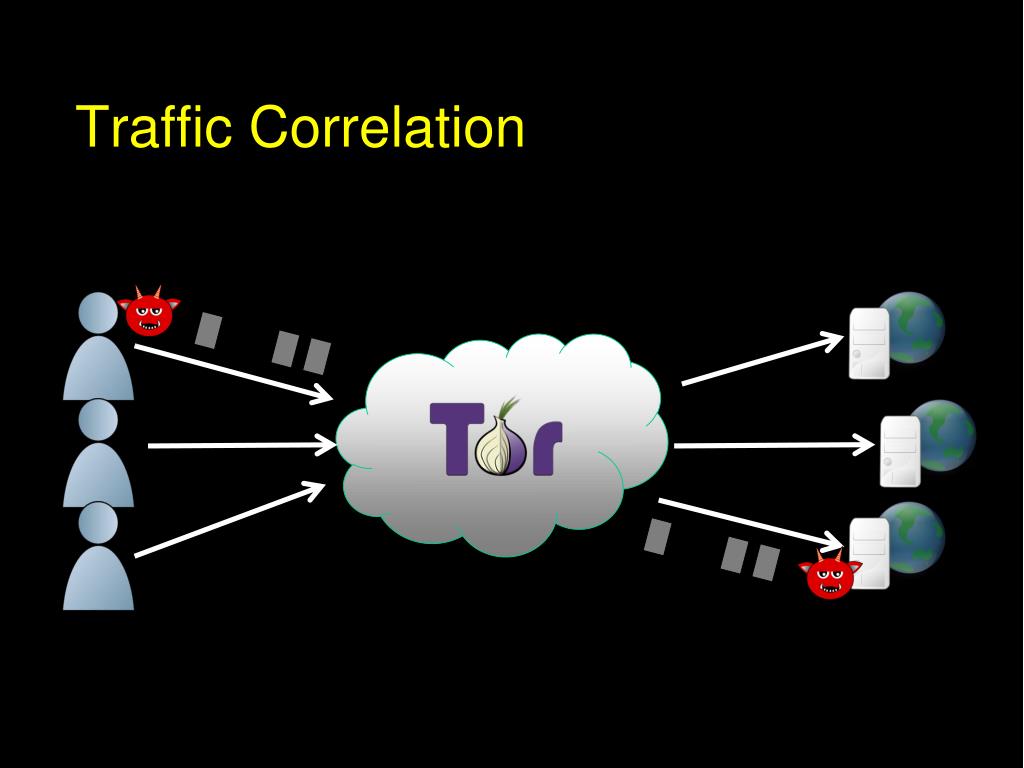
Because Tor is a low-latency network designed for interactive use like web browsing, it doesn't significantly alter the timing and volume characteristics of a traffic stream. An adversary who suspects you are visiting a specific server can monitor the data flow from your IP into the Tor network and simultaneously monitor the data flow from all Tor exit nodes to that server. By matching the patterns, they can confirm their suspicion.
Let's ground this in a more formal description.
Traffic Analysis Attacks on Tor: A Survey
The following reading from 'Traffic Analysis Attacks on Tor: A Survey' formally discusses Tor's threat model and its inherent limitations. It clearly states which attacks are considered 'out of scope' for Tor's design.
Please read Section III, 'ATTACKING TOR', focusing on subsection A, 'Tor’s Threat Model' and the final paragraph of subsection B, 'Tor’s Defenses'. Pay close attention to the explicit statement about traffic confirmation attacks.
As the paper confirms, traffic confirmation attacks are largely outside Tor's design scope. This is a fundamental trade-off made for the sake of performance and usability.
2. Traffic Analysis Attacks
Traffic analysis encompasses a range of techniques that go beyond the simple end-to-end correlation we just discussed. Given your background in statistical science and machine learning, you can think of these as sophisticated classification and time-series analysis problems.
2.1. Global Correlation and Website Fingerprinting
More advanced correlation attacks don't just confirm a suspected link; they can actively discover it. By collecting vast amounts of traffic data and applying machine learning models, an adversary can find matches between entry and exit streams.
A related and particularly potent attack is website fingerprinting. In this attack, an adversary only needs to monitor the encrypted traffic between you and your entry guard. They don't need to see the exit traffic at all. The core idea is that every website loads resources in a unique sequence, creating a distinctive "fingerprint" of packet sizes, directions (in/out), and timing. An adversary can pre-compute fingerprints for thousands of popular (or sensitive) websites. By capturing your encrypted traffic stream and matching it to a known fingerprint, they can infer which site you are visiting.
The following reading discusses attacks that assume a global adversary and those that work by only capturing the entry flow, which includes the basis for fingerprinting.
Traffic Analysis Attacks on Tor: A Survey
This next reading from the same survey paper delves into specific traffic analysis attacks. It covers both the powerful 'global adversary' model and the more limited 'capture entry flow' model.
Please read Section IV.A, 'Global Adversary Model', and Section IV.B, 'Capturing Entry Flow'. In IV.A, note the mention of 'DeepCorr', which uses deep learning for this task. In IV.B, focus on the concept of identifying traffic types based on their features (e.g., time-based features, burst volumes). This is the foundation of website fingerprinting.
The attacks described, like DeepCorr, treat de-anonymization as a pattern recognition problem applied to time-series data (the packet streams). Features like inter-packet delay, packet size, and burst direction are fed into models to find correlations or classify traffic, bypassing the encryption entirely.
3. The Threat of Malicious Relays
The second major class of weaknesses stems from Tor's reliance on a network of volunteers. Anyone can set up a relay, and while this decentralization is a strength, it also creates an opportunity for adversaries to inject malicious nodes into the network.
3.1. Malicious Exit Nodes
The exit node is the most sensitive point in a Tor circuit. It is the gateway where your traffic leaves the Tor network, meaning the final layer of Tor's encryption is removed.

A malicious exit node operator can:
- Sniff Traffic: If you connect to a website using unencrypted HTTP, or check your email with unencrypted POP3/IMAP, the exit node operator can read your data, including usernames, passwords, and the content of your communications.
- Perform Man-in-the-Middle (MitM) Attacks: The operator can actively modify traffic. A common attack is
sslstrip, where the exit node downgrades a secure HTTPS connection to insecure HTTP, making it possible to sniff credentials. They can also inject malicious code (e.g., malware, browser exploits) into unencrypted file downloads or web pages.
3.2. Malicious Relays for Correlation (Sybil Attacks)
While exit nodes are uniquely dangerous for sniffing, any relay position can be used for traffic analysis. An adversary who controls both the entry guard and the exit relay on your circuit can de-anonymize you with 100% certainty, as they can see both your real IP and your final destination.
To increase the chances of this happening, an adversary can perform a Sybil attack. This involves creating a large number of Tor relays under their control and adding them to the network. By controlling a significant fraction of the network's relays, they increase the probability that a user's randomly chosen circuit path will consist entirely or partially of their malicious nodes.
Other active attacks, such as flow watermarking, also rely on controlling relays to inject subtle patterns into a traffic stream to be detected by another malicious relay elsewhere in the path.
Traffic Analysis Attacks on Tor: A Survey
This final reading from the survey paper discusses attacks that assume the adversary controls one or more Tor relays. It provides concrete examples of how this control can be leveraged.
Please read Section IV.C, 'Compromising Tor’s relays', and Section V, 'Analysis'. The table in Section V provides an excellent, concise summary of the different attacks, the adversary model required, and their drawbacks. It's a great way to synthesize the information.
The table in the analysis section is a key resource. It neatly categorizes the attacks we've discussed, showing the trade-offs between the power of the adversary (e.g., global vs. partial) and the effectiveness of the attack.
Conclusion
This lesson has moved beyond the idealized model of Tor to examine its real-world limitations. It's crucial to maintain a realistic perspective: Tor provides powerful anonymity, but it is not a magical cloak of invisibility.
Key Takeaways:
- Tor's primary design weakness is its vulnerability to end-to-end traffic correlation by a powerful adversary who can observe traffic at both ends of a connection.
- Website fingerprinting allows an adversary who can only see the user's connection to the Tor network to make an educated guess about the websites they are visiting.
- Malicious exit nodes are a significant threat, capable of sniffing unencrypted data and performing man-in-the-middle attacks. Always prioritize using end-to-end encryption like HTTPS (TLS).
- Adversaries can run their own relays and use techniques like the Sybil attack to increase their chances of controlling a user's circuit, enabling de-anonymization.
Understanding these weaknesses is the first step toward mitigating them. You now have the necessary context to understand why simply using the Tor Browser is not always sufficient for robust anonymity.
Preview of the Next Lesson:
Our next lesson will introduce Whonix. Whonix is a desktop operating system specifically designed to run inside virtual machines and force all network connections through the Tor network. We will explore its Gateway-Workstation architecture, which is a direct and practical response to some of the weaknesses we've analyzed today, particularly by preventing IP address leaks and isolating network streams to make traffic analysis more difficult.
Can't find a good explanation? Sign up and we'll make it for you
Sign up