
Introduction
Welcome to Module 8. In our last module, we explored the world of the Quimbaya, a culture that flourished in the temperate, rolling hills of the Cauca River Valley. We saw how their environment, rich in agricultural potential, influenced a mythology centered on fertility, which they masterfully encoded in their goldwork.
Now, we shift our focus and climb much higher in altitude. This lesson begins our exploration of the Pasto and Nasa (or Páez) peoples of southern Colombia. To understand their stories, we must first understand their world. The learning outcome for this lesson is to describe the high-altitude environment of the Pasto and Nasa (Páez) peoples in southern Colombia.
Think of this as setting the stage for a great drama. The landscape—a dramatic realm of active volcanoes, misty moorlands, and vital river sources—is not just a backdrop but a central character in their cosmology. For you as a visual storyteller, grasping this environment is the first step toward illustrating its myths with authenticity and power.
1. The Mountainous Realm of Tierradentro
The Nasa people are historically associated with a region in the department of Cauca that the Spanish named Tierradentro—the "inward-land"—due to its rugged, almost inaccessible mountains. This name itself speaks volumes about the geography. Let's explore its key features.
The following text is from a guidebook for the Tierradentro Archeological Park, produced by the Colombian Institute of Anthropology and History. It provides an excellent description of the region's physical geography.
Please read the introductory section that starts with 'Tierradentro is also the name of the geographical region...'. Focus on the descriptions of the topography, the role of the Nevado del Huila volcano, the different 'thermal levels,' and the climate.
As you've just read, the environment of the Nasa is defined by several key characteristics:
- A Volcanic Landscape: The region lies on the eastern side of the Andes' Central Mountain Range and is dominated by the Nevado del Huila, Colombia's highest volcano. This isn't a static feature; the text notes the area experiences "frequent earthquakes, ash rains and avalanches." This constant, powerful presence of geological forces is a fundamental aspect of life here.
- Vertical Ecology: The sharp contrasts in height create a variety of "ecologic niches" at different thermal levels. This is a concept you might appreciate from a systems thinking perspective. Instead of vast horizontal plains, the people here have a vertical world.
- Warm Lower Slopes (~1700m): Ideal for corn, beans, and manioc.
- Cold Higher Slopes (~2000m): Suitable for potatoes and other tubers.
- Frigid Moorlands (~3000m+): A source of unique fauna and wild plants.
- A Land of Water: The massive volcano and high mountains capture moisture, forming the great Páez River and its many tributaries. This abundance of water in a mountainous landscape is a crucial theme we will return to.
This vertical system allowed pre-Hispanic populations—and allows their descendants today—to access a wide variety of resources within a relatively small geographic area by moving up and down the mountain slopes.
2. The Páramo: A Unique Highland Ecosystem
Above the tree line, from roughly 3,000 to 5,000 meters, lies one of the most unique ecosystems in the Americas: the páramo. This high-altitude moorland is the defining feature of the Pasto and Nasa territories.
The article 'They Cannot Keep Us Silent' from Earth Island Journal provides a clear definition of the páramo and its critical importance.
First, read the section that begins 'Paramos are a kind of moorland...'. Then, read the section just before it, starting with 'Cauca also harbors some of Colombia’s most invaluable ecosystems...', to understand how this ecosystem functions as a 'water factory'.
The páramo is more than just cold, high-altitude grassland. It is a vital, living system.
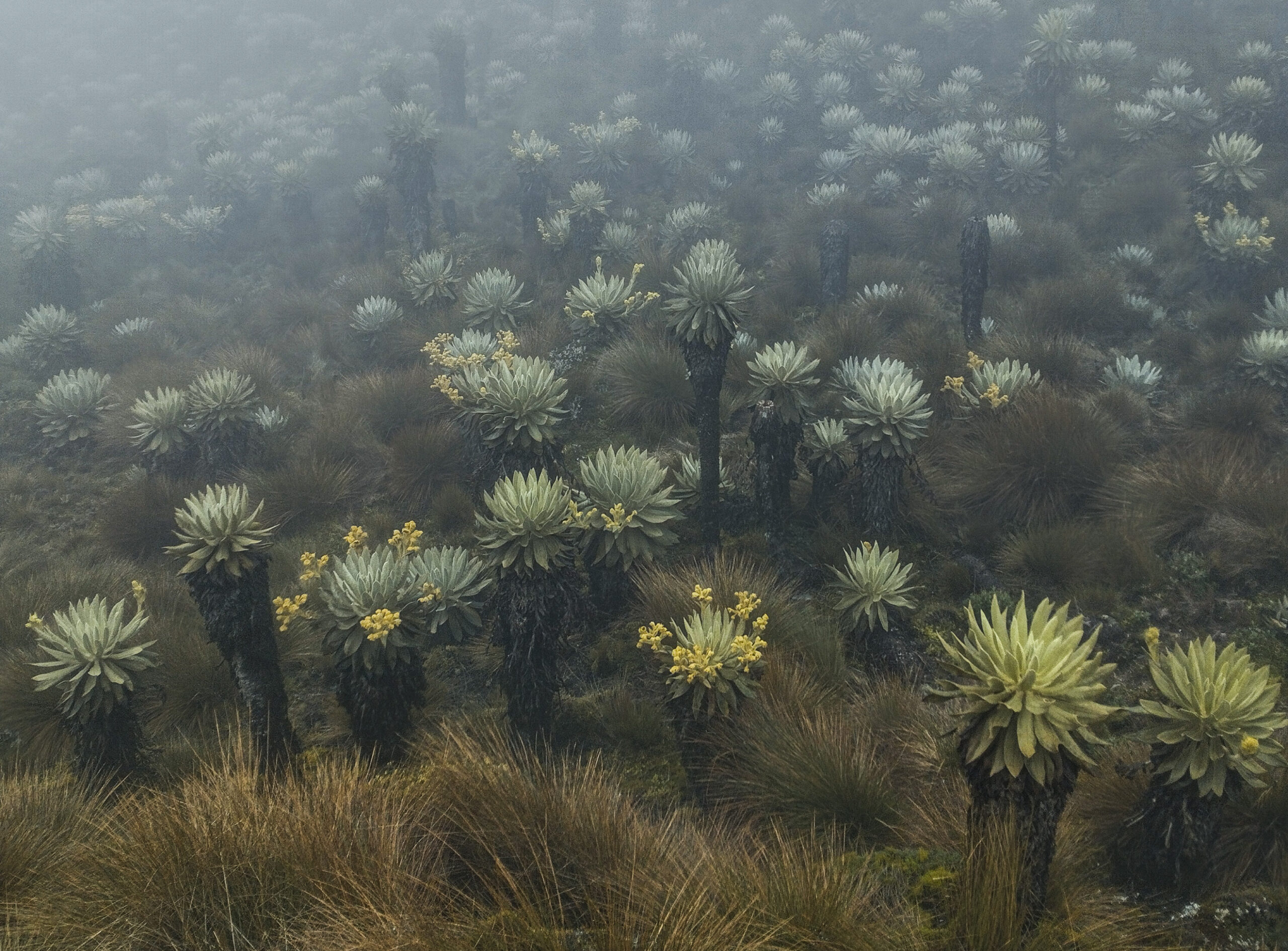
- A 'Water Factory': The spongy soils and unique plants of the páramo, particularly the iconic frailejones, are incredibly effective at capturing and storing water from rain and mist. This water is then slowly released, forming the headwaters of some of Colombia's most important rivers, including the Cauca, Páez, and Magdalena.
- A World of Endemic Life: These landscapes are rich in unique biodiversity, with plants and animals adapted to the harsh conditions of high altitude, low temperatures, and intense ultraviolet radiation.
Visually, the páramo is an otherworldly landscape. The mist, the low-lying vegetation, and the distinctive forms of the frailejones create a unique aesthetic.

3. People of Water and Thunder
The Nasa and Pasto peoples are not just inhabitants of this landscape; their culture and worldview are deeply intertwined with it. Their ancestral territories are concentrated precisely in these highlands, encompassing the páramos that are the source of life-giving water.
This connection is beautifully captured in the Nasa's own identity.
Let's return to the article 'They Cannot Keep Us Silent' to see how the Nasa people describe themselves in relation to their environment.
Please read the two sections beginning with 'In Cauca, these essential watersheds...' and 'Seventy percent of the 300,000 Indigenous people...'. Pay close attention to how the Nasa identify themselves.
The reading highlights the most crucial point: the Nasa self-identify as the "children of water and the grandchildren of thunder." This is a profound statement of origin that is directly tied to their environment:
- "Children of Water": Acknowledges their origin and dependence on the water flowing from the páramos and sacred lagoons.
- "Grandchildren of Thunder": Acknowledges the immense power of the sky and the mountains, expressed through storms and volcanic activity.
This identity perfectly synthesizes the elements of their world into a mythological framework. Their agricultural practices also reflect this deep connection. As the Tierradentro guidebook mentioned, the Nasa hold the earth as having a "sacred value," cultivating crops like corn and potatoes in a system perfectly adapted to the mountain's vertical ecology.
Test your understanding!
In the last module, we studied the Quimbaya in the Cauca River Valley. Now, we've explored the environment of the Nasa in the southern highlands.
From a "human-centered design" perspective, what would you say is the single biggest environmental constraint or opportunity that differentiates the Nasa's world from the Quimbaya's, and how might this influence their mythology?
Show answer
While there are many differences, a key differentiator is verticality and extreme climate.
The Quimbaya inhabited a more temperate and horizontally expansive valley. Their environment, while requiring management, was broadly fertile, leading to myths focused on abundance and fertility (e.g., poporos shaped like gourds).
The Nasa and Pasto, on the other hand, live in a vertical world defined by extreme altitude, cold, and powerful geological forces (volcanoes, thunder). This presents a significant constraint but also an opportunity. The constraint is the harshness and the need for specialized adaptation. The opportunity is the páramo as a "water factory."
This likely shapes their mythology to be less about general fertility and more about a direct, dramatic relationship with powerful, personified natural forces: the mountain spirits, the thunder, and the sacred lagoons that are the origin of water and life itself. Their worldview is forged by the constant presence of immense power.
Conclusion
In this lesson, we have mapped out the physical and ecological world of the Pasto and Nasa peoples. This is not a passive landscape but an active, powerful environment that has profoundly shaped the people who call it home.
Key Takeaways:
- A High-Altitude, Volcanic World: The southern highlands are a rugged, mountainous region dominated by active volcanoes like Nevado del Huila, where life is lived amidst powerful geological forces.
- The Páramo as a 'Water Factory': This unique high-altitude ecosystem, characterized by its iconic frailejones, is the source of Colombia's major rivers and is central to the region's ecology.
- A World of Verticality: Life is organized vertically, with different crops and resources available at different altitudes on the mountain slopes.
- People of the Environment: The Nasa's self-identification as "children of water and grandchildren of thunder" reveals a worldview where human identity and mythology are inseparable from the surrounding landscape.
Preview of the Next Lesson:
Now that we have established this dramatic setting—a world of high peaks, sacred lagoons, and the ever-present moon in the clear night sky—we are ready to explore the stories that grew from it. In our next lesson, we will delve into our first myth from this region: the Pasto story explaining the origin of the moon.
Can't find a good explanation? Sign up and we'll make it for you
Sign up