
Hello. This first lesson begins a focused review of the Enlightenment thinkers most likely to appear in a matching, identification, or short-response question. The larger course will then connect their ideas to the French Revolution and Napoleon. For now, the goal is precise recognition: given an idea, policy, or quotation-like description, you should be able to name the thinker—or recognize when the description refers to the broader group called the philosophes.
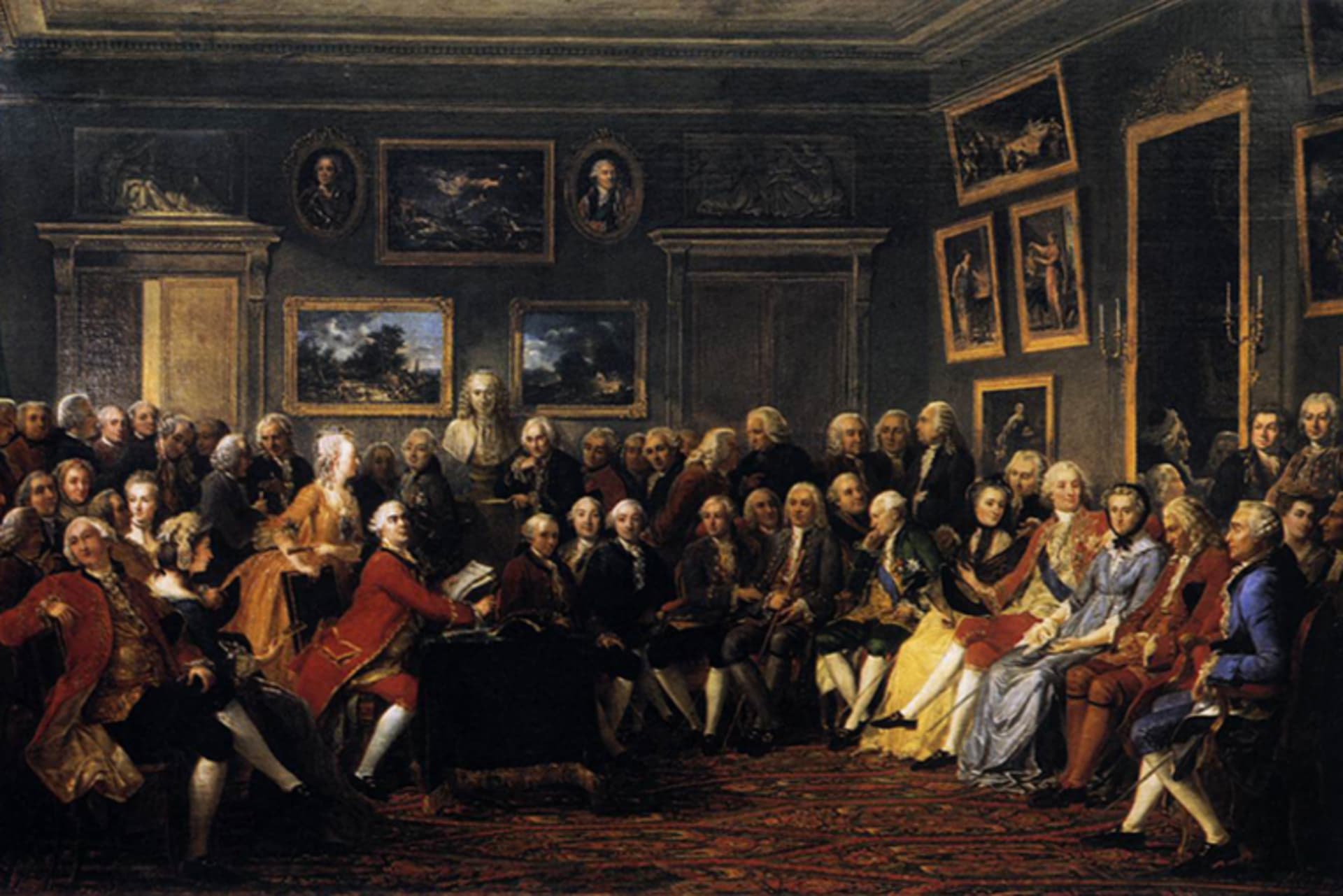
The Enlightenment was not a single doctrine. Its thinkers agreed that reason could be used to examine inherited institutions, but they disagreed sharply about human nature, political power, religion, democracy, and economics. That disagreement is exactly what makes identification possible.
The big frame: reason applied to society
During the eighteenth century, European thinkers increasingly challenged the idea that kings ruled because God had chosen them. They asked a new set of political questions:
- What rights do people possess simply by being human?
- Why should anyone obey a government?
- What limits should government have?
- How can societies prevent tyranny?
- Should religious institutions control public life?
- Should governments manage trade and markets?
The ENLIGHTENMENT, Explained [AP Euro Review—Unit 4 Topic 3]
Watch “The ENLIGHTENMENT, Explained” by Heimler's History for a compact overview of the movement’s method: applying reason, modeled partly on science, to human institutions.
Watch the overview. Focus on the three linked claims: reason can test ideas, society has discoverable patterns, and human institutions can be improved.
A useful way to organize the seven terms in this lesson is by the main problem each one addresses.
| Main problem | Thinker or group | Identification clue |
|---|---|---|
| How do we avoid chaos caused by self-interest? | Thomas Hobbes | A powerful, absolute ruler must keep order |
| What rights must government protect? | John Locke | Life, liberty, property; consent and resistance |
| How do we stop government from becoming tyrannical? | Montesquieu | Separate branches and checks on power |
| How do we protect thought and belief from persecution? | Voltaire | Speech, religious toleration, church and state |
| Who has legitimate political authority? | Jean-Jacques Rousseau | General will, popular sovereignty, direct democracy |
| What happens when government controls the economy too much? | Adam Smith | Free markets, laissez-faire, invisible hand |
| What do French Enlightenment intellectuals collectively do? | Philosophes | Apply reason to society, politics, and religion |
The rest of the lesson gives you the distinctions that prevent common mix-ups.
Hobbes and Locke: two very different social contracts
Both Thomas Hobbes and John Locke wrote about a social contract: an agreement that explains why people accept government. Since both names can appear beside the phrase “social contract,” use the thinker’s view of human nature and the proper strength of government to tell them apart.
Thomas Hobbes: security before liberty
Hobbes imagined life without government as a “state of nature,” where people would pursue their own interests and conflict would be likely. In a test-level summary, Hobbes believed human beings were naturally selfish and that, without firm control, society would fall into disorder.
His solution was a social contract in which people give up substantial freedom in exchange for security and order. Because he feared anarchy more than tyranny, Hobbes favored an absolute monarchy, or at least a sovereign with nearly unlimited authority.
His major work, Leviathan, compares the state to a massive, commanding creature. The point is not that Hobbes admired cruelty; it is that he thought peace required a government strong enough to enforce rules.
Identify Hobbes when a description emphasizes:
- selfish or dangerous human nature
- fear of chaos, anarchy, or disorder
- security and stability as the highest political needs
- surrendering liberties for protection
- absolute monarchy or a powerful sovereign
7.1 The Enlightenment - World History Volume 2, from 1400 | OpenStax
Read OpenStax’s explanation of social-contract theory and Hobbes. It clarifies an important test distinction: a social contract does not automatically mean democracy.
In the subsection “Social Contract Theory,” begin with the sentence that defines the social contract. Continue through the discussion of monarchs and enlightened despots. Then read the “Beyond the Book” passage beginning on Hobbes and Leviathan. Focus on why Hobbes concludes that a strong sovereign is necessary, not merely on the vocabulary word “social contract.”
John Locke: rights before government
Locke begins from a more optimistic starting point. People possess natural rights: rights that do not come from a king and cannot legitimately be taken away by government. The three Locke terms to memorize are:
For Locke, government exists because people consent to it as a way to protect those rights. Political authority is therefore limited, not absolute. If a government systematically violates rights rather than protecting them, people may alter or overthrow it.
That final point is a decisive identification clue. A prompt saying that citizens may remove a tyrannical government is pointing most directly to Locke.
Identify Locke when a description emphasizes:
- natural rights
- life, liberty, and property
- consent of the governed
- limited government
- the right to overthrow a government that fails to protect rights
The fastest Hobbes–Locke contrast
| If the prompt stresses… | Identify… | Why |
|---|---|---|
| Disorder is the central danger | Hobbes | A strong sovereign prevents conflict |
| Government is the central danger | Locke | Natural rights limit government |
| People surrender freedom for security | Hobbes | Security requires powerful authority |
| Government needs consent and may be replaced | Locke | Authority depends on protecting rights |
A compact memory sentence is: Hobbes fears chaos; Locke fears violated rights.
French philosophes: reform through reason
The word philosophes does not name one person. It refers to French intellectuals of the Enlightenment who used reason to criticize and reform society. They wrote books, essays, pamphlets, and encyclopedia articles; debated in salons; and challenged absolutism, religious intolerance, inherited privilege, and censorship.
A description is probably referring to the philosophes as a group when it mentions:
- French intellectuals or writers
- reason and science applied to politics or society
- criticism of traditional authority
- salons, pamphlets, or the Encyclopedia
- a desire for reform and human progress
Individual philosophes did not agree on every issue. For example, Voltaire defended religious toleration but did not necessarily support democracy, while Rousseau gave a far stronger role to the people as a political body. The shared label tells you their method and intellectual movement, not a single, uniform political platform.
The ENLIGHTENMENT, Explained [AP Euro Review—Unit 4 Topic 3]
Continue with Heimler's History for an efficient introduction to the French philosophes and the distinct ideas of Montesquieu and Voltaire.
Watch the definition of “philosophes,” then watch Montesquieu and Voltaire. Notice that Montesquieu’s answer to tyranny is institutional design, whereas Voltaire’s target is intolerance and religious coercion. The final portion introduces Diderot and the Encyclopedia as an example of how philosophes spread ideas.
Montesquieu and Voltaire: limiting power in different ways
Montesquieu: divide power to preserve liberty
Baron de Montesquieu focused on a structural problem: even a government that claims to protect the people can abuse its power if all authority is concentrated in one ruler or institution.
His solution was the separation of powers into three branches:
- Legislative power makes laws.
- Executive power carries out laws.
- Judicial power interprets laws and resolves legal disputes.
Each branch should restrain the others through checks and balances. The underlying logic is simple: power is safer when no person or institution can control every part of government.
Identify Montesquieu when you see:
- separation of powers
- three branches of government
- executive, legislative, and judicial
- checks and balances
- preventing despotism or tyranny by dividing authority
- The Spirit of the Laws
Do not confuse Montesquieu with Locke. Locke argues that government must protect natural rights and rests on consent. Montesquieu gives the most recognizable blueprint for how to organize government power internally.
Voltaire: freedom of thought and religion
Voltaire is the clearest match for intellectual liberty. He criticized religious intolerance, censorship, and institutions that used religion to justify political authority. He championed:
- freedom of speech
- freedom of religion and religious toleration
- criticism of persecution and religious bigotry
- separation of church and state
Voltaire’s key concern was not primarily the number of government branches or the people’s direct rule. It was the individual’s freedom to think, speak, worship, or not worship without coercion.
Identify Voltaire when you see:
- free speech or criticism of censorship
- religious toleration
- freedom of religion
- opposition to religious persecution
- church separated from government
- criticism of the Catholic Church’s political power
A reliable contrast is: Montesquieu separates branches of government; Voltaire separates religious authority from government and defends free expression.
Rousseau: popular sovereignty and the general will
Jean-Jacques Rousseau also wrote The Social Contract, which means he can be confused with both Hobbes and Locke. His distinctive idea is the general will.
Rousseau argued that legitimate government must be guided by the collective will of the people—the common good—not by the private interests of a monarch, aristocracy, or wealthy minority. This is popular sovereignty: ultimate political authority rests with the people.
The general will is not simply whatever most individuals want at a given moment. Rousseau meant the shared public interest of the political community. His ideas are often associated with direct democracy, in which citizens themselves participate directly in making laws rather than acting only through representatives.
Identify Rousseau when a description emphasizes:
- The Social Contract
- the general will
- popular sovereignty
- the common good
- political authority belonging to the people
- direct democracy
Sorting the three social-contract thinkers
| Thinker | Central concern | Best clue |
|---|---|---|
| Hobbes | Preventing anarchy | Absolute sovereign and order |
| Locke | Protecting individual rights | Life, liberty, property; overthrow a failing government |
| Rousseau | Ensuring rule serves the people as a whole | General will and direct democracy |
7.1 The Enlightenment - World History Volume 2, from 1400 | OpenStax
Use these two short OpenStax sections to consolidate the thinkers most often confused in identification questions: Locke, Voltaire, Montesquieu, and Rousseau.
In “Natural Rights,” read from Locke’s natural-rights argument, then continue through the paragraph ending with Montesquieu’s discussion of political liberty and the three powers. Focus on the different nouns attached to each thinker: Locke and rights, Voltaire and toleration, Montesquieu and separated powers. Next, read the Rousseau paragraph beginning on the general will. Pay particular attention to the difference between individual freedom and the people’s collective sovereignty.
Adam Smith: liberty in the marketplace
The thinkers so far have concentrated on political or religious power. Adam Smith applied Enlightenment reasoning to economics.
In The Wealth of Nations, Smith criticized excessive government control of trade and markets. He supported laissez-faire economics, a French phrase usually translated as “leave it alone.” In this approach, governments should generally interfere less in economic decisions, allowing buyers, sellers, workers, and producers to respond to supply and demand.
Smith’s famous phrase, the “invisible hand,” describes the idea that individuals pursuing their own economic interests can, under market conditions, contribute to broader economic activity and prosperity without a central government directing every transaction.
For an identification question, keep the core connection direct:
Identify Adam Smith when a description emphasizes:
- The Wealth of Nations
- laissez-faire
- free trade or free markets
- limited government interference in the economy
- supply and demand
- the invisible hand
- criticism of mercantilism
Be careful: Hobbes also assumes people act in self-interest, but he thinks that self-interest makes strong political authority necessary. Smith argues that self-interest in a market can help organize economic activity without extensive government control. The same observation about self-interest produces very different political conclusions.
The ENLIGHTENMENT, Explained [AP Euro Review—Unit 4 Topic 3]
Finish the core review with Heimler's History on Locke, Rousseau, and Adam Smith. This segment is useful because it puts political rights, popular authority, and free-market economics side by side.
Watch Locke and Rousseau and listen for the shared language of rights and social contract, then isolate Rousseau’s emphasis on authority belonging to the people. Next watch Adam Smith. Focus on Smith’s contrast between state-controlled mercantilism and a market guided more freely by supply and demand.
A practical identification routine
When you face a description, do not begin by trying to remember every fact about every thinker. Instead, locate the description’s signature phrase.
| Signature phrase in a prompt | Best answer |
|---|---|
| “People are selfish; order requires a powerful ruler.” | Thomas Hobbes |
| “Life, liberty, and property are natural rights.” | John Locke |
| “People may overthrow a government that violates their rights.” | John Locke |
| “Government should have executive, legislative, and judicial branches.” | Montesquieu |
| “Checks and balances prevent tyranny.” | Montesquieu |
| “Defend speech, religious toleration, and church-state separation.” | Voltaire |
| “Government must express the general will.” | Jean-Jacques Rousseau |
| “Citizens should directly make laws for the common good.” | Jean-Jacques Rousseau |
| “The invisible hand guides a free market.” | Adam Smith |
| “French Enlightenment intellectuals applying reason to society.” | Philosophes |
For a quick self-review, cover the right-hand column of that table and name the answer aloud. Then reverse the task: name a thinker and state their signature phrase in one sentence. Identification works best when you can move in both directions.
One final caution: descriptions sometimes contain more than one Enlightenment theme. Choose the thinker associated with the most specific clue. For example, “natural rights” may suggest Locke, but “general will” is specifically Rousseau; “limited government” may suggest Locke, but “three branches” is specifically Montesquieu.
Key takeaways
The Enlightenment used reason to question traditional political, social, and religious authority. The most testable thinker–idea pairings are:
- Hobbes: selfish human nature; order through absolute authority.
- Locke: natural rights to life, liberty, and property; consent and the right to replace a failing government.
- Montesquieu: separation of powers and checks and balances.
- Voltaire: freedom of speech, religious toleration, and separation of church and state.
- Rousseau: The Social Contract, popular sovereignty, the general will, and direct democracy.
- Adam Smith: The Wealth of Nations, laissez-faire, free markets, and the invisible hand.
- Philosophes: French Enlightenment intellectuals using reason to critique and reform society.
Next, the course will shift from ideas to events: how social inequality, state debt, food crisis, and the Estates-General created the conditions for the French Revolution.
Can't find a good explanation? Sign up and we'll make it for you
Sign up