
Welcome to the second module of your course, "Go-to-Market Content Strategy." In the last module, you successfully refined your SaaS idea and defined a scope for your Minimum Viable Product (MVP) by analyzing real-world community feedback. You've answered the critical question of "What should I build first?"
Now, your focus shifts to the next crucial question: "How will my first customers find me?" This lesson marks your first step into building a scalable marketing engine. Your learning outcome is to design a content pillar strategy and marketing funnel (TOFU, MOFU, BOFU) for a specific SaaS idea. These two frameworks—the funnel and the pillars—are the foundational blueprints for all the content you will create to attract, engage, and convert customers.
Part 1: Mapping the Customer Journey with a Marketing Funnel
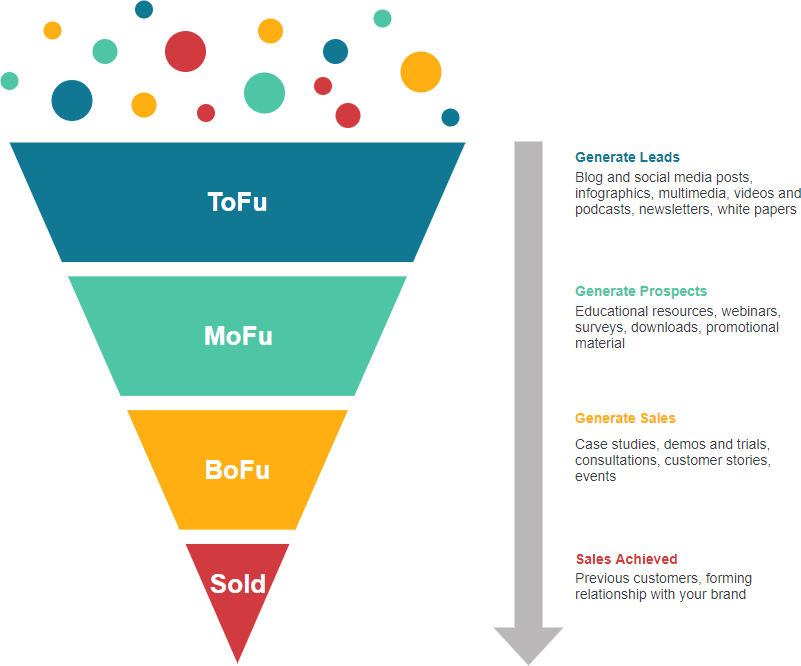
Before you create a single piece of content, you need a map. In marketing, that map is the funnel. It describes the journey a person takes from being a complete stranger to becoming a paying customer. The most common model for this is TOFU, MOFU, and BOFU.
- TOFU (Top of the Funnel): The "awareness" stage. People at this stage have a problem but may not know that solutions like yours exist. Your goal here is to attract a broad audience by providing helpful, educational content related to their problem space.
- MOFU (Middle of the Funnel): The "consideration" stage. People here are aware of their problem and are actively researching solutions. Your goal is to nurture their interest, build trust, and position your product as a credible option.
- BOFU (Bottom of the Funnel): The "decision" stage. People at this stage are ready to choose a solution. Your goal is to convert them by demonstrating why your product is the best choice for them.
TOFU, MOFU, and BOFU: the best SaaS content marketing funnel explained
To get a solid grasp of these concepts, let's start with a clear, concise article from the Not Scheduled blog. It defines each stage of the funnel and explains why this framework is so beneficial for a SaaS business.
Read the first two main sections: 'TOFU, MOFU, and BOFU: social media content funnel components' and 'Benefits of using TOFU, MOFU, and BOFU framework for your SaaS marketing funnel'. Focus on understanding the purpose of each stage and the strategic advantages of thinking in this way.
A slightly more granular way to think about this journey is through Eugene Schwarz's "Five Levels of Awareness," a classic marketing concept. Understanding these levels will give you a more nuanced approach to creating content.
This Is the SMARTEST SaaS Marketing Strategy I’ve Ever Seen… 🤯
In this video, veteran SaaS founder Rob Walling calls this framework the 'SMARTEST SaaS Marketing Strategy'. He provides a fantastic breakdown of the five levels of awareness, which map directly onto the TOFU-MOFU-BOFU model.
Watch from 01:06 to 02:02. Pay attention to how he introduces the five levels: Unaware, Problem Aware, Solution Aware, Product Aware, and Most Aware.
Here's how the levels of awareness generally map to the funnel:
- Unaware & Problem Aware: Top of Funnel (TOFU)
- Solution Aware: Middle of Funnel (MOFU)
- Product Aware & Most Aware: Bottom of Funnel (BOFU)
Part 2: Where to Start? The Early-Stage SaaS Advantage
With limited time and resources, you can't create content for everyone at every stage. As a founder aiming for rapid scaling, you need to be ruthlessly strategic. Common sense might suggest starting at the top of the funnel to attract the largest audience, but for an early-stage SaaS, this is often a mistake.
Your most valuable asset is traction—early revenue and user feedback. This comes from people who are actively looking for a solution now. These are your "Solution Aware" and "Product Aware" prospects in the Middle and Bottom of the Funnel.
This Is the SMARTEST SaaS Marketing Strategy I’ve Ever Seen… 🤯
Let's return to Rob Walling's video. He explains exactly why early-stage founders should concentrate their efforts on the lower parts of the funnel.
Watch the section from 05:39 to 07:17. Listen carefully to his reasoning for starting with 'solution aware' and 'product aware' content. This is a critical insight for getting your first customers.
This "bottom-up" approach is a recurring theme in effective SaaS content strategy. You first build the content that helps close deals, and then you work your way up to attracting a wider audience.
My best SaaS content marketing strategy guide for 2025
This article from MarketerMilk reinforces the same principle, calling it creating content from 'right to left' on their content lifecycle diagram. This perspective is vital for prioritizing your work.
Read the section '3. Creating a content lifecycle strategy'. Focus on the subsection 'The content lifecycle diagram' and the key takeaway: 'You’ll want to create content from right to left... you need to first start at the bottom of the funnel.'
By focusing on MOFU and BOFU first, you create content for people with high purchase intent. This leads to faster conversions, provides immediate validation for your MVP, and generates the early revenue needed to fuel further growth.
Part 3: What to Talk About? Defining Your Content Pillars
Now that you know who you're talking to (people in the middle and bottom of the funnel) and why (to get conversions), you need to decide what you're going to talk about. This is where content pillars come in.
Content pillars are the 3-5 core topics your brand will consistently discuss. They are the intersection of your expertise, your audience's interests, and your business goals. They are not product features or sales pitches; they are value-driven themes that help your audience.
How to Create Content Pillars for Social Media | Follow this EASY Content Pillar Strategy!
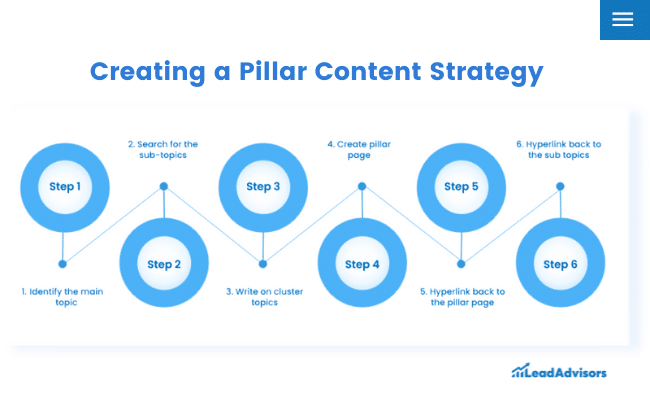
The team at High Season Co. provides an excellent, step-by-step framework for defining your content pillars. Their 'PILLARS' acronym makes the process easy to remember and implement.
This video is your primary guide for this section. Watch from 00:14 to 09:23 to understand the entire pillar creation process. Specifically, focus on: What pillars are and are not (00:14 - 01:14). The 'PILLARS' framework: Purpose, Identify audience, List topics, Link to goals, and Assign pillars (01:42 - 09:23). Take notes on how you would apply these steps to your own SaaS idea.
To summarize the framework from the video, when defining your pillars, ask yourself:
- Purpose: What is my business goal? (e.g., generate sign-ups for my MVP)
- Identify Audience: Who am I talking to and what are their biggest pain points? (Refer back to your ICP from Module 1)
- List Topics: What broad topics can I speak about with authority that help my audience?
- Link to Goals: Does this topic help me achieve my business goal?
- Assign Pillars: Select 3-5 specific, value-driven pillars. (e.g., Instead of "Education," a better pillar is "Productivity hacks for remote teams.")
Part 4: Tying It All Together - Pillars in the Funnel
The final step is to combine these two frameworks. Your pillars define what you talk about, and the funnel defines how you talk about it at each stage of the customer journey. A single content pillar can be used to generate ideas for every stage of the funnel.
Example:
- SaaS Idea: A project management tool for freelance web developers.
- Content Pillar: "Client Management for Freelancers"
- TOFU Content: Blog post: "5 Common Mistakes Freelancers Make When Onboarding New Clients"
- MOFU Content: E-book/Guide: "The Ultimate Client Project Scoping Template"
- BOFU Content: Case Study/Video: "How [Developer Name] Used Our Tool to Cut Project Admin Time by 50%"
This is where your strategy becomes a concrete action plan.
TOFU, MOFU, and BOFU: the best SaaS content marketing funnel explained
Let's return to the Not Scheduled blog. This article provides a goldmine of real-world content examples for each funnel stage, analyzing posts from the founder of the SaaS tool Breakcold. This is the tactical inspiration you need.
Study the large section titled 'How to incorporate a content marketing funnel to your B2B SaaS founder's personal and business page?'. Go through the examples for TOFU, MOFU, and BOFU. Notice the difference in tone and call-to-action for each stage.
Test your understanding!
Imagine your SaaS is a tool that helps podcasters create and schedule social media clips. One of your content pillars is "Podcast Growth Strategies."
Come up with one content idea for each stage of the funnel (TOFU, MOFU, BOFU) based on this pillar.
Show answer
Here are some possible answers. Yours may vary!
- TOFU: A blog post or Twitter thread titled "10 Viral Hooks to Grab Your Listeners' Attention in the First 15 Seconds." (Broad appeal, educational, solves a common problem).
- MOFU: A detailed comparison article: "[Our Tool] vs. Opus Clip vs. Klap: Which is Best for Repurposing Podcast Content?" (Targets solution-aware prospects who are evaluating options).
- BOFU: A short video testimonial from a successful podcaster showing their dashboard and explaining how your tool helped them double their downloads in 30 days. (Builds trust and pushes for a decision).
Conclusion
You have now designed the strategic foundation of your go-to-market plan. By combining the customer journey map (the funnel) with your core areas of expertise (the pillars), you can create content that is both valuable to your audience and aligned with your business objectives.
Key Takeaways:
- The TOFU, MOFU, BOFU funnel is a map of the customer's journey from awareness to decision.
- As an early-stage SaaS founder, you should strategically focus your initial efforts on MOFU and BOFU content to attract high-intent prospects and achieve faster conversions.
- Content pillars are 3-5 core, value-driven topics that you will own. They should align with your audience's needs and your business goals.
- Every piece of content you create should serve a specific pillar and be tailored for a specific funnel stage.
Preview of the Next Lesson:
You have the "what" (pillars) and the "how" (funnel). The next logical step is to find the exact words and phrases your potential customers are typing into Google when they look for solutions. In the next lesson, you will learn how to use Ahrefs Keyword Explorer or SEMrush to identify high-intent, low-competition keywords for your content. This is where your strategy meets data.