
Hello! Welcome to the final lesson of our third module, "Functions and Benefits of Sleep."
In our previous lesson, we explored the intricate connection between sleep, appetite-regulating hormones, and our overall metabolic health. We saw how sleep loss disrupts hormones like ghrelin and leptin, creating a "physiological double jeopardy" that drives hunger and weight gain. This highlighted sleep's role in regulating our physical state.
Today, we shift our focus from the physical to the emotional. We will explore how sleep acts as a crucial regulator of our feelings, moods, and psychological resilience. The learning outcome for this lesson is to describe the relationship between sleep and emotional regulation. You'll learn the precise brain mechanisms that explain why a poor night's sleep can leave us feeling irritable and emotionally volatile, and how a full night's sleep provides a form of "overnight therapy."
This topic serves as a vital bridge between modern neuroscience and the philosophical goals of Jain practice, which, as we will see, also place a strong emphasis on achieving emotional balance.
The Sleep-Deprived Brain: An Emotional Amplifier
We've all experienced it: after a night of tossing and turning, the slightest frustration can feel like a major crisis. A normally manageable email triggers a spike of anxiety, or a simple disagreement with a loved one feels deeply upsetting. This isn't a failure of character; it's a predictable consequence of a sleep-deprived brain.
To understand why, we need to look at two key regions of the brain that work together—or fail to—in managing our emotions.
- The Amygdala: You can think of this as the brain's emotional "gas pedal" or alarm system. Located deep in the brain, it's responsible for generating rapid, powerful emotional reactions, particularly to negative or threatening stimuli. It’s the part of you that feels a flash of fear or anger before you’ve even had a chance to think.
- The Prefrontal Cortex (PFC): This is the large, recently evolved area at the very front of your brain. It's the "CEO" or the "brake pedal." The PFC is responsible for rational thought, decision-making, and top-down control. One of its most important jobs is to regulate the amygdala, assessing a situation and sending a signal to either calm down ("it's just a car backfiring, not a threat") or confirm the reaction.
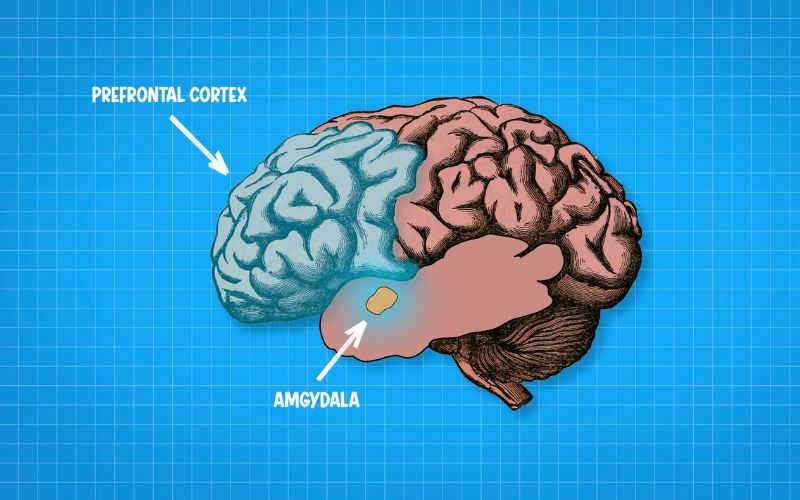
So, what happens to this delicate partnership when we don't sleep?
How sleep affects your emotions | Sleeping with Science, a TED series
Let's turn again to sleep scientist Dr. Matthew Walker. In this clear and concise video from his TED series, he explains a brain imaging study that revealed exactly how a lack of sleep unbalances this critical emotional circuit.
Please watch the first three minutes of the video (00:00 - 02:59). Focus on the roles of the amygdala and the prefrontal cortex, and what happens to them with and without sleep.
As the video explains, sleep deprivation creates a double-whammy for our emotional stability:
- The amygdala becomes hyperactive, reacting with about 60% more intensity to negative emotional stimuli. This is why small problems can feel overwhelming.
- The communication link between the rational prefrontal cortex and the emotional amygdala is severely impaired.
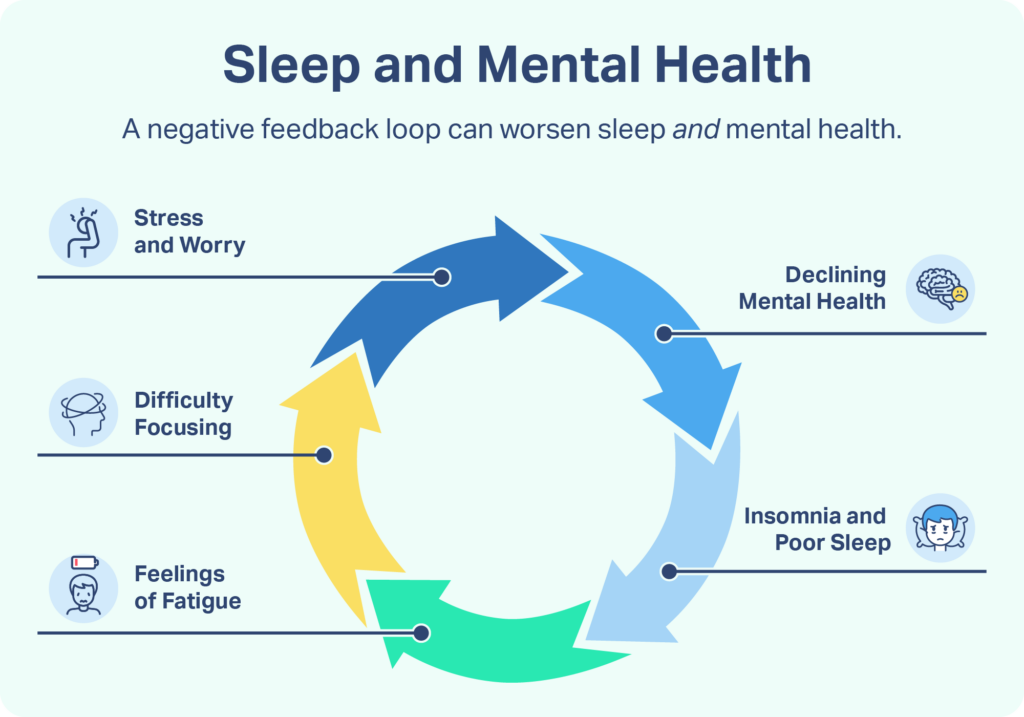
The result is a brain that is all "emotional accelerator" and very little "regulatory brake." We become emotionally reactive and irrational not because we are trying to be, but because the very brain structures responsible for maintaining calm and perspective have been taken offline. This can create a vicious cycle, as poor emotional regulation often leads to stress and worry, which can further disrupt sleep.
Test your understanding!
A colleague sends you a brief, slightly critical email about a project. If you have had a full night of sleep, how would you expect your PFC and amygdala to interact? What about if you were sleep-deprived?
Show answer
- With a full night of sleep: Your amygdala might still have an initial, small flash of irritation or defensiveness. However, your well-rested PFC would quickly come online, assess the situation rationally ("This is just constructive feedback, not a personal attack"), and regulate the amygdala's response. You would likely craft a calm, professional reply.
- When sleep-deprived: Your hyperactive amygdala would likely trigger a strong, disproportionate emotional reaction (e.g., intense anger, anxiety, or feelings of being attacked). The weakened PFC would be unable to effectively regulate this, so the raw emotion would dominate your perception. You might ruminate on the email for hours or fire back an overly defensive and emotional response.
How Sleep Heals: Overnight Therapy in REM
If sleep loss makes us emotionally unstable, then it follows that getting sleep must restore that stability. The process by which this happens is one of the most remarkable functions of sleep, centered on the stage we know as Rapid Eye Movement (REM) sleep.
How sleep affects your emotions | Sleeping with Science, a TED series
Let's return to the same TED video, where Dr. Walker briefly introduces this healing function of sleep.
Please watch from 02:59 to 03:40. He describes sleep as a form of 'nocturnal soothing balm.'
Dr. Walker calls this process "emotional convalescence." But how does it work? To understand this, we need to dive a little deeper into a leading scientific theory, sometimes called the "sleep to forget, sleep to remember" hypothesis, which is detailed in advanced research papers like The Role of Sleep in Emotional Brain Function.
The core idea is that sleep helps us separate the memory of an event from the painful emotion attached to it.
Here’s the process, step-by-step:
- Encoding the Emotional Memory: When you have a difficult or emotional experience during the day, your brain encodes the memory of the event. This memory is tagged with a strong emotional charge, driven by stress-related brain chemistry. A key chemical involved here is noradrenaline (also known as norepinephrine), which is associated with arousal, stress, and the "fight-or-flight" response.
- Re-processing in REM Sleep: Later that night, when you enter REM sleep, your brain reactivates and replays these emotional memories. This helps strengthen and consolidate the informational part of the memory.
- The Unique REM Environment: Crucially, this memory replay happens in a unique brain state. During REM sleep, the concentration of that stress-related chemical, noradrenaline, drops to virtually zero. It is the only time, day or night, that your brain is completely free of this anxiety-provoking molecule.
- The Therapeutic Outcome: By re-processing the emotional memory in a neurochemically "safe" or low-stress environment, REM sleep effectively strips away the painful emotional charge. You keep the memory and the lessons learned from it, but you lose the visceral, emotional sting.
This is why, after a good night's sleep, you can often reflect on a difficult event from the previous day with a sense of perspective and calm that was impossible in the heat of the moment. As Dr. Walker poetically puts it, perhaps it's not time that heals all wounds, but time spent in sleep that provides that emotional healing.
Bridging Science and Jain Philosophy: The Pursuit of Equanimity
This scientific model of emotional regulation provides a fascinating parallel to the principles of Preksha Dhyaan and Jain philosophy.
The problem identified by neuroscience—an overactive, reactive emotional brain (amygdala) without sufficient rational oversight (PFC)—is precisely the state that meditative practices aim to transform.
Let's look at some principles from the Preksha Dhyana text by Acharya Mahapragya:
- "Act - Do not 'Re-act'": The text states, "Habitually we react to external stimuli...this cannot be called 'action', it is, in fact, 're-action'." This perfectly describes the behavior of a sleep-deprived brain, where the hyperactive amygdala produces automatic "re-actions." The goal of establishing control and producing appropriate "action" is functionally identical to the PFC's job of regulating the amygdala.
- "Purify the mental states": The text aims to cleanse the mind from "contaminating urges, emotions and passions." The REM sleep mechanism we just discussed is nature's automatic, unconscious way of doing this—it "cleanses" the emotional charge from our daily experiences.
- "Equanimity": The ultimate goal is described as "impartial (uncontaminated) perception... uncontaminated by attachment and/or aversion." This state of equanimity is what a well-rested brain is better equipped to achieve. Sleep restores the biological hardware needed for emotional balance.
We can therefore see two powerful systems working toward the same goal of emotional regulation:
- Sleep (The Unconscious Path): A nightly, automatic biological process that resets emotional brain circuits, particularly during REM sleep, allowing us to process difficult experiences and maintain emotional stability.
- Preksha Dhyaan (The Conscious Path): A waking practice of focused perception and contemplation designed to strengthen "conscious reasoning" (the PFC) and gain mastery over reactive "emotions and passions" (the amygdala).
This parallel opens up profound questions that we will explore later in the course. If sleep automatically provides emotional regulation, what is the role of conscious meditation? Can meditation enhance this natural process? This is the very intersection of science and spirituality you wished to explore.
Conclusion
In this lesson, we have uncovered the deep biological relationship between the sleeping brain and our emotional lives.
Key Takeaways:
- Sleep deprivation causes a hyper-reactive amygdala (the brain's emotional center) and weakens its connection to the rational prefrontal cortex (PFC). This makes us emotionally volatile and prone to irrational reactions.
- REM sleep provides a form of "overnight therapy." During this stage, the brain is free of the stress chemical noradrenaline, allowing it to re-process emotional memories and strip away their painful charge.
- This scientific model of emotional regulation—a balanced interplay between the amygdala and PFC—provides a strong neurobiological basis for the philosophical goals of Preksha Dhyaan, which aims to achieve equanimity by consciously moving from "re-action" to "action."
Preview of the Next Module:
This lesson concludes our module on the functions of sleep. We have explored its role in learning, physical restoration, waste clearance, immunity, hormonal balance, and now, emotional regulation.
Our discussion of REM sleep and its unique properties provides the perfect launchpad for our next module, "The Science of Dreaming." We will begin by exploring the fundamental questions: when and why do we dream?