Hello! Let's dive into the final lesson of our module on building a long-term reputation.
Introduction
In our last session, we established that building a premium brand is all about playing the "long game." We discussed how your brand becomes a valuable asset—a 'bond'—that you post as a guarantee of your quality. You build this brand through credible signals, like investing in top-tier machinery and offering a strong warranty, which prove your commitment in a world of asymmetric information.
You are now faced with one of the most difficult and recurring challenges for any new entrepreneur: the direct conflict between immediate needs and long-term goals. As a new business, cash flow is king, and the temptation to maximize profit on every job can be immense. However, for a premium brand, your reputation is your foundation for all future profit.
Today, we will analyze this fundamental trade-off between short-term profit and long-term reputation. Our goal is to give you a game theory framework to navigate these decisions, so you can build a sustainable, reputable business without going broke in the process.
1. One-Shot Deals vs. Enduring Relationships: The Game Theory View
The core of this trade-off lies in understanding the difference between a one-shot transaction and a repeated interaction. Game theory gives us a powerful model to understand this: the Prisoner's Dilemma.
In a single, one-time interaction, the most "rational" choice is often to act in your own immediate self-interest, even if it leads to a worse outcome for everyone. This is the logic of the tourist trap restaurant we discussed previously—they play the short game because they don't expect to see their customers again.
However, the entire dynamic changes when you know you will interact again in the future.
This game theory problem will change the way you see the world
To see how this works, let's first quickly review the classic Prisoner's Dilemma. Then, we'll see what happens when the game is repeated. This video from Veritasium explains this shift beautifully and introduces the winning strategy that emerged from Robert Axelrod's famous computer tournament.
Please watch from 5:29 to 15:57. Focus on two key ideas: How does the game change when it's played repeatedly? What are the four characteristics of the winning 'Tit-for-Tat' strategy (nice, forgiving, retaliatory, clear)?
As the video shows, in a repeated game, the winning strategy is not to be selfish. Instead, strategies that are cooperative, forgiving, and clear—like Tit-for-Tat—dominate. The "shadow of the future" makes cooperation the most profitable long-term strategy.

Your woodworking business is not a one-shot game. It is a series of repeated games with customers (who can offer repeat business and referrals), suppliers (who you'll buy from for years), and even competitors (whose actions influence the market).
2. A Practical Framework: The Tomorrow Test
Knowing you're in a repeated game is the first step. The next is having a practical way to apply this thinking to daily decisions.
Game Theory: The Simple Strategy that Will Change Your Life Forever (Audiobook)
The following audio provides an excellent business-focused perspective on this concept. It frames long-term thinking as an 'operating system' for your business and introduces a simple, powerful diagnostic tool.
Please listen to two segments. First, from the beginning (00:31) to 4:41, to understand the core idea of optimizing for relationships over transactions. Second, listen from 10:27 to 17:50 to learn the 'Tomorrow Test,' a framework for diagnosing whether you're in a one-shot or repeated game.
The key insight is that your reputation is a form of compound interest. Every time you act with integrity, you make a small deposit. Over time, these deposits grow and begin to work for you, pre-negotiating deals and attracting opportunities.
The Tomorrow Test from the video gives you a concrete decision-making tool. Before making a choice that pits short-term gain against long-term reputation, ask yourself:
- Will we interact again? (e.g., Is this a potential repeat client?)
- Will others see how this unfolds? (e.g., Will this client leave an online review or tell their friends?)
- Will my reputation spill over to future opportunities? (e.g., Could this project be a portfolio piece that wins me a bigger job later?)
If the answer to any of these is "yes," you are in a repeated game. Optimize for the long-term relationship.
Test your understanding!
A potential client wants you to build kitchen cabinets. They are shopping around and mention that a competitor offered to use lower-grade plywood for the cabinet boxes to reduce the price by 15%. They ask if you can match that. Using the Tomorrow Test, how would you analyze this situation and what would you do?
Show answer
Applying the Tomorrow Test:
- Will we interact again? Yes, a happy kitchen client is a prime source for future work (built-ins, vanities) and referrals.
- Will others see this? Absolutely. Their friends and family will see the kitchen, and they might leave online reviews.
- Will reputation spill over? Yes. Every kitchen you build becomes part of your brand's story. Using cheaper materials compromises the "premium quality" signal you need to send to attract future high-end clients.
This is clearly a repeated game. The long-term strategy is to politely decline to use the lower-grade material. You should explain why: that your brand's standard is to use only high-quality materials to ensure longevity and that compromising on this isn't something you do. You're not just turning down a request; you're signaling your commitment to quality. This action reinforces your premium position, even if it means losing this specific job. The right client will see this not as inflexibility, but as a sign of integrity.
3. Case Study: The Pricing Trade-Off
Pricing is a primary arena for the conflict between short-term profit and long-term reputation. As a premium brand, you need to charge premium prices. But how you set those prices sends a powerful message.
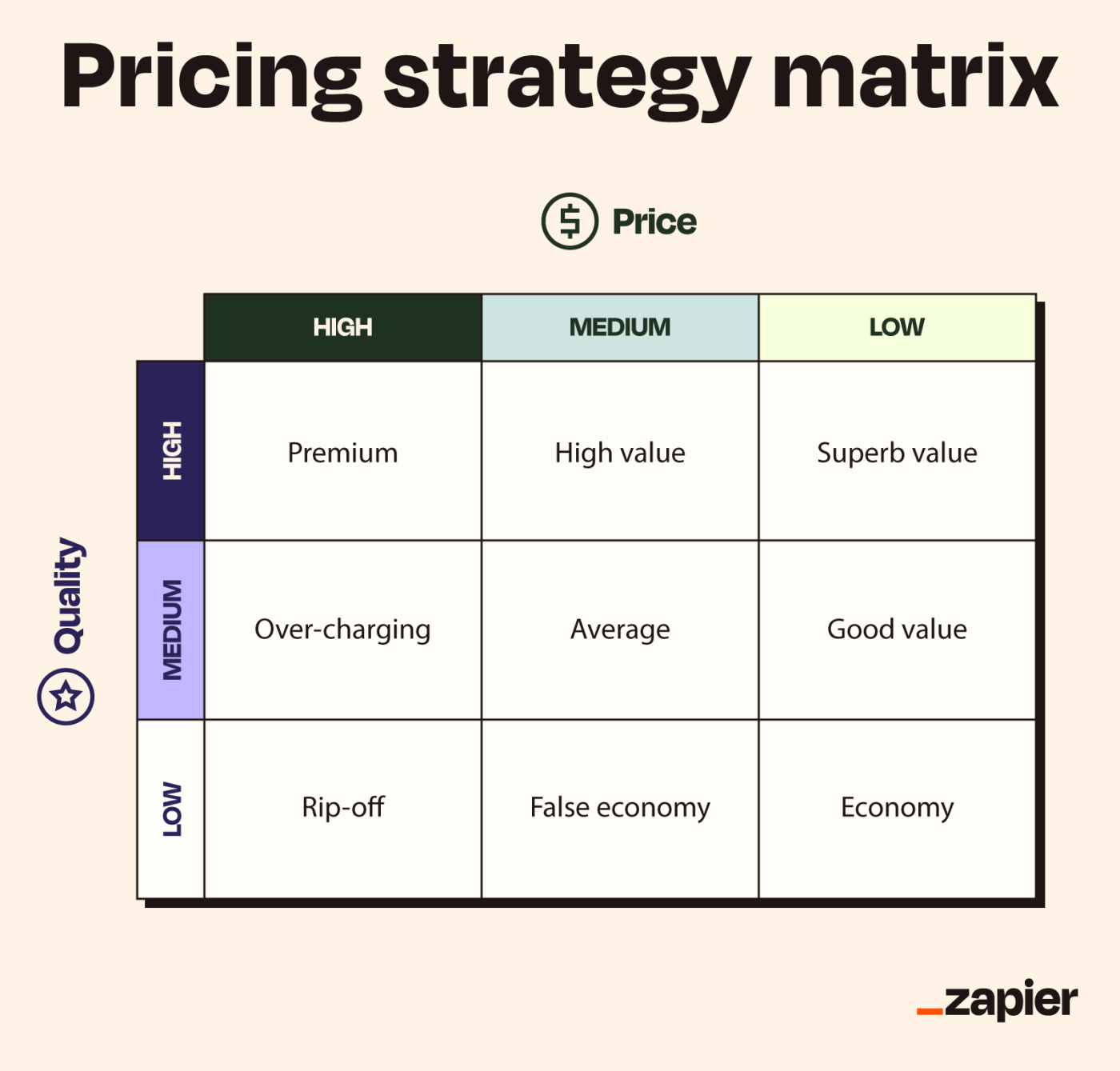
The challenge is more nuanced than just "high price, high quality." For a new business, you need to attract your first clients and build a customer base.
How strong is the pricing power of luxury goods
This report from KPMG on the luxury goods market provides some valuable insights into this balancing act. While it focuses on large global brands, the principles are directly applicable to your premium woodworking business.
Please read the 'Key takeaways' and scan the content for sections 02 ('Determining the elasticity of demand in luxury goods') and 03 ('Drawing parallels between price increase and desire'). Focus on the difference between high-end and 'mainstream' or 'entry-level' luxury consumers.
Here's the key trade-off for your business, as highlighted by the report:
- Short-Term Profit: You could set your prices at the absolute maximum, targeting only very wealthy clients. This maximizes profit per job.
- Long-Term Reputation & Growth: This strategy risks outpricing the "aspirational" or "entry-level luxury" consumer. These are the clients who are stretching their budget for high quality because they truly value it. They are often your most vocal advocates and a key source of referrals. Alienating them can stunt your growth.
The strategic choice is to set a price that reflects your premium quality but remains accessible enough to build a loyal following. This might mean accepting a slightly lower margin in the short term to build the volume of work and word-of-mouth that will establish your brand for the long term.
4. Handling Mistakes: Investing in Goodwill
No business is perfect. You will eventually face a delayed project, a mistake in an installation, or a material defect. How you handle these situations is one of the most powerful signals of your character as a business.
- Short-Term Mindset: Do the bare minimum to fix the problem. Argue about who is at fault. Minimize your cost.
- Long-Term Mindset: View the mistake as an opportunity to turn a dissatisfied customer into a raving fan.
Game Theory: The Simple Strategy that Will Change Your Life Forever (Audiobook)
Let's return to the 'Grow To The Top' audio, which has a brilliant section on how to handle failures to build, rather than break, relationships.
Please listen to the segment from 1:21:56 to 1:27:06. Pay close attention to the concept of 'overcorrecting' and the 'mathematics of make goods.'
When you make a mistake, overcorrecting is the ultimate long-game strategy. If you deliver a set of doors a week late, the short-term fix is to apologize and install them. The long-term, reputation-building fix is to apologize, install them, and offer a meaningful concession—perhaps a discount, or a complimentary matching item like a cutting board made from the same wood.
This feels like a short-term loss. But what you are actually doing is making a powerful investment. The client's story changes from "He was late" to "He was late, but he more than made up for it. He really stands behind his work." That second story is priceless marketing.
Conclusion
Navigating the trade-off between short-term profit and long-term reputation is at the heart of building a successful premium business. Game theory shows us that because business is a repeated game, prioritizing your reputation is the most rational and profitable path.
Key Takeaways:
- Your Business is a Repeated Game: The "shadow of the future" means cooperative, trustworthy behavior is more profitable than short-term opportunism.
- Reputation is Compounding Interest: Small, consistent acts of integrity build a powerful asset that works for you over time.
- Short-Term Sacrifices are Investments: Willingly accepting a short-term cost—by maintaining quality standards, pricing fairly, or "overcorrecting" on a mistake—is not a loss. It is a strategic investment in your brand.
- Use the Tomorrow Test: When facing a tough decision, ask if future interactions, observers, or reputational spillovers are at play. If yes, play the long game.
Preview of the Next Module:
We have now established the critical importance of reputation and the strategic logic of prioritizing it. In our next module, "Signaling Quality and Intent," we will get even more specific. We'll start by revisiting the problem of asymmetric information and breaking down exactly how actions like your pricing strategies and warranty policies function as credible signals that bridge the information gap between you and your customers.