Hello! Welcome to the second-to-last lesson of your course.
In our previous session, we identified the best platform for hiring your first remote team member, concluding that OnlineJobs.ph is the most suitable choice for finding a long-term e-commerce virtual assistant. By delegating daily operational tasks, you free up your own time to focus on high-level strategy and business growth—which is exactly what we will be doing today.
This lesson tackles a major strategic step: expanding your business into a new international marketplace. To do this successfully, you need a structured plan. Therefore, the learning outcome for this lesson is to develop a market entry checklist for expanding to a new international marketplace, covering legal, logistical, and marketing steps. This checklist will serve as your roadmap, helping you anticipate challenges and avoid costly errors as you scale your business globally.
Why You Need a Market Entry Checklist
Expanding internationally is more complex than simply listing your products on a different country's marketplace. Each new region comes with its own set of rules, customer expectations, and logistical hurdles. A detailed checklist ensures you address all critical areas systematically, from legal compliance to marketing localization.
Let's build this checklist by breaking it down into four essential pillars:
- Market Research and Selection
- Legal and Compliance
- Logistics and Fulfillment
- Marketing and Localization
Pillar 1: Market Research and Selection
Before you even think about legalities or shipping, you must first validate that a market is worth entering. Don't assume a product that sells well in the US will automatically succeed elsewhere.
The article "International Shipping Readiness Checklist" provides an excellent framework for this initial research phase.
International Shipping Readiness Checklist for High-Growth Ecommerce Businesses
Let's begin by reading the first part of the 'International Shipping Readiness Checklist' from DCL Corp. This will help you formulate the initial research questions for your checklist.
Please read the two sections titled 'Consider Your Customer' and 'Research the New Region'. Focus on the questions provided, as they form the foundation of your market selection process.
Based on that reading, the first section of your market entry checklist should cover these questions:
- Demand Validation:
- Are you getting requests from customers in a specific country or region?
- Does your website analytics show significant traffic from a particular international location?
- Have your competitors started selling similar products into that region?
- Product-Market Fit:
- Does your product translate well to the new culture and language?
- Is your product and its branding culturally appropriate and appealing?
- Initial Feasibility:
- Is the product legal to sell in the target country?
- Are there any obvious prohibitive tariffs, duties, or import restrictions on your product category?
Answering these questions first prevents you from wasting time and money planning an expansion into a market with no demand or insurmountable barriers.
Pillar 2: Legal and Compliance
This is often the most intimidating part of international expansion, but breaking it down makes it manageable. It's about understanding and complying with the target country's laws and the marketplace's rules.
General Requirements for International Sellers
When you sell in a new country, you essentially become an importer and a business operator in that jurisdiction. This comes with specific requirements.
How To Start Selling On Amazon.com If You Live Outside The USA (International)
The video 'How To Start Selling On Amazon.com If You Live Outside The USA' by Tatiana James, while aimed at non-US sellers entering the US, outlines the fundamental legal and financial requirements that apply universally when selling cross-border. Listen for the types of documents and accounts you need.
Watch from 01:39 to 09:26. Pay close attention to the discussion on: Banking solutions for foreign currency (like Payoneer). The concept of using a local business entity. Tax forms for international sellers (W-8BEN as an example) and the difference between income tax and sales tax (like VAT/GST).
Customs and Import Regulations
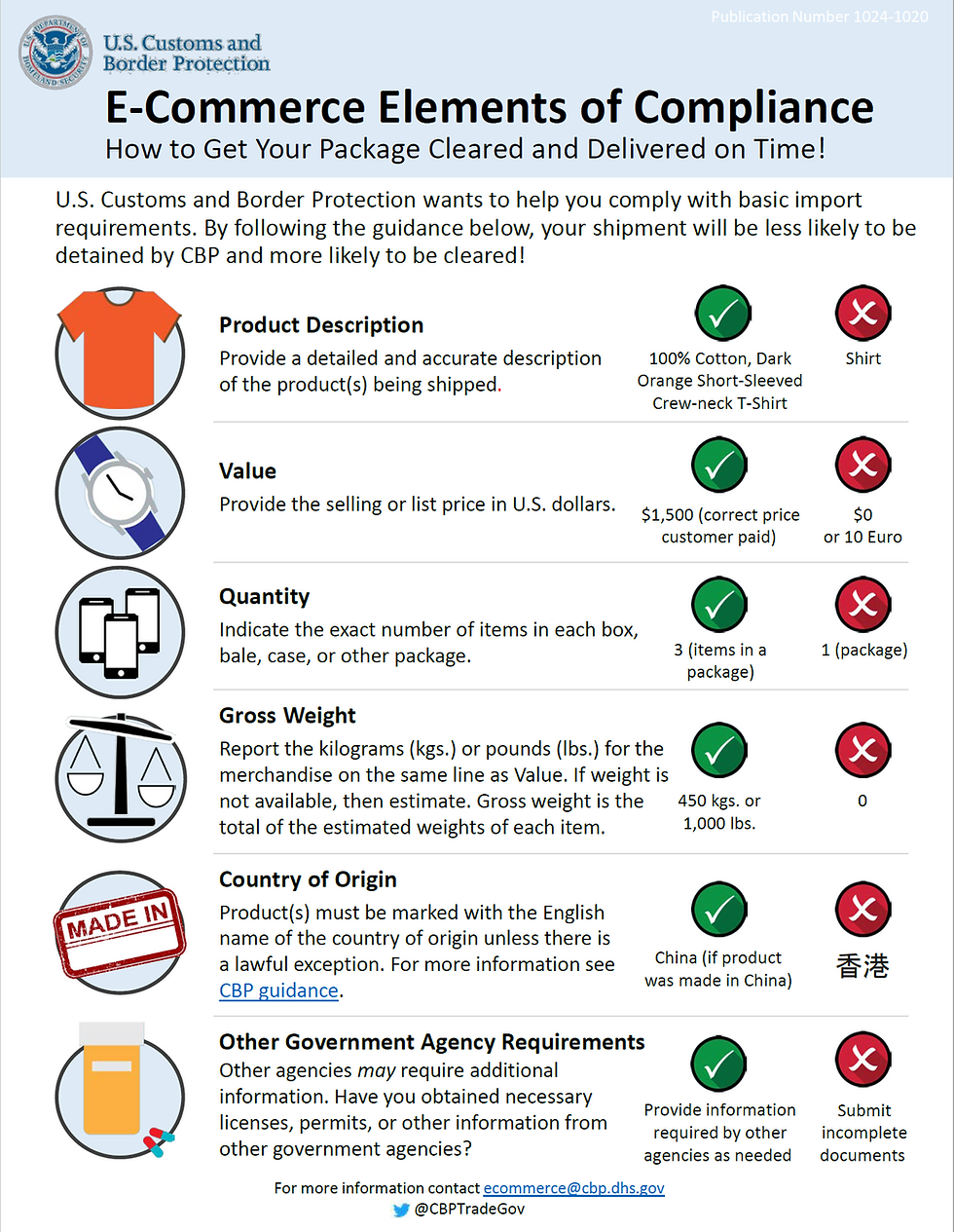
Getting your goods through customs smoothly is critical. You must provide accurate information. The U.S. Customs and Border Protection (CBP) provides a clear infographic on what's needed for US imports; these same principles apply when you are exporting to other countries.
Platform-Specific Rules
Each marketplace (Amazon, Walmart, etc.) has its own set of requirements for international sellers. For example, Walmart has a specific list of approved countries and required documents. Researching this for your target platform and country is a non-negotiable step.
This guide for selling on Walmart US as a non-US seller gives a good idea of the level of detail you'll need to investigate for your target market. You'll need to find the equivalent requirements for a US seller wanting to sell on, for example, Walmart Canada or Amazon Germany.
Walmart Marketplace for International Sellers
To understand the kinds of platform-specific rules you'll encounter, let's look at GeekSeller's guide for international sellers on Walmart. This demonstrates the type of documentation and operational setup you'll need to research for any new platform.
Review 'Step 1 – Check Eligibility', focusing on the 'Required Documents' table. Also, review the requirements under 'US Phone Number' and 'US Return Address'. This shows how platforms mandate specific in-country infrastructure.
So, your Legal and Compliance checklist should include:
- Business Entity: Do I need to register a local business entity in the target country?
- Tax Registration:
- Register for Value Added Tax (VAT) or Goods and Services Tax (GST).
- Obtain any necessary tax ID numbers (e.g., an EORI number for the EU).
- Banking: Set up a bank account or payment service (e.g., Payoneer) that can handle the local currency.
- Product Compliance:
- Does the product require local certifications (e.g., CE mark in Europe, UKCA mark in the UK)?
- Do packaging and labeling meet local standards (e.g., language, warning labels)?
- Customs Documentation:
- Determine the correct HS (Harmonized System) code for your product.
- Prepare a commercial invoice template with all required details (description, value, country of origin).
- Platform Requirements: Fulfill the marketplace's specific verification process for international sellers.
Pillar 3: Logistics and Fulfillment
How will customers receive their orders quickly and reliably? This is a defining factor for success.
A key decision is whether to ship products from your home country for each order (cross-border fulfillment) or to send inventory in bulk to a fulfillment center in the target country (in-country fulfillment).
How to Sell Globally on Amazon | Can you Sell Globally on Amazon using FBA?
The video 'How to Sell Globally on Amazon' explains the strategic trade-offs between different fulfillment models. This will help you decide on the best logistics strategy for your expansion.
Watch the section from 05:14 to 06:32. The speaker discusses using FBA in the target country to offer fast shipping versus shipping internationally for each order. This is a crucial consideration for customer experience and competitiveness.
Your Logistics and Fulfillment checklist must cover:
- Fulfillment Strategy:
- Choose a model: In-country fulfillment (e.g., Amazon FBA, a local 3PL) or cross-border shipping from the US.
- Analyze costs and delivery times for each option.
- International Shipping:
- Select and get quotes from international carriers (e.g., FedEx, DHL, freight forwarders).
- Understand who is responsible for paying duties & taxes (you, via DDP shipping, or the customer, via DDU). It is almost always better for you to handle this to avoid surprising your customer with a customs bill.
- Returns Management:
- Establish a local return address in the target country. This is often a requirement by marketplaces like Amazon and Walmart.
- Define the process for handling international returns. Will you refund, dispose of, or consolidate and ship returns back to the US?
- Inventory: Plan initial inventory levels for the new market and how you will manage restocking.
Test your understanding!
You're planning to expand to the German market with a competitive product like a phone case. Based on what you've just learned, which fulfillment strategy would be more effective and why: shipping each order from the US, or using Amazon FBA in Germany?
Show answer
For a competitive product like a phone case, using Amazon FBA in Germany would be far more effective. Customers expect fast, Prime-eligible shipping for such items. Shipping from the US would result in long delivery times and potentially unexpected customs fees for the buyer, making your offer uncompetitive against local sellers. Storing inventory locally is key to meeting customer expectations.
Pillar 4: Marketing and Localization
Simply making your product available isn't enough. You need to adapt your marketing to the local audience.
This involves more than just translation. Localization means adjusting your entire message, pricing, and presentation to fit cultural norms and local search behavior.
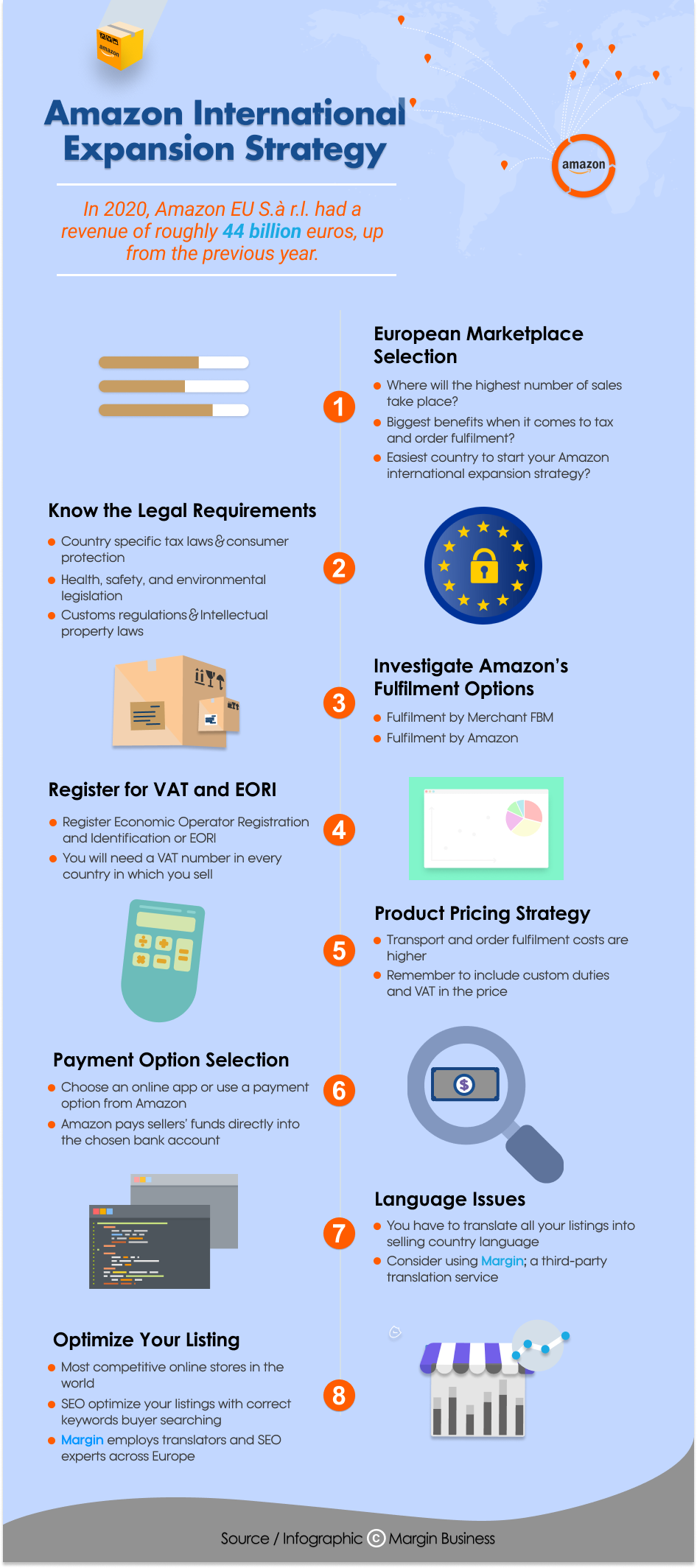
Your Marketing and Localization checklist should include:
- Listing Optimization:
- Translate and localize product titles, bullet points, and descriptions using a native speaker or a professional service.
- Conduct keyword research specific to the local language and search habits.
- Pricing Strategy:
- Calculate a new price point that accounts for international shipping, customs duties, VAT/GST, currency conversion fees, and new marketplace fees.
- Set up multi-currency pricing and payment gateways.
- Customer Support: Plan for how you will handle customer inquiries in the local language and timezone. (This is a great task for a specialized VA!).
- Launch Strategy:
- Adapt your US launch strategy for the new market.
- Plan for initial advertising (e.g., local PPC campaigns) to gain visibility.
Your Market Entry Checklist Template
Here is a summary of our discussion in a template you can copy and use for your expansion plans.
Market Entry Checklist for [Target Country/Marketplace]
Phase 1: Market Research & Selection
- Confirmed market demand (analytics, requests, competitor analysis).
- Verified product-market fit (cultural relevance, language).
- Confirmed product legality and basic import feasibility.
Phase 2: Legal & Compliance
- Business entity requirements researched.
- VAT/GST registration process understood and initiated.
- Local currency banking solution selected.
- Product certifications (e.g., CE, UKCA) investigated.
- Packaging and labeling requirements documented.
- HS code for product identified.
- Target marketplace's seller verification requirements reviewed.
Phase 3: Logistics & Fulfillment
- Fulfillment strategy selected (In-country vs. Cross-border).
- International shipping carriers and costs quoted.
- DDP (Delivered Duty Paid) shipping capability confirmed.
- Local return address secured (e.g., via 3PL).
- International returns process and policy defined.
Phase 4: Marketing & Localization
- Product listings professionally translated and localized.
- Local keyword research completed.
- Final pricing strategy calculated, including all new costs.
- Customer support plan for local language/timezone established.
- Initial marketing and launch plan developed.
Conclusion
Congratulations on building a comprehensive framework for international expansion! You are no longer just reacting to opportunities but are now proactively planning for strategic growth.
Key Takeaways:
- International expansion requires a systematic approach across four key pillars: Market Research, Legal & Compliance, Logistics, and Marketing.
- A detailed checklist is your most valuable tool for managing this complexity, reducing risk, and ensuring no critical step is missed.
- The process begins with validating demand and ends with localizing your marketing—every step is crucial for success.
Next Up:
You now have the strategic roadmap. In our final lesson of the course, we will take one of the items from this checklist and put it into practice. You will learn how to activate a cross-border selling program within Amazon Seller Central for a new region (e.g., Canada, UK), turning your strategic plan into an actionable step.