Hello! Welcome to the final module of our course. Over the past ten lessons, we have explored a wide array of theories about justice, rights, and political order. From the natural law of Locke to the non-domination of republicanism and the proceduralism of Waldron and Estlund, we have built a sophisticated toolkit of concepts. Now, we begin the work of synthesis.
In our last session, we analyzed how procedural legitimacy might justify political authority when citizens have deep, reasonable disagreements about what constitutes a just outcome. We concluded that the authority of law seems to rest not just on the fairness of the process but also on its epistemic capacity to make better-than-random decisions.
Today, we ascend to a higher level of architectural analysis. We will tackle one of the most fundamental and enduring tensions in political philosophy, one that lies at the heart of your initial course goal. The learning outcome for this lesson is to analyze the trade-off between universal liberal principles and the value of particularist community bonds.
This is the classic debate between liberalism and communitarianism. It pits the value of universal rights, individual autonomy, and equality against the value of tradition, social cohesion, and shared identity. As we'll see, this isn't a simple binary choice but a complex balancing act, and how a society manages this trade-off defines its character.
1. The Double-Edged Sword of Equality: Tocqueville's Observations
Perhaps no one has analyzed this trade-off with more foresight than the French aristocrat Alexis de Tocqueville. Visiting the United States in the 1830s, he saw a society where the "equality of conditions" was the defining feature. While he admired its dynamism, he also identified profound dangers in this new, universalizing democratic spirit.
Alexis de Tocqueville - Democracy in America | Political Philosophy
This video provides an excellent summary of Tocqueville's central arguments in 'Democracy in America.' It sets the stage by explaining how the universal principle of equality can threaten both individual liberty and the community bonds that sustain a free society.
Please watch from 04:36 to 08:40. Pay close attention to: The two main dangers Tocqueville saw in the growth of democracy: the centralization of state power and the rise of a stifling individualism. His concept of the 'tyranny of the majority' and how it functions as a 'legal despotism' against minority groups and opinions.
Tocqueville's analysis reveals the core of the problem. The very engine of liberal democracy—the principle of equality—can lead to:
- Atomization: As old hierarchies and social ties dissolve, society risks becoming a collection of isolated, self-interested individuals.
- Centralization of Power: Intermediary institutions (like guilds, local aristocracies, or strong churches) that once stood between the individual and the central government wither away, leaving the individual to face the immense power of the state alone.
- Tyranny of the Majority: In a system where the majority's will is sovereign, there are few safeguards against the oppression of minorities or dissenting individuals. This isn't just political but also social, creating a pressure toward conformity and what he called a "creeping mediocrity."
The ultimate danger Tocqueville foresaw was a new kind of "soft despotism," where a paternalistic state provides for every need, keeping its citizens in a state of "perpetual childhood." They remain free in a trivial sense—they can choose their guardians—but they lose the capacity for self-government.
2. The Philosophical Debate: Liberalism vs. Communitarianism
Tocqueville's sociological observations form the backdrop for a deep philosophical debate. Communitarian thinkers argue that liberalism, with its focus on the autonomous, rights-bearing individual, either misunderstands or actively undermines the social attachments that are essential for a meaningful human life.
The political philosopher Michael Walzer masterfully outlines this critique. He notes that communitarianism suggests two powerful, but contradictory, arguments against liberalism.
The Communitarian Critique of Liberalism
In his famous essay 'The Communitarian Critique of Liberalism,' Michael Walzer brilliantly dissects the two main lines of attack against liberal theory. Understanding them separately is key to seeing the nuance of the debate.
Please read the sections titled 'I' and 'II' (starting from 'The first argument holds...' and ending just before 'We are saved...'). In these sections, Walzer lays out: The first critique: Liberal theory is an accurate description of a grim, fragmented social reality. The second critique: Liberal theory is a radical misrepresentation of our deeply social and embedded lives.
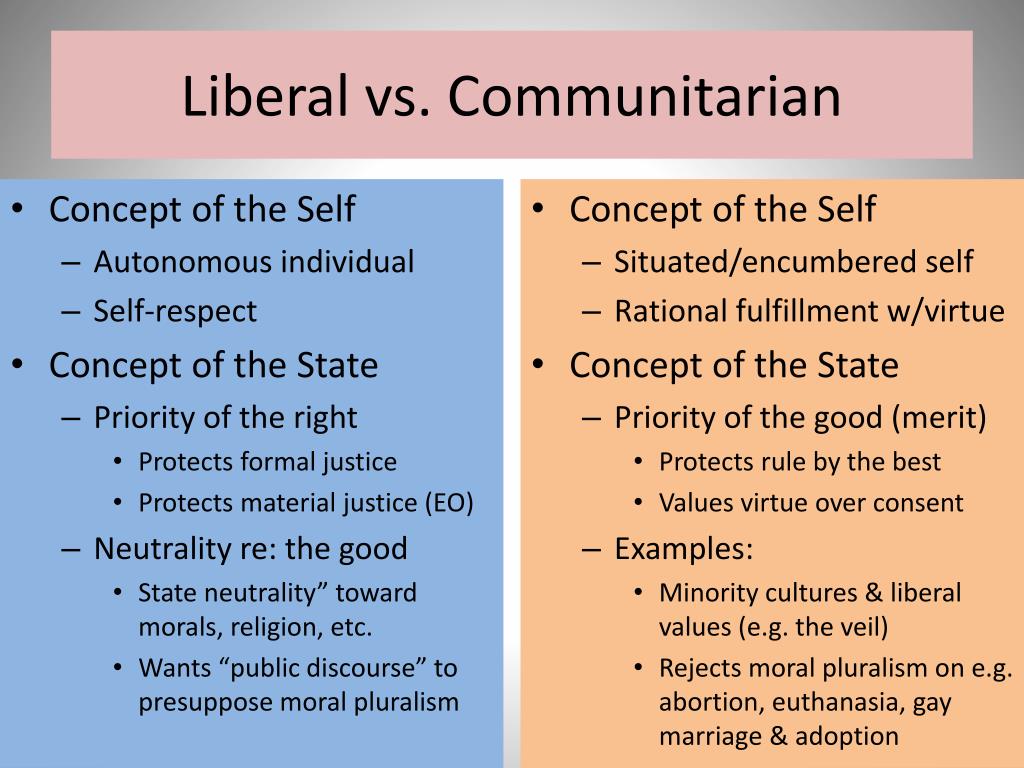
Let's summarize the two critiques:
- Critique 1 (Liberalism as Unfortunate Truth): Liberal theory is correct. Modern society is a collection of isolated, self-interested individuals. Community has been lost, and our political life is impoverished as a result. We are the "unencumbered selves" that liberal theory describes, and it is a lamentable state.
- Critique 2 (Liberalism as Ideological Distortion): Liberal theory is false. We are, and always have been, "situated selves"—born into families, communities, and traditions that shape who we are. The problem is that the rhetoric of liberalism (individualism, rights, choice) blinds us to these realities and prevents us from articulating the value of our own communal ties.
The image below provides a helpful schematic of these opposing worldviews.
3. A Society in Tension: The Four Mobilities
So, which critique is right? Is society truly fragmented, or are we just using the wrong language to describe our connections? Walzer argues that the truth is a "muddle"—each critique is partly right, and modern liberal life exists in the tension between them.
He makes this concrete by identifying four powerful dissociative forces at work in modern society.
The Communitarian Critique of Liberalism
Walzer moves beyond abstract theory to offer a sociological diagnosis of liberalism's dissociative tendencies. This provides a very practical way to understand the 'trade-off' we are analyzing.
Please read section 'IV' of Walzer's essay. Focus on his description of the 'Four Mobilities' (Geographic, Social, Marital, and Political) and his conclusion that while these forces are real, community bonds still persist to a remarkable extent.
Walzer's Four Mobilities are the practical enactment of liberal freedom, but they each come at a cost to stable community:
- Geographic Mobility: We move for work and opportunity, weakening our sense of place and neighborhood ties.
- Social Mobility: We rise (or fall) in status, telling different life stories from our parents and making the inheritance of tradition uncertain.
- Marital Mobility: Higher rates of divorce and remarriage create complex family structures and disrupt the primary school of community.
- Political Mobility: We become "independent voters," choosing parties and candidates based on our interests, weakening the stable loyalties that once defined political communities.
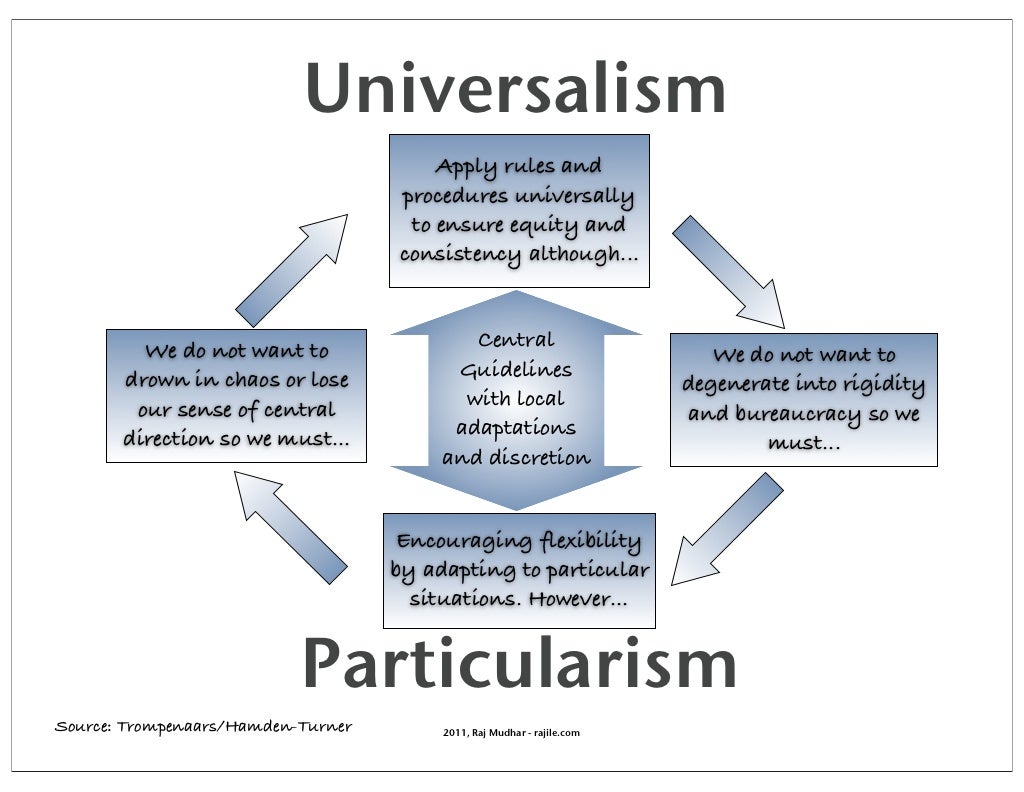
These forces are real and they constantly erode community bonds. This is the truth in the first critique. And yet, communities of family, faith, ethnicity, and locality demonstrably survive. This is the truth in the second critique.
The challenge, then, is not to choose between universalism and particularism, but to manage their interplay.
4. Pathways to Reconciliation
If liberal society contains both associative and dissociative forces, can anything be done to strengthen the former without destroying the liberty that powers the latter? Both Tocqueville and modern commentators offer a similar answer: empower civil society.
Tocqueville's Antidotes
For Tocqueville, the antidotes to individualism and soft despotism were the very things he saw Americans doing so well: forming associations and maintaining religious belief.
Alexis de Tocqueville - Democracy in America | Political Philosophy
Let's return to the Tocqueville video to see his proposed solutions. These are the classic 'particularist' buffers against the universalizing tendencies of the democratic state.
Please watch from 09:56 to 12:29. Focus on the two key institutions Tocqueville believed could combat individualism: civic and political associations, and organized religion. Note his concept of 'self-interest rightly understood.'
These intermediary institutions—clubs, charities, churches, political groups—serve two functions:
- They integrate individuals into communities, giving them a sense of shared purpose.
- They form a buffer, mediating between the individual and the power of the central state.
The Modern Communitarian Correction
Walzer and other modern thinkers like Francis Fukuyama update this idea. They argue that a healthy liberalism doesn't require a strictly neutral state. Instead, the state can and should actively foster the conditions for a vibrant associative life.
Francis Fukuyama provides a robust defense of liberalism against the modern 'postliberal' critique, which echoes the old communitarian complaints. His argument is pragmatic and directly relevant to our analysis.
Please read the following sections from Fukuyama's article: Start with 'However, there is a cogent liberal response...' to the end of that paragraph. Then read from 'The postliberal critique fails...' to '...gods who do not agree with one another.' Finally, read 'Liberalism was created in the 17th century...' to the end of that paragraph. Focus on the core of his argument: liberalism's strength is not in providing one 'strong god' (a single community), but in managing the peaceful coexistence of many.
The reconciliation lies in this insight: Liberalism is the solution to the problem of particularism. In a world with many competing communities and conceptions of the good life ("strong gods"), liberalism provides the meta-framework for them to coexist. The goal is not a single, thick community, but what John Rawls called a "social union of social unions."
This can be achieved through:
- A Robust Civil Society: Freedom of association allows people to form the particularist communities they desire voluntarily.
- A Non-Neutral State (in a limited sense): As Walzer argues, the state can use policy (like the Wagner Act promoting unions, or tax exemptions for religious charities) to solve free-rider problems and make associative life more robust, countering the Four Mobilities.
Test your understanding!
Consider the debate over school vouchers, which allow parents to use public funds for private schooling (often religious).
How would you analyze this policy debate as a trade-off between universal liberal principles and particularist community bonds? Use the ideas of Tocqueville and Walzer in your analysis.
Show answer
This is a classic example of the trade-off.
-
A Liberal/Universalist Argument for Vouchers: Vouchers enhance the universal liberal principle of individual choice and autonomy. They allow parents to choose an education that aligns with their values, treating them as free individuals making choices in a marketplace of options.
-
A Communitarian/Particularist Argument for Vouchers: Vouchers strengthen particularist communities. They allow religious or cultural groups to maintain their own schools, reinforcing their traditions and passing them down to the next generation. From this perspective, a universal public school system can feel like a threat to the community's identity.
-
Tocqueville's Perspective: Tocqueville might be ambivalent. On one hand, he would see these private, often religious, schools as precisely the kind of intermediary associations that form a buffer against the state and combat individualism. They are particularist bonds that create moral character. On the other hand, he might worry that a proliferation of separate schools could undermine the creation of a common American civic identity, leading to a different kind of fragmentation.
-
Walzer's Perspective: Walzer might see state-funded vouchers as a form of "communitarian correction." The state would be using its power (via funding) in a non-neutral way to support particular communities (churches, etc.) and their associative activities (schools). He would argue this is a legitimate way for a liberal state to counteract its own dissociative tendencies and support the social unions that give life meaning. The key would be whether these schools still uphold basic liberal principles (e.g., tolerance, individual rights).
The policy thus sits at the heart of the tension: it uses a universalist mechanism (choice, markets) to support particularist ends (community schools). The debate is about which value to prioritize: the universalist goal of a common civic education or the particularist value of community self-preservation.
Conclusion
Today we have analyzed the fundamental tension between the universalizing drive of liberalism and the human need for particularist community. We've seen that this is not a simple problem with a final solution, but an ongoing balancing act that defines the character of a liberal society.
Key Takeaways:
- Liberalism's core principles of individual rights and equality, while liberating, generate dissociative forces ("The Four Mobilities") that can lead to atomization, social conformity, and an overly powerful state (Tocqueville's "soft despotism").
- Particularist community bonds (family, religion, tradition, place) provide meaning, social cohesion, and crucial buffers between the individual and the state.
- The relationship is a trade-off to be managed, not a choice to be made. A healthy society exists in the tension between these poles.
- The most effective way to manage this trade-off within a liberal framework is to foster a vibrant civil society, where individuals can form voluntary associations. The state can play a role in this, acting with a "communitarian correction" to support associative life without imposing a single conception of the good.
Preview of the Next Lesson:
Now that we have explored this foundational trade-off, we will turn to its concrete institutional expression. In our next lesson, we will compare how different constitutional structures—such as majoritarian versus consensus-based democracies—attempt to balance the universal principle of popular sovereignty against the particular claims of minority rights and community values.