Hello! Welcome to the final lesson of our course, "Think like a buyer."
In our last session, we focused on reactive learning—rewriting copy based on the feedback and data it generated. We saw how to diagnose weaknesses in copy using user quotes and performance metrics, then turn those insights into a more persuasive message.
Today, we shift from a reactive to a proactive approach. Instead of only learning from our own copy, we'll learn from the best examples out there. This lesson is about building a career-long asset that will provide endless inspiration and sharpen your strategic thinking: a personal swipe file.
By the end of our final session, you will be able to curate a personal swipe file by selecting and annotating high-performing B2B copy examples.
What is a Swipe File and Why Do You Need One?
As a copywriter, you're familiar with the concept of a swipe file. But building one for B2B requires a specific focus. It's not just a folder of ads you like; it's a strategic library of dissected marketing arguments.
Let's start with a clear definition and purpose.
The 8 best swipe files on the internet for copywriters & marketers
The article 'The 8 best swipe files on the internet' provides a great introduction to this topic. It explains what a swipe file is, why it's a critical tool for any marketer, and what kinds of assets you should collect.
Please read the first three sections: 'What exactly is a swipe file?', 'Why do you need one?', and 'What should you collect in your swipe file?'. As you read, think about how this concept applies specifically to the B2B world we've been exploring.
A swipe file moves you from "staring at a blank page" to starting with proven frameworks. For a B2B copywriter, this is invaluable. Your goal is to collect examples that effectively navigate the complex B2B buying journey we've discussed throughout this course.
How to Select High-Performing Examples
The quality of your swipe file depends on your ability to distinguish "good" from "bad" B2B copy. A high-performing example isn't just creative; it's clear, buyer-centric, and persuasive. A weak example is often generic, company-centric, and full of jargon.
To sharpen your critical eye, let's watch a teardown of a cold email, a classic B2B copywriting format.
How to Pitch White Label Services? - ✉Cold Email Teardown✉
In this video, 'How to Pitch White Label Services?', Alex Berman breaks down a real cold email, highlights its flaws, and then rewrites it to be much more effective. This is a perfect demonstration of the difference between weak and strong B2B copy.
Watch from 00:33 to 04:34. First, pay attention to the specific reasons why the original email fails (generic subject line, no personalization, wordiness). Then, observe how the rewritten version addresses each of those problems by being specific, personal, and focused on the recipient's interests.
When you encounter copy in the wild, apply the same critical thinking. Ask yourself: Is this like the "before" email or the "after" email? Your swipe file should only contain the "afters."
The Art of Annotation: Go Beyond a Screenshot
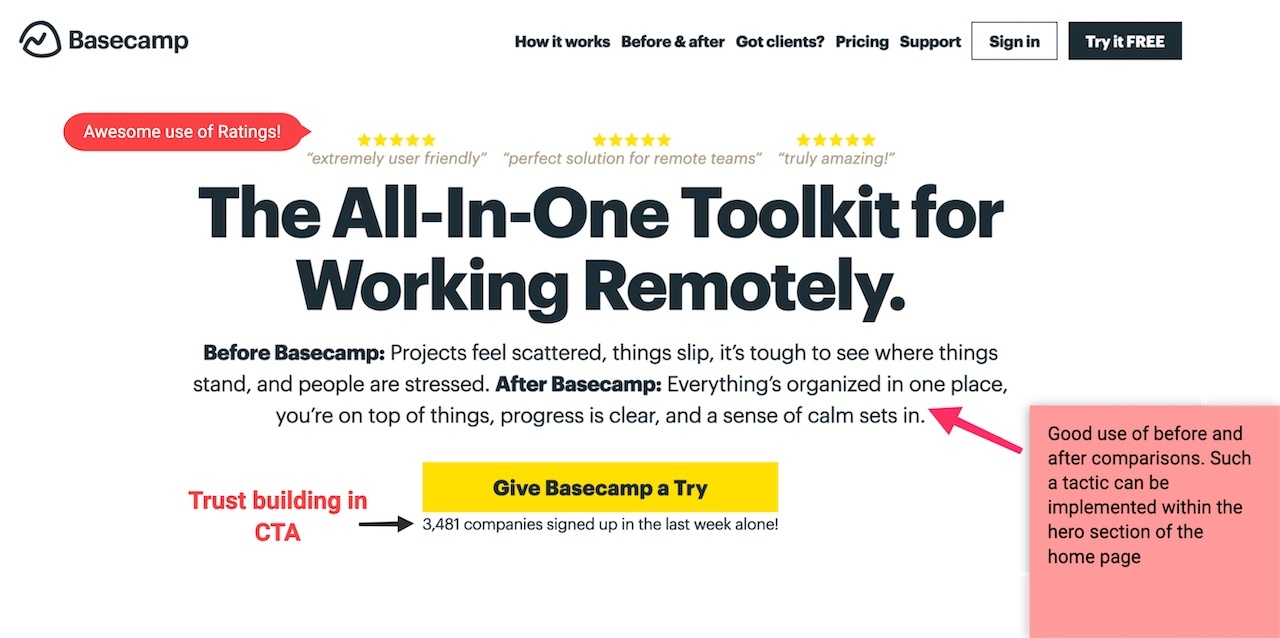
A swipe file of screenshots is a photo album. A swipe file with annotations is a strategic playbook. The value isn't in the example itself, but in your analysis of why it works.
For every piece you save, you should be able to answer three questions:
- WHO is this for? (The Buyer Persona: Their role, industry, and sophistication)
- WHAT is the core message? (The Value Proposition: What problem is being solved or what outcome is being promised?)
- WHY does it work? (The Techniques: Identify the specific persuasion principles at play.)
Here is what a good, simple annotation looks like in practice:
Guided Practice: Let's Annotate Together
Now, let's analyze a B2B email from Stripe.
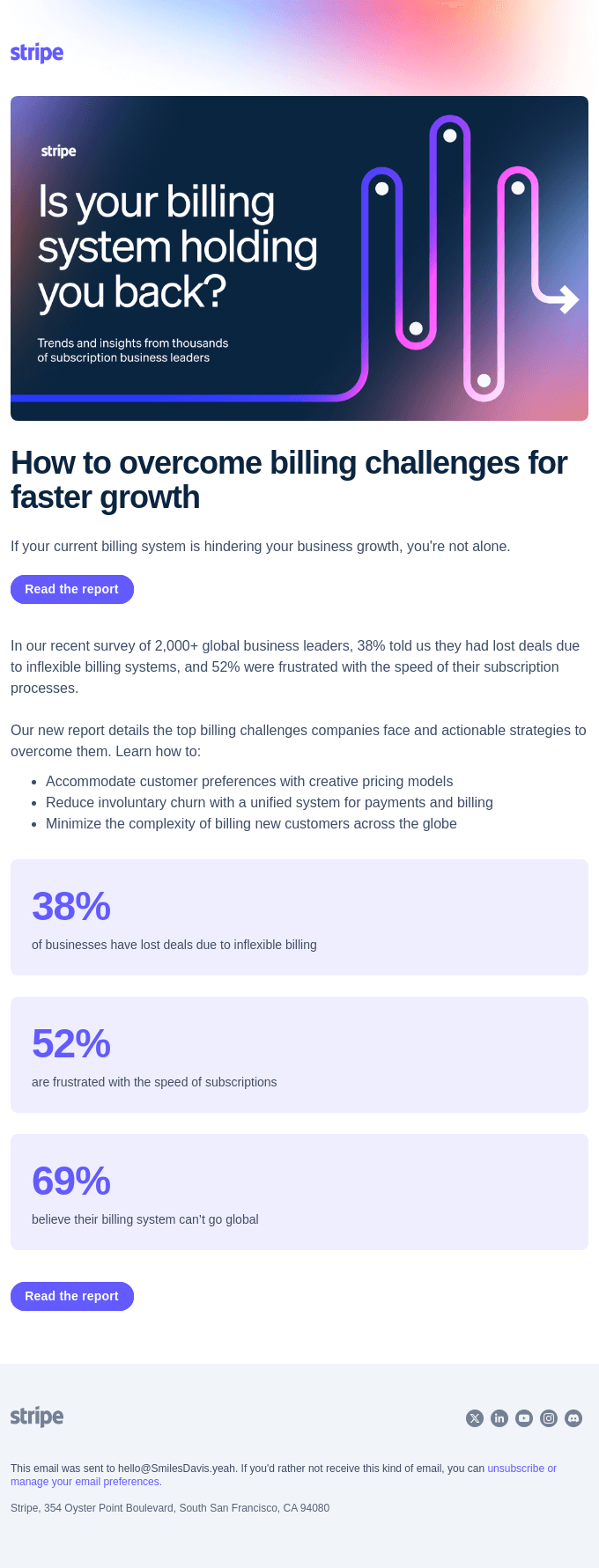
Take a moment to analyze this email using our framework. Think about who they're targeting, what they're offering, and what techniques make the copy compelling.
...
Here's my breakdown:
- WHO is this for? Finance or operations leaders at growing businesses (likely SaaS or eCommerce) who are feeling the pain of a clunky, homegrown billing system.
- WHAT is the core message? Your inflexible billing system is costing you customers and revenue. Our free report gives you actionable strategies to fix it.
- WHY does it work?
- Problem-Agitation: It starts with a relatable question ("Is your billing system holding you back?") and uses powerful statistics (38%, 52%, 69%) to make the problem feel urgent and universal.
- Clear Value: It lists specific, desirable outcomes the reader will get from the report (accommodate preferences, reduce churn, minimize complexity).
- Low-Friction CTA: The call to action is "Read the report," which is a small ask. They're not pushing for a demo or a sales call, which matches the reader's likely stage of awareness.
Your annotations don't need to be long, but they must be specific.
Your Turn: Curate Your First Swipe File Entry
It's time to create your first entry. Case studies are a cornerstone of B2B marketing, making them a perfect asset to analyze.
9 B2B Case Study Examples Worthy of Your Swipe File
The article '9 B2B Case Study Examples Worthy of Your Swipe File' is a fantastic resource. It not only provides great examples but also analyzes why each one is effective, essentially doing the first layer of annotation for you.
Scroll through the 9 examples in the article. Choose ONE that you find particularly compelling. Click the link to view the original case study on the company's website.
Your Task:
Once you have chosen a case study, create a swipe file entry for it. You can do this in a simple document, a note-taking app, or just on paper.
For your chosen case study, write down your analysis using our framework:
- WHO is this for? (Who is the ideal reader of this case study?)
- WHAT is the core message? (What is the one key transformation or result being highlighted?)
- WHY does it work? (Referencing the article's analysis is fine, but add your own observations. What specific headline formula is used? How do they use customer quotes? What data points are most powerful?)
This exercise is the heart of what it means to curate a swipe file. It's an active process of learning, not passive collecting.
Conclusion: Your Journey as a B2B Copywriter
Congratulations on completing the course! From understanding the B2B buyer's journey to testing and iterating your copy, you have built a comprehensive foundation for a successful career in B2B copywriting.
This final lesson isn't an end—it's the beginning of a continuous habit of learning. Your swipe file will be your personal library of excellence, a resource you will turn to again and again.
Key Takeaways:
- A swipe file is a strategic library, not just a folder of screenshots.
- Curate your file by selecting high-performing B2B examples that are specific, personal, and buyer-centric.
- The real value comes from annotating each example to deconstruct why it is persuasive. Use the "Who, What, Why" framework.
Make it a habit to add one new, annotated example to your swipe file each week. As it grows, so will your skill and confidence. You now have the tools and the mindset to not just write copy, but to "think like a buyer" and create B2B copy that truly sells.