Hello! Welcome back to the course.
In our last lesson, you developed a product launch playbook focused on securing initial reviews and using promotional pricing. With your inventory heading to FBA and a strategy in place to build trust, it's time to open the floodgates and drive targeted traffic to your listing.
This lesson directly addresses today's learning outcome: to set up and manage an initial Amazon PPC 'Sponsored Products' campaign to drive launch visibility. While your launch strategy prepares the ground, Pay-Per-Click (PPC) advertising is the engine that generates sales velocity, teaches Amazon's algorithm what your product is about, and pushes you towards that coveted first-page ranking.
Given your experience with Facebook ads, you'll find some familiar concepts here, like bidding and targeting. However, Amazon PPC is unique because it captures customers at the very moment they are searching to buy, making it an incredibly powerful tool.
Why PPC is Critical for a New Product
When your product first goes live, it has no sales history and no organic ranking. It's effectively invisible. As the video from Crescent Kao explains, 70% of all sales happen on the first page of search results. PPC is your ticket to getting seen on that first page from day one.
Amazon PPC 5 Step Strategy for Product Launch | Amazon PPC 2024 Step By Step Tutorial
To understand the fundamental role of PPC in a product launch, watch the beginning of the video 'Amazon PPC 5 Step Strategy for Product Launch' by Crescent Kao. He clearly explains why new products are buried in search results and how PPC solves this problem.
Watch the first 2 minutes and 45 seconds of this video. Focus on the difference between organic placement (based on sales) and sponsored ad placement (based on bids).
The Initial PPC Launch Strategy: Discovery and Targeting
A successful launch strategy doesn't just rely on one campaign. Instead, we will set up a small portfolio of campaigns with two distinct goals:
- Discovery: Use broad, automated campaigns to "listen" to the market. These will uncover the exact search terms customers use to find products like yours.
- Targeting: Use precise, manual campaigns to bid aggressively on the keywords you already know are highly relevant to your product.
This dual approach allows you to capture sales from obvious keywords while simultaneously mining for new, profitable ones.
Step 1: Prepare Your Keyword Lists & Understand Match Types
Before building the campaigns, you need your raw materials: keywords. In Module 2, you used tools like Helium 10 to research and identify product opportunities. Now, we'll use those same tools to create curated keyword lists for our campaigns.
The second core concept is keyword match types. This tells Amazon how closely a customer's search term needs to match your keyword for your ad to be eligible to show.
Amazon PPC 5 Step Strategy for Product Launch | Amazon PPC 2024 Step By Step Tutorial
Crescent Kao's video provides a great hands-on guide for curating your keyword lists and explains the three match types. We'll use his method as our foundation.
Watch from 03:15 to 11:05. Follow these key sections: Keyword Curation (03:15 - 09:02): Pay close attention to how he uses keyword tools to build a comprehensive list and then refines it into three distinct groups: a Master List, a Main Keywords list (your most important, high-intent keywords), and a Relevant Keywords list. This organization is crucial for the strategy we're about to build. Match Types Explained (09:02 - 11:05): Focus on understanding the difference between Exact, Broad, and Phrase match. This is fundamental to controlling your ad spend.
Step 2: Build Your 5-Campaign Launch Portfolio
Now for the hands-on part. We'll follow Crescent Kao's 5-step strategy to create five initial campaigns. This structure is designed to be highly organized, allowing you to easily track performance and make optimization decisions later.
We will begin in your Seller Central account. Navigate to Advertising > Campaign Manager and click Create campaign.
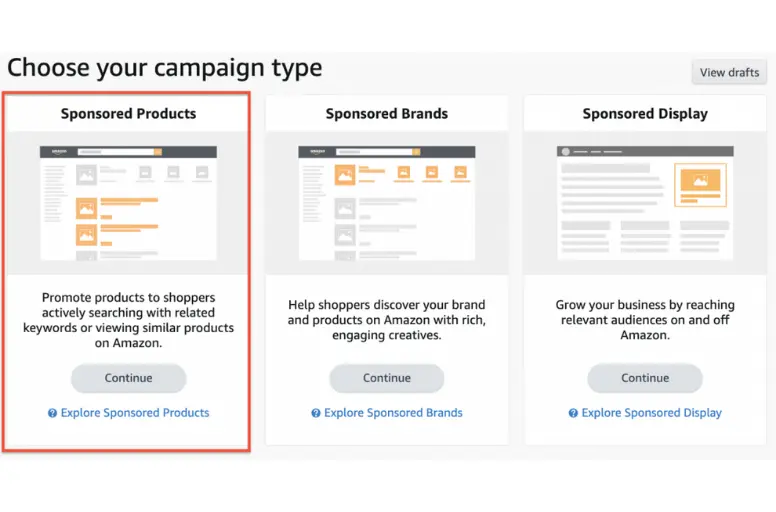
As you create each campaign, adopt a clear naming convention. This will be invaluable as you manage more products and campaigns. A great format is:
[Product Code] - [Campaign Purpose/Keywords] - [Match Type]
(e.g., BW01 - Main Keywords - Exact)
Campaigns 1 & 2: Exact Match Targeting
These campaigns are for surgically targeting your most valuable keywords.
Amazon PPC 5 Step Strategy for Product Launch | Amazon PPC 2024 Step By Step Tutorial
Let's create the first two campaigns using your 'Main' and 'Relevant' keyword lists. These are your high-precision campaigns.
Watch from 11:05 to 16:17. This will guide you through creating: Campaign 1 (11:05 - 15:17): An Exact Match campaign using your 'Main Keywords' list. Pay close attention to his aggressive bidding strategy (overbidding the suggestion) and his 'pro tip' about setting a high daily budget to maximize impressions. Campaign 2 (15:17 - 16:17): An identical setup, but this time using your 'Relevant Keywords' list.
Campaign 3: Broad Match Keyword Testing
This campaign casts a wider net using your 'Master' list to discover variations and long-tail keywords.
Amazon PPC 5 Step Strategy for Product Launch | Amazon PPC 2024 Step By Step Tutorial
Now, let's set up the third campaign. This one uses Broad Match to start the keyword discovery process.
Watch from 16:17 to 16:49. Follow the steps to create a Broad Match campaign using your 'Master' keyword list. Note the more conservative daily budget suggestion ($20).
Campaigns 4 & 5: Automatic Discovery
These last two campaigns delegate the discovery work to Amazon's algorithm, which will analyze your listing and competitors to find relevant search terms and product pages to show your ads.
Amazon PPC 5 Step Strategy for Product Launch | Amazon PPC 2024 Step By Step Tutorial
Finally, we create the two 'discovery' campaigns where Amazon does the heavy lifting to find new opportunities.
Watch from 16:49 to 17:56. This section covers: Campaign 4 (16:49 - 17:28): A Broad Match campaign using Amazon's suggested keywords. Campaign 5 (17:28 - 17:56): A fully Automatic campaign where you give Amazon full control of the targeting.
Test your understanding!
You want to ensure your ad shows up for the search term "waterproof hiking backpack" and only that exact search term. Which campaign type and match type should you use, and which of your curated keyword lists would this term most likely belong to?
Show answer
You should use a Manual Campaign with Exact Match. This keyword would be a core search term for your product, so it would belong in your Main Keywords list.
Step 3: Choosing Your Bidding Strategy
You've seen Crescent Kao recommend an aggressive "Dynamic bids - up and down" strategy to maximize visibility. This tells Amazon it can increase your bid if a click is likely to convert. However, there is an alternative, more conservative approach.
How to set up an Amazon PPC Campaign in 2024 - Step-by-Step Guide
For a different perspective on bidding, watch this short clip from seller Mina Elias. He explains why he prefers a more conservative strategy for better budget control, especially when starting out.
Watch from 05:54 to 06:26. He recommends using 'Dynamic bids - down only'. This strategy allows Amazon to lower your bid if a conversion is unlikely, but it will never raise it above your set amount. This is a great way to control costs during the initial data-gathering phase.
Which bidding strategy should you choose?
- Aggressive ("Up and down"): Use this if your primary goal is to gather data and rank as fast as possible, and you have the budget to support potentially higher costs.
- Conservative ("Down only"): Use this if your priority is controlling your budget and ensuring you don't overspend while you learn which keywords perform best. This is the recommended starting point for most new sellers.
Step 4: Initial Management - Collect Data, Don't Panic
Your campaigns are live. Now what? The single most important thing to do is wait.
Amazon PPC 5 Step Strategy for Product Launch | Amazon PPC 2024 Step By Step Tutorial
Resist the urge to check your campaigns every hour and make changes. Let's hear this advice directly from Crescent Kao.
Watch from 17:56 to 19:19. He stresses the importance of letting the campaigns run for at least 4-7 days to collect enough data to make informed decisions. Also, note his advice on having your listing fully optimized before starting PPC.
During this first week, your goal is not profitability. Your goal is to collect data on:
- Which search terms are getting clicks.
- Which search terms are converting into sales.
After 7-10 days, you will perform your first major management task: Keyword Harvesting. This involves analyzing the Search Term Report from your Automatic and Broad Match campaigns. You will identify customer search terms that led to sales and "harvest" them by adding them as new keywords to your Exact Match campaign. At the same time, you will identify irrelevant search terms that wasted money and add them as negative keywords to prevent future spend.
Amazon PPC Guide: Launch Your First Profitable Campaign
The article 'Amazon PPC Guide' from Flapen provides a clear explanation of this 'Keyword Harvesting' process. This is the fundamental loop of PPC optimization.
Read the sections '5. Track Performance and Harvest Keywords' and '6. Optimize Your Campaign Weekly'. This explains the cycle of analyzing your search term report, moving winning keywords to manual campaigns, and adding poor performers as negatives.
Conclusion
You have now built a sophisticated, multi-campaign PPC structure designed specifically for a new product launch. This setup allows you to bid aggressively on your known top keywords while simultaneously using Amazon's algorithm to discover new customer search behaviors.
Key Takeaways:
- PPC is essential for visibility: It's your way to get on page one from day one.
- Use a structured portfolio: Combine Automatic, Broad, and Exact match campaigns to achieve both Discovery and Targeting.
- Organize your keywords: Separating keywords into 'Main', 'Relevant', and 'Master' lists makes campaign management much more efficient.
- Choose a bidding strategy: Start with 'Down only' for budget control, or use 'Up and down' for more aggressive data collection.
- Be patient: Let your campaigns run for at least a week to collect meaningful data before making any major optimization changes.
Next Up:
Running successful PPC campaigns will increase your sales velocity, which means your inventory will start moving. In our next lesson, we will shift our focus back to operations and learn how to monitor FBA inventory levels and performance using the Inventory Performance Index (IPI). This is critical for ensuring you stay in stock and maintain a healthy seller account.