
Hello! In our last lesson, we explored the materials and principles of bone grafting, establishing the "what" and "how" of Guided Bone Regeneration (GBR). We learned that a graft material acts as a scaffold (osteoconduction), and sometimes a biological stimulus (osteoinduction/osteogenesis), while a membrane creates a protected space for bone to grow.
Today, we'll apply these principles to a specific and common clinical challenge: placing implants in the posterior maxilla. This area presents a unique anatomical obstacle—the maxillary sinus. Your learning outcome for this lesson is to explain the anatomical and mechanical rationale for sinus lift procedures (lateral and crestal approach) to enable implant placement in the posterior maxilla.
We will dissect why this procedure is necessary by examining the anatomy of the upper jaw and how it changes after tooth loss. Then, we will explore the two primary surgical techniques used to solve this problem, connecting them directly to the GBR principles you've already learned.
The Anatomical Problem: A Deficit in Vertical Bone
When posterior maxillary teeth are lost, two simultaneous processes lead to a significant reduction in bone height available for an implant:
- Alveolar Ridge Resorption: As we've discussed, the bone that once supported the teeth resorbs from the crest downwards.
- Sinus Pneumatization: The maxillary sinus, an air-filled cavity lined by a delicate membrane (the Schneiderian membrane), expands downwards into the space previously occupied by the tooth roots.
This "pincer" effect from above and below often leaves insufficient residual bone height (RBH) to place an implant of adequate length for long-term stability.
[Master Course - BASIC] Anatomic Considerations for Implant Dentistry PART 2 -Maxilla
To visualize this anatomical challenge, let's watch a section of the 'Anatomic Considerations for Implant Dentistry' video from OSSTEM. It provides an excellent overview of maxillary bone resorption and the specific anatomy of the sinus.
Please watch two segments from this video: Maxilla Morphology and Bone Resorption (03:02 - 09:15): Focus on the explanation of how bone height is lost in the posterior maxilla after extraction, leading to the necessity of a 'sinus grafting' procedure. Maxillary Sinus Anatomy (16:10 - 21:28): Pay close attention to the description of the sinus shape, the Schneiderian membrane, and the presence of septa (bony walls within the sinus) which can complicate surgery.
This anatomical situation is the core anatomical rationale for a sinus lift procedure. The goal is to reclaim the vertical space lost to the expanding sinus.
The Mechanical Solution: Elevating the Sinus Floor
The sinus lift, or sinus augmentation, is a surgical procedure that elevates the floor of the maxillary sinus (the Schneiderian membrane) and places a bone graft into the newly created space. This is essentially a GBR procedure applied vertically inside the sinus.
The graft material serves as an osteoconductive scaffold, holding the space while the body forms new bone. The elevated Schneiderian membrane acts as the "barrier membrane," separating the graft from the sinus cavity and allowing bone-forming cells to populate the scaffold. The ultimate goal is to create enough vertical bone to securely anchor a dental implant.
The choice of surgical technique depends almost entirely on one key parameter: the Residual Bone Height (RBH).
Evolving Techniques and Trends in Maxillary Sinus Lift ...
The review paper 'Evolving Techniques and Trends in Maxillary Sinus Lift' provides a clear, evidence-based framework for this decision-making process. It's an excellent resource that aligns with your preference for in-depth, peer-reviewed literature.
Please read the 'Abstract', 'Introduction and background', and the section 'Review' up to (but not including) the 'Direct sinus lift technique' heading. Pay special attention to Table 2, which outlines the criteria for choosing a technique based on RBH. This table is central to understanding the clinical decision-making.
As you've just read, the clinical decision is stratified:
- RBH ≤ 5 mm: A more invasive approach is needed to gain significant height. This calls for the lateral window technique.
- RBH > 5 mm: A less invasive approach can be used to gain a smaller amount of height. This is the domain of the crestal (or transalveolar) technique.
Let's examine each approach in detail.
1. The Lateral Window Approach (Direct Sinus Lift)
This technique is used when there is severe vertical bone loss and a large amount of augmentation is required (often > 5 mm). It provides the surgeon with direct visibility of the sinus membrane.
Mechanical Rationale and Procedure
The core idea is to create a "window" in the lateral (cheek-side) wall of the maxilla to access the sinus.
- A flap of gum tissue is raised to expose the bone.
- A small window is carefully cut in the lateral bone wall using a drill or, more precisely, a piezoelectric instrument (which uses ultrasonic vibrations to cut bone without harming soft tissue like the sinus membrane).
- The surgeon gently separates the Schneiderian membrane from the inner surface of the sinus and elevates it upwards. The presence of septa, as mentioned in the video, can make this step more challenging.
- The space created underneath the elevated membrane is packed with bone graft material (often a slow-resorbing xenograft to maintain volume, or a mix).
- The window is typically covered with a resorbable collagen membrane to contain the graft.
- The gum tissue is sutured back into place.
This creates a large, contained graft that will mature into solid bone over 6-9 months, after which an implant can be placed. In some cases with moderate RBH (e.g., 4-5 mm), the implant can be placed simultaneously.
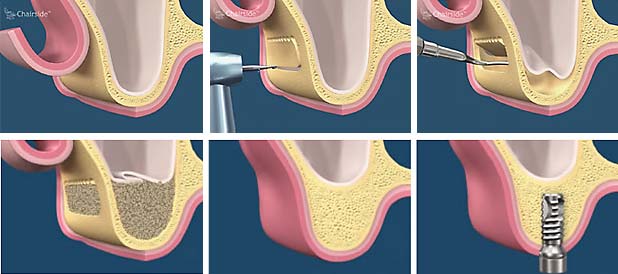
For a detailed procedural description, you can refer to the paper we're using.
Evolving Techniques and Trends in Maxillary Sinus Lift ...
Let's return to the 'Evolving Techniques' paper for a formal description of the lateral window technique.
Please read the section titled 'Direct sinus lift technique'. Note the description of the osteotomy steps and the mention of piezosurgery, which relates to your understanding of applied physics (using frequency and vibration for precise cutting).
2. The Crestal Approach (Indirect Sinus Lift)
This is a less invasive technique suitable for cases where only a small amount of vertical bone height (typically 2-4 mm) needs to be gained. The sinus is accessed "indirectly" through the same channel that is prepared for the implant.
Mechanical Rationale and Procedure
The underlying principle is to use the implant site itself as the access point to push the sinus floor upwards. The classic method was developed by Dr. Robert Summers using osteotomes.
- A pilot hole is drilled through the alveolar crest, stopping about 1-2 mm short of the sinus floor.
- A series of osteotomes (blunt, tapered instruments of increasing diameter) are gently tapped into the hole. This condenses the bone laterally and, in the final step, creates a gentle, controlled fracture of the sinus floor.
- The pressure from the osteotome (and sometimes a small amount of graft material pushed ahead of it) lifts the Schneiderian membrane upwards.
- Bone graft material is packed into the osteotomy site, further elevating the membrane via hydraulic pressure.
- The implant is then placed, with its apex extending into the newly grafted space. The implant itself helps to support the elevated membrane.
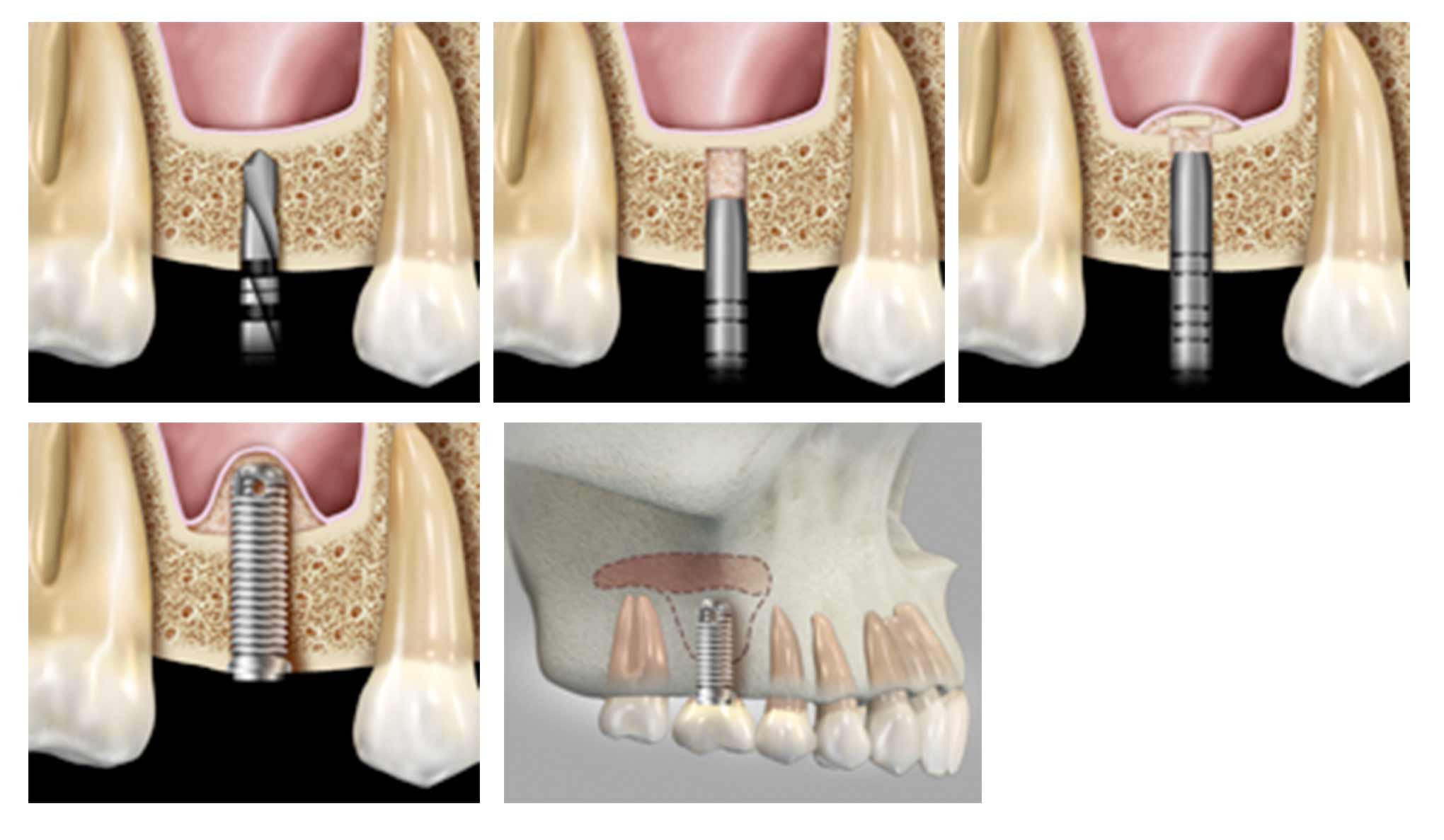
This approach is often called "minimally invasive" because it avoids a large surgical flap and lateral window. Your background in physics and engineering will appreciate the numerous modern variations on this theme, which use different methods to apply a controlled force to elevate the membrane, such as hydraulic pressure (using saline), or osseodensification burs (which use controlled rotation and irrigation).
Evolving Techniques and Trends in Maxillary Sinus Lift ...
The 'Evolving Techniques' paper also provides an excellent summary of the indirect approach and its many innovative modifications.
Please read the section 'Indirect sinus lift technique'. Focus on the general steps of the classic osteotome technique. You might also find the descriptions of modifications like the hydraulic pressure technique and osseodensification interesting, as they represent different engineering solutions to the same mechanical problem.
Test your understanding!
A CBCT scan reveals a patient has 4 mm of residual bone height in the posterior maxilla. The plan is to place a 10 mm long implant. Which sinus lift approach would be indicated, and why? What is the primary risk associated with the membrane elevation step in this procedure?
Show answer
With only 4 mm of RBH, a lateral window approach would be indicated. The goal is to gain at least 6-7 mm of bone height (to place a 10 mm implant with a safety margin), which is beyond the predictable capability of the crestal approach. The lateral approach allows for direct visualization and the large augmentation required. The primary risk during membrane elevation in either technique, but especially during the delicate dissection in a lateral lift, is perforation of the Schneiderian membrane.
Comparing the Two Approaches
| Feature | Lateral Window Approach | Crestal Approach |
|---|---|---|
| Indication | Severe bone loss (RBH ≤ 5 mm) | Mild-to-moderate bone loss (RBH > 5 mm) |
| Bone Height Gain | Significant (can be > 9 mm) | Limited (typically 2-4 mm) |
| Invasiveness | More invasive (large flap, bone window) | Minimally invasive (access through implant site) |
| Visualization | Direct view of the membrane | "Blind" procedure |
| Complication Risk | Higher risk of large membrane perforation, more post-op swelling and discomfort. | Lower risk of perforation (if done correctly), less post-op morbidity. |
| Simultaneous Implant | Possible if RBH is ~4-5 mm; otherwise, delayed placement. | Implant is almost always placed simultaneously. |
Conclusion
In this lesson, you've learned how the unique anatomy of the posterior maxilla necessitates a specialized bone grafting procedure—the sinus lift—to enable implant placement.
Key Takeaways:
- Anatomical Rationale: The combination of alveolar bone resorption and maxillary sinus pneumatization after tooth loss reduces the available bone height.
- Mechanical Rationale: A sinus lift procedure mechanically elevates the Schneiderian membrane to create a new, more coronal sinus floor, and a bone graft is used to fill this space, augmenting the vertical bone dimension.
- Two Primary Approaches: The choice between techniques is dictated by the amount of Residual Bone Height (RBH).
- The Lateral Window Approach is for significant augmentation (RBH ≤ 5 mm), offering direct vision but with greater invasiveness.
- The Crestal Approach is for smaller augmentations (RBH > 5 mm) and is minimally invasive but performed without direct vision.
Next Lesson Preview:
Now that we understand how to prepare a site with sufficient bone (whether through GBR or a sinus lift), we need to consider surgical timing. The next lesson will focus on surgical strategy, where you will analyze the decision-making criteria for choosing between a one-stage (non-submerged) and two-stage (submerged) surgical protocol. This decision is closely linked to the quality of the bone and the primary stability achieved at the time of implant placement—concepts that are directly influenced by the augmentation procedures we've just discussed.
Can't find a good explanation? Sign up and we'll make it for you
Sign up