
Hello! Welcome back to your second lesson in the "UX refresher for edtech strategy" course.
Introduction
Today's Focus: Mapping UX Priorities to EdTech Revenue Models
This lesson addresses the second learning outcome: Visually map how key UX design priorities and feature sets differ across distinct EdTech revenue models (e.g., subscription, marketplace, B2B licensing).
In our last session, we established a framework for linking UX principles to both pedagogical and business goals. Today, we will zero in on that business pillar. The specific way an EdTech product makes money—its revenue model—profoundly influences its entire user experience. Your ability to align design decisions with the commercial strategy is a hallmark of a strategic UX leader.
By the end of this lesson, you will be able to articulate and visually map how and why the UX of a subscription service like MasterClass must differ from a marketplace like Udemy or a B2B platform like Canvas.
Estimated Time to Complete: 55-60 minutes.
Quick Recap: In our previous lesson, we framed UX in EdTech as a balance between user desirability, business viability, and pedagogical efficacy. We practiced linking core UX principles to both a learning goal and a business objective. Today, we'll see how different business objectives demand different UX priorities.
1. The Landscape of EdTech Business Models
Before we can map UX priorities, we need to understand the underlying business models. While many hybrids exist, most EdTech products are built around a few core revenue strategies. The learning outcome specifically asks us to look at subscription, marketplace, and B2B models. We'll also include the "freemium" model, as it's a dominant strategy for user acquisition.
Please read the following sections from the article below to familiarize yourself with the mechanics, pros, and cons of each model.
(Reading: 15 minutes)
From Top Edtech Business Models in 2025 You Should Know by Tran Tran:
- Section 1: Subscription-as-a-Service (SaaS) Model
- Section 2: Marketplace Model
- Section 3: Freemium Model
- Section 4: B2B Enterprise Sales Model
Focus on understanding the core driver of each model:
- Subscription: Predictable, recurring revenue for continuous access.
- Marketplace: Commission on transactions between learners and content creators.
- Freemium: Massive user acquisition with a goal of converting a small percentage to paying customers.
- B2B Licensing: High-value, long-term contracts with institutions (schools, companies).
2. How Revenue Models Dictate UX Priorities
Now, let's connect these business models directly to UX strategy. Your job as a designer is to create an experience that not only serves the user but also drives the core commercial goal of the chosen model.
-
Subscription (SaaS) Model:
- Goal: Maximize Customer Lifetime Value (CLV) by minimizing churn.
- UX Priority: Demonstrate ongoing value and foster deep engagement. The user must feel their recurring payment is justified month after month.
- Key Features: Personalization engines, new content notifications, community features, clear progress tracking, and loyalty rewards.
-
Marketplace Model:
- Goal: Facilitate successful transactions and build a critical mass of both buyers (learners) and sellers (creators).
- UX Priority: Build trust and facilitate discovery. The platform must feel credible, and users must be able to easily find what they need.
- Key Features: Robust search and filtering, prominent ratings/reviews, instructor profiles, secure payment flows, and tools for creators to manage their content.
-
B2B Licensing Model:
- Goal: Secure and retain high-value institutional contracts.
- UX Priority: Serve two distinct users: the administrative buyer and the end-user learner/instructor. The UX for the buyer, who makes the purchasing decision, is as important as the UX for the end-user.
- Key Features: For buyers: admin dashboards, ROI reporting, user management tools, and security compliance documentation. For end-users: seamless single sign-on (SSO), integration with existing systems (like an LMS), and simple, scalable interfaces.
-
Freemium Model:
- Goal: Convert free users to paying customers.
- UX Priority: Design a compelling and persuasive conversion funnel. The free experience must be valuable enough to hook the user, but limited enough to make the premium offering highly desirable.
- Key Features: Strategic paywalls, "teaser" content, clear communication of premium benefits, and prominent "Upgrade" calls-to-action (CTAs).
This image of the "Teachly" dashboard is a perfect example of a freemium/subscription UX in action. Notice the onboarding guide for free users alongside the prominent CTA and discount offer to upgrade to a paid plan.
 The dashboard is designed to guide free users while constantly reminding them of the value of upgrading, a core UX pattern in freemium and tiered subscription models.
3. Activity: Visually Mapping Models to UX
This is your main task for today. Using the concepts we've just discussed and the information from the resources, you will create a visual map. This map will directly fulfill the learning outcome by connecting each revenue model to its goals, UX priorities, and resulting feature sets.
Your Task (20 minutes):
Create a table with the following columns. I have filled in the "Freemium" row as an example to guide you. Complete the table for the Subscription, Marketplace, and B2B Licensing models.
| Revenue Model | Primary Business Goal | Key UX Priority | Example UX Features & Patterns |
|---|---|---|---|
| Freemium | Convert free users to paying customers. | Design a persuasive conversion funnel. | Onboarding that teases premium features, usage limits (e.g., "3 hearts left"), prominent "Upgrade" CTAs, ad-supported experience. |
| Subscription (SaaS) | |||
| Marketplace | |||
| B2B Licensing |
Helpful Resources for this Activity:
- The sections you read in Top Edtech Business Models in 2025 You Should Know. The comparison table at the end is an excellent summary.
- The article Successful EdTech Apps Case Studies Key Insights and .... The sections "Freemium vs. Subscription" and "Partnerships with Educational Institutions" provide great context for this task.
This pricing table image illustrates how tiered subscriptions are presented to users. The UX of this page is to clearly differentiate value to guide the user to the "Most popular" option.
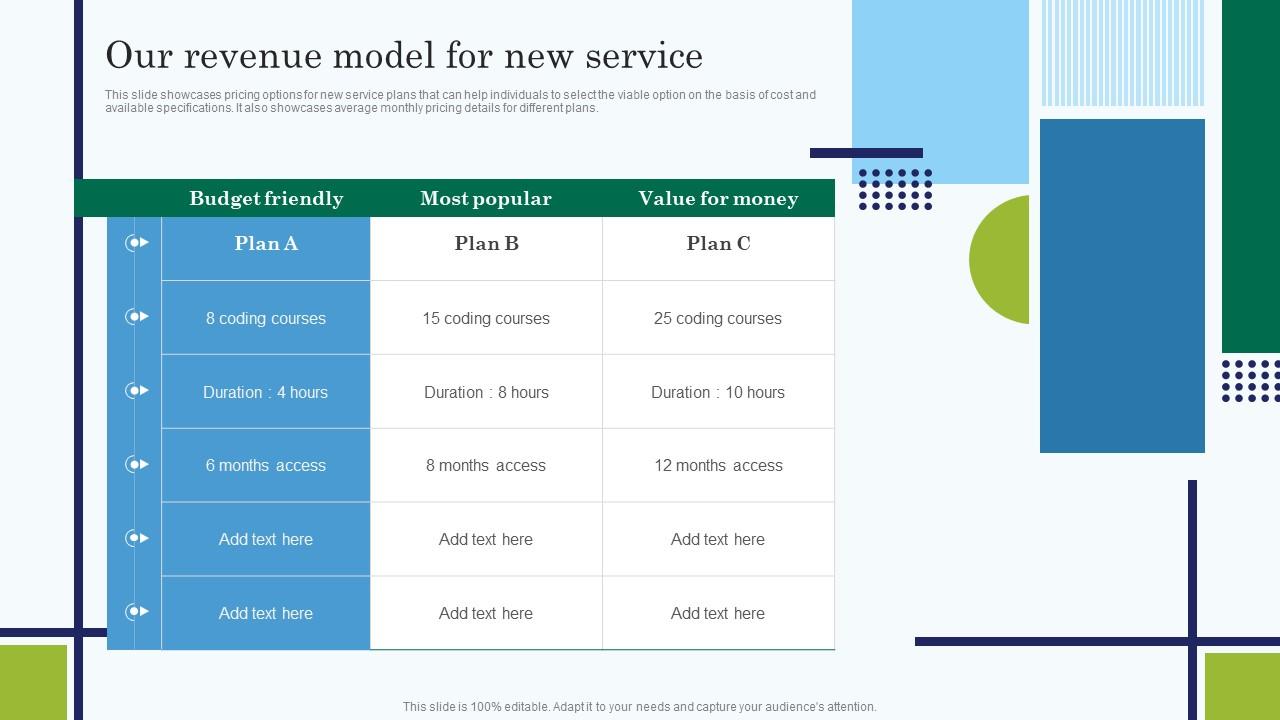 A typical pricing page UX, designed to compare features and nudge users toward a specific plan. This is crucial for both Subscription and Freemium models.
Conclusion
Great job! By completing the mapping exercise, you've created a strategic blueprint that connects high-level business models directly to tangible UX features. This is a crucial skill for moving from a pure design role to a product strategy role.
Key Points Summary:
- An EdTech product's revenue model is a primary driver of its UX strategy.
- Subscription models prioritize UX features that demonstrate ongoing value and drive retention (e.g., personalization, community).
- Marketplace models prioritize UX that builds trust and facilitates discovery (e.g., reviews, search).
- B2B models require a dual-focused UX that serves both the institutional buyer and the end-user (e.g., admin dashboards, seamless integration).
- Freemium models structure their UX as a conversion funnel, balancing free value with compelling reasons to upgrade.
Preview of the Next Lesson:
We've now established the what (core UX principles) and the how (linking them to business models). In the next lesson, we will put it all together in a detailed case study. We will deconstruct the user experience of a successful B2C EdTech product (e.g., Duolingo) to visually map its UX features to its underlying freemium business model and pedagogical strategy. Today's work on the freemium model provides the perfect foundation for this deep dive.
Can't find a good explanation? Sign up and we'll make it for you
Sign up