
Welcome. This seven-day course begins before you draw or animate anything: with deciding exactly what a viewer should gain from a very short video. A polished motion-graphics explainer can make a complicated mechanism feel intuitive, but it cannot rescue a vague idea.
In this opening module, you will plan an engineering explainer before opening VectorMotion. By the end of this lesson, you will have a practical Audience & Promise Brief: a specific beginner viewer, a single learning promise, and a short throughline that can guide every later decision about research, script, visuals, and animation. Plan for about 40 minutes.
Start with a viewer, not a subject
“People interested in engineering” is not an audience. It is a category containing viewers with radically different starting points: a school student curious about bridges, a technician diagnosing a pump, and an engineering undergraduate studying fluid mechanics. The same 45-second animation would be too slow for one, too technical for another, and irrelevant to a third.
For this course, a beginner-friendly audience is defined by what viewers can reasonably bring to the video and the question that made them click. It is not defined by calling them “beginners” and then lowering the quality of the explanation.
A useful audience statement has four parts:
- Who they are in context: for example, school-level science learners, curious adults, or first-year technical students.
- What they already know: everyday observations or simple science, not specialist terminology.
- What they do not yet know: the engineering mechanism you will explain.
- Why they care now: a recognizable question, surprise, or problem.
For a channel built around visual engineering explanations, a strong starting hypothesis could be:
Curious viewers with school-level science but no formal engineering training, who want clear answers to “How does that everyday technology work?”
That is still broad enough for a channel, but specific enough to make production decisions. For this audience, you would:
- begin with a visible everyday effect rather than a textbook definition;
- explain new terms when they first matter;
- use arrows, simple labels, and motion to show cause and effect;
- avoid assuming formulas, component acronyms, or prior engineering vocabulary;
- preserve the real mechanism rather than replacing it with a misleading metaphor.
The YouTube Creators clip below makes one central planning point: decide whether the intended viewer is a complete newcomer or already has experience before deciding what the video needs to say.
YouTube pros share 5 steps for getting your educational channel started
Watch “YouTube pros share 5 steps for getting your educational channel started” from YouTube Creators. It offers a concise reminder that the intended viewer’s prior knowledge should shape the content.
Watch target viewers. Notice that the useful distinction is not merely demographic; it is whether viewers arrive as complete beginners or with prior familiarity. Apply that distinction to engineering knowledge in your Audience & Promise Brief.
A vague and a useful audience statement can look very similar at first:
| Too vague to guide a video | Specific enough to guide choices |
|---|---|
| “Anyone who likes science.” | “Curious school-science learners who have never studied structures and wonder why bridges contain visible gaps.” |
| “People who want to learn about engines.” | “Everyday car users who recognize an engine but do not know why a gearbox changes turning force and speed.” |
| “Engineering students.” | “First-year learners who know basic electricity but have not yet encountered how a DC motor produces rotation.” |
Do not invent false precision, such as an exact age range or profession, unless it genuinely changes the explanation. The real test is practical: can you predict what terms, examples, and visuals this person will understand without additional teaching?
Turn a viewer need into one learning promise
Your learning promise is the one capability a viewer should leave with. It is a contract: if someone watches attentively, what can they now do that they could not do before?
The promise is not “covering a topic.”
- “How bridges work” is a topic.
- “Viewers can explain why bridges need expansion joints” is a learning promise.
The distinction matters because a topic expands without limit, while a promise gives the video a boundary.
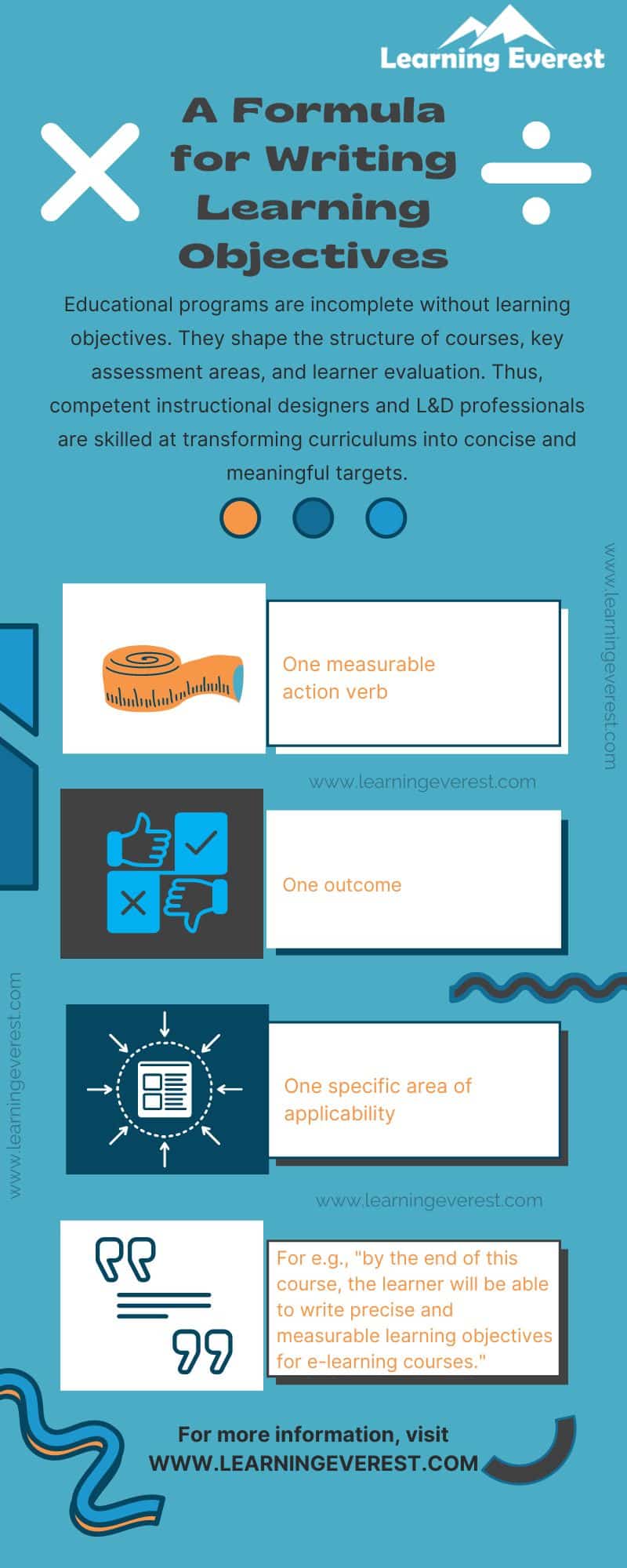
Use this structure:
After this 30–60 second video, [specific audience] can [observable action verb] [one mechanism or relationship] in [a defined context].
For example:
After this 45-second video, curious school-science learners can explain why bridge expansion joints allow a deck to change length as temperature changes.
This promise has a clear audience, an action that a viewer could demonstrate, one central relationship, and a concrete context.
Choose verbs that show what changed
Avoid promises built around understand, know, or learn about. They sound positive but do not tell you what successful learning looks like. In a short engineering explainer, the most useful verbs are usually:
| Verb | What the viewer should be able to do | Suitable use |
|---|---|---|
| Identify | Point out a component or effect | “Identify the compressor in a jet-engine diagram.” |
| Describe | State what happens in a sequence | “Describe how a heat sink moves heat away from a chip.” |
| Trace | Follow material, force, or energy through a system | “Trace energy from a wind turbine rotor to a generator.” |
| Explain | Give a concise causal reason | “Explain why a larger gear trades speed for turning force.” |
| Predict | Apply the mechanism to one simple situation | “Predict what happens to a bridge joint when the deck warms.” |
For a first video, explain and trace are particularly effective. They encourage visuals that show a causal chain rather than a static list of parts.
Read the following sections for the instructional-design reasoning behind this approach.
Establishing Learning Goals and Outcomes – Instruction in Libraries and Information Centers
Read “Establishing Learning Goals and Outcomes” from the University of Illinois’s Instruction in Libraries and Information Centers. Its principles apply directly to a short explainer: the result must fit the audience, the available time, and an observable action.
Under the “Writing Outcomes” heading, read the criteria for effective outcomes. Focus on the three requirements: a stated end result, an appropriate audience and time frame, and measurability. Then, in the “Using Active Verbs” subsection, read the active-verb discussion. Pay particular attention to why “understand” is too vague and how verbs such as “explain” and “apply” make an outcome concrete.
A viewer-facing title may later be more conversational, such as “Why Do Bridges Have Gaps?” The internal learning promise stays more precise:
Viewers can explain how temperature-driven length change makes expansion joints necessary.
The title attracts attention; the promise keeps the video honest and focused. You need both eventually, but the promise comes first.
Give the whole video one throughline
A throughline is the central idea that connects every shot, line of narration, and sound cue. It prevents a short explainer from becoming a rushed collection of loosely related facts.
For the bridge-joint example, a throughline could be:
Heat changes a bridge deck’s length, so joints give it room to move.
That is the idea the viewer should remember. The video could show a hot deck lengthening, the gap narrowing, and the damage that rigid restraint could cause. It would not need to explain every type of bridge, the history of expansion joints, material specifications, construction methods, or maintenance procedures. Those may be interesting, but they do not serve this promise.
The TED-Ed video uses “throughline” for talks, but its guidance is especially important when your entire explanation lasts less than a minute.
Watch “How to communicate clearly” from TED-Ed. This segment explains why a constrained presentation becomes stronger when it develops one idea rather than skimming many.
Watch scope choice for the case against cramming many subjects into a short format. Then watch throughline test, especially the suggestion to express the core idea in fifteen words or fewer. Draft a short throughline for your own promise as you watch.
For a 30–60 second animation, apply a strict scope test. Your promise is probably workable if you can explain it with:
- one main question the viewer recognizes;
- one central mechanism or causal relationship;
- a small set of visible components, rather than a full system diagram;
- one main consequence the viewer can remember;
- three or fewer reasoning moves.
For instance, “How does an electric car work?” fails this test: it contains batteries, motors, controllers, charging, braking, cooling, drivetrain design, and more. It is a series, not a short explainer.
“Why does regenerative braking recharge the battery?” is narrower, but still needs careful research and may require several components. “How can a motor become a generator during braking?” is a tighter mechanism-centered promise. In the next lesson, you will choose and verify a topic more systematically; for now, recognize the difference between a broad subject and one visualizable mechanism.
A useful warning sign is a promise containing several unrelated “and” clauses:
“Viewers will understand how solar panels work, how batteries store energy, and how homes use electricity.”
That is three different learning promises. In contrast, this is one linked relationship:
“Viewers can explain why a larger gear turns more slowly but with greater turning force.”
It includes two effects, but they are consequences of the same mechanical tradeoff.
Respect the time limit
At a clear narration pace, a 30-second video may hold roughly 65–75 spoken words; a 60-second video may hold roughly 130–150. Pauses, emphasis, and time for viewers to read labels reduce that usable space further.
This is why your promise should be narrow before you write. A short video earns clarity by leaving things out deliberately, not by speaking faster. Every sentence, visual object, and animation should reinforce the throughline. If an appealing fact does not support it, save that fact for another video.
Create your Audience & Promise Brief
Create a single note in your project folder or phone notes app. This is the planning document that will travel with you into research, scripting, storyboard work, and animation.
Use the following format.
Working video question:
[Example: Why do bridges have gaps?]

Audience:
[Who they are, what they already know, and what they are curious about.]

They already know:
[Everyday observation or simple science you can begin with.]

They do not yet know:
[The precise mechanism or relationship.]

Single learning promise:
After this [30–60]-second video, [audience] can [active verb] [one mechanism] in [context].

Throughline, 15 words or fewer:
[The one idea every shot must reinforce.]

Scope boundary:
This video will not explain [related but separate topic].

Success evidence:
A viewer could [say, point out, trace, or predict one visible result].
Here is a completed example:
Working video question:
Why do bridges have gaps?

Audience:
Curious school-science learners with no structural-engineering background
who notice gaps in bridges and want to know their purpose.

They already know:
Objects can feel hotter or colder, and bridges are made from solid materials.

They do not yet know:
A long bridge deck can change length as temperature changes.

Single learning promise:
After this 45-second video, viewers can explain why bridge expansion joints
allow the deck to change length as temperature changes.

Throughline:
Heat changes deck length, so joints make room for movement.

Scope boundary:
This video will not explain bridge types, construction, or every joint design.

Success evidence:
A viewer can describe what happens to the gap when the deck warms.
Write your first version quickly, then apply three checks:
- Audience check: Could you name what this viewer knows and does not know without guessing?
- Promise check: Does the promise contain one observable action and one mechanism?
- Deletion check: Can you name a tempting related detail that belongs in a later video instead?
Do not worry yet about finding the perfect topic. A working brief is meant to be revised after research. Its purpose now is to stop a broad, attractive idea from quietly turning into an unmakeable 60-second project.
Key takeaways
A successful short engineering explainer begins with a defined viewer and one learning promise, not a large topic. Define the audience by prior knowledge, missing knowledge, and a real question they want answered. Then state a promise using a precise action verb such as explain, trace, or predict.
Keep the promise small enough to support one throughline. If a fact, visual, or animation does not reinforce that central idea, it belongs in another video. Your completed Audience & Promise Brief is now the constraint that will make later drawing and animation decisions easier rather than more restrictive.
Next, you will select an engineering topic that can genuinely be explained through one central mechanism or process—and distinguish a promising short-video idea from a subject that needs a series.
Can't find a good explanation? Sign up and we'll make it for you
Sign up