Hello! Welcome back to your course on game theory for entrepreneurs.
In our last lesson, we explored the crucial difference between making empty claims ("cheap talk") and taking costly, believable actions ("credible signals"). We established that to overcome the challenge of asymmetric information—where you know your quality but your customers don't—you must signal that quality through your actions.
Today, we're going to analyze two of the most powerful and practical signals at your disposal: premium pricing and warranties. Your learning outcome for this lesson is to analyze how actions like premium pricing and warranties can signal high quality to customers. We will explore the game theory logic that explains why a higher price can sometimes attract more customers and how a strong warranty acts as a definitive proof of quality, directly helping you build the premium brand you envision for your woodworking business.
1. Premium Pricing: More Than Just a Number
It seems counterintuitive, but in a market where quality is uncertain, a higher price can be a powerful signal of superiority. Price isn't just what a customer pays; it's a message you send about your product's value.
A low-quality producer simply cannot sustain a high price for long. Once customers discover the poor quality, they won't make repeat purchases, and negative word-of-mouth will spread. For them, the best strategy is to sell at a low price to move as much product as possible before their reputation catches up.
In contrast, when you set a high price, you are making a confident bet on long-term customer satisfaction. It's a signal that says, "I know my product is worth this price because its quality will be evident, leading to happy customers and a strong reputation."
This relationship between price and quality is often visualized in a pricing matrix.
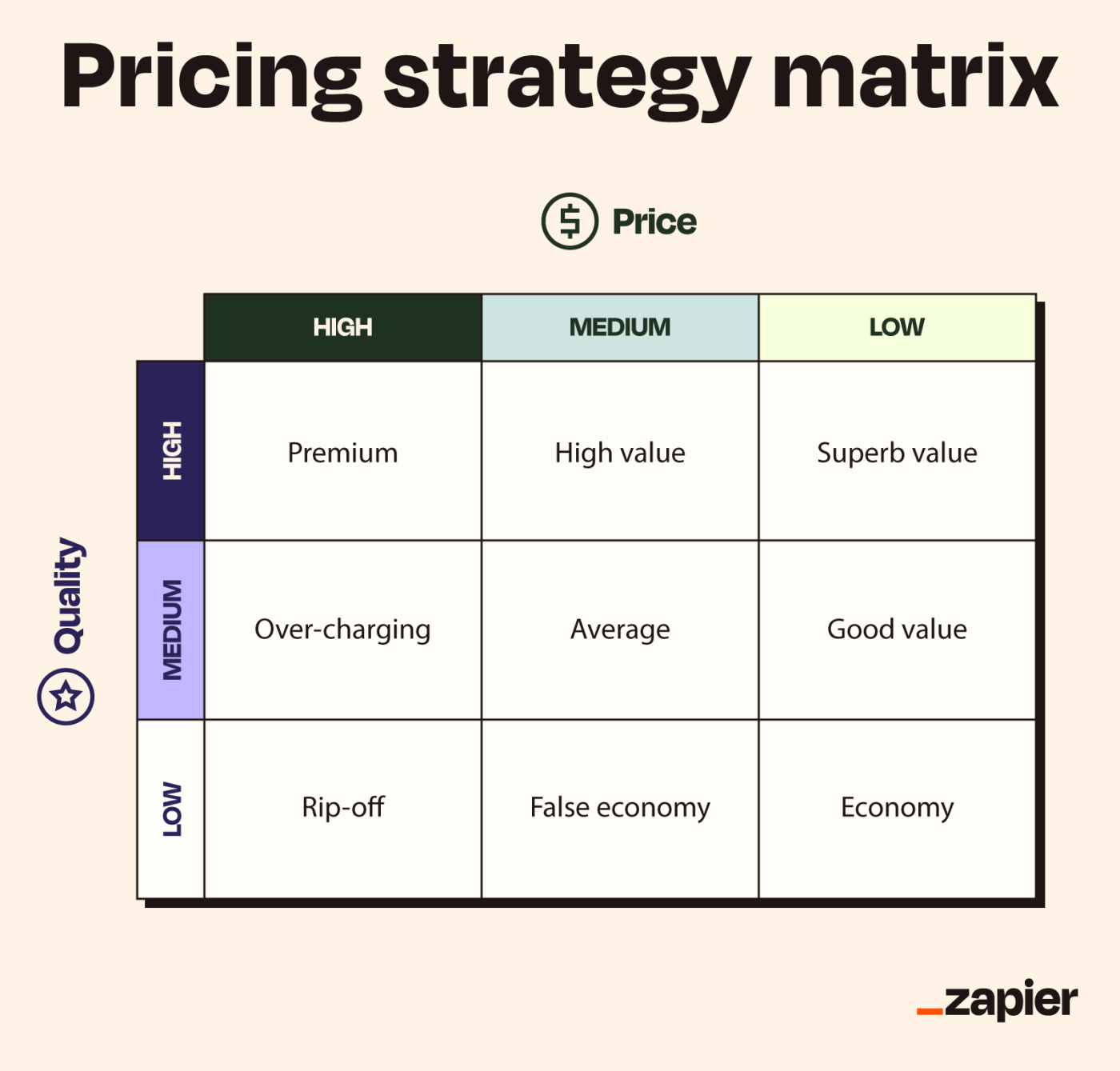
To succeed with this strategy, the price signal must be consistent with the actual product experience.
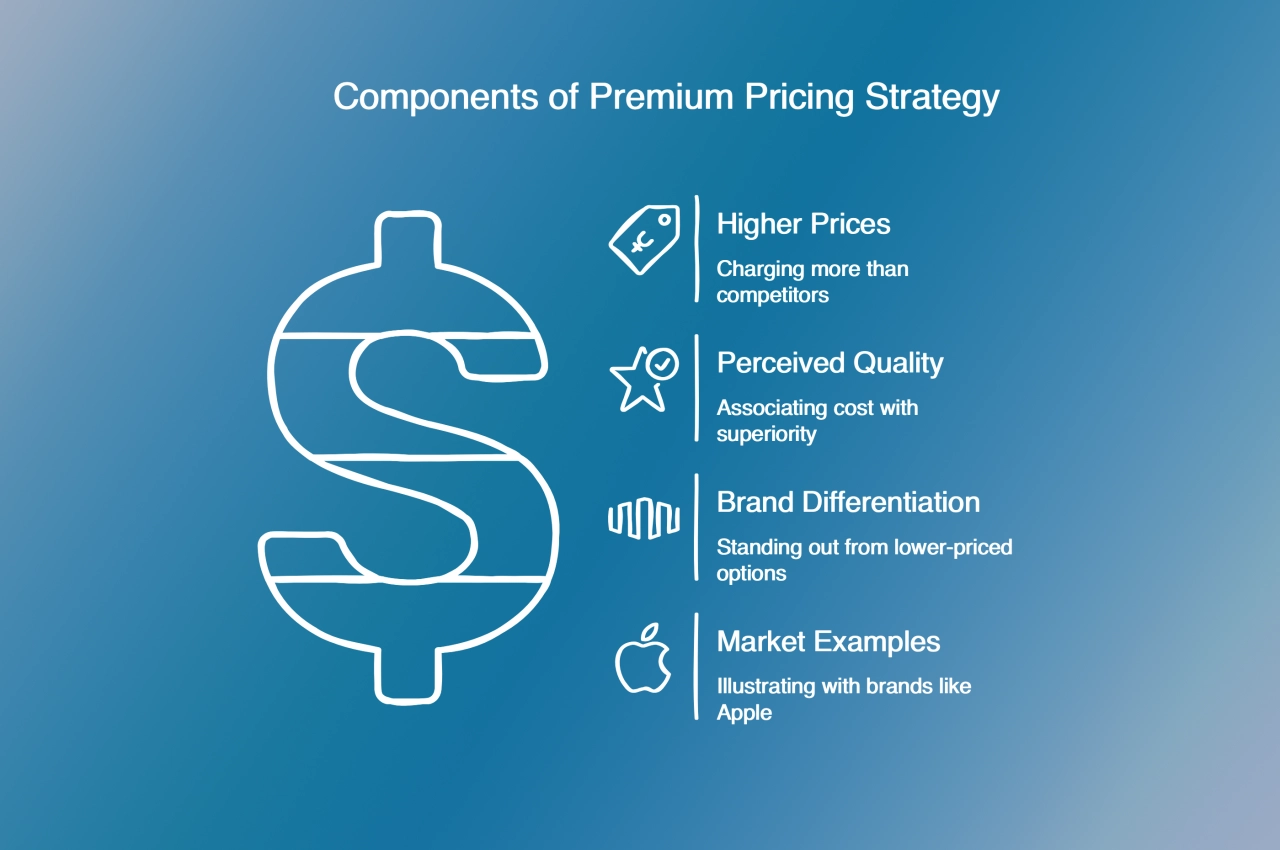
Let's look at a practical article written for woodworkers that touches on this very idea.
How to Price Woodworking Projects: 5 Profit-Boosting ...
The article 'How to Price Woodworking Projects' from Woodcraft Blueprint gives direct advice to artisans. It has a section that perfectly captures the signaling power of price.
Please read the short section titled '3. Fearing Price Increases'. Notice how the author observes that raising prices can actually increase demand by signaling higher value. This is a real-world application of the signaling principle in your specific field.
The article confirms that this is not just a theoretical concept; it's a recognized business practice in your industry. A higher price can shift customer perception from seeing your work as a commodity to seeing it as a premium investment.
To see this effect in action with a concrete example, let's examine a case from a different industry.
Prisoner's Dilemma: Why Price Competition Is a Game You ...
The article 'Prisoner's Dilemma: Why Price Competition Is a Game You ...' provides a fantastic, concise example of price signaling quality.
Please read the first paragraph of the section 'Implementing the IDEAL Framework: Testing for Optimal Pricing.' Focus on the tennis racquet example and the surprising outcome of a price increase.
The tennis racquet example is a perfect illustration. The 12% price increase didn't deter customers; it attracted the right customers—serious players who interpreted the higher price as a signal of higher quality, leading to an 8% increase in sales. This is exactly the dynamic you want to create for your premium doors and cabinets.
2. The Warranty: A Costly, Credible Promise
In the last lesson, we briefly touched on the Hyundai warranty. Let's now formalize why a warranty is one of the most effective signals of quality.
A warranty is a promise, but it's not cheap talk. It's a costly commitment that is asymmetrically expensive for producers of different quality levels.
- For a high-quality producer (like you): Offering a 10-year warranty on your cabinets is a low-risk proposition. You use superior materials (solid wood, high-grade plywood) and robust construction techniques. You are confident that very few units will fail, so the expected cost of honoring the warranty is minimal.
- For a low-quality producer: Offering the same 10-year warranty would be a suicidal business decision. Their cabinets, made from cheaper materials like particleboard with low-grade hardware, are likely to fail within that timeframe. The cost of replacements and repairs would quickly bankrupt them.
Because the low-quality producer cannot afford to mimic the signal, the warranty becomes an exceptionally credible indicator of durability and quality. It separates you from the competition in a way that words never could. A client choosing between your cabinet with a 10-year warranty and a competitor's with a 1-year warranty has received a very clear signal about which product is built to last.
Test your understanding!
You are deciding on the warranty for a new line of custom front doors. You have two options:
Option A: Offer a standard 2-year "craftsmanship" warranty that covers obvious defects present upon installation.
Option B: Offer a 7-year "performance" warranty that explicitly covers issues like warping beyond a certain tolerance and failure of the finish (e.g., peeling or bubbling).
Which option is a more credible signal of high quality, and why?
Show answer
Option B is the far more credible signal.
- Option A is close to cheap talk. Most major defects will show up quickly, and the "craftsmanship" language is vague. A low-quality producer could likely afford to offer this, as it doesn't cover the long-term failures that truly differentiate quality levels.
- Option B is a costly and specific commitment. Warping and finish failure are the primary risks for exterior doors. By guaranteeing performance against these specific, long-term issues, you are signaling immense confidence in your materials, joinery, and finishing process. A competitor using inferior materials or techniques would not dare to offer such a warranty because the financial risk would be too high.
3. Combining Signals for a Coherent Brand Story
While pricing and warranties are powerful signals on their own, their true strength is realized when they are combined with other signals to create a consistent and believable narrative about your brand. A customer may be skeptical of one signal, but a chorus of reinforcing signals is hard to ignore.
Imagine a potential customer for a new kitchen. They see:
- Your premium price, which sets a high expectation.
- Your 10-year performance warranty, which backs up the price with a commitment.
- Your website, which showcases the high-end CNC machinery you've invested in (a signal of precision and commitment).
- Your quote, which explicitly lists the use of premium materials, like Blum drawer slides and sustainably-sourced hardwood (a signal of transparency and quality).
No single signal tells the whole story, but together they paint a powerful and convincing picture of a premium brand that justifies its price. Let's look at a case study of a furniture retailer who did exactly this.
Prisoner's Dilemma: Why Price Competition Is a Game You ...
Let's return to the 'Prisoner's Dilemma' article. The case study at the end provides an excellent example of a business that escaped a price war by combining multiple signals to create a unique value proposition.
Please read the section titled 'Case Study: Escaping the Price War'. Pay close attention to the bundle of actions the retailer took—exclusive product lines, superior delivery, design packages, and targeted marketing. This is a masterclass in combining signals.
This furniture retailer didn't just raise prices. They fundamentally changed the conversation from "who is cheapest?" to "who offers the best solution and experience?" They used a combination of signals—exclusivity, service, and expertise—to build a brand that couldn't be easily compared on price alone, ultimately leading to higher margins and profitability.
Conclusion
Today, we've moved from the general theory of signaling to the practical application of two of your most important strategic tools: price and warranties.
Key Takeaways:
- Premium Pricing as a Signal: In a market with uncertain quality, a high price can signal high quality because only a superior product can sustain it long-term. It's a confident bet on future customer satisfaction.
- Warranties as a Signal: A strong, long-term warranty is a credible promise of durability because it would be financially ruinous for a low-quality producer to offer.
- The Power of Combination: Signals are most effective when they are consistent and mutually reinforcing. Combining premium pricing, strong warranties, visible investments, and material transparency creates a coherent and believable premium brand identity.
Preview of the Next Lesson:
We now understand what signals are and have analyzed the mechanics of pricing and warranties. In the next lesson, we will focus on applying these signaling principles to your branding and marketing. We'll discuss how to weave these signals into a compelling story that communicates your value proposition and justifies your premium position to your ideal customers.