
Introduction
Welcome to a new module! We've just journeyed through the dense, spiritually-charged rainforests of the Pacific coast with the Embera people. Now, we travel to a different landscape and a different era: the temperate, fertile slopes of the Andes mountains. Our focus for this module is the Quimbaya civilization, a culture renowned for its extraordinary artistic and metallurgical achievements.
In our last lesson, we saw how the Embera Jaibaná acts as a crucial mediator with the spirit world. Today, we'll lay the foundation for understanding the Quimbaya worldview by first understanding the world they physically inhabited. This lesson will address the learning outcome: Describe the location and social structure of the Quimbaya civilization in the Cauca River Valley.
We will explore where they lived, how their environment shaped their lives, and how their society was organized. Think of this as establishing the "user profile" and "operating environment" for the Quimbaya people before we dive into the "software" of their belief system in the next lesson.
1. The Land of the Quimbaya: The Cauca River Valley
To understand any culture, you must first understand its home. The Quimbaya civilization flourished in the Middle Cauca River Valley, a region that is today famous as Colombia's coffee-growing axis (Eje Cafetero).
Let's start by getting a clear picture of this landscape.
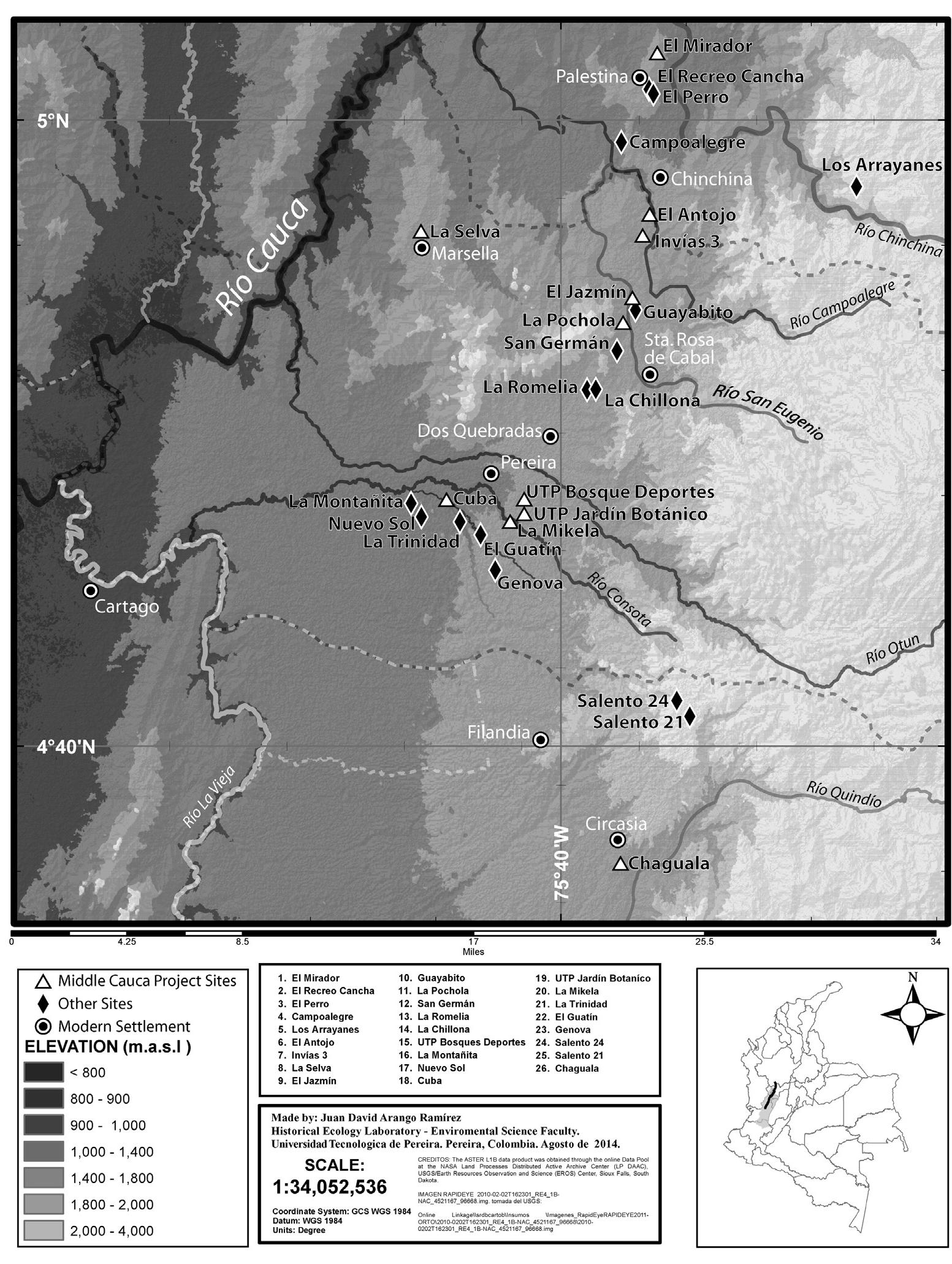
This was a rich and productive environment. As you can see from the map's elevation key, the terrain varies from hot valley floors to cooler mountain slopes. This allowed for a diverse and stable way of life.
To learn more about their location and timeline, let's turn to a brief introductory text.
The Wikipedia article on the Quimbaya provides a concise overview of their geographical location and the peak period of their culture.
Please read the section titled 'History'. Focus on the first two paragraphs, which identify the modern Colombian departments the Quimbaya inhabited and specify the era known as 'The Quimbaya Classic'.
As you've read, the Quimbaya territory corresponds to the modern departments of Quindío, Caldas, and Risaralda. While their origins date back to around the 1st century BCE, their culture reached its zenith between the 4th and 7th centuries CE.
This was not an empty wilderness; it was a productive landscape that the Quimbaya expertly managed.
To understand how the Quimbaya utilized their environment, let's consult a chapter from the Cambridge History of Latin America.
Please read the final paragraph of the document, which begins 'In the middle Cauca valley...'. This short description provides a vivid picture of their subsistence strategy.
The reading confirms what the geography suggests: a multi-layered approach to subsistence. They had:
- Fishing from the river and marshlands on the valley floor.
- Kitchen gardens on the well-drained mountain slopes near their settlements.
- Hunting and cultivation of crops further up the slopes.
This mastery of their environment provided the stable foundation upon which they built a complex society.
2. Social Organization: The Chiefdom Model
The Quimbaya did not have a centralized state or empire like the Inca. Instead, they were organized into numerous chiefdoms (or cacicazgos), a form of society structured around a clear hierarchy based on kinship and hereditary rank.
This infographic provides a simple, clear model of their social pyramid.
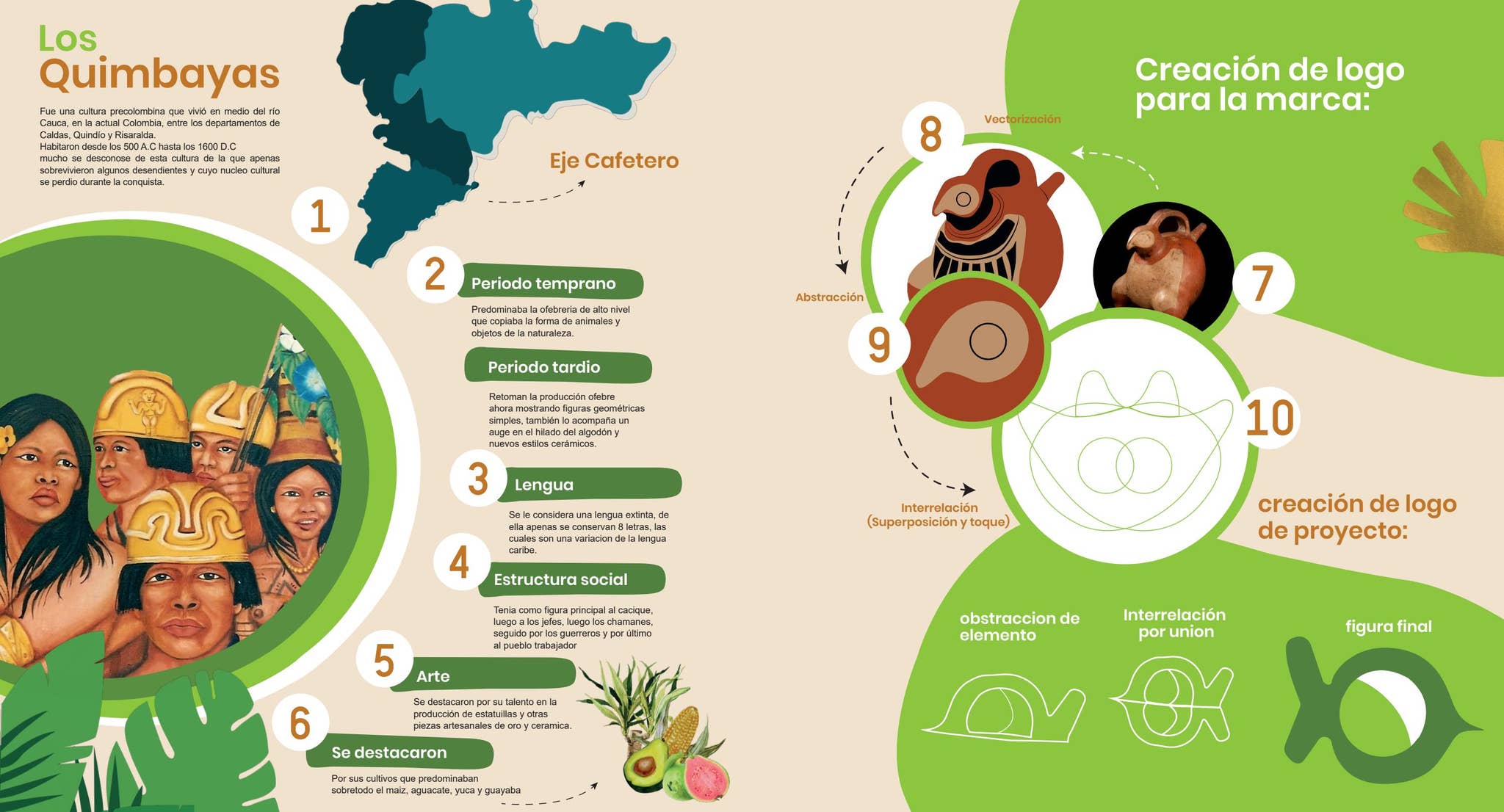
Let's explore this structure in more detail. In this region of Colombia, societies were generally composed of two main tiers: elites and commoners.
Let's return to the Cambridge History text for a more detailed, academic description of the chiefdom model that characterized the region, including the Quimbaya.
Read the paragraphs describing the 'two social sectors of elites and commoners' and the different interests and activities of each group. This section starts with 'Circum-Caribbean rank societies were composed of...' and ends with '...their homes less elaborate and their burials simpler than those of their lords.'
As the text explains, Quimbaya society was fundamentally divided:
- Elites: This group, headed by a paramount chief or cacique, held hereditary power. They controlled resources, led warriors, and had exclusive access to spiritual knowledge and luxury goods (like fine textiles and gold ornaments). Their lives and deaths were marked by elaborate ceremony and high-status objects.
- Commoners: This was the general population, whose lives were more focused on the day-to-day tasks of farming, fishing, and supporting their kin groups.
Within this structure, there was a high degree of specialization. The Wikipedia article you read earlier ("Quimbaya," resource LINK) mentions that their political structure included "distinct groups dedicated to pottery, religion, trade, gold work and war." This points to a complex society with specialized roles for shamans, warriors, and artisans, all operating within the chiefdom system.
3. The Economic Engine of Quimbaya Society
A social hierarchy like a chiefdom requires an economic engine to sustain it. The power and prestige of the Quimbaya elites were directly linked to their ability to control the production and distribution of valuable resources.
The Quimbaya were key players in a vast regional trade network. They weren't just a powerful local group; they were an influential hub.
This final reading from the Cambridge History text explains what made the Quimbaya polities so influential. It details the resources they controlled and their role in the wider network of elite trade.
First, read the paragraph starting 'The highest levels of political development...', which situates the Quimbaya among other major Colombian polities. Then, read the longer section that begins 'The powerful position enjoyed by rulers...' and focuses on the control of resources like gold and salt. Pay attention to how the Quimbaya fit into this system of production and exchange.
This reading reveals the economic foundations of the Quimbaya social structure:
- Control of Natural Resources: Their territory contained productive gold fields and salt springs. Salt, crucial for preservation and consumption, was as valuable as gold.
- Specialized Craftsmanship: Quimbaya artisans were masters of metallurgy and weaving. They didn't just export raw materials; they exported high-value, finished goods.
- Centrality in Trade: The chiefs controlled the trade of these goods—salt, textiles, and gold objects—exchanging them with neighboring and distant groups. This trade brought wealth, prestige, and political power, cementing the authority of the elite.
This system connects everything we've discussed: the location provided the raw materials (gold, salt, cotton), which fueled an economy based on skilled craftsmanship and trade, which in turn supported the hierarchical social structure of the chiefdom.
Test your understanding!
Your work as a product designer involves understanding systems and how different components (users, technology, business goals) interact.
Drawing on this systems-thinking approach, how did the Quimbaya's control over both raw materials (like gold) and specialized production (transforming that gold into art) give their elite a more powerful position than a group that only controlled one or the other?
Show answer
This is an excellent way to analyze the situation. By controlling the entire "value chain," from raw material to finished product, the Quimbaya elite secured a much more powerful and stable position.
- If they only controlled raw materials: They would be a simple supplier, dependent on others to create value. Other groups could potentially find different sources or dictate prices, limiting the elite's wealth and influence.
- If they only had skilled artisans (but no raw materials): They would be dependent on other polities for the necessary inputs (like raw gold). This would make them vulnerable to supply chain disruptions and give the suppliers leverage over them.
By controlling both, the Quimbaya elite controlled the means of production from start to finish. They could ensure a steady supply for their master artisans, capture the full value of the finished luxury goods in trade, and use their unique, high-status products as powerful diplomatic and political tools. This vertical integration gave them immense economic and social power within the regional system.
Conclusion
In this lesson, we have established the essential context for understanding the Quimbaya. We've moved from the abstract idea of a "lost civilization" to a tangible society grounded in a specific time and place.
Key Takeaways:
- Location: The Quimbaya civilization was located in the fertile, resource-rich Middle Cauca River Valley of Colombia, in the area of the modern-day departments of Quindío, Caldas, and Risaralda.
- Social Structure: They were organized into chiefdoms (cacicazgos), a hierarchical society with a clear distinction between a ruling elite (led by a cacique) and commoners. This structure also included specialized roles like priests, warriors, and artisans.
- Economic Foundation: The elite's power was built on their control of valuable resources like gold and salt, their patronage of master artisans, and their central role in regional trade networks for luxury goods.
Preview of the Next Lesson:
Now that we have a clear picture of who the Quimbaya were and how their society functioned, we can begin to explore how they saw the world. In the next lesson, we will delve into their belief system, focusing on the central themes in the Quimbaya worldview, particularly their fascinating concepts of the afterlife. This will be the key to unlocking the meaning behind their famous goldwork.
Can't find a good explanation? Sign up and we'll make it for you
Sign up