
Good to see you again. In the previous lesson, you separated costs by traceability and behaviour: direct versus indirect, and fixed versus variable. That distinction is the foundation for this lesson. Contribution margin uses it to answer a practical question:
When Steelo earns revenue from one more member, transaction, or sponsored opportunity, how much is left after the costs that rise with that activity?
This is the metric that turns a broad claim such as “commerce creates more revenue drivers than subscriptions” into a commercial test. A stream can create revenue and still be unattractive if most of that revenue is consumed by payment fees, verification, fulfilment, rewards, or transaction support.
By the end, you will be able to calculate contribution margin in dollars and as a percentage for Steelo’s membership, commerce, and sponsored opportunity streams.
Contribution margin is not profit
Contribution margin is the revenue remaining after subtracting variable costs. It is called “contribution” because the remainder contributes first to fixed operating costs and then, once those are covered, to profit.
For a platform, the key word is recognized. Steelo should not calculate margin using every dollar that passes through its payment system.
For instance:
- A member paying $12 for a monthly membership may create $12 of Steelo revenue.
- A customer purchasing $75 of merchandise may create $75 of GMV, but only a $9 commission for Steelo if its take rate is .
- A sponsor may provide a $10,000 campaign budget, but Steelo may retain only a $2,000 platform fee while the remaining funds are owed to an artist and participating members.
The first step is therefore to identify what Steelo actually keeps or recognizes as revenue. The second is to subtract the costs that vary with the sale, member, order, or campaign.
Watch this short explanation from Contribution Margin Income Statement by Kristin Ingram. It establishes the distinction between revenue, variable costs, contribution margin, fixed costs, and operating income.
Contribution Margin Income Statement
Watch “Contribution Margin Income Statement” by Kristin Ingram for the basic structure of a contribution margin statement and the meaning of the margin percentage.
Watch the basic structure to see how revenue is divided between variable expenses and contribution margin, and how contribution margin then covers fixed costs or becomes operating income. Then watch the margin ratio to understand why the percentage shows the amount of each revenue dollar left after variable costs.
Three related measures matter:
The “unit” must fit the stream being assessed:
| Revenue stream | Useful unit |
|---|---|
| Membership | Paid member month |
| Commerce marketplace | Completed order or transaction |
| Sponsored opportunity | Completed campaign |
| Artist service | Completed service engagement |
A contribution margin of $6 per commerce order tells you the dollar amount generated by another order. A contribution margin ratio of tells you that $0.68 of each dollar of recognized platform revenue remains after variable costs.
Start with the correct platform revenue
The marketplace distinction between GMV and net revenue is especially important for Steelo. A rising GMV figure can demonstrate demand, but it does not by itself demonstrate platform profitability.
Read the opening sections of Glencoyne’s Marketplace Unit Economics: Understanding Seller and Platform Metrics. The guide frames the exact problem of separating transaction volume from the portion of revenue a marketplace keeps.
E-commerce marketplace unit economics: seller contribution ...
Read this Glencoyne guide to distinguish GMV, net platform revenue, and transaction contribution before applying the framework to Steelo.
In the opening discussion, read the opening rationale for why impressive payment volume can obscure weak unit economics. Then, in “The Foundational Metrics: GMV, Net Revenue, and Contribution Margin,” focus on the definitions of GMV, net revenue, and contribution margin. Continue into “How to Calculate Marketplace Unit Economics: A Transaction Breakdown” and read the transaction example. Notice that the platform’s commission, not the customer’s full purchase price, is its revenue.
A card transaction may involve several parties and several fees. The important financial discipline is to separate the buyer’s payment, the merchant or artist payout, the card fees, and Steelo’s retained fee.
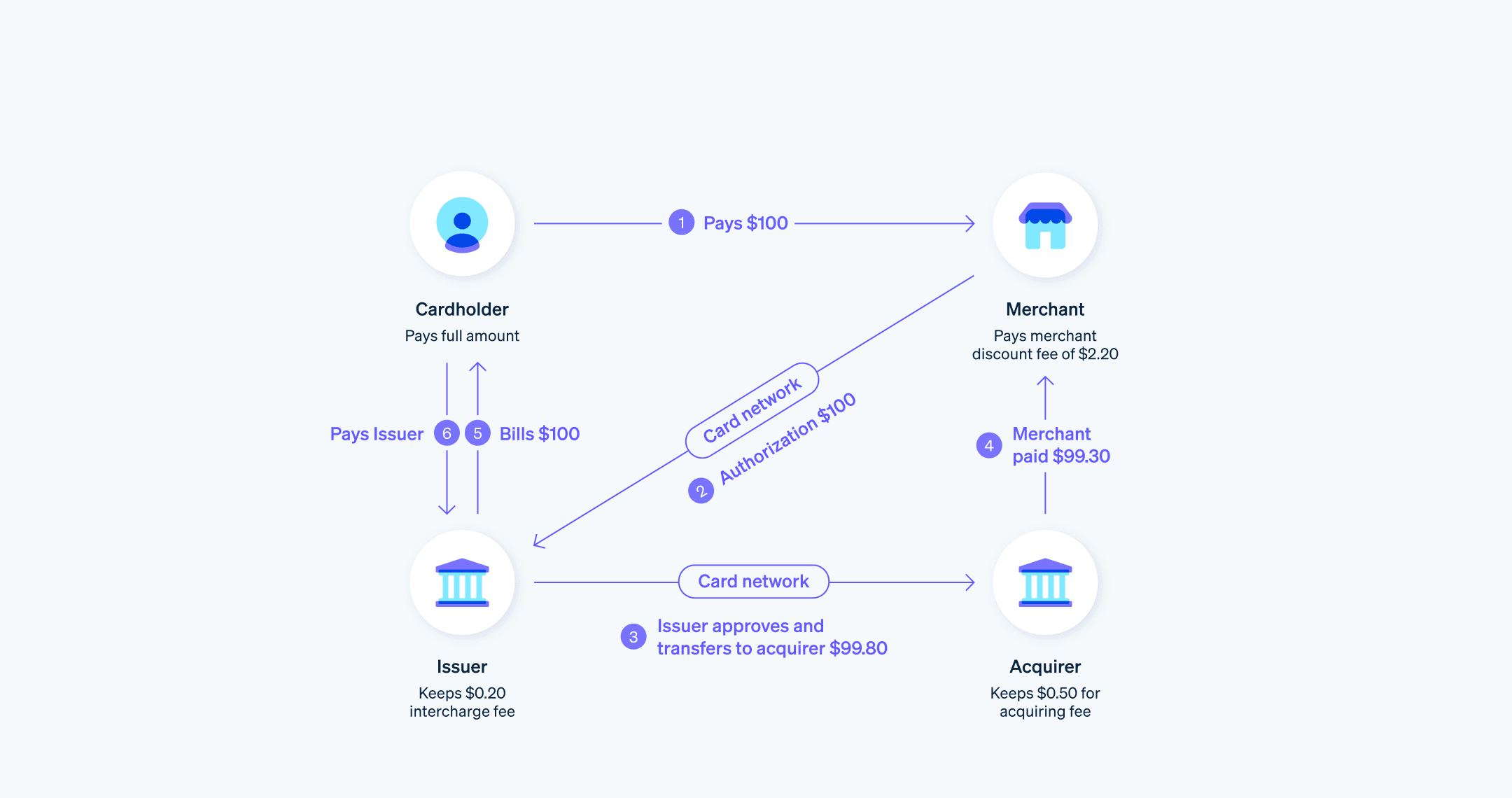
For a commerce marketplace, a useful starting formula is:
If Steelo enables 400 merchandise orders with an average order value of $75, then GMV is:
Assume Steelo’s commission is .
The $30,000 is GMV. The $3,600 is Steelo’s recognized commission revenue under this example. The merchant proceeds are not Steelo revenue merely because the cash may temporarily move through Steelo’s payment account.
This treatment depends on the commercial agreement and Steelo’s accounting conclusion about whether it acts as an agent or principal. For operating modelling, however, the discipline remains the same: make the assumed retained fee explicit and do not confuse it with the full customer payment.
Which costs belong in contribution margin?
For an individual transaction or revenue stream, include costs that are caused by incremental activity. In a platform context, common variable costs include:
- Payment processing fees
- Fraud screening or identity verification fees per transaction
- Per order customer support costs, where support capacity or contractor cost rises with tickets
- Per transaction software, messaging, or reporting fees
- Merchant fulfilment or shipping cost, but only if Steelo bears it
- Member rewards paid per verified action
- Sales commissions paid only when a transaction or campaign closes
- Campaign specific fulfilment or reporting costs
Do not deduct every cost related to the business from contribution margin. In particular, exclude fixed costs such as:
- Core product and engineering payroll
- Founder compensation
- General legal and finance
- Shared platform software subscriptions
- Fixed office, insurance, or accounting costs
- A dedicated campaign manager paid a monthly salary regardless of campaign count
A cost can be direct and fixed. A moderator assigned solely to one artist community is directly traceable to that community, but if their monthly pay remains unchanged as membership grows, it does not belong in the initial contribution margin calculation.
That fixed cost still matters. It is simply assessed after total contribution margin:
| Layer of analysis | What it answers |
|---|---|
| Revenue less variable costs | Does each additional unit create cash to cover the business? |
| Contribution margin less traceable fixed costs | Does this stream support its own dedicated operating base? |
| Operating income after shared fixed costs | Does the entire company produce profit? |
This prevents two common errors:
- Calling a stream “unprofitable” because it has been allocated a large share of existing company overhead.
- Calling a stream “profitable” because positive transaction margin is presented as if payroll and infrastructure do not exist.
Worked calculation: Steelo commerce commission
Assume Steelo enables 400 merchandise orders in a month.
| Assumption | Amount |
|---|---|
| Average order value | $75.00 |
| Orders | 400 |
| GMV | $30,000.00 |
| Steelo commission rate | |
| Payment processing fee paid by Steelo | of GMV plus $0.30 per order |
| Fraud check | $0.15 per order |
| Incremental transaction support | $0.25 per order |
1. Calculate recognized revenue
2. Calculate the variable costs
Payment processing applies to the full amount processed, not merely to Steelo’s $3,600 commission.
The other variable costs are:
3. Calculate total contribution margin
4. Calculate contribution margin per order
Rounded for decision making:
5. Calculate the contribution margin ratio
The contribution margin statement is:
| Steelo commerce stream, monthly | Amount |
|---|---|
| GMV, context only | $30,000.00 |
| Recognized commission revenue | $3,600.00 |
| Less: payment processing | |
| Less: fraud checks | |
| Less: incremental support | |
| Contribution margin | $2,450.00 |
| Contribution margin per order | $6.13 |
| Contribution margin ratio | 68.1% |
The $2,450 is not profit. It is the amount available to cover Steelo’s moderator costs, product team, sponsorship operations, legal, leadership, and other fixed operating costs.
The underlying commerce formula
A compact model makes it easier to see what must be true for the commerce stream to work.
Let:
- = number of orders
- = average order value
- = Steelo’s take rate
- = percentage payment processing fee
- = fixed payment fee per order
- = other variable costs per order
Then:
This formula reveals an important commercial issue. If Steelo pays payment processing fees on the full transaction value, its take rate must be sufficiently above the processing percentage to cover both the percentage fee and the fixed per order costs.
A low value order can be more difficult to monetise than a high value order because the fixed card fee consumes a greater proportion of the platform commission. That does not mean Steelo should avoid lower priced merchandise. It means the fee structure, payment fee responsibility, and minimum transaction value need to be modelled deliberately.
Comparing Steelo’s possible revenue streams
Contribution margin helps compare different revenue drivers without pretending that they are identical businesses.
Membership
Assume Steelo retains a $12 monthly membership fee and bears:
- $0.65 in payment processing
- $0.20 in delivery or media usage
- $0.15 in incremental member support
Membership can therefore have a high margin percentage. Its limitation is not necessarily unit margin. It is that total membership revenue remains tied to the number of paying members, price, and retention.
Sponsored opportunity campaign
Assume a sponsor provides a $10,000 campaign budget. Under the agreement, Steelo acts as an agent: $8,000 is reserved for the artist and participating members, while Steelo earns a $2,000 fee.
Steelo bears these campaign variable costs:
| Variable cost | Amount |
|---|---|
| Payment processing on $10,000 | $290.30 |
| Verification and fraud checks | $120.00 |
| Payout processing charges | $40.00 |
| Incremental campaign support | $150.00 |
| Total variable costs | $600.30 |
The contribution calculation uses Steelo’s $2,000 retained fee, not the sponsor’s entire $10,000 budget.
Artist and member payouts are excluded from this particular calculation because the example assumes Steelo is an agent administering funds that belong to participants. If Steelo instead contracts as the principal and promises a campaign outcome in its own name, the revenue and cost presentation may differ. The commercial model, contracts, and accounting policy must agree.
The key operating insight is that sponsored opportunities can create a separate contribution pool per campaign. But a campaign is not attractive merely because its budget is large. The retained fee, payment costs, verification burden, participant payouts, and required support must leave enough contribution to justify the operational complexity.
A reliable calculation checklist
Before presenting a margin figure to Steelo’s owner or a partner, use this sequence:
-
Define the stream and unit
State whether the analysis is per member month, order, campaign, or another consistent unit. -
Identify recognized revenue
Use Steelo’s subscription fee, commission, sponsor fee, or service fee. Keep GMV and sponsor budgets separate. -
List only variable costs
Include costs that increase as the selected unit increases. -
Check who bears each cost
A merchant’s fulfilment expense or an artist’s production expense does not become Steelo’s cost merely because it occurs on the platform. -
Match the period
Compare monthly revenue with monthly variable costs. If a membership is billed annually, do not compare one month of revenue with a full year of payment and servicing costs. -
Calculate dollar contribution and percentage contribution
Dollar contribution supports staffing and fixed cost decisions. The percentage supports comparison across revenue streams and prices. -
State exclusions clearly
Note fixed payroll, shared software, company overhead, taxes, and any pass through participant funds excluded from the calculation.
Key takeaways
Contribution margin measures what remains after a stream’s variable costs:
For Steelo:
- Use membership revenue for member margin.
- Use commission or take rate revenue, not GMV, for marketplace margin.
- Use Steelo’s retained sponsor fee, not the full sponsor budget, when Steelo acts as an agent.
- Include transaction driven costs such as processing, verification, rewards, and incremental support.
- Exclude fixed costs from contribution margin, while recognising that they must later be covered by total contribution.
A high contribution margin ratio is useful, but it is not a complete investment case. Steelo must also show that enough contribution is generated to cover its fixed operating base and that the stream can grow without damaging artist, merchant, sponsor, or member incentives.
Next, the course moves into pricing and customer unit economics. You will use contribution margin as one input when judging whether a price can support the value Steelo provides and the costs it must bear.
Can't find a good explanation? Sign up and we'll make it for you
Sign up