
Introduction
Welcome back! In our last lesson, we explored the sacred geography of the Muisca, understanding how mountains and lagoons were not just physical landscapes but the spiritual foundation of their cosmos—the stage for their most important rituals. We concluded by touching on the El Dorado ceremony as the ultimate expression of this worldview.
Today, we will focus on the most famous element of that ceremony: gold. Your learning outcome for this lesson is to describe the ritualistic and symbolic importance of gold in Muisca society. We will move past the Spanish legend of a city paved with gold and uncover the metal's true meaning for the Muisca—as a divine substance, a tool for cosmic balance, and the heart of their sacred offerings.
For your goal of illustrating these myths, this lesson is critical. It will help you visualize gold not as a simple treasure, but as a material charged with spiritual power, reflecting the sun and connecting the human world to the divine.
The True Value of Gold: A Solar Connection
The first step in understanding Muisca gold is to set aside the European concept of gold as currency or a measure of material wealth. For the Muisca, its value was purely symbolic and spiritual.
To begin, let's watch a short video that introduces the Muisca's relationship with gold and debunks some common assumptions.
The Muisca: Legends of Gold (subtitulos en español)
The video 'The Muisca: Legends of Gold' by Ancient Americas provides an excellent overview. This first clip introduces the Muisca's fame for goldwork and clarifies that its value was linked to the sun, not material wealth.
Please watch from 12:46 to 13:17. Note the key reason why gold was prized and where the Muisca obtained it from.
As the video highlights, gold's importance stemmed from two key aspects:
- Its "Affinity to the Sun": Gold's brilliant, unchanging color was seen as a physical manifestation of the sun's divine energy and light. The Muisca worshipped Sué, the Sun God, and gold was his earthly counterpart.
- It Was Acquired, Not Mined: The Muisca did not mine gold in their own territory. They were masters of trade, exchanging valuable resources like salt and emeralds for raw gold from other regions. This further proves that their interest was in the substance's spiritual qualities, not in controlling its source.
The following text reinforces this crucial distinction between material and spiritual value.
El Dorado: The truth behind the myth
The BBC article 'El Dorado: The truth behind the myth' clearly articulates the Muisca's unique perspective on gold.
Please read from the paragraph starting 'Within Muisca society gold...' until the quote from Roberto Lleras Perez. Focus on the distinction between spiritual power and material value.
The key takeaway is that gold was a sacred tool used to "bring balance and harmony." As Muisca descendant Enrique Gonzalez states in the article, "gold is nothing more than an offering... gold does not represent wealth to us."
Metallurgy as Sacred Art: Crafting the Divine
The Muisca were not just users of gold; they were master metallurgists who developed sophisticated techniques to shape it for ritual purposes. Their goal was not to create jewelry for adornment but to create votive offerings, or tunjos.
These tunjos were small, often flat, stylized figures representing people, animals, or scenes from daily and religious life. They were crafted to be given away to the gods.
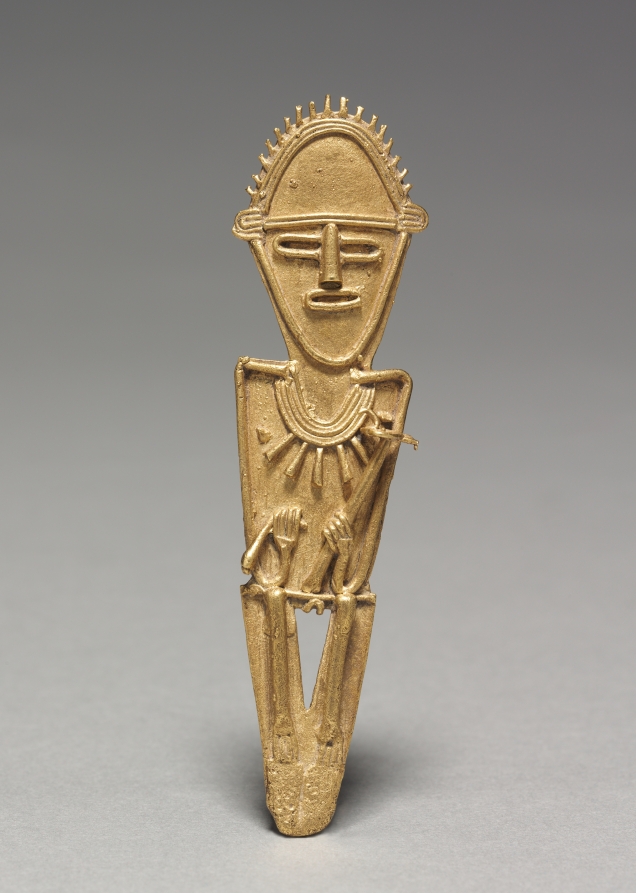
The primary technique used to create these pieces was the lost-wax casting method. The video below provides a clear, concise explanation of this ingenious process.
The Muisca: Legends of Gold (subtitulos en español)
Let's return to 'The Muisca: Legends of Gold' to understand how these objects were made. This segment visually breaks down the complex process of lost-wax casting.
Watch from 13:33 to 14:08. Try to visualize the step-by-step process from wax model to finished gold object.
The Muisca also frequently used an alloy called tumbaga—a mix of gold and copper, sometimes with silver. This was not done to "debase" the gold, but for a specific aesthetic and symbolic purpose. The Khan Academy article "Muisca Raft" notes that the pinkish-yellow glow of tumbaga was admired for its unique association with the sun deity.
The Ultimate Purpose: Gold as an Offering
So, why did the Muisca dedicate so much effort to creating thousands of these intricate gold objects? The article "El Dorado: The truth behind the myth" provides the answer: a massive portion of their goldwork was made for the sole purpose of being offered to the gods.
Archaeologist Roberto Lleras Perez notes this was a unique practice in South America, highlighting how central this act of offering was to the Muisca worldview. These offerings were deposited in sacred places—primarily lagoons—to appease deities, seek protection, and maintain the cosmic equilibrium.
This brings us back to the most significant ritual of all: the ceremony of El Dorado. It was not a place, but a person and a ritual: the golden one.
To understand the ceremony and the archaeological evidence that confirms it, let's explore the most iconic Muisca artifact.
The article 'Muisca Raft' from Khan Academy provides a detailed look at the artifact that depicts the El Dorado ceremony.
Please read the entire section titled 'Muisca Raft'. Pay close attention to how the artifact visually represents the details of the ceremony.
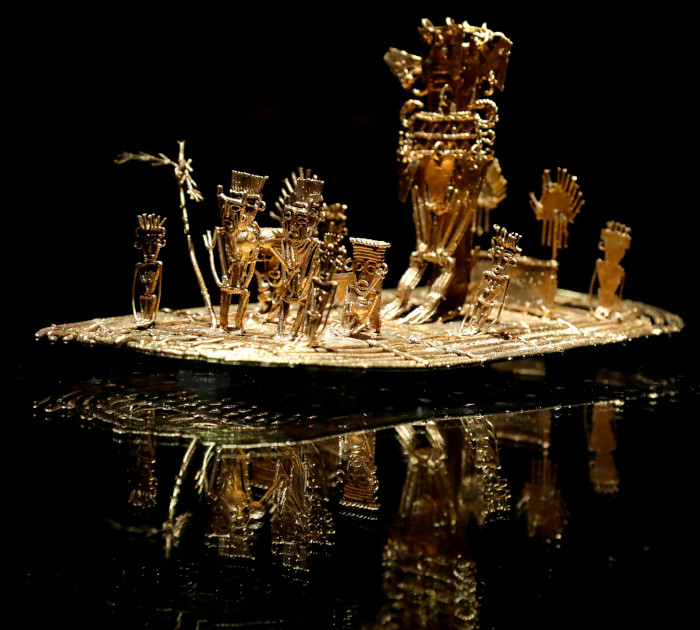
The ceremony, as depicted on the raft and described by Spanish chroniclers, was the ultimate synthesis of Muisca beliefs:
- The Leader as a Solar Being: The new chief was stripped naked and covered in gold dust. He literally became a vessel for the sun's energy, transforming into "the golden one."
- The Offering: He would journey to the center of the sacred lagoon on a raft with priests. There, he would offer tunjos and emeralds into the water, and finally wash the gold dust from his own body, completing the offering.
- Cosmic Renewal: In this act, the representative of the sun's power on Earth (the chief) deposited the sun's physical essence (gold) into the womb of Mother Earth (the lagoon). This was not just a coronation; it was a powerful ritual to ensure harmony between the cosmic forces, guaranteeing the continued survival and prosperity of his people.
Test your understanding!
Imagine you are a product designer tasked with creating a museum exhibit display for the Muisca Raft. Your goal is to help visitors understand the symbolic meaning of gold, not just its material beauty.
What information or visual elements would you place around the artifact to contrast the Muisca spiritual worldview with the European material one?
Show answer
A good exhibit design would create a clear contrast. On one side, you could display quotes from Spanish chroniclers focused on "treasure," "riches," and the monetary value of the gold they found. You could even show a diagram of how they attempted to drain Lake Guatavita.
On the other side, you would present the Muisca worldview. You could use quotes like the one from Enrique Gonzalez ("gold does not represent wealth to us"). You could have a visual that links the sun, the golden chief, and the lagoon with lines of light, illustrating the flow of cosmic energy. You might also display a collection of simple tunjos next to the raft, emphasizing that the purpose was offering, not just creating one spectacular piece. The key is to show that for one group, gold was an end in itself (wealth), while for the other, it was a means to a spiritual end (balance).
The Clash of Worlds
The story of Muisca gold ends with a tragic misunderstanding. The Spanish conquistadors, driven by a thirst for material wealth, could not comprehend the Muisca's spiritual relationship with the metal. They heard the story of "the golden one" and imagined a city paved with gold.
The Muisca: Legends of Gold (subtitulos en español)
This final clip from 'The Muisca: Legends of Gold' details the origins of the El Dorado myth and the subsequent European obsession with finding it.
Watch from 24:43 to 26:10. This segment explains how the ritual of the 'golden man' was misinterpreted and led to attempts to drain Lake Guatavita.
This fundamental clash of worldviews led the Spanish to melt down countless Muisca artifacts, destroying irreplaceable records of their culture and beliefs. The true value—the stories, the symbolism, the spiritual knowledge encoded in each piece—was lost forever, melted into anonymous bars of metal.
Conclusion
In this lesson, we have separated the myth of El Dorado from the reality of Muisca belief, uncovering the profound spiritual importance of gold. You can now describe how this metal was far more than a simple commodity.
Key Takeaways:
- Symbolic Value: Gold was prized not for its material worth, but for its connection to the Sun God, Sué. Its color and incorruptibility made it the earthly embodiment of divine, life-giving energy.
- Sacred Craft: The Muisca were master metallurgists, using techniques like lost-wax casting to create tunjos (votive offerings), often from a gold-copper alloy called tumbaga.
- Ritual Purpose: The primary function of gold was to be given away as an offering to the gods in sacred lagoons to maintain cosmic harmony and balance.
- The El Dorado Ceremony: This was the pinnacle of Muisca ritual, where the new leader, covered in gold dust, became a living solar offering, renewing the pact between his people and the divine by depositing gold into the sacred waters of a lagoon.
Preview of the Next Lesson:
We have now concluded our in-depth study of the Muisca. In the next module, we will journey north to the towering peaks of the Sierra Nevada de Santa Marta to meet the Tairona and their descendants, the Kogi. We will explore their unique worldview, their concept of the mountains as the "Heart of the World," and the powerful cosmological principles that guide their lives today.
Can't find a good explanation? Sign up and we'll make it for you
Sign up