Hello! Welcome to the final lesson of our first module, "Foundations of Sleep Science."
In our previous lesson, we integrated the homeostatic and circadian drives into the Two-Process Model of Sleep Regulation. We saw that your sleep-wake cycle is governed by the push-and-pull between sleep pressure (Process S) and the internal, 24-hour clock's alerting signal (Process C).
However, this internal clock isn't isolated. For it to be useful, it must be synchronized with the 24-hour cycle of the world around us. This process of synchronization is called entrainment. Today, we will explore the powerful environmental cues that our body uses to entrain our internal clock. These cues are known as zeitgebers, a German word meaning "time-givers."
This lesson will explain how the most important zeitgebers—light and temperature—along with other factors, directly influence your sleep timing and quality. Understanding these external levers is the first step toward consciously optimizing your sleep.
The Master Time-Giver: Light
Our internal clock, governed by the suprachiasmatic nucleus (SCN), runs on a cycle that is slightly longer than 24 hours. If left in total darkness without any time cues, a person's sleep-wake cycle would drift later and later each day.
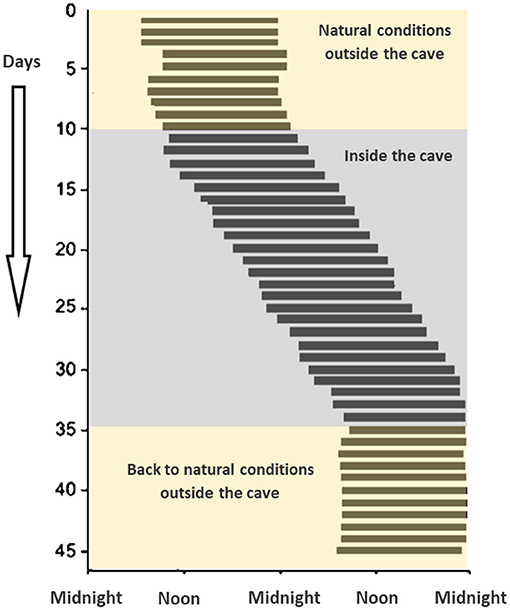
This is why we need zeitgebers. By far, the most powerful zeitgeber for humans is light. Light exposure resets our internal clock every single day, keeping it aligned with the planet's rotation.
How Your Brain Sees Light for Timekeeping
But how does this work? It's not through vision. Even people who are visually blind can still have their circadian rhythms entrained by light. This is because our eyes contain a special, third type of photoreceptor, separate from the rods and cones we use for sight.
Let's watch a video by Dr. Satchin Panda, a leading researcher in this field, who was part of the team that discovered this mechanism.
Satchin Panda – Circadian Theory of Health
In this clip from his talk 'Circadian Theory of Health,' Dr. Satchin Panda explains the discovery of a special light-sensing protein in our eyes and its direct connection to the brain's master clock.
Please watch from 10:35 to 12:25. Dr. Panda introduces a protein called melanopsin, which is highly sensitive to blue light and is the key link between environmental light and your internal clock.
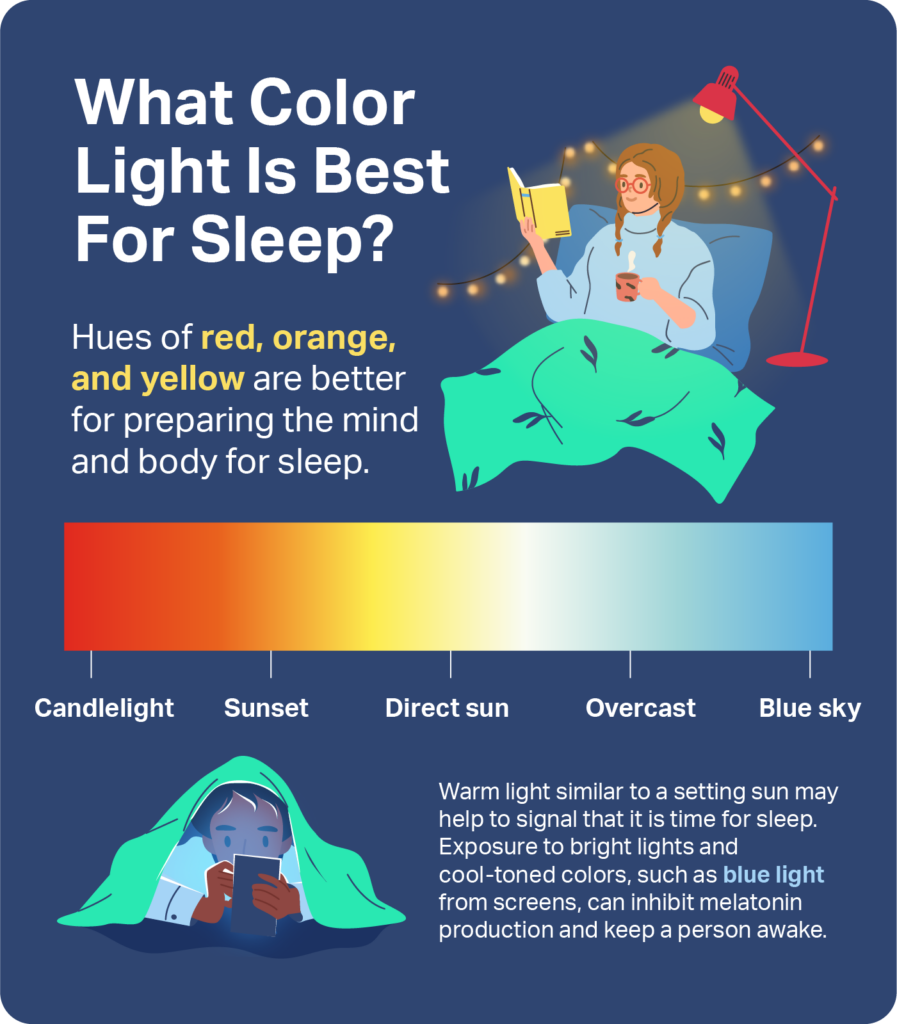
As Dr. Panda explained, specialized cells in our retina contain melanopsin, a photopigment that is most sensitive to the blue-spectrum light abundant in daylight. When these cells detect bright, blue-rich light, they send a powerful signal directly to the SCN, your master clock, effectively saying, "It's daytime! Stay awake!"
This signal has two immediate effects:
- It reinforces the circadian alerting signal (Process C).
- It suppresses the production of the sleep-promoting hormone, melatonin.
Conversely, when darkness falls, the absence of this light signal allows melatonin production to begin, signaling to your body that it is nighttime and time to prepare for sleep.
Timing is Everything: Shifting Your Clock
The effect of light on your clock is not just about its presence or absence; the timing of light exposure is critical. You can strategically use light to shift your entire sleep-wake schedule earlier or later.
A key marker for understanding this is your temperature minimum. This is the point in the 24-hour cycle when your core body temperature is at its lowest, which typically occurs about two hours before your natural wake-up time.
Let's watch a clip where neuroscientist Dr. Andrew Huberman explains how light exposure relative to this point can shift your clock.
Optimal Sleep Temperature | Andrew Huberman and Lex Fridman
In this discussion, Dr. Andrew Huberman provides a clear, actionable rule for how the timing of light exposure can either advance or delay your circadian clock.
Please watch from 3:05 to 4:51. Focus on the concept of the 'temperature minimum' and the simple rule he describes: light before this point delays your clock, while light after this point advances it.
Here is the fundamental rule of circadian entrainment by light:
- Light in the morning (after your temperature minimum): This tells your brain the day has started, causing a phase advance. Your clock shifts earlier, making you want to wake up and go to sleep earlier on subsequent days. This is why getting morning sunlight is so effective for stabilizing your sleep schedule.
- Light in the evening and night (before your temperature minimum): This tells your brain the day is lasting longer, causing a phase delay. Your clock shifts later, making you want to wake up and go to sleep later. This is why using bright screens late at night can make it hard to fall asleep at a reasonable hour.
Test your understanding!
You have to travel from New York to Paris, which is 6 hours ahead. To combat jet lag, you want to shift your internal clock earlier. Based on what you just learned, what would be a good light exposure strategy upon arriving in Paris?
Show answer
To shift your clock earlier (a phase advance), you should expose yourself to bright light in the morning in the new time zone (Paris). This light exposure, occurring after your body's temperature minimum (which is still on New York time initially), will signal your SCN to advance the clock, helping you adapt to the new schedule more quickly. You would also want to avoid bright light in the Parisian evening, which would send a conflicting "delay" signal.
The Role of Temperature
While light is the primary zeitgeber, temperature is a close and related second. Your core body temperature also follows a distinct circadian rhythm, and controlling your environmental temperature can significantly support or disrupt your sleep timing.
To understand this connection, please read the following sections from the Sleep Foundation.
The Best Temperature for Sleep
These articles from the Sleep Foundation detail the physiological link between body temperature and sleep, and offer evidence-based recommendations for your sleep environment.
Please read the sections titled 'How Does Temperature Affect Sleep?' and 'What Happens When Your Bedroom Is Too Hot?'. Focus on how the body's natural drop in temperature is a signal for sleep and how a warm environment can interfere with important sleep stages.
As the reading highlights, a drop in your core body temperature is a crucial signal for sleep initiation. This process begins about two hours before bedtime, coinciding with the release of melatonin. Your body actively cools its core by increasing blood flow to your hands and feet (a process called vasodilation), radiating heat away.
You can support this natural process by maintaining a cool bedroom environment.
- A cool room facilitates sleep onset: By keeping your bedroom cool, you help your body achieve the necessary temperature drop to fall asleep more easily. The recommended range is 65-68°F (18.3-20°C).
- A warm room disrupts sleep quality: A bedroom that is too hot can interfere with thermoregulation, leading to more awakenings and a reduction in both deep slow-wave sleep and REM sleep.
- Temperature rise signals waking: Just as a temperature drop initiates sleep, a rise in core body temperature is part of the wake-up signal. This rise helps trigger the release of cortisol, a hormone that promotes alertness.
Other Environmental Factors
While light and temperature are the main drivers, other cues also contribute to entraining our circadian rhythm:
- Meal Timing: The timing of your food intake acts as a zeitgeber for the "peripheral clocks" in your digestive organs. Eating on a regular schedule can help anchor your rhythm, while eating late at night can send a conflicting signal to your body, suggesting it should be active when your brain's master clock is preparing for sleep.
- Exercise: The timing of physical activity can also shift your clock. For most people, exercising in the morning or afternoon reinforces the daytime alerting signal. Very intense exercise too close to bedtime can raise your core body temperature and delay sleep onset for some individuals.
- Social Cues: Our daily schedules, such as alarm clocks, work hours, and social engagements, also act as weak zeitgebers. While they don't have the direct biological power of light, they provide a consistent structure that helps keep our rhythms on track.
Conclusion
This lesson concludes our foundational module on sleep science. We've seen that our sleep is not just a passive state, but an actively regulated process governed by internal drives and synchronized by powerful external cues.
Key Takeaways:
- Our internal circadian clock requires daily synchronization from external cues called zeitgebers to stay aligned with the 24-hour day.
- Light is the most potent zeitgeber. Bright, blue-rich light detected by melanopsin cells in the retina signals "daytime" to the brain, suppressing melatonin and promoting alertness.
- The timing of light is critical: morning light advances the clock (shifts it earlier), while evening light delays it (shifts it later).
- Temperature is another key factor. A drop in core body temperature is a necessary signal for sleep onset, and a cool bedroom environment supports higher-quality sleep.
- Meal timing, exercise, and social schedules also act as weaker zeitgebers that help reinforce a stable rhythm.
Preview of the Next Module:
We have now built a complete picture of how sleep is regulated. You understand the brain structures involved, the two-process model that drives sleep, and the environmental factors that time it.
In our next module, "The Architecture of Sleep," we will move from why we sleep to what happens when we sleep. We will delve into the different stages of sleep—from light NREM to deep slow-wave sleep and the fascinating world of REM sleep. We'll start by learning about polysomnography, the scientific tool that allows us to see and measure the intricate journey your brain and body take every night.